Energy Modulation through Breath and Imagery

(Title image: Photo by Alexander Krivitskiy on Unsplash)

As my family takes some time to grieve the passing of a family member, I have been using pranayama (breathwork) to help with the broad range of emotions that such situations elicit.

I came across an excellent meditation by teacher Jeff Warren on the Calm app in which he pairs visualization with breathwork as a way of modifying your energy states.

Need to spark yourself? Or cool the sparks? There’s a breathing practice for that.
(Photo by Jez Timms on Unsplash)

It works with the natural ability of inhales to quicken your heartrate and bring up your energy levels and exhales to calm the nervous system and elicit the relaxation response. This is my version of what he instructed (his actual guidance may have been a little different):

To increase energy:
Breath ~ Extended, intentional inhales fully filling the lungs followed by shorter, sharper, quicker exhales. Five such breaths followed by natural breath, then bringing attention to your current state. Important: stop if becoming lightheaded or short of breath. This should increase your energy, not overwhelm or wear you out!
Visualization ~ Imagine sparks of energy rising up from the earth and entering your body, into the fingertips and soles of the feet, coalescing in your core, then shooting upwards towards your head and skyward from your crown. Imagine the sensation of energy coursing through your entire body, and a sense of lightness and bouyancy, as if your body is charged and driving itself.

To come into calm:
Breath ~ Four-count inhales through the nose breathing into the diaphragm followed by 6-count extended exhales through pursed lips. Five of these breaths then moving into your natural breath, noticing the stillness. If available to you, extend the exhales to eight counts. This helps elicit the “relaxation response”.
Visualization ~ Imagine heat and sparks draining down from your body, into the earth. Feel a coolness washing over you, notice a solid foundation beneath you. There is a slowing and steadiness, a pleasant grounding and a clearing of the ears. Notice the sensations of your surroundings in the present moment.
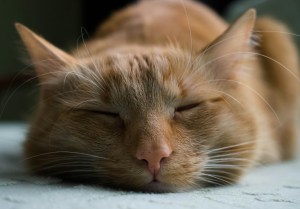
Sometimes a mind-body break is in order.
(Photo by Victoria Tronina on Unsplash)

Quite honestly, I rarely need to increase my energy levels due the the ability of my parasympathetic nervous system to get activated quickly. If I am feeling fatigued, I don’t do breathwork to rev myself up. More likely, I will exercise…or I’ll respect the fact that my body is telling me that rest is needed and will respond accordingly.

On the other hand, I make frequent and liberal use of calming breaths and find that my ability to handle difficult emotions has improved because of it. Of course, I still struggle from time to time, but that is why this type of work is called a “practice.”

I hope these help you too!

Stop and Do This Now

(Title image: Photo by Ruslan Zh on Unsplash)

No matter where you are reading this, pause now and take a deep breath.

And exhale.

How did that feel? How you were breathing right before you took that breath? Were you relaxed with deep breaths already? Or was your breathing quick and shallow and that sudden deep inhale felt very different?

For me, my breath is a reflection of my internal state. It’s a compass that points me to what is happening to me, regardless of what is going on around me. Many times, I’m not aware of how I am responding to things around me until I stop to notice my breathing.

And don’t forget to exhale.
(Photo by Kelly Jean on Unsplash)

Sometimes it takes a number of tries to achieve a deep inhale. Then I realize how shallow my breaths have been. That opens the door for me to consider how I’ve been reacting to things throughout the day. And it also leads to more deeper breaths as I settle down.

If I’m home, I may grab my flute — it is a Native American-style flute of red cedar wood. Holding it in my hands, enjoying the pleasant scent of cedar, playing a few bars of a mournful melody…all that helps to calm and ground me. It demands a controlled lungful of air for a clear tone, an elongated exhale that soothes me.

Did you take a deep breath at the start of this post? If not, try it now. And notice. Notice if it’s easy for your diaphragm to drop and pull in a good lungful of air, or does your body resist, as if something is squeezing your lungs, or your torso is bound tight?

Take several more breaths and allow them to expand your ribcage, coaxing more air in with every inhale and slowly releasing with every exhale. Until, like a balloon that has been stretched, the lungs fill fully, comfortably, easily.

And then just breathe. Allow yourself to stay where you are with whatever is taking place around you and keep breathing. Breathe mindfully for few minutes. Shake off the pressures of the day.

Then take one more deep breath…and carry on.

“Am I Clenching?”; or “Wait, Where’s My Tree?”

A few days ago I realized that we were missing a tree out in front of our balcony. Not some little sapling that could be easily overlooked, but a tall, mature pine tree that offered us shade during hot summer afternoons.

It was gone, only stumps remaining. I was stunned. After I furiously texted my family for answers (WHERE IS THE TREE???), my husband texted back that it hadn’t been there for weeks, and I hadn’t noticed its disappearance even though I’d been out on the balcony numerous times.

WHO TOOK MY TREE???

That was weird.

So, you might be wondering what that has to do with this post. Well, it’s easy to cruise through life not being fully aware of what’s going on around us…or in our bodies. Just like I was imaging the tree was still there (while also wondering why the plants on the balcony were drying up much faster this summer), many times I’m also not aware that I’m holding tension in my body.

Perfect example: I had trouble falling asleep a few nights ago. After lying awake in bed for some time, it struck me that I was clenching just about every part of my body. My jaws, neck, shoulders, back, glutes…everything had tightened into knots.

I had been concerned about preparations for a party that we were to attend the next day–and I was aware of that–but all of those worries had passed into my physical being, and that I wasn’t aware of. Good luck trying to get to sleep when you’re as rigid as a board!

So I started a little dance of releasing those muscles, then drifting back to my “normal” state of what can only be described as oblivious unattention, until I noticed that I was still not sleeping and–oh look!–everything was rigid again, so I released my muscles again…

Sometimes I find myself clenching just a teensy bit too tightly…

Yes, I went through the process of relaxing my face, my jaw, my neck…blah blah blah…if you’re a meditator, you know the drill. But a few minutes later, everything had clenched up again without me realizing it.

This went on for a while. When I get caught in a “loop of oblivion” like this, one of the first things I do is stop. Just halt the dance. And take a very deep breath.

That’s the first start in resetting things. Think of it as a much kindler, gentler version of someone slapping you in the face and yelling, “Get it together!”

And that’s when my broader awareness returned and I was able to get out of autopilot mode, acknowledging my mental tension and thereby the physical one. It was a perspective shift because I wasn’t just thinking, “Will we get everything done in time?”

I realized what was actually happening: “All this concern about getting everything done in time is keeping me up.”

That slight shift enabled me to pull back and out of myself, brush off the worries about things I could do nothing about at the moment, and drift off to sleep. But it also reminded me that I need to practice awareness more than I had been. In a sense, I was now more aware of the need to stay even more aware.

Yes, even after years of understanding the importance of mindfulness, I must return to square one and refocus. I don’t think I’ll ever not be restarting, especially not as long as trees keep disappearing from under my nose. But that’s okay…the journey is soothing and the practice itself is a destination. My main task is to not stop practicing.

Quitting This Stupid Job…and Going Back to Training

For a number of months now, my meditations have been “sub-par”.

I know I’m not supposed to judge, but objectively I’m aware that I’ve veered off course somewhere. In the past, I’d have good days and bad days, transcendent meditation sessions and really distracted, “no-way-I’m-gonna-focus” ones. But that was okay, because a large part of mindfulness meditation is coming back to the breath AFTER losing focus.

Rabbit holes are very enticing places to disappear into.

This has been a little different.

It started with a few weeks of distractibility as I was navigating stressors in the early months of this year. But gradually, things went downhill until I seemed to make it my job to use meditation time to go down rabbit holes.

Maybe I was too tired, meditating in the evening before bed or when I woke in the middle of the night and couldn’t sleep, so I didn’t check my wandering mind because I was dozing off.

If I had music in the background, my mind would dance off in a tangent and I wasn’t meditating anymore, forgetting that this was a time for calm and presence.

I’d get lost during my meditation with little hope of finding my way back on the path that I was on.

So I’d start a guided meditation — listening to someone’s voice would keep me on track, right? Nope. My ability to allow that voice to fade into the background was nothing short of impressive.

Day after day, I had dutifully taken on the task of wandering way off my meditation path until I realized that I was going nowhere and it was time to quit the restlessness and stay still for a while.

Even after years of daily meditations, I had to re-learn the habit of staying… because over the past few months, I’ve established a new habit of not coming back to my center regularly enough. And this new habit of spending my session mindlessly had managed to supplant my previous meditation flow.

So here we go again: setting aside some quiet time when I’m not particularly sleepy, finding an anchor like the breath to focus on in a patient, non-gripping manner, maintaining a gentle awareness of where my mind is, and when it inevitably wanders away from my point of focus (which it always will), calmly guiding it back.

Going back and consciously setting an anchor again. And enjoying that comfortable feeling of being present and aware of this very second.

When the breath seems like a boring place to drop my anchor, I turn to the sensations in my hands and feet (particulary useful when I’m stressed) or the sounds of automobile traffic outside ebbing and flowing or opening my awareness to all my senses and accepting whatever shows up. My focus is on the present and that’s where I aim to keep it.

So it’s true, that old “muscle memory” is bringing back my meditation practice and strengthening it as it does so. This serves as a good reminder to not get complacent, calling myself a “meditator” and throwing around stats like how many days in a row I’ve been meditating. In the end, the important thing is not my meditation streak, it’s the fact that today I will choose to meditate again.

Navigating Anxious Moments with Breath and Muscle Release

When you can’t control your anxious thoughts, what can you use to get a foothold on stability?

This was the issue for me for years, if not decades. During panicky times, I’d close my eyes at night and see a montage of fleeting images like a rapidly changing patchwork quilt that I couldn’t stop. It was kind of like at the beginning of a Marvel movie, where images whiz by you. Except that for me there were no superheroes or rush of excited anticipation.

This is not an ad for Marvel. The first seven seconds of this 11-second clip represent what I used to “see” during middle-of-the-night panic sessions: just flashing images passing before me.

Anxiety meant being blanketed by nausea and fear that blocked my view of reality. I couldn’t see past any of it because the sensation was all-encompassing. Mindful grounding has enabled me to get a hold on the edge of that blanket and pull it up ever so slightly to let some light in.

That was accomplished by two simple things that I could control in the midst of everything else I couldn’t:
1) changing my breathing pattern
2) identifying and releasing muscle tension

I might not have been able to slow the thoughts, decrease my heartrate or relieve the nausea directly…but the combination of the breath and relaxing my muscles provided a path that led around those things and quietly affected them behind the scenes.

First, start with your breath

Bring your attention to the breath and consciously slow it down. Start by trying to make your inhales and exhales the same length, adding a second-or-two pause in between. Depending on your level of anxiety, this may take some time if your breathing has been rapid and shallow. Any slowing is helpful, especially at the beginning. Be compassionate and patient with yourself.

A hand on the belly makes it easier to focus on breathing into the abdomen.

I find it easiest to deepen the inhale first, drawing the breath into the belly. Placing a hand on the belly helps keep your focus there as the sense of touch supports grounding. Try a deep inbreath, pause, and a lengthened outbreath. Blowing out through pursed lips helps control the air flow and draw out the exhale. An exhale that is longer that an inhale helps slow your heartrate. Belly-breathing makes a big difference.

Aim for an inbreath of 4 counts, pause and hold for 2 counts, exhale for 6 counts.

Some guidance recommends that you place one hand on the chest while you have the other on your belly. However, in my experience, if you are particularly anxious it’s helpful to keep your focus off a racing heart. Keeping your hand on your belly is enough.

Next, relax muscular tension

Releasing the tension in your body will help calm you. We often don’t realize how much tension we’re holding until we mindfully scan our bodies.

Stretch in whatever way feels good. Don’t be afraid to take up some space.

First, streeeetch the way you’d stretch after waking or when you’ve been stuck in one position for a while. Imagine you’re a sleepy bear coming out of hibernation. Too often when stressed we crumple in and hunch over — opening up through a stretch may signal to the body that it’s safe to come out.

Then, roll your shoulders forwards and back. Gently roll your head in a front semicircle, ear to ear, paying attention to how it feel to move in that way. So many of us hold tension in the neck and shoulders and we squeeze muscles there without realizing it. Spend some time loosening up these areas.

Feel into your face. Raise and lower your brows several times. Relax the muscles around the eyes. Open and close your mouth and wiggle your jaw. Clenching in this area can cause headaches so try to release tightness here.

Turn your attention to the rest of your body. Are you knotted anywhere? Simply the process of noticing where your muscles are tightening can change your focus from anxious thoughts in your head to sensations in your body, keeping you present and less likely to get trapped by fears.

Aim for progress, not perfection. This is a learning process, so don’t wait for anxiety to reach a peak before starting. Practice when you’re calm so you know what a lengthened breath and relaxed state feels like in your body.

Those of us who have lived with anxiety would love to hang out in peaceful bliss all the time, but that’s not the reality of life. However, nurturing calm through techniques such as breathwork and muscle relaxation lessens the distress of anxiety-provoking situations and helps us find a sense of comfort within our discomfort.

Mindfulness 101: You Want Me To Do WHAT in the Middle of Anxiety?

Ah, anxiety. I hate it but it’s such a fixture in my life, although it’s gotten better now that I’ve become more aware of the nuances of my reactions to stress.

That awareness was key, but it took a while for me to figure it out. I had been told to “feel what the response to anxiety feels like in my body”, but lemme tell ya, when you’re in the middle of being really stressed out, the only answer you can give is: “TERRIBLE!”

I think the way this suggestion has been posed is all wrong. It wasn’t until I started mindfulness meditation that I finally understood what was really the point of feeling into body sensations.

First of all, in case you’ve been fortunate enough to never experience severe anxiety, here’s how to imagine it: (1) turn on a really large blender, (2) stick your head in it. That’s about it. Then, when someone asks you to feel what body sensations you have, you answer, “Dunno, my brain is missing.”

If serenity is a clear day, this is anxiety.

Basically, in the midst of anxiety, there is so much that feels out of control that I don’t think it’s possible to lasso down sensations without having a person hold your hands, look into your eyes and say, “Okay, focus on me and do this…”

And that, my friends, is why scratching out even the slightest bit of space for yourself in a stressful situation, just so that you are not 100% caught up in the whirlwind, is so beneficial for getting yourself through it.

Just like you don’t wait until the day of your first marathon to start training for it, you need to prepare for the next tornadic episode of anxiety before you’re in it.

Become your own Professional Stress Manager. That takes practice, primarily when things are peaceful. Just like you don’t wait until the day of your first marathon to start training for it, you need to prepare for the next tornadic episode of anxiety before you’re in it.

Job One is bringing yourself out of the swirling thoughts in your head and that can be hard to do, since they are where your anxiety originates. That’s why you have to re-direct your attention to something outside your mind, and that’s where focusing on body sensations comes into play.

First, find stability and grounding.

First, find yourself an anchor, like the oft-mentioned breath, and start with that. Focusing on the breath gives you a target for your attention when everything else feels crazy. There are a variety of sensations associated with breathing: the rush of air, expansion of the chest, expansion of the belly and whatever else is salient to you.

Pick one that makes sense. It is expected that you won’t be able to maintain your focus on it and your mind will wander off. That’s OK. In fact, the whole point of this is that you DO lose your focus. And once you realize that you have, bring your attention back to your breath.

And that’s it. That’s ALL of it. It doesn’t get more complicated than that.

And when you’ve achieved some sort of stability there, you’ve made yourself some space. Take advantage of that and bring your attention to other parts of your body, with one eye on your breath: is there a tingle in your fingertips? How about your toes? Are you clenching any muscles in your body and what happens if you try to release them?

Ask yourself, “How do I know I’m anxious?” What are the signs? Face feeling hot? Stomach bunched up? Cold feeling in the intestines? Tightness in the chest? Can I take a deeper breath and try to relieve that tightness? Can I send warmth into my gut? Try to define what anxiety means to you on a physical level. The more you do that, the more control you get on your reaction and the experience is not as frightening.

See, the idea is that you need that fingerhold in the crack between your stressor and your reaction to it so that you don’t get swept up in the lack of control. And establishing that will take some practice and time, but as with any exercise, each practice session will benefit you. And then best time to start is now.

Wound a Bit Tight? Meditating with Muscle Release

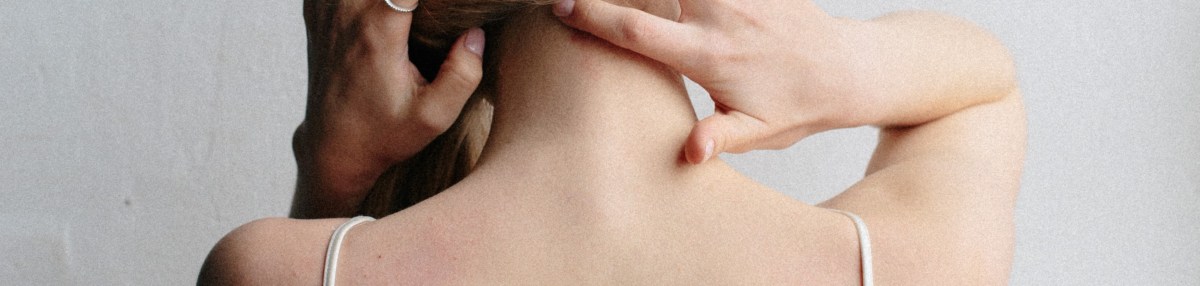
I, like so many people, keep a lot of tension in my neck and shoulders. Some days it feels as though my neck is made of steel, but not in a good way.

The reality is that I don’t even realize how tight those muscles are until I lie down and try to relax.

So I have made a meditation of this for bedtime. Instead of focusing on the sensation of my breath, the focus is on releasing the tension in my neck and upper shoulders.

It may sound like I would not be able to squeeze an entire meditation session out of this, but oh, I can.

Complete release takes focus!

Lying down on my back I inhale, and then with the exhale, I focus on my neck and relax it, releasing the rest of my body along with it. With the following exhale, I do that again. That’s because while I may think that the initial release took care of the tension, there is still tightness there and I really have to work on it mentally to release that.

It’s as though my neck muscles are springs that I can stretch, releasing tension through the exhale, but once I let go (inhale) the “memory” in my muscles tightens them up again.

It helps to imagine my body melting, as if I’m being drawn downward into the Earth.

I can keep going like this, feeling my chin inch slightly towards my chest as the tension releases. Melting into the mattress. The more I release, the more subtle the sensation, yet very satisfying. The more I relax, the more deeply I breathe and everything lets go.

The awareness of what is going on in my body helps so much, but the tension is tenacious. This is not surprising, given how much mental weight my neck and shoulders bear. So it is a dance between releasing and returning to release again. Little by little until I eventually fall asleep.

Making Space Through Breath: A Visualization

I’ve posted previously about the sensations I’ve experienced in the midst of anxiety, as if the stressor is right in my face, raw and unescapable.

Combatting this feeling has been my number one priority, since anxiety overtakes me before I even know it, triggering my fight-or-flight response. Once my sympathetic nervous system gets going, getting it “back in the box” can be difficult, possibly taking days, depending on the intensity of the stressor.

Anxiety can make us feel like we’re trapped and suffocating.

My current strategy is to create protective distance for myself in a very simple way. And it consists of visualizing an expansion of the space around my body.

It goes something like this: Imagine you are inside a deflated balloon. If you are experiencing tighteness in your head or chest, this serves as an effective analogy, particularly if your balloon is constricting you. Without letting your mind be consumed by the tightness, allow yourself to acknowledge the stressor that surrounds you.

Then, taking a deep breath in, exhale through pursed lips and inflate that space around you. Imagine how it feels to expand the balloon and release that clinging sensation. Feel the fresh air moving against your skin as the space around you continues to broaden.

Maybe you begin with the area around your head first, as if creating a bubble around it allows oxygen to flow freely, then move the expansion towards the torso, protecting and releasing the heart, lungs and other vital organs.

Or perhaps begin with the chest if that’s where the constriction feels greatest. Anxiety can squeeze your breath, so focus on mentally removing that weight from your sternum and ribs, visualizing an expansion of the free space around your chest with a deliberate slowing of breath. This takes some work, a back-and-forth between imagining space expanding around you and your breath taking advantage of the room that it has.

Breathe, expand and feel the space!

If your chest is mired too deeply in anxiety, turn your attention to your extremities, starting with the feet and hands, getting a foothold there and allowing the sensation of space to move slowly towards the center of your body.

The idea is to E-X-P-A-N-D the space around you, dispelling the feeling of closeness and suffocation that results in the wild urge to flee. Note that this is not avoidance of the stressful situation. You are acknowledging its existence…and then creating room so that your brain has space and time in which to think, to know that it’s protected from words and sensations and fearful possibilities. To know that it’s safe in the “now”.

Try this the next time you have a quiet moment. As with many of these techniques, it is helpful to practice in times of calm, to feel into what that sensation of space feels like. The more we practice, the clearer and more familiar that sensation becomes, and we can draw upon that feeling during stressful times.

100+ Breaths: Another Back-to-Sleep Option

Another stressful night left me wide awake at 3am again. Not fun when you’ve got a long day of work ahead of you.

I went to my tried-and-true tactic: several guided meditations which usually work to take the place of the worries swirling in my noggin. But this time it wasn’t enough. The voices were soothing but I wasn’t close to falling asleep.

So I came up with a simple impromptu meditation that kinda-sorta breaks the mindfulness “rules”.

So many numbers out there for me to count while I’m not sleeping…

I’ve been taught that one can count the breaths to help deal with the chattering “Monkey Mind”, and this can be done in various ways. For example, count each inhale as one and each exhale as two, repeating with the next inhale as one and exhale as two, and so on, never progressing further.

Or counting each breath cycle up to 10 (or any other preset number) and then start again at one. If your focus is lost at any point, start at one again, working your way back to 10, restarting at one if your mind wanders off again.

These types of counting techniques aren’t meant to get you anywhere. The number you reach doesn’t matter. What matters is that you make the breath counts your point of focus, giving the Monkey Mind something to do and keeping anxious thoughts at bay.

But for this particular 3am waking, I decided to try something else: count breaths without a stopping point. Instead of observing the breath without changing it, as is usually done during other mindfulness meditation practices, I counted during the exhale, consciously extending the breath as I thought the number. And as I focused on my breath, I kept track of the ascending numbers. This required a touch more concentration and yet was simple and boring enough to not excite my mind.

Inhale, exhale, eighty-six…inhale, exhale, eighty-seven…inhale, exhale, eighty-z-z-z-z-z-z-z…

Somewhere in the 70s and 80s the numbers started jumbling in my head and I repeated several, not being sure exactly where I was. By the 90s, my monkey brain was muttering. I remember getting to 100 and going past it, but my memory is foggy. Consciousness faded in the one hundred teens, I think.

As far as back-to-sleep methods go, this was not a quick fix, but I was too awake to try anything else. I counted for a good 20-30 minutes. I manipulated the breath, so as I mentioned, this practice didn’t follow the mindfulness meditation “rules”, although it did offer me meditation practice in lieu of spinning my worry wheels.

But in the wee hours of the morning when nothing else seemed to be working, it got me to where I needed to be: asleep.

~~~~~~~~~~~~~~~~~~~~~

When the going gets tough, I’ve found counting to be one of the most effective last-ditch back-to-sleep methods, for me preferable to getting out of bed and going out to the couch to read or something. If nothing else, I get in some effective meditation practice. Additionally, this was not a night with a totally hyperactive Monkey Mind. My monkey was awake for distractible.

Note that as I was doing this, I lay on my side, bolster between my knees, white noise playing through my earbuds (yes, I’ve taken to sleeping with earbuds in!). I was in “sleep position” and keeping still, so the only “moving parts” were my brain and the expansion and contraction of my chest and belly.

When I Can’t Keep Images Out of My Head

When I first started my mindfulness meditation journey, I was taught to use the breath as the point of focus. It is a reliable anchor, always there to return to when you inevitably drift off into thought. It is a stable grounding force that keeps us present.

But there are times when it’s hard to focus on the breath. Perhaps when the mind is especially busy. At those times, I switch to other bodily sensations, such as tingling in my hands or pressure from contact with the surface that I’m sitting on. I wrote a post about moving between two points of focus to help the mind maintain concentration without wandering off. That helps too.

Some days my monkey mind is particularly loud and attention-seeking.

And sometimes my chattering “monkey mind” calls for a switch to an auditory focal point such as gentle music, singing bowls, nature sounds or even simply street noises. Those will keep me present as long as I don’t fall into the trap of making stories about the sounds.

But some days are extra tough.

I tend to avoid meditating with my eyes open. Doing so only reminds me that I need to clean my desk or vacuum the carpet (“guilt-guilt, blame-blame”). However, I am a very visual person with a vivid imagination, and opening my eyes immediately grounds me if my thoughts get too pervasive when my eyes are closed.

Sometimes a thought will trigger an uncomfortable and anxiety-provoking feeling simply because a seemingly-innocuous scene has been associated with a disturbing event. The scene flashes before my eyes andbefore I know it I’m down a rabbit hole. Monkey mind is activated.

While staying with bodily sensations would be preferable, some days there are too many opportunities for my monkey mind to run away with me. It can get exhausting and counterproductive to “dodge” these visuals. Yes, we are “supposed to” let the thoughts pass by us without getting caught up in them. But there are days when they agitate me too much and throw me off track.

Tree!

So I’m cutting myself some slack and turning the “problem” into the solution. On those difficult days, I focus on an image of my own choosing. Something that I can visualize clearly so that it keeps the monkey occupied while at the same time keeping me away from troubling scenes. You could argue that I’m “avoiding” the thoughts. But I see this differently–I’m giving myself a little break from them.

What works best for me? An image unencumbered by potent associations–this is different for each person. A tree, for example, works for me. It might be a thin white birch tree or as majestic and meaningful as Yggdrasil. The tree itself doesn’t matter as much as that I choose it according to what suits me and what soothes me. I can focus on its rough bark, veiny leaves and thick canopy and the sensations that these things evoke to keep away from creating stories.

And if this results in greater concentration, I have the option of hopping back to the breath. Or not.

This might not seem like an earth-shattering revelation. There are relatively popular mountain and lake meditations, so this concept is not new. But with all the emphasis on feeling into your breath in an effort to calm the thinking mind, sometimes it’s simpler to not worry about the “shoulds” and instead see what your own self needs to help it let go and settle into peace.