Year 8 Mammogram: Can’t Shake This Feeling

(Title image: Photo by 🐣 Luca Iaconelli 🦊 on Unsplash)

A couple of weeks ago, I had my 8-year 3-D mammogram. To be clear, this is eight years following the original diagnostic 2-D mammogram and ultrasound that identified my breast cancer tumor.

This far down the road, the situation seems much less dire. The mammogram takes place shortly after one of my visits to the oncologist, who does a manual breast exam. So if anything should show up on the 3-D mammogram, it would still be quite early stage.

And at this point in my life, my greatest fear is not something showing up on a mammogram, it’s something showing up on another scan elsewhere in my body, because that would mean metastasis.

I’m busy, busy, busy. Too busy to worry, right? RIGHT?
(Photo by Dan Freeman on Unsplash)

But that was not the case this year. I was preoccupied with other concerns including a car purchase, the upcoming practicum for my yoga4cancer training and an NIH grant renewal for the lab I work in. The main thing that I was thinking of regarding the mammogram was how badly my ribs might hurt as I was pulled closer into the scanner and smushed up against the machine.

And also, how sleep deprived my husband and I would be since we had an early morning appointment. Following which I needed to get to the office, while catching a webinar on the way. Lots of stuff to juggle.

So that’s the mindset with which I arrived at the imaging center. And that’s what was going through my head as I made small-talk with the friendly technician and went through the scanning process.

But then she left the room to bring the scans to the attending radiologist’s attention. Note: at our imagining center, if you are a cancer survivor, the radiologist reads your scans while you’re in the imaging room so that you don’t have to wait for results via phone call, through an online notification or—even worse—via the mail. You get them then and there.

Before the tech left she offered me use of the bathroom. I didn’t need it, but I realized that while waiting for the results I needed to keep my mind busy. Off to the bathroom I went, feeling into my feet as I walked like a good little mindful girl.

My big burning ball of cancer experience has quite a long memory tail!
(Photo by Jacob Dyer on Unsplash)

So again, it’s been eight years. I’ve had quite a few mammograms and other scans in that time. I’ve gotten a lot better about dealing with them and I certainly don’t experience severe “scanxiety” with mammograms.

But when I was done with the bathroom and sat back down in the imagining room with the monolithic mammography machine quietly staring back at me, I wanted to be done with it. I wanted to be dressing and leaving and on my way to the next thing.

Again, it’s been eight years, but I had to grab my phone and distract myself with work emails so that I wouldn’t think about anything else.

EIGHT YEARS, people! Cancer is like a fiery comet with a long tail that is visible for years after the thing itself passes.

~~~~~~~~~~~~~~~~~~~~

Oh! I got a clean bill of health. Good to go for another year!

Revisiting Radiation Tattoos

(Title image: Photo by FlyD on Unsplash)

I came across a story from November 2024 about actress Nicole Eggert (“Baywatch”, “Charles in Charge”) discussing her breast cancer diagnosis.

While I admit that I hadn’t watched any of her acting projects, I could completely relate to her reaction to preparing for radiation therapy.

The article focuses on an Instagram post that she made after leaving a doctor’s appointment during which she received her radiation tattoos, expressing surprise at the fact that they were, in fact, actual tattoos.

As the article continues, “She then started to cry as she realized just how permanent the tattoo would be. ‘And it’s minor, it’s nothing but dots, but boy, every step of this process is never gonna let you forget it, there’s just always going to be a constant reminder.’

This really resonated with me because I had a similar reaction to getting my own radiation tattoos. I had never had an interest in getting any kind of tattoo myself. But now, with cancer, nothing was under my control anymore. It felt like my body was not my own.

Nope, never wanted a tattoo. But had to get four anyway (minus the pretty flowers).
(Photo by Lucas Lenzi on Unsplash)

And I remember being told that now I was going to get tattooed, just like that. No fanfare or anything. I don’t remember being told in advance, although I would not be surprised if I had and it simply hadn’t registered. I felt helpless a lot of the time and I had hoped that after chemo I could get a sense of self-ownership back. But the tattoos were a big “NOPE” to that!

I agree with Nicole, it’s the permanence of these things and even the long-term nature of some of the side effects of cancer treatment that add to the emotional impact of the disease.

I don’t know much about Nicole’s tattoos, but because I am pale with lots of moles already, my tattoos were blue to distinguish them from everything else on my skin. So while they were just small dots, to me they were very visible when I looked in the mirror.

My post about the experience (“I Didn’t Expect THAT: Radiation Tattoos“) talks a bit more about this. Now, almost 8 years later, I’ve made peace with the blue dots in the same way that I’ve tried to accept my scars and aches and whatever else has hung around since treatment.

Made peace, yes. But like the tattoos, although their sharpness fades, the memory remains.

“It’s Not a Toomah”: My Aura Theory

(Title image: Photo by Daniele Levis Pelusi on Unsplash)

I’ve written in my blog that I was experiencing strange visual disturbances, most likely visual migraine auras. Note: I’ve never experienced migraine pain.

This is particularly worrisome for me as a survivor of triple-positive breast cancer, as there is a greater chance of that type of cancer metastasizing to the brain. Presumably, a growing tumor could restrict blood flow to areas of the brain that could result in me seeing strange things.

This was of great concern to my ophthalmologist. However, there was no pain associated with the auras, and pain would have been expected (but not necessarily required) if the auras were caused by a tumor.

There were other confounding variables, too. Since the summer of 2024, shortly before my father’s death, I had noticed that I was doing a lot of involuntary “sighing”. I’d experienced this type of sighing before, but this time it kept going for months, sometimes occurring a number of times an hour.

Naturally I googled it, and Dr. Google pointed out that excessive sighing was potentially associated with undiagnosed anxiety and depression. When I finally started writing out all my stressors, it because obvious to me that I had been far more deeply affected by what was going on in my life than I imagined.

So, after my appointments on Nov 22, I took time to grieve my father’s death, which I hadn’t done up to then. I thought I had accepted his passing and moved on, but clearly I hadn’t. I sought hugs and solace from family members and expressed what I was feeling.

My last aura was on Nov 29th. After that, along with allowing space for grief, I expanded my time in meditation, added up to an hour of breathwork a day and even included a daily cup of ceremonial-grade cacao (for the theobromine).

Mindfulness took a front seat. I paused at various points of the day to simply take deep breaths. I paid attention to what my body was doing and what thoughts were running through my mind. I made a concerted effort to show compassion to myself, more than I had in a long time.

The auras did not come back. As of this writing, it has been 45 days since the last aura. I had been having them once a week, and at their worst, a couple a week and even two on one evening.

I am well aware of the power of the mind. My educational background is in graduate-level psychology and I myself have experienced psychosomatic pain before. But honestly, I never expected to have such a striking response to anxiety/depression/grief.

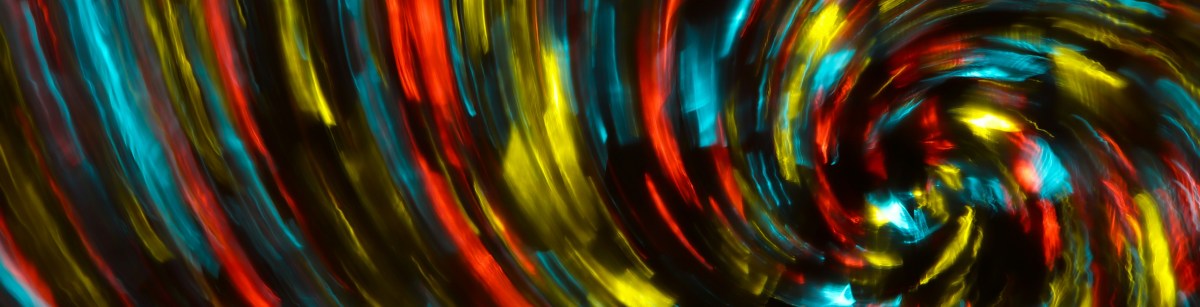
I have searched for a good visual representation of an aura and it’s hard to find one that actually reflects what I was experiencing. It was something like this:

This is not exactly what it looks like for me, as some of my auras have been “thicker” and more “stained glass-like” in color, looking more zigzagged (as if the entire half-circle is made up of triangular pieces of vividly bright LED-like colors). Also, mine were gone within about 20 minutes.

That’s not an insignificant reaction to something that is going on in my head. My brain created those auras. That is amazing.

I should mention, I never had an MRI so technically a tumor cannot be ruled out. And neither can some other cause that I have not considered. However, the fact that my auras stopped after I put concerted effort into exploring my anxiety, acknowledging depression and recognizing that I was not okay with the pressures I was under suggests that it’s probably not a tumor.

Lucy in the Sky with Diamonds: And Now…My Eyes?

(Title image: Photo by Adam Gonzales on Unsplash)

So one of the hardest things for me about having cancer was losing a sense of security. Suddenly my body was out to get me, without my knowledge, while I was basking in a false sense of security that everything was okay.

Dealing with uncertainty is tough. It made me painfully aware of my own mortality before I was ready for it. It was as if cancer became my midlife crisis.

But it wasn’t just that I had to deal with not having guarantees about my own health (I mean, do we ever really have that?), about cancer not bothering me again. It also brought uncertainty about whether strange feelings in my body meant something.

I got to a point where I was afraid of anything, real or imagined, that I felt in my body. And after doing that for a while and completely exhausting myself, I called it quits and stopped running to the doctor for every little thing.

But now…I’m wondering if I’m kidding myself?

About a week ago, I had a weird thing happen. I was shopping at a market with my daughter. We were almost done when I noticed a funny change in my vision.

This wasn’t what I saw, but the colors were just as bright and vibrant.
(Photo by Randy Bayne on Unsplash)

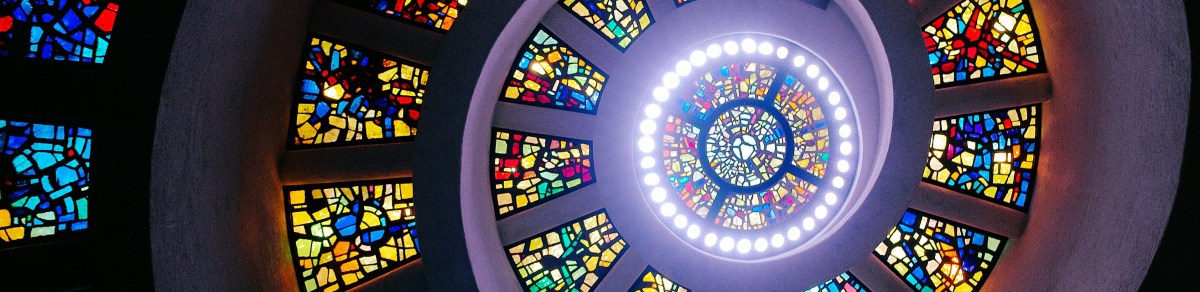
I started seeing rings, the best way I can describe them is as if they were stained glass rings of vibrant colors, like an OLED screen, kind of like what you might see in a beautiful kaleidoscope. They were noticible, but didn’t take over all of my visual field. And YES, they were freaky. The entire show lasted about 20 minutes and primarily affected my left eye.

Then they faded away.

At that point, I recalled that I had experienced something similar, but without the vibrant colors, a few months ago. Again, I had been at a store and noticed a funny change in my vision, zigzagged lines.

That time it also didn’t last very long. Neither one of these episodes was associated with headaches.

Now we have a situation.

My oncologist always asks about visual disturbances, like seeing things that aren’t there, shadows, headaches, severe loss of balance. As a triple positive breast cancer survivor, I know this is because of possible metastases to the brain.

But instead of calling him last week to tell him what happened, I paused. I had done some research on the internet about these types of phenomena, and it’s quite possible that I’m experiencing ocular (acephalgic) migraines…again, without the headache. I’ll have to see if those rings/zigzags happen again, but at this point, with the amount of upheaval that I’ve experienced over the past few months (including the death of a parent)…and the fact that both times these visual oddities happened in stores with bright overhead lighting, well, let’s just say “brain tumor” doesn’t strike me as the most likely cause.

Yes, yes, yes, I will reach out to my oncologist this week. Probably, maybe. And if I do, I will ask to wait before being required to take another ride in the MRI tube. I’ve learned that at times like this, it is best to take a breath, stay present and wait for more information before proceeding.

“Ask Me Anything”: Streaming on Twitch

(Title image: Photo by Clay Banks on Unsplash)

Well, I tried a thing…

In honor of Breast Cancer Awareness Month, I decided to try an “Ask Me Anything” stream on a streaming platform called Twitch.

Twitch is primarily a game streaming platform although there are also art streams, animal streams, science streams and a variety of other worthwhile (and some not-so-worthwhile) streams.

I’ve streamed video games there before—because after cancer, playing horror games in virtual reality is not as scary—so I was familiar with the workings. Additionally, with progressively more younger women getting diagnosed with breast cancer, I felt that it was appropriate to reach out to a younger community.

I wanted to give people a chance to ask questions about the breast cancer experience that they might not feel comfortable asking someone they know who has the disease. This was based on my own experience decades ago; a fellow student was diagnosed, and suddenly I wasn’t sure how to talk to her. I didn’t want to say the “wrong” thing, afraid that I might upset her or otherwise “remind” her about her cancer, as if she had forgotten.

All this was, of course, ridiculous, because she herself was very open about the disease and talked about it to us freely. She’d let us know how it was going, sometimes came to class wearing only a hat on her bald head, never showing any indication that speaking about cancer made her uncomfortable.

The issue wasn’t my friend, it was me, and I honestly didn’t give her as much support as I could have. I probably looked like I was pulling away but the reality was that I just didn’t know how to speak to her for fear of hurting her.

I’m here to answer all those questions that people don’t feel comfortable asking…but want to know the answer to.
(Photo by 愚木混株 cdd20 on Unsplash)

There were questions that I could have engaged her with like, “how sick do you get from chemotherapy”, “what does your treatment plan look like”, “what type of breast cancer do you have”, “what are you looking forward to most when you’re done?”

Additionally, I wondered about things like, “what is the survival rate for your cancer”, that I would have never asked her for fear of really being inappropriate. But I was still curious (keep in mind, this was prior to widespread usage of the World Wide Web/Internet, so I couldn’t google the info).

All of those questions are the ones that I wanted to be available to answer on my stream. If you’ve been reading my blog posts, you probably know a lot about my own situation. I’m not shy about sharing.

But a person with a co-worker who was recently diagnosed, like my younger self, might not want to ask them.

So, I gave the Q&A session a try…to a whopping zero viewers. And that was okay because I wasn’t sure how it would go. I talked almost non-stop about what my breast cancer experience was like. It was cathartic to be sure and I was surprised that I was able to speak for as long as I did. Eventually, my throat started to hurt (water? I’m supposed to drink water?) and I called it a day.

It was also a touch out of my comfort zone. I feel like I need to do something useful with my life and I’m running out of time. This stream is one way to shake myself up at the age of 58 and get used to taking risks again. Ouch.

Just for kicks, I’ll be posting the unedited video that I created from the Q&A session although I admit, it took a bit for me to get going so it’s very stream-of-consciousness. I’m still in the process of uploading it, but will post it once that’s all done.

I’m tentatively planning to do this again next Saturday morning at ~9am PDT, assuming my voice recovers by then. If you’re interested it taking a look, you will be able to access the stream here: https://www.twitch.tv/franticshanti.

The Pink Tsunami is Coming

(Title image: Photo by Pawel Czerwinski on Unsplash)

It’s that time of the year again.

I won’t lie, I have mixed feelings about the color pink these days, along with October’s “breast cancer awareness” paraphernalia popping up in stores, in promotions and all over social media. Some of us don’t need the reminder that breasts get cancer.

Breast cancer is probably the most popularized cancer there is, and I’m willing to bet that’s in part because there is a giddiness associated with yelling “SAVE THE BOOBIES” and not getting into trouble for it. It is also the most funded cancer (McIntosh et al., 2023, Lancet, for example) but to be fair, also one of the most common.

So you would think that by now I would be very accepting of all the pink ribbons on yogurt and fizzy drinks and whatnot. But amidst the rah-rah, October also brings with it the memories of feeling very alone with my disease. Once the chemo and radiation were done, I found myself wading through a new phase of life that I wasn’t prepared for.

This is a reminder to myself that it is a privilege to be here griping about October being so pink!
(Photo by Angiola Harry on Unsplash)

I thought I was “done”. And so did everyone else. But dealing with continued Herceptin infusions along with an uncertain future of endocrine therapy frustrated me because I felt I still had an excuse to feel crappy, but no one else thought I did.

And even with that frustration, I have a lot to be grateful for.

All the pink stuff and smiling faces have been so important in bringing so much generous funding to breast cancer research, which has resulted in great strides being made. There are other cancers that are painfully underfunded (for instance, pancreatic cancer, which also has high mortality rates), and I would be lying if I said that I didn’t feel some guilt about that. I cannot gripe about all the pink too much, because I am the beneficiary of all the money that has poured in.

Specifically, my triple-positive breast cancer was actually considered quite aggressive, but research resulted in new pharmaceuticals that have de-fanged that type of breast cancer and resulted in high survival rates. Even my oncologist remarked that he couldn’t remember the last time a HER2-positive patient of his suffered a recurrence, and he’s in his 70s. That says a lot.

So it seems disingenuous of me to lament all the screaming pink at the store. It seems equally disingenuous of me to wonder how much cancer took away from me that I would still have right now. Because one thing it didn’t take away was my life, and not everyone is that fortunate. Remembering that puts everything into perspective.

Aging Muscle: After Cancer Treatment and Menopause [PHOTOS]

(Title image: Photo by Samuel Girven on Unsplash)

This is a reality check to demonstrate how, even with the greatest of intentions and planning, coupled with a serious love of exercise, you can’t turn back time.

And that’s okay.

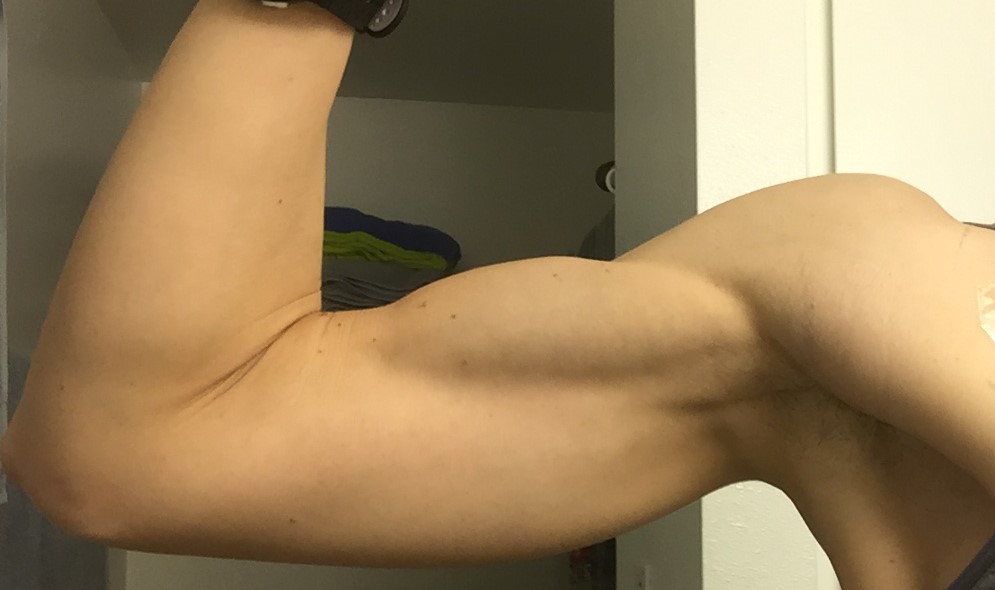
But first, the comparison. Taken from this previous post, here’s a photo right before I started chemotherapy for triple-positive breast cancer, April 27, 2017:

April 27, 2017: I was exercising with a vengeance

After finishing chemo, radiation and Herceptin, AND after two years of estrogen-lowering Tamoxifen and a year into Letrozole, I’d lost some muscle even though I was lifting as heavy as I could.

This photo is from December 11, 2020:

December 11, 2020: Still exercising with a vengeance, but…

While I was still working out hard, endocrine therapy and menopause took their toll on my progress. Interestingly, estrogen is not simply a “feminizing” hormone; in women, it also helps preserve both muscle and bone mass. Menopause puts the breaks on estrogen production.

This becomes worrying as we age because less estrogen means weaker muscles which can lead to a greater risk of falls and chance of bone fractures. Endocrine therapy, which is designed to decrease the estrogen in the body in order to lessen the recurrence risk of hormone-sensitive breast cancer, adds to the problem.

And more than seven years after the top photo, this was taken today before posting, September 23, 2024:

September 23, 2024: New phone, different lighting (sorry!), more wrinkles, same moles. I’m working hard just to keep what I have, but loss is inevitable.

I’m still lifting but the entire landscape of my workout routines has changed. I have to give myself more recovery time between strength training sessions. I am much more susceptible to injuries—seriously, I can tweak something by turning or stretching out in a weird way. I have neuropathy in my feet which makes getting up on my toes (such as in plank or doing lunges) painful.

We recently had an intense heat wave: for a week the temperature inside our apartment didn’t fall below 80F degrees, and during the day it climbed as high as 95F degrees (again, INSIDE our apartment). I managed to work out through a chunk of that week, but the heat eventually got to me. And recovering from that took almost another week.

So, the spirit is willing but the flesh is barely managing at times.

However, there is an upside to being 58 years old with a lifetime of fitness experience. I still love working out. Even tough training sessions are manageable because they feel like an awesome accomplishment, and I feel bouyed afterwards.

Even on the days that I don’t do a formal workout, I make sure that I’m moving as much as I can. Fitness is an integral part of my life, even though it looks different now than it did seven years ago. In the post that I reference earlier, at the very bottom I wrote about how yoga was becoming a larger part of my life.

And that’s continued. Through my yoga teacher training in 2022 and upcoming yoga4cancer advanced training starting in January 2025, this direction feels so right for me.

While I don’t plan to give up my gym sessions anytime soon, yoga has given me a path to physical and mental fitness as I age. I am gradually moving into a more meditative approach to exercise that is less about intensity and more about staying healthy by integrating mind and body.

Elle Macpherson’s Cancer Story and the Missing Tumor Info

(Title image: Photo by Pierre Bamin on Unsplash)

Following on the heels of my Elle Macpherson post last week, I wanted to fill in some missing info…

To back up, former supermodel Elle Macpherson revealed that she took the holistic route when deciding to treat her breast cancer in 2017. However, most of the news stories that reported and offered opinions on her choices left out some critical information, as noted by this article in The Guardian (“Crucial information missing in Elle Macpherson breast cancer story, experts warn“). In this case, that information makes a big difference.

While it seems that Elle’s cancer was HER2-receptor positive, which suggests a more aggressive cancer, it was considered “non-invasive”, meaning it was contained within the mammary ducts. Often, this is referred to DCIS, or Ductal Carcinoma In Situ, and at this point those of us with personal knowledge of the disease will knowingly go, “OOooooooh.”

This is basically a “precancerous” mass of cells and often the treatments are more conservative. It’s considered stage 0. Yes, it becomes more dangerous if you do nothing, but clearly Elle did something: she had it removed.

DCIS is a stage 0 cancer, which doesn’t necessitate the most aggressive treatment.
(Photo by Bernard Hermant on Unsplash)

Beyond that, there are other conventional treatments offered, depending on how aggressively you want to go. This introduces the issue of potential overtreatment, which is gaining more attention among physicians and the public. It’s easy to throw the kitchen sink at anything that looks like cancer, but that increases the chances that patients unnecessarily experience damaging side effects. Not everyone needs to be smacked that hard with treatment.

So, given that Elle’s cancer was DCIS, her holistic treatment starts looking less extreme. In perspective, for stage 0, a radical mastectomy topped off with chemotherapy and other treatments leans towards overkill with minimal benefits, potentially affecting quality of life. So this is less about the types of Elle’s holistic treatments and much more about her cancer not requiring the same level of aggressive action as stage 1+ tumors.

However, very few of the news stories mentioned this. As a matter of fact, my own blog post last week might have confused the issue—I was writing without having all the facts. This underscores the importance of learning as much about your cancer as you can and understanding that your version of the disease may be very different from that of a friend with cancer.

In light of this, the pile-on regarding Elle’s treatment seems unfair…but only as it regards her personal situation. Because all the opinion pieces that came out against her choices, including my post, did so for a critical reason: that Elle’s story (“follow your heart”) may turn a cancer patient away from much-needed and beneficial treatment that can prolong their lives.

Get the facts, talk to your team, understand what you’re up against and what your risks are—yes, meditate, pray, exercise, change your diet. But don’t try to wish your cancer away.

~~~~~~~~~~~~~~~~~~~~

To clarify, Elle did indeed decline even less radical treatments such as endocrine therapy, so one could argue that she’s still taking a risk. We don’t have a crystal ball to determine whether this was the wisest choice, Elle believed it was the right choice for her.

The Dangers of Elle Macpherson’s Cancer Treatment Choices

(Title image: Photo by Naser Tamimi on Unsplash)

Supermodel Elle Macpherson recently made the news with an interview with the Australian Women’s Weekly magazine when she revealed her breast cancer diagnosis.

She was diagnosed in 2017 (as I was!), so the fact that she’s here and talking about it suggests that her treatment worked.

But what was her treatment? According to the article, following diagnosis Elle consulted with 32 doctors (and experts, although it’s unclear in what) and ultimately decided to follow a holistic treatment path. In her own words, “an intuitive, heart-led, holistic approach”.

She decided to forego a mastectomy in favor of a lumpectomy (as I also did) but also dispensed with the conventional chemotherapy, radiation and hormone therapy (I went the conventional route).

So let me clarify some things here: Elle had the lump removed. If the cancer had not spread (which presumably it hadn’t) AND no rogue cancer cells had gotten out AND the surgeon confirmed “clear margins” upon excision of the tumor, it’s certainly possible that all evidence of the cancer was removed from Elle’s body with that surgery.

As we survivors know, everyone’s cancer is different. That’s why we discourage comparing tumors or offering advice. What works for one person may not for another because so much depends on the state of the individual…and probably on a lot of other factors that we are not even aware of, even with present day advances in cancer treatment.

Elle has even stated that her treatment is not for everyone. Who knows, she might have said this for legal reasons…because you can see what’s going to happen. While Elle, as a former supermodel, businesswoman, etc., might have access to whatever specialists and level of care she desires, most of us will not.

Do you feel lucky? Rejecting conventional cancer treatments in favor of clinically unproven ones can be a big gamble.
(Photo by Chris Liverani on Unsplash)

Elle asserted: “I want to help and encourage others to follow their heart and give things a go.” Sadly, when it comes to something as slippery as cancer, following our hearts is not always the best choice of action, no matter how much we want it to be.

My concern is that a newly-diagnosed breast cancer patient, fearful of the admittedly-harsh treatments that modern medicine offers, might decide to take Elle’s path (“she did it so I can too!”). But unless this person is independently wealthy or otherwise connected, they will have to cobble together a questionable plan with minimal support, and possibly fall prey to unscrupulous players looking to make a buck out of someone’s desperation.

And in these days of growing suspicion of science and the advice of doctors—brought on by pandemic-related missteps or perceived draconian measures—the chance of patients rejecting well-worn treatments is even more likely. Statistically, this would result in more lives lost to the disease.

When I made my own treatment choices, I didn’t go with the harshest stuff that my oncologist offered, opting for very effective (and, yes, cardiotoxic) Herceptin immunotherapy instead of lobbying my insurance to cover the even-more-effective (but even more toxic) Perjeta for my HER2+ cancer. I also had to cut my hormone therapy short by a number of years due to how it affected my ability to exercise, which has also been shown to have a strong effect on preventing cancer recurrence. These were measured choices, as it’s clear that Elle’s were.

At the same time, in the back of my mind I know I can’t say I did everything I could to blast my cancer into submission. But I do feel that taking everything into consideration, I did enough. My oncologist agrees.

As far as Elle’s treatment is concerned…I also did a number of things that she did, including meditation, exercise, therapy (our cancer center was very supportive of complementary therapies) and more. I cannot say how much conventional treatments vs. complementary ones contributed to my remission, but I assume each played a role. And the combination gave me peace of mind, which I would not have had, had I chosen only alternative therapies.

Ultimately, I hope we get to the point where we can eliminate the most toxic treatments and heal ourselves more gently. Ideally, we’d even prevent cancer. Huge strides have been made in cancer treatment, but we are not there yet. Every time we decline a proven treatment, we roll the dice. I’m hoping that Elle’s story does not unnecessarily put people with fewer resources at risk.

I Saw My Oncologist…and Left Ridiculously Happy

(Title image: Photo by Nick Fewings on Unsplash)

Yep, this is another installment of “I had another oncologist appointment today”. This time I’m marking seven years since completing my chemo treatment, which I can assure you at the time was a very happy event…

…marred only by that little nail infection a few weeks later. But don’t go there unless you have a strong stomach.

Regardless, I had a great meeting with my oncologist. The concern now is about whether I’m experiencing anything cancer-related, either long-term side effects or—perish the thought—a recurrence. Today the answer was neither.

We talked about the recent death of my father…and that’s pretty much the way the appointment went–catching up on the last six months. Naturally, I forgot to tell him about a bunch of the other concerns I had, little weird things in my body. But really, they’re not unusual given what I’ve gone through.

If there’s one thing I’ve learned, it’s that I need to slow down when interpreting body sensations as health problems. Usually they’re not. (Even though once they were cancer.)
(Photo by LOGAN WEAVER | @LGNWVR on Unsplash)

We did, however, discuss how it takes a little while to get used to all those sensations in your body. After cancer, I was on high alert. My medical team was asking detailed questions about what I was feeling, and as a result, I was laser-focused on every twitch and twinge…and maybe some that I just imagined. At one point, I was sent for a brain MRI because of what I feared were serious cognitive issues. But in reality it was anxiety, not a tumor.

Seven years out, however, you kinda get expect all those funny sensations and don’t interpret them as being dangerous anymore. Even the heart palpitations that I would get from time to time…yeah, I still get those, maybe once a week, maybe a couple of times a month. But they only last a handful of seconds and I no longer think that my heart is failing (especially not when I can turn around and do a HIIT workout). I haven’t been back to the cardiologist and my oncologist agrees that it’s not necessary.

He asked if I wanted to come back in six months. Sure, I like being back in the Cancer Center as *NOT* a cancer patient. It’s nice being there and remembering doing jigsaw puzzles in the radiation oncology waiting room, or even feeling well-taken-care of after my treatments were done. There ARE positive memories in a place that you’d think would only be negative.

That can change very quickly, of course. But for the time being, I’m feeling happy.