Four Minutes of Hovering

Last week I had a 3-D mammogram. This scan marks a bit over five years since the diagnostic test that indicated I had a solid tumor on the outside of my left breast.

Heading into this appointment, I wasn’t particularly worried. Yes, I admit to having little heartbeat skips over “lumps” in my breast that aren’t really lumps: if you recall, I had felt something before my last oncologist visit; my doctor reassured me it was nothing.

I will never again hear the word “lump” and NOT think of cancer.

And because last August I’d had a chest MRI, a more sensitive scan than even a 3-D mammogram, it was HIGHLY unlikely that there was anything to be found in this mammogram.

But still, after the pictures were taken and the mammography technician left the room to consult with the radiologist, I got that all-too-familiar uneasy feeling.

WHY? I knew that the radiologist wouldn’t find anything. The technician practically said that out loud, since she was aware of my recent MRI.

But still.

I sat alone in the mammography room, breathing, looking at the clock on the wall and simply hovering. My attention was like a butterfly looking for a place to alight. I wasn’t holding my breath…but mentally, I had put the rest of my life on hold when the tech stepped out the door.

It took all of four minutes and the mammographer returned and gave me two thumbs up.

For four minutes, I had no plans for anything outside of the room I was in.

I breathed a sigh even though I had expected the good news. And while I wasn’t “freaking out” waiting for the response, it became apparent to me that I might always feel uneasy during that period of uncertainty.

I didn’t want that. I wanted to be completely unaffected, as if I had never had a bad experience and my heart was calm.

But hovering it was, because there are no guarantees. And as the gears of my life started turning once again, I remembered that there was no going back. All the negatives that have happened have happened and I can’t change that.

Eventually, years from now, my emotions may soften, but in the meantime, I’m just going to have to be okay with hovering for a few minutes.

And Suddenly, Another Freakout

Last week, I had a Pap smear. If you’re not familiar with what that is, you must be either male or blissfully young. In brief, it’s a test for cervical cancer, customarily done every 3-5 years.

I knew my results would come this week, along with other lab results. I was in a work meeting today when I noticed my phone was vibrating. It was my doctor’s office…and I was too late to answer the call.

Me: It’s probably nothing.
Also me: OMG I NEED TO CALL NOW!

The doctor’s office didn’t leave a message.

And that’s when I officially tuned out the meeting. A flood of possibilities came rushing in. My boss needed to talk to me but I was trying to suppress the growing urge to call the doctor’s office immediately.

The urge won. I called and left a message and went back to work, but my head was elsewhere.

The fact that there had been no message was extremely unsettling, because it made sense that if there were really bad news, the office would want to speak with me directly instead of leaving a voicemail.

And my reaction shouldn’t come as a surprise, because having been hit with a cancer diagnosis before, I’ve become hypervigilant. Like it or not, my brain wants to prepare for the worst so that I don’t have that horrible fall from thinking that everything’s just peachy to slamming into a nightmare.

It doesn’t help that I’ve read sooo many stories of women talking about being completely blindsighted by frightening diagnoses, and all of them saying that they thought nothing of the missed call from the doctor since they knew they were perfectly healthy, blah blah blah.

Gotta be prepared, ya know?

Of course, I know better than this. And at least I was aware of the hypervigilance, aware of my body’s reactions and aware that I was blowing things out of proportion. But it’s that uncertainty that is so difficult to take. Even though I know my response, I know why it happens and I know that chances are everything is ok…I want that certainty.

As it turned out, the call had come from the nurse assistant to let me know that my blood work results had come in. This was a relief, although I admit I considered it a defeat that I couldn’t be mindful and breathe through it all.

Then again, as a cancer survivor, I need to cut myself some slack. Getting slammed with a devastating diagnosis once leads to understandable echoes, no matter what test results I’m waiting for.

For now, I’m calm. Of course, my actual Pap smear results aren’t in yet. Those should come tomorrow or the next day. The nurse assistant told me that they’ll probably be normal (OMG, how can anyone say that????) and they’ll be loaded onto the patient portal…unless they’re not normal. And then they won’t be.

Guess whose heart will be fluttering for the next few days?

Not mine, because I’ve got it together.

Kind of…

~~~~~~~~~~~~~~~~~~~~~~~

To be fair, I didn’t totally freak out over this. But scanxiety over test results is getting a little old, honestly…

What If It Isn’t?

“Supposing a tree fell down, Pooh, when we were underneath it?”
“Supposing it didn’t,” said Pooh after careful thought.
Piglet was comforted by this.

A. A. Milne

So, I felt a “lump” under my left nipple, what I refer to as my cancer-side. It wasn’t the same kind of lump that I remember from cancer but when I thought of how I’d describe it (mass, thickening, etc.) I came up with cancer-sounding descriptive words.

This “lump” was also way bigger than my tumor had been.

I think I feel “something” and –BAM!– my mind takes me to worst-case-scenario land.

Now you might think that I would reason with myself. I’d had an MRI in the late summer that showed nothing. A real lump that big would have shown up.

Again, it wasn’t a lump, it was a “lump”. But in the back of my mind, a film starting playing…

I was writing letters to my friends on how much I had appreciated their friendship. Practicing how to tell my kids that I wouldn’t be around to see them graduate from college. Posting my final thoughts here.

It sounds sooo melodramatic but my brain is like a motor boat left unattended with the engine running. And it’s just heading away on its own on a course that no one plotted.

Why do I “go there”?

There is a part of the brain called the Default Mode Network (DMN), which is the area that is more active when you’re at rest and otherwise not focusing on anything. There is a nice “plain-English” explanation here (from an accompanying article to meditation teacher Jon Kabat-Zinn’s Mindfulness course on Masterclass.com). It describes the role of the DMN in “self-reflection…social evaluations…memories…envisioning the future”. And it also notes that problems within the DMN can predipose people to a variety of cognitive issues, including anxiety.

Start my motor, cut me loose…and off I go.

This would explain a lot about my personal default mode.

The article goes on to describe how meditation can “keep the mind from wandering into stressful territory, like reliving traumatic events from the past or anxieties about the future.”

Well, it’s good that I’m meditating, then. But I’ve already put a lot of practice into panicking. I’m an expert hand-wringer. I have a lifetime of experience helped along by a series of anxiety-provoking events. Meditation is chipping away at my hypervigilance, but it’s a slow process.

The main thing that has changed, however, is that now I’m more aware when the motorboat putters away. It used to blindsight me and before I knew it, I was hit by a tidal wave of anxious sensations (tightening, gripping, nausea…). I didn’t realize that this habit of automatic thoughts was driving my anxiety.

Now, when I start down the road of “what if it is…”, I can stop and ask, “what if it isn’t”?

And that comforts me.

When I Can’t Keep Images Out of My Head

When I first started my mindfulness meditation journey, I was taught to use the breath as the point of focus. It is a reliable anchor, always there to return to when you inevitably drift off into thought. It is a stable grounding force that keeps us present.

But there are times when it’s hard to focus on the breath. Perhaps when the mind is especially busy. At those times, I switch to other bodily sensations, such as tingling in my hands or pressure from contact with the surface that I’m sitting on. I wrote a post about moving between two points of focus to help the mind maintain concentration without wandering off. That helps too.

Some days my monkey mind is particularly loud and attention-seeking.

And sometimes my chattering “monkey mind” calls for a switch to an auditory focal point such as gentle music, singing bowls, nature sounds or even simply street noises. Those will keep me present as long as I don’t fall into the trap of making stories about the sounds.

But some days are extra tough.

I tend to avoid meditating with my eyes open. Doing so only reminds me that I need to clean my desk or vacuum the carpet (“guilt-guilt, blame-blame”). However, I am a very visual person with a vivid imagination, and opening my eyes immediately grounds me if my thoughts get too pervasive when my eyes are closed.

Sometimes a thought will trigger an uncomfortable and anxiety-provoking feeling simply because a seemingly-innocuous scene has been associated with a disturbing event. The scene flashes before my eyes andbefore I know it I’m down a rabbit hole. Monkey mind is activated.

While staying with bodily sensations would be preferable, some days there are too many opportunities for my monkey mind to run away with me. It can get exhausting and counterproductive to “dodge” these visuals. Yes, we are “supposed to” let the thoughts pass by us without getting caught up in them. But there are days when they agitate me too much and throw me off track.

Tree!

So I’m cutting myself some slack and turning the “problem” into the solution. On those difficult days, I focus on an image of my own choosing. Something that I can visualize clearly so that it keeps the monkey occupied while at the same time keeping me away from troubling scenes. You could argue that I’m “avoiding” the thoughts. But I see this differently–I’m giving myself a little break from them.

What works best for me? An image unencumbered by potent associations–this is different for each person. A tree, for example, works for me. It might be a thin white birch tree or as majestic and meaningful as Yggdrasil. The tree itself doesn’t matter as much as that I choose it according to what suits me and what soothes me. I can focus on its rough bark, veiny leaves and thick canopy and the sensations that these things evoke to keep away from creating stories.

And if this results in greater concentration, I have the option of hopping back to the breath. Or not.

This might not seem like an earth-shattering revelation. There are relatively popular mountain and lake meditations, so this concept is not new. But with all the emphasis on feeling into your breath in an effort to calm the thinking mind, sometimes it’s simpler to not worry about the “shoulds” and instead see what your own self needs to help it let go and settle into peace.

Nothing to Fear but Fear…Sort of

About five years ago around this time of the year, I had an uneasy feeling.

So, let me back up. The previous August 2016 I had felt a small lump in my left breast. It wasn’t all that different from another lump that I had gone to see my Nurse Practitioner about in late June 2016, and she had put my fears to rest.

Still, she noted that I hadn’t had a mammogram since 2013, so she wrote me an order for one so that I could keep on track with my screenings.

But I dragged my feet on the mammogram. And when the August lump appeared, I decided to wait until it disappeared–you know, like they always did–before setting up the appointment. Because going into a screening knowing that I had a lump seemed terrifying.

You can’t hide from your fears, but that didn’t stop me from trying.

It didn’t disappear. I kept feeling it, pressing it to see how squishy it was, did it move about, was it getting bigger. And all the time, wondering how long it would last. It was hanging around longer than I expected.

But I still waited because I was afraid. I didn’t want to go to the mammogram and have the technician look concerned. Maybe she’d call the doctor in and the doctor would look concerned. Maybe they’d suggest more tests.

I *knew* it was nothing because it had to be nothing, but I didn’t want to risk having the medical professionals think it was something because that would be terrifying to me when I really knew that it was nothing. I didn’t want to experience that fear needlessly. I was afraid of being afraid.

So I waited until around this time of the year in 2017, when, after talking with my mom, we both agreed that getting the lump checked out would relieve my building anxiety. I imagined a pleasant conversation with the Nurse Practitioner as she would say, “Don’t worry, it’s nothing.”

Except that’s not what my NP said. Her expression went from friendly-smiley to concern, and she told me that I needed to get that mammogram done as soon as possible. All that fear that I’d tried to avoid by not getting the screening suddenly hit me at once. As the NP left the examination room, she admonished me to not put the mammogram off.

The order that I got read, “Mammography and Diagnostic Screening”. The left breast on the picture on the sheet was circled. I think. To be honest, I don’t remember much more than that. To an outsider, I was just going to have a suspicious lump checked out. But inside me, there was a tornado of anxiety whipping around unchecked.

I know I know I know…but at that time, the fear of what might be overpowered common sense. So I waited.

I had waited six months simply to avoid fear. I was so afraid of the fear that I was willing to risk my life–even though I hadn’t see it that way. The overwhelming need to not experience fear trumped everything else because it was so horrible that I couldn’t seen past it. Nothing else mattered.

Believe it or not, I didn’t realize that I had been suffering from severe anxiety for a number of years. It was always bubbling right by the surface, occasionally boiling over, but never sufficiently dealt with. It had built up throughout my life through an unfortunate series of events and I had become worse and worse at shaking it, but the two years prior to my diagnosis brought some of the longest bouts of chronic anxiety and feelings of worthlessness.

And all that fear that I had, that reason for not getting the lump checked out, that fear that almost cost me my life? Cancer was what forced me to face it. The most feared disease that I could have imagined ironically put me on the path to finally dealing with one of the most crippling issues of my adult life.

No, I’m not going to say that I’m thankful for cancer. Because that would be ridiculous. But I can now step back and see the worth of fearful experiences and understand that sometimes it’s the horrible things that push you into the most meaningful personal growth.

Making Mondays Bearable

As 2022 approaches and we face the prospect of having another twelve months speed by us again, I’ve found it useful to sit down and take stock of where I was last January, what changed over the past year, and with what attitude I will enter into the next 12 months.

One thing that has caused a great deal of anxiety for me has been work, even with having one of the greatest bosses in the world and a flexible work situation.

My work situation is quite positive, but anxiety has left me with emotional claustrophobia.

Why? Because my job has also been associated with some of the most wrenching anxiety that I have ever experienced, including being diagnosed with cancer.

What’s resulted is that even in a supportive and stimulating environment (although not my passion, admittedly), I’ve felt trapped, like an animal trying to scratch my way out of my cage.

This past year, I came up with a tactic to at least partially relieve this feeling.

Now, I actually look forward to Mondays, because I’ve set up a beautiful association for the first day of the workweek with something very indulgent.

First, I work from home on Monday. This softens the dread that I’ve historically felt on Sunday nights, knowing that the weekend is over. The transition to the office is gentler.

Second, with some changes in my kids’ school schedules (one in college living at home and the other in high school), I start my workday an hour later. This has given the entire family reprieve from the stress of waking very early and starting the week sleep-deprived.

It also gives me to time to enjoy a cup or two of decaf in the morning.

Third, when the rest of the family leaves for school and work, I have 45 minutes before my own workday starts. I set up my rower for a 30-minute row, facing the tv/computer monitor in the living room…

Great exercise + fun videos = an amazing start to Monday!

…and put on a half-hour YouTube video of something I really enjoy that I might not have time to watch otherwise. For me now? It’s an episode of “BuzzFeed Unsolved–Supernatural”. Pure 100% indulgent entertainment.

Because it’s a timed row, when the 30 minutes are over, I stop. No pressure to hit a certain speed or distance. No matter what, it ends up being a decent workout because I enjoy the exercise.

That leaves 15 minutes before I start work. Chemo left me with short hair that allows for a five-minute shower.

By the time my workday begins, I am completely refreshed and the day’s workout is done. I feel like I’ve been given a huge treat–almost like I’m cheating, but I know I’m not. That 30 minutes of physical activity tied with watching a fun video re-sets my attitude and I’m ready to take on the week.

I love Mondays!

~~~~~~~~~~~~~~~~~

Can you create your own positive association with the toughest day of the week or anything else that causes you grief?

Losing My Voice and Finding Calm

About a week ago, I lost my voice. This doesn’t happen often (some in my family might say it doesn’t happen often enough) as I tend not to get demonstrably sick beyond a runny nose.

Oh yeah, and cancer, but that’s beside the point.

Quiet is contagious.

I was coordinating a lectureship that was to take place on a Monday and Tuesday (luckly, I was not the speaker, just the one making arrangements), and on the previous Friday evening my voice disappeared. I could only manage a whisper as the event approached.

And I noticed something funny. As my voice became quieter, so did the voices of my family members. When one of us is not speaking loudly, others don’t have to either. Everyone is heard. Like magic!

As we all lowered the volume, I found myself less anxious about work. As I became quieter, it felt as though the world slowed down a bit too. Things felt a bit calmer.

This made me wonder how much I was adding to needless noise clutter at home…and how much I was responsible for driving the hectic state.

Sometimes we need to be reminded that we have more control over our mental state than we may realize.

It also reminded me that even when things felt “out of control”, that was just an illusion. They were most definitely within my control. I could turn down the rush of anxiety. I just had to remain aware of what was happening and that I had a choice in the matter.

Now, none of this is a miraculous revelation. I’ve known this since before I started meditating. But knowing something is not the same as putting it into practice. And sometimes to put it into practice, you have to realize that even though you “knew” it, you didn’t truly believe that you could do it.

I need that reminder now and then. That’s the gift mindfulness has given me. And even then, I still might need a nudge.

And the lectureship? It came and went, a little hiccup here and there, but under the circumstances everything worked out well. No voice required. And more importantly, no anxiety required.

~~~~~~~~~~~~~~~~~~~~~~~~~~~~~

I’m not going to pretend that it’s easy to switch off anxiety. If I knew how to do that I would be living a carefree and very wealthy life. But just being aware that we have a crumb more control than we thought we did…brings us one step closer to a little more peace in our lives.

Working Out to Avoid Freaking Out

It’s hard to imagine a cancer diagnosis that doesn’t provoke some level of anxiety.

When I was told that I had breast cancer, it didn’t take long before I got a prescription for Xanax because my anxiety was going through the roof — I clearly couldn’t handle everything I was feeling. It wasn’t until my radiation oncologist suggested that I try meditation that my view of the best way to handle my anxious feelings changed, and eventually I dropped the Xanax altogether.

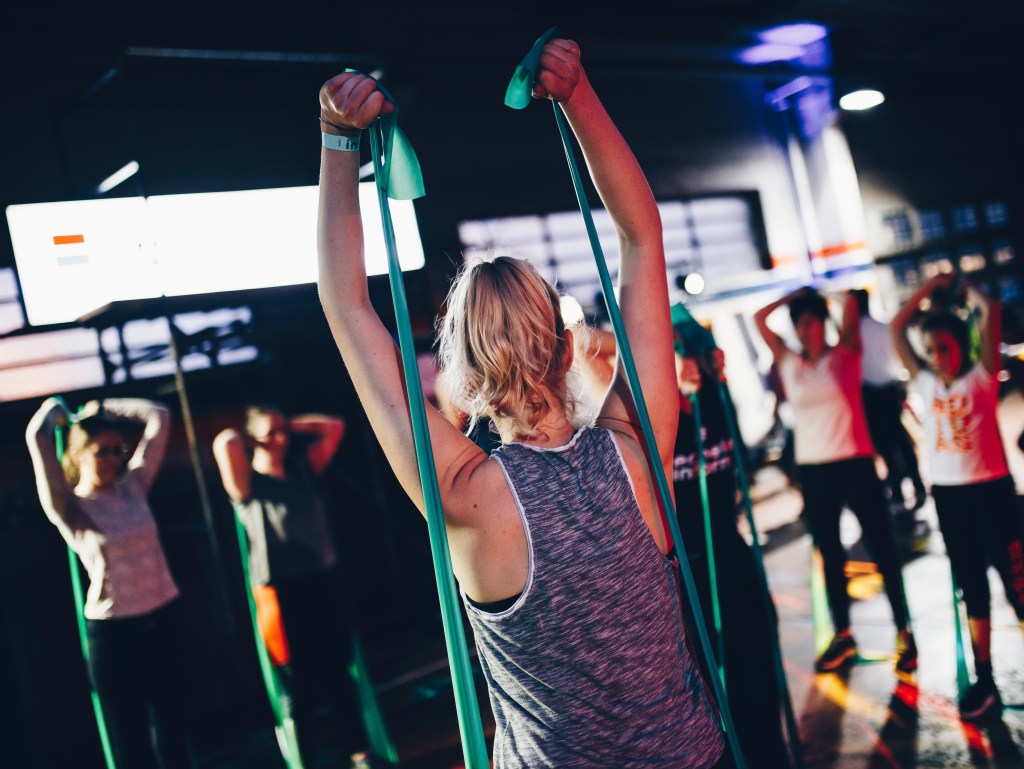
But one thing that I kept on doing was exercising, at least as much as I could manage on a given day. So after reading a recent study about exercise, I had to wonder how much worse my experience might have been if I hadn’t kept to my workouts.

Henriksson et al. (2022, Journal of Affective Disorders; see link below) found that engaging in moderate or strenuous exercise was very effective in relieving the symptoms of anxiety. What I found so interesting was that half of the study participants had actually lived with anxiety for at least a decade, and they still got relief!

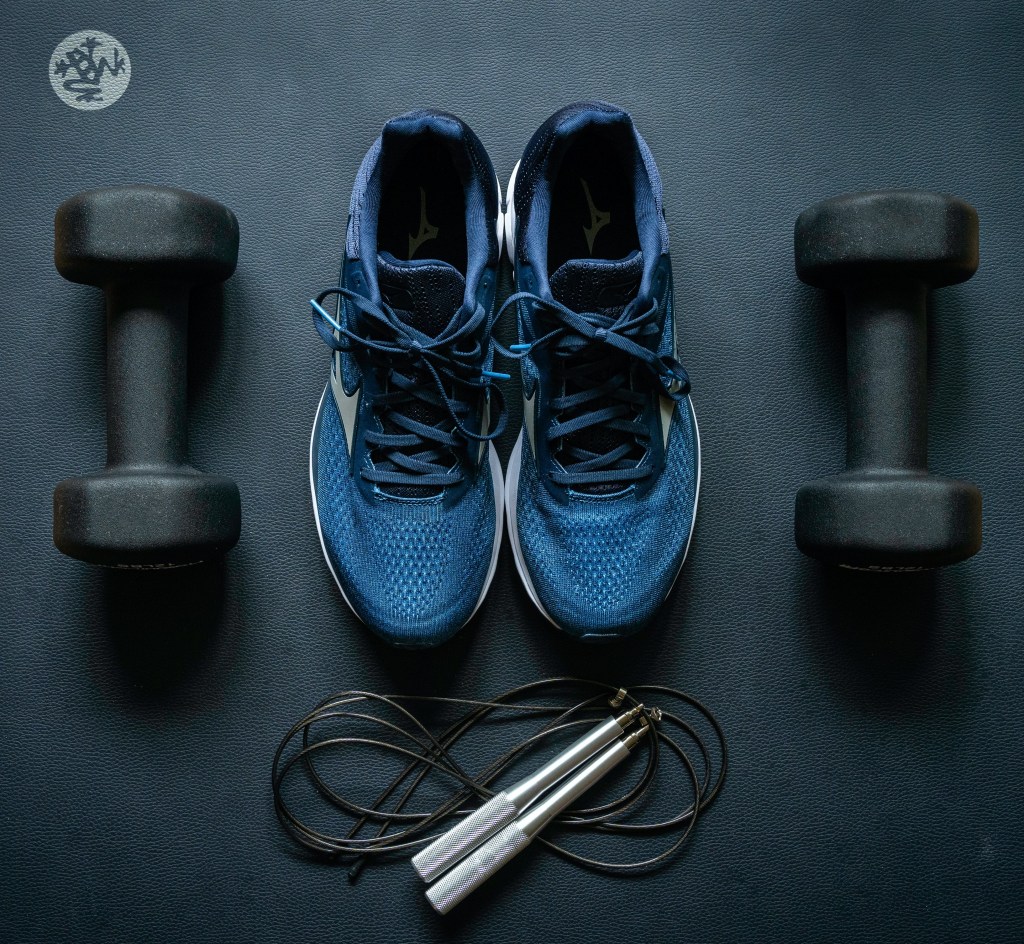
The subjects in the exercise groups did a combination of both strength and cardio training.

The subjects in the experimental groups were assigned to one of two groups: low-to-moderate intensity group exercise or high intensity group exercise. The exercise was timed circuit training that combined both cardiovascular and strength moves and subjects maintained heartrates at levels appropriate for their assigned intensity levels. At the end of the 12-week program, everyone’s anxiety had significantly decreased, as compared to a control group that was not participating in group exercise.

What is striking is that there was a tendency for the improvement to follow the level of intensity; the harder the subjects exercised, the more anxiety relief they experienced. Talk about motivation!

My own experience echoes this, but in a subtractive sense. At times of intense stress, my anxiety skyrockets when I’m prevented from engaging in my regular workouts. This may happen, for example, when I’m dealing with an unreasonable workload that ties me to my desk and preempts my exercise sessions.

I used to wonder why I felt so much worse when I was getting more work done. This study answers that question for me.

Couple these results with what we’ve learned about the beneficial effects of exercise in decreasing the risk of recurrence of breast cancer and it is incredible why physicians don’t write exercise prescriptions for their patients, and why personal trainer sessions are not covered by health insurance.

~~~~~~~~~~~~~~~~~~~~~~~~

There are several things that I feel are important to underscore here if you’re interested in trying this out yourself.

The social aspect of the exercise sessions may have also played a role in alleviating the anxiety that the study participants had initially complained of, and there was the added benefit of a pre-planned, supervised program.

First, this was a group session. That means that there was also social support involved as no one was exercising alone. The subjects were supervised by a physiotherapist; they didn’t have to come up with their own program, as it had been created for them.

Also, the exercise included both cardio and strength exercises and included warm-up, cool-down and stretching, so it covered all the bases, so to speak. And the subjects got fitter as the study progressed, so there was also a sense of self-efficacy at work here.

Does this mean that the exercise didn’t matter? Not at all! The emotional benefits of exercise have been documented in previous studies. If you consider the mind-body as a single system, as your physical fitness improves, your mental health will generally follow.

If you’d like to see the original article, it is available free online:
Malin Henriksson, Alexander Wall, Jenny Nyberg, Martin Adiels, Karin Lundin, Ylva Bergh, Robert Eggertsen, Louise Danielsson, H. Georg Kuhn, Maria Westerlund, N. David Åberg, Margda Waern, Maria Åberg. Effects of exercise on symptoms of anxiety in primary care patients: A randomized controlled trialJournal of Affective Disorders, 2022; 297: 26 DOI: 10.1016/j.jad.2021.10.006

For a reader-friendly version, see the write-up in Science Daily:
University of Gothenburg. “Anxiety effectively treated with exercise.” ScienceDaily. ScienceDaily, 9 November 2021. www.sciencedaily.com/releases/2021/11/211109095348.htm

The Voice of Reason: Why I Love Guided Meditations

If you’ve read my posts, you’re aware that I really like guided meditations. There are a number of mindfulness apps that I use everyday, and if it’s not a meditation, it may just be ambient noise that I have in the background that helps keep me grounded.

The fact is that guided meditations have been a game-changer for me. During those times when I am trying to fall back to sleep and shake off anxiousness, having someone else’s voice in my head makes a huge difference.

When I’m groggy, I’m vulnerable. My thoughts can run away with me and take me to places that will keep me awake.

What do I mean by that? I’ve found that I’m a very visual person and for better or worse, I have a vivid imagination (this seems to be the case for many anxious people). During the day, it’s much easier for me to ground myself with the techniques that I often write about here — and it’s even better if I can find a quiet corner to do so. But nighttime is different. Sometimes I wake up stressed and clearing my head of all the noise feels like a Sisyphean task.

When I am groggy, I am vulnerable. But I certainly don’t want to do anything to make me more alert since my goal is to fall back to sleep, not to practice improving my concentration. That is the perfect time allow someone else to guide me in meditation.

The guidance does this: it allows me to focus on someone else’s voice. That’s enough. I do not want to have to exert effort beyond that required to listen.

The exact topic of the meditation is far less important than the delivery. A gentle voice at a low volume draws my attention just enough that it keeps my anxious “Monkey Mind” occupied and quiet.

The Monkey Mind running loose is a good way to visualize what your thoughts might be doing inside your head, swinging from branch to branch, chattering, jumping and constantly changing directions. It can be a jumbled mess in there. The meditation helps sort it out.

I have tried this on a number of occasions and have been very impressed with how effective a guided meditation is in dulling the clarity of what my mind has cooked up and clings to. It provides space between my worries and my self. And then I drift off to sleep.

As I mentioned, the meditation doesn’t have to be anything specific. While body scans work particularly well, any calming meditation will do as long as its purpose is to relax the listener. Breathing cues can also be highly effective, as can novel ambient noise that pulls you away from your worries.

No need to overthink it. Just indulge in a lulling guided practice and get some rest.

Breathing into Limbs: A Grounding Visualization

I’m perpetually on the lookout for different ways to ground myself.

When things get tough and I feel my anxiety rising, I’ve gotten better at pausing and pulling a grounding technique out of my “mental tool bag” before the feelings become too intense.

One that I came up with recently works quiet well, especially if you can take a quick break and find a quiet corner.

As I breathe, I visualize my breath inflating my limbs, filling them with relaxation.

The idea behind this one is that you take a few deep breaths to help slow your breathing down, and then start imagining that your breath is going down into one arm, inflating it.

I’ve visualized it in two ways. The first being breathing into the arm as if it were a balloon that inflates in all directions, all the way down to the fingertips, until it’s completely full. I imagine it glowing from within.

The second entails imagining the breath filling the arm in the way that a fern leaf unfolds. The expansion starts at the shoulder, then upper arm, elbow, lower arm, wrist, hand and finally fingers. As the arm fills with the inhalation, it brightens. This visualization is best when your breathing has already slowed considerably, as it may take a longer breath for your entire limb to sense the serial expansion down to your fingertips.

If my breathing has slowed enough, I imagine the breath entering my limb gradually, just like a fern leaf gently unfurls, part by part.

Either way, I wiggle my fingers at the end of the in-breath, and then as I exhale, the fingers fall still again and the breath exits my arm as it arrived.

Then I do the same with my other arm, followed by one leg and then the other.

On days that I’m really rushed, I might only have time for one limb, particularly if I’m sitting at my desk at work. But that’s okay. Even that short bit is better than letting stress run away with me. That little pause may be exactly what I need.

If this “extremity inflation” sounds too complicated in the heat of the moment, I urge you to try it when you’re lying in bed with your eyes closed. Then you can focus on the sensation of expansion and get familiar with it, so that when you need to call upon it in a stressful situation, you’ll have an easier time bringing up that imagery.

My limbs glow as the breath brings brightness into them.

What I particularly like about this visualization is that it’s a touch more complex, and therefore requires more attention from you. The inhalation all the way to the wiggling fingers makes it more difficult to be thinking about other things. So while it may demand more, I feel that it also delivers more, since everything else decreases to a dull roar in the background as you visualize the air rush in and inflate your body.

And of course, there are different variations of this that you can play with, such as expanding your entire body.

If you are able to practice with this, or even duck out to the bathroom for a few moments of eyes-closed peace, I think you’ll find it a lovely way to give your nervous system a needed break.