Surviving Another Ride in the Tube

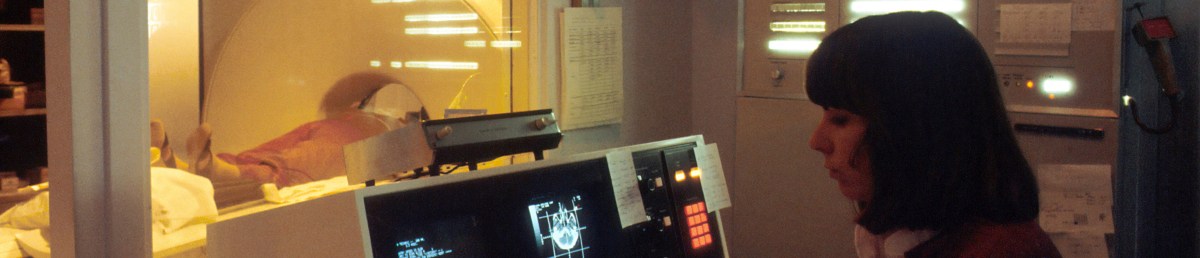
During my last oncologist appointment, I was told it was time for a chest MRI.

The last time I had one of those, I was barely holding it together–it had been a couple of weeks since my breast cancer diagnosis an dI was in an emotionally fragile state.

But that was four and a half years ago. This time, I was fine. I thought.

In case you’re never experienced one, the bilateral chest MRI is not particularly comfy. You lie face-down, your breasts hang between two open slots beneath you and your arms are outstretched in a “superman” pose.

I was a bit taller than they expected…things didn’t completely fit.

And you hold that for a specified length of time. I seem to recall almost an hour last time in 2017, but this time it was only a half hour. Which is good, since I had a hard time getting comfortable–based on how the MRI bed was set up, they hadn’t expected me to be quite so tall.

And since I needed “contrast” in my MRI, I was hooked up to an IV for infusing gadolinium. But the veins on my right arm (which is the only one I’m supposed to use) have seen a lot of wear and tear. Yes, they bulge and look nice and juicy. But it’s a lie. Only after some false starts–the first vein the nurse tried was a bust–did we get the IV going.

The MRI machine looked shiny and competently high-tech. I got to listen to spa music through headphones, which is kind of funny, since it’s like being at a spa where they also bang pots and jackhammer while you’re getting your treatment. In case you’re not aware: MRIs are LOUD.

Ironically, there’s something quite positive about that: the percussive nature of the noise has an almost lulling effect–if you let it. This worked quite well with my strategy of meditating throughout the procedure. Breathing was not particularly comfortable because of pressure on my ribcage (again, due to my height and positioning on the bed), so I chose not to focus on it.

The dressing room was cute, but I couldn’t help feeling so alone in it.

Instead, there were many other bodily sensations that I could pay attention to. At times, I could “feel” the MRI in my hips and spine. I focused on the weight of my body on that bed and on releasing tension whereever I sensed it. Compared to the previous chest MRI, I felt a sense of grounding.

But there were little cracks in my composure. I took a picture of the cute little dressing room where I changed and left my clothing. It was lightly decorated with homey touches. At the same time, it looked so empty: my gown on one chair, my belongings on another. Briefly, I felt small and alone.

After unsuccessful attempts, the IV was connected, and I remembered the feeling of expecting that things were just gonna hurt.

After I got home I removed my bandages from the IV arm and looked at the crook of my elbow, and it reminded me of all the pokes that I’ve endured. All the discomfort that I learned to expect and not question if it was necessary, because it always was. And I fought back feelings of helplessness.

It’s not all bad. This time, I had a better grip on things. I wasn’t even thinking about the MRI the next morning when I went grocery shopping, until…

…I saw a call come through from my oncologist’s office. And suddenly my heart started racing. It was a pure knee-jerk reaction. The voice on the other end told me that the MRI looked normal and my oncologist would see me at my next scheduled appointment next year.

It took a bit for my heart to calm down. I hadn’t been worrying about the results, certainly hadn’t expected anything bad, but wow, when that phone rang, it was as if my brain yelled at me, “Time to PANIC!”

This ride in the tube had a happy ending. But there’s no mistaking all the anxiety bubbling under the surface. Try as I might, I am always going to associate these procedures with fear and possible death. Memories of what happened a few years ago are not going anywhere.

And that’s okay. Because even though my reactions to those memories may still be stressful, I can accept that this will be the case and not expect them to be otherwise. And that acceptance is one of the most valuable skills that I’ve learned.

I Still Don’t Recognize “Myself”

You know how you have a picture of yourself in your mind’s eye? The way you imagine you look?

For four years, that self didn’t mesh with reality.

I still saw the long-haired fitness freak who’d never had a surgery in her life and definitely no serious illness. The one who was remarkably healthy at 50…the one whose co-worker assumed was age 35.

This is a perfect illustration of how I felt post-diagnosis.

That reality changed in an instant. The unbelievable happened, the unexplicable knocked me off my feet. There was no transition time. I went from super-healthy and super-fit to being diagnosed with one of the most dangerous diseases in our experience.

As the saying goes, “If you don’t have your health, you don’t have anything.” My health was everything to me, and suddenly I felt as though I had nothing.

And in the cruelty that is cancer treatment, off went the hair. Now there was no mistaking that I was “sick”. So when I bumped into friends who hadn’t heard about my diagnosis and tried to explain what had happened, they all said the same thing: “I know.”

Every time I walked past a mirror, I would get a shock. And this went on. Through the months of chemo, through radiation, waiting for regrowth that seemed to take forever.

My oncologist told me to be patient, the hair would come back. It was different for everyone. But I was still scared. And acceptance was a new concept that I was not comfortable with.

Yes, I felt I bounced back the year after chemo – working out hard, with the most awesome new-growth hair that random people would stop and compliment. That year, I felt strong and full of promise. I dared to say that cancer MIGHT have been the best thing to happen to me…

But as time went on, reality moved in again and I realized that there really was no going back. And that “lift” that I had gotten after my hair started growing back and I was hitting the gym hard, well, I crashed again.

Picking up the pieces has been a process…

Endocrine therapy pushed me through menopause. My hair thinned. And most devastatingly, I lost two friends who had been diagnosed with breast cancer around the same time that I had been.

I couldn’t celebrate that. And I fought it for months and months.

Four years later, I’m comfortable with calling myself a cancer survivor. But you know what? I still get a little jolt when I walk past the mirror. It’s still not the “me” that I expect to see. After several years of endocrine therapy, I do not look like I used to. My body doesn’t feel like it used to.

So I stopped beating myself up about it. I need more rest time between workouts. I get tired earlier in the evening. Yeah, I forget things. A lot. So I write more notes and declare my intentions out loud (“I’m going to have to take the next exit…”) so I remember what I’m doing.

I still don’t recognize “myself” in the mirror, but that is a previous “self” who was the right “self” for that time. The current “self” is wiser and more gentle with her body and her spirit.

And I do recognize her.

Just Show Up

The thing about cancer is that the news hits you hard at once.

And it’s not like you get time to get used to it, because the diagnosis is LOADED. All those scary things that you’ve ever associated with the “big C” rush at you and there’s no real way to protect yourself.

It would be terrifying for anyone, but those of us currently in mid-life grew up at a time when cancer treatment was not as refined or targeted as it is now: visions abound of hospital beds, bald heads, bodies wasting away, vomiting, hopelessness. Most cancers were frequently fatal and diagnosis was the beginning of the end.

Everyone’s pushing you to fight, fight, fight. It sounds like the right thing to say, but it can feel exhausting.

As we’re trying to process what this all means for us, for our future and for our families, others try to prop us up with cheers of, “Be a badass!” “Stay strong!” “You’ll beat this!” “You’re a fighter!”

So between juggling the cancer news and the “hang tough” messages from those around us, everything gets overwhelming. Our oncologist lays out a treatment plan and suddenly we need to learn a different language. Tumor types, chemo drugs, clinical terms, side effects.

I distinctly remember wanting to hide under my bed and wait for it to go away. There was so much I needed to do and I didn’t know how to get through it all. It seemed like an immense amount of work for one person.

And then it hit me. All I needed to do was show up.

I put the gloves away and realized I didn’t need to fight anything. I needed self-compassion.

I didn’t need to be the warrior that everyone was pushing me to be. The mere fact that I was going to my appointments on my scheduled day was enough. I wasn’t going to win a prize for being the best “infusee” or for absorbing the most radiation the fastest.

I didn’t have to fight. All I needed to do was endure and allow. To accept what was going on and move through it. And to breathe.

~~~~~~~~~~~~~~~~~~~~~~~~~~~~~~

I brought my office work with me to my first infusion. I was going to be there for at least 5 hours so I figured I should use the time “wisely”. I fired up my laptop but soon the Benadryl that I was given to prevent adverse reactions kicked in and brought on drowsiness.

Suffice it to say I might have answered an email here or there, but did little else. The same thing happened during the next infusion, and the one after that. Eventually I realized that the wisest way I could spend my time was by giving myself permission to rest and ride out the treatments.

When infusion day rolled around, I learned to put aside my work duties and family responsibilities, and simply be. It was such an uncomplicated concept, the benefits of which rippled out beyond my treatment. Why did it take cancer to teach me that?

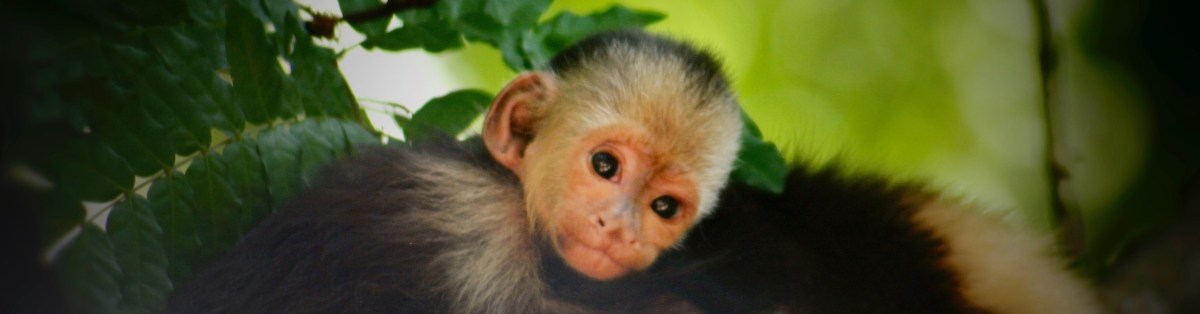
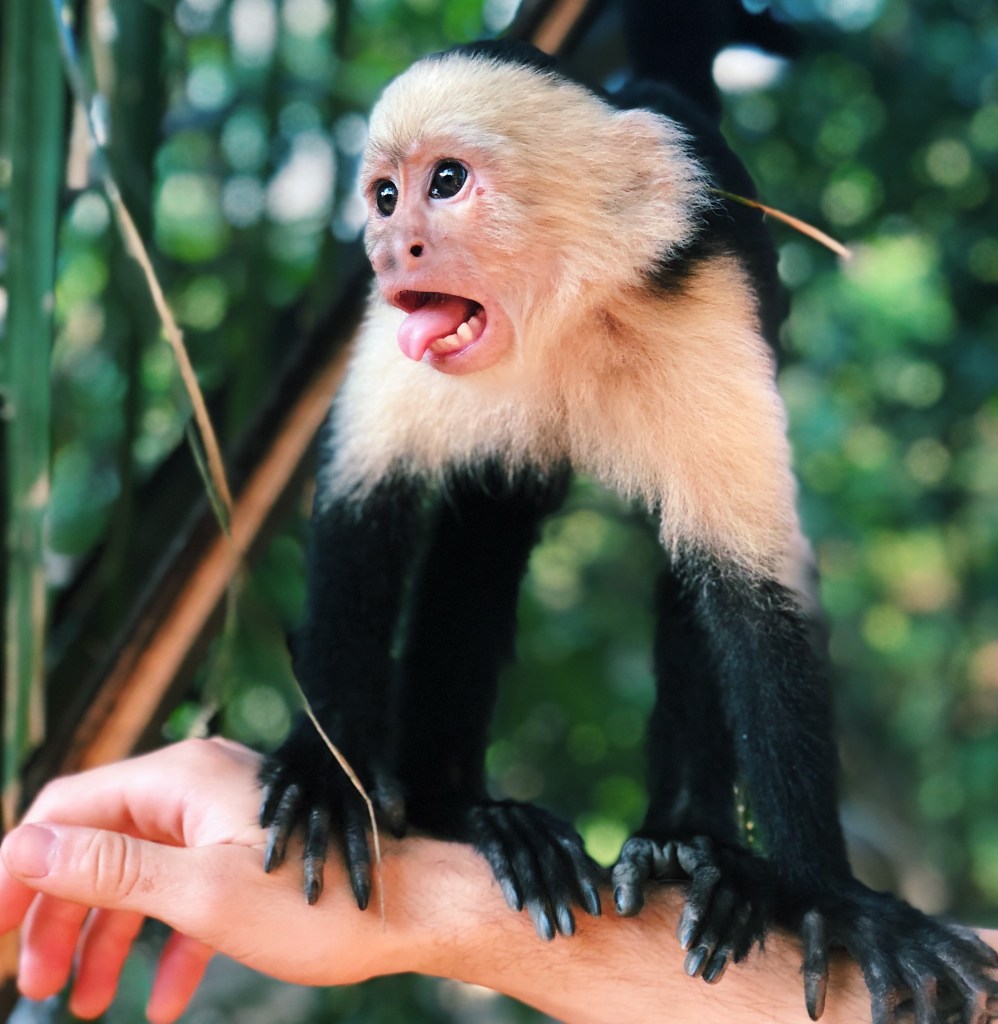
What My MonkeyMind Needs, Part 1

This post was inspired by Smilecalm’s beautiful combination of words and pictures. He has a very insightful monkey!

I got thinking about my MonkeyMind. Most of the time it’s doing a lot of chattering, distracting me from the present and keeping me up at night. I meditate in an effort to shut it up, but that’s a struggle.

We have had a tumultuous relationship, MonkeyMind and I.

I’ve tried to wrestle it into submission, but WOW does it put up a fight! We stand at odds, I in one corner and my MonkeyMind in the other, dukes up, gritting our teeth.

Headaches result. This is tiring. Something needs to change.

After numerous fruitless boxing matches, I decide to try something else, something I hadn’t thought of before. I invite MonkeyMind into my home. While I had, in the past, taken it by the scruff of the neck and attempted to toss it outside–an exercise in futility–now I’m opening the door…

We stare at each other. MonkeyMind looks a lot smaller sitting on the rug by the front door than when it’s screaming in my ear at 3am. Gentler and less menacing. Even a little scared, unsure of what’s going to happen.

MonkeyMind doesn’t look so scary there on the ground by itself. You mean, this is the little guy who’s been giving me so much grief?

I pat it on the head. Its fur is silky soft! I expected a rough, bristly coat, but it’s nothing like that. I can’t resist, I pick MonkeyMind up and then, as I look down at its anxious little face, I’m struck by an overwhelming urge to hug the little bugger, so I do.

And then something new happens: MonkeyMind burbles contentedly. I’ve never heard that before!

Then again I’ve never held MonkeyMind before. I’ve never given it the attention it required to make its needs known, never been sincerely patient with it, never cuddled it. I’ve just tried to push it away.

This is so much nicer.

Now when I wake in the middle of the night and notice MonkeyMind chattering in my ear, I take it in my arms and rub its tiny feet. I stroke its little back and feel the softness of its fur against my face. We take a deep breath together.

I feel grounded and present. MonkeyMind settles down. We both go back to sleep.

(Read Part 2 of this story here.)

Making Peace with Street Noise

Is it possible to re-imagine annoying city noises?

At the least, living in an urban area with a high level of noise pollution is annoying. At worst, being subjected to car alarms and emergency vehicle sirens at any time of the day and night is very jarring and stressful. And I’m speaking from personal experience here, as following our last move, we ended up with a bedroom overlooking a very busy Southern California street.

The stretch of road outside our apartment unit is one of those that give cars enough distance between traffic lights to really accelerate as they blast by. It also leads to one of the major hospitals in the area (hello, ambulance traffic), and this being a big city with big city issues, there’s no shortage of opportunities for the police to be called out, sirens blaring.

There are many days that I wish I weren’t where I am. But wishing doesn’t change anything.

Drawing on mindfulness helps, however, and this is how:

Re-interpreting noise as different sound elements turns an “idiot street racer” into a thunder-like rumble. Much less annoying.

Much of the stress I experience from these various car noises is due in part because I know what they mean. I know that the sounds are the constant stream of cars going down the street or a high-pitched siren wail. But what if I were to accept that I’m living in a noisy city and to define the street noises as simply various sounds?

What if I were to break down the sounds into their characteristics? Would it be easier to handle the noise if I stopped judging and explored each sound as if I were hearing it for the first time?

This is far more doable than one might imagine. Yes, alarms and loud tail pipes are decidedly unpleasant, but they don’t punctuate my soundscape nearly as frequently as do the regular cars driving by. The cars speed through with whooshes of different pitches depending on the vehicle and how quickly it passes.

Sounds of passing cars transform into soothing waves – with the occasional jarring reminder that things are not entirely pleasant.

These sounds rise up and pass away like waves on the ocean – in fact, that whoosh can be soothing, just like the sounds of the ocean can lull you to sleep. Even noisier cars and motorcycles take on a rumbling quality, like thunder. Allowing oneself to re-interpret these sounds, to let go of annoyance, makes even the more jarring noises easier to handle.

When you can’t run away from the noise, make space for it, invite it in and accept that this is what’s happening now. Inevitably, it will pass, to be replaced by another noise and another opportunity to re-imagine it.

Letting Go, Painfully

I try to avoid “stream-of-consciousness”posts, but occasionally I’ll let one through. This one stings a bit…

I am tired. Physical fatigue is easy for me; getting emotionally wrung out is exhausting.

Events that have taken place over the past several years have demanded a release of expectations, a relinquishing of normality, how I think life “should” be.

Cancer was the big one. I used to wake in the morning, hoping that my diagnosis had been a bad dream. That I could laugh and shake my head, thinking, “Phew! Glad THAT wasn’t real!” And then go about my day, forgetting the fear and immersing myself in blissfully boring everyday life.

But that’s not what happened. I would wake in the pre-dawn hours after sleep had left me to the darkness, coldness spreading through my belly as I remembered that I had cancer. And in the midst of the fear of dying was that wrenching feeling of having to let go of wanting things to be different. Still desperately holding on when it was too late to do so.

Attachment leads to suffering. I know this, but I cling nonetheless, stubbornly refusing to accept change.

I was given a bit of news several days ago, too disorienting for me to even define in this post. Like cancer, it caught me off guard, and I cling to wanting things to be different. To be “normal” and uninteresting. I’m compelled by my need to fix it, make it comfortable and easy to accept.

I need to get.a.grip…

Yet another thing I wish I could control. But I can only paw at it from the outside.

Now I’m engaging in emotional calisthenics, to try to find a notch on this slick surface that I can stick my finger into and get some sort of grip.

I wish this wasn’t the case. I’m disappointed that I feel the way I do. I tell myself, I should be more tolerant of what happens. But it’s the hope that things will stay the same that makes change so difficult.

I twist my thoughts into origami, trying to find a comfortable shape. It takes a lot of massaging to smooth out the edges and make this morsel easier to swallow. Every time I mull it over, it cuts me again.

At some point it is no longer the matter itself that causes pain. It’s all the emotion layered on top of it.

So I’m tired. Letting go, yes, but so slowly. You’d think that it would get easier with practice but even the process hurts.

Of course, holding on hurts more.

Do Small Things with Great Love

Not all of us can do great things. But we can do small things with great love.

Attributed to Mother Theresa

I have disappointed myself.

Thirty years ago, I would have assumed that by now I would be doing great things, making a big difference in the lives of many beings.

I would have been well advanced in my field and a person of consequence.

But life is full of twists and turns and things don’t always go according to plan.

There are obstacles along the way, and maneuvering around them can force you onto a side path. Sometimes that path strays too far from your original purpose and you end up so far away that you cannot make it back.

You may find yourself in a place that’s unfamiliar and unexpected. For me, it was a realization that I will not get to where I thought I was going.

So I cannot make grand decisions to benefit all. But perhaps I can do little things with a kind heart that will benefit someone. I may not change the world, but in a small way with great love I can do my part.

And perhaps that is enough.

The Magic of Impermanence

I can be clingy at times.

For better or worse, my tendency is to cling to thoughts, expectations, emotions. Letting go is difficult because change brings on uncertainty, and uncertainty doesn’t feel safe.

And yet, if there’s anything that watching the stately Notre-Dame aflame teaches us, it’s that nothing remains untouched by time and happenstance, not even the 850-year-old symbol of a country.

In our lifetimes, the cathedral has been a steady fixture. And yet, if you consider its history, Notre-Dame has undergone many changes. Modifications by French kings, damage during the Huguenot riots and French Revolution. Repurposing, re-consecration, restoration and renovation over the centuries

While it’s romantic to consider Notre-Dame de Paris as a constant through the ages, the reality is that those significant changes have enhanced its character with meaning. And when the unstoppable advance of time transforms the cathedral into rubble, perhaps something even more beautiful will arise from her remains.

Change can set free something unexpected and lovely.

I have experienced changes in my own life that I couldn’t have predicted and certainly didn’t want. They have been frightening and even painful, and I increased my suffering by fighting them even after realizing I couldn’t stop them.

But just as there is new growth after a forest fire, with the heat being necessary in some cases to release seeds and allow them to find soil, unpleasant changes in my life have led to new paths. All I have needed to do is let go of the past, accept my new reality and find something even more beautiful there.

And that is where the magic lies.

Mindfulness and the College Admissions Scandal

As an alumna of one of the universities involved in the recent U.S. college admissions scandal, I’ve been following the details of this story with great interest. My eldest will be completing college applications this autumn. She is a remarkable student; however, unlike many of my fellow alumni, I have not had the means to put her into every imaginable extracurricular activity.

Yet, I had impressed upon her the importance of always doing her best and getting into a “good” university to improve her choices for the future, particularly since there will not be a windfall waiting for her when I die.

But the recent events have left a sour taste in my mouth. Particularly since my cancer diagnosis, I’ve been rethinking the stressors that are placed on students in the hopes of getting them into the “best” schools.

So much anxiety and lost sleep. Pressures to compete. I can no longer say that it’s worth it. The recent admissions scandal broke open the “secret” that many of us already knew. There is great iniquity in our society and college admissions reflect that.

I do believe that education is very important. That has not changed. But the artificial ways that we twist ourselves to fit a mold, to be granted confirmation of our worthiness of being one of the chosen few, is unhealthy.

I have served as an alumna interviewer for prospective students and become increasingly frustrated by the opportunities that wealthier applicants are given, when in fact they may work no harder than their less fortunate counterparts. If anything, I’ve seen relatively poor students do so much with what they have, sometimes as they deal with complicated home situations and an inordinate amount of responsibility.

But one thing seems to hold true for all students, regardless of income: competition for college acceptance teaches them that they’re never “good enough”. Having good grades and high scores is insufficient — they must do more: sports, clubs, musical instruments, volunteer activities, other distinctions, all at nosebleed-high levels of accomplishment. Nothing less than perfection is expected.

And always planning, planning, planning. There is little time to appreciate what is taking place now.

I don’t want the exquisite beauty of now to be sacrificed for some plastic promise of tomorrow.

I have bright children, but my wish for them is not necessarily to attend my alma mater. That is not what is important. I want them to be good people. Compassionate, empathetic and not so much in a hurry to get ahead, particularly not if it means treading on others. We have the ability to define our own success and we can do so mindfully and with grace.

This is not something that money can buy, nor that a particular diploma can offer. This is something that comes from within. The greatest gift that I can give my children is to teach them mindfulness, to show them how to still their thoughts and calm their worries. That lesson will serve them for the rest of their lives.

~~~~~~~~~~~~~~~~~~~~~~~~~~~~~~~~~~~~~~~~~~~~~~~~~~

What I would like all those students who tried so hard and still weren’t
“accepted” to know:

You are enough. You don’t need an acceptance letter to prove your worth.

You are bright and resourceful, inquisitive and engaged. And no matter where you go to school, you will do well. I see the sparkling light in your eyes — don’t let the heaviness of worldly expectations douse it. You, not some musty ancient institution, are who defines yourself.

Strive for what you feel is important, but do so mindfully and with kindness. That is what will make this world a better place for all.