Hovering Over Possibilities

(Title image: Photo by Victor Rutka on Unsplash)

Since I’ve been writing about non-attachment, I wanted to follow up with a description of what it feels like for me.

As an example, I’m currently waiting on medical results for a family member. And I can promise you, there is a particular outcome that I really want. It’s the one where everything works out without any problems and you can look back at what transpired and wonder what you were even worried about. All good!

But that’s a best-case scenario, and wish as we might, it’s not a guaranteed outcome, even when we assume it’s a guaranteed outcome. When reality comes out worse, the let-down can feel intense. I’ve experienced that too many times.

Gently, gently. Allowing thoughts to come and go as they please without holding on or pushing away.
(Photo by Dmitry on Unsplash)

So I’ve taken to holding my thoughts lightly, like you would hold a little bird in your hand. Not grasping them, just keeping my hand open and allowing them to flit in and out of it.

It feels like I’m hovering over the possibilities of what might transpire. I am aware of the potential outcomes, but not holding on to them. I don’t push them out of my mind completely. Rather, I fuzz my view of them as if with a softened gaze.

Then time stops. And coming down out of what is swirling in my head, I turn my awareness to what is going on right now. Especially what my feet are doing. How my soles feel pressed against the floor. Focusing on the sensations.

Always, when the possibilities get too intense and clear, I return to my feet on the floor. If my recalcitrant mind continues to swirl, I focus on my hands and pour my senses into what they are doing: tying shoelaces, making coffee, doing the dishes—noticing the movements and pressure, watching my fingers. Once I’m anchored in my body, my awareness reaches out again.

I know those thoughts, hopes and fears are there. I don’t try to repress them. I don’t try to analyze them. They simply come and go, and I return to the calmness of where I am.

Admittedly, some days it’s much harder than on other days. “Letting go” is a practice, not a destination. But even brief moments of respite are welcome.

~~~~~~~~~~~~~~~~~~~~

There’s also something to be said about the underlying fear of waiting for responses, the uncertainty that weighs so heavily upon us. I’ve always felt that one of the toughest times of my cancer experience was when I was waiting for scan results, biopsy results, even doctors’ appointments. That was the real test of “hovering” and it was one that I did not handle well at the time. But thankfully, relief came in the form of a treatment plan, a.k.a. a certainty of sorts. No, it didn’t make everything better, but it gave me a path to focus on.

8 Year Cancer-versary and Everything Hurts

(Title image: Photo by Nick Fewings on Unsplash)

This past weekend marked eight years since my breast cancer diagnosis and I recently had another oncologist appointment.

Over the years my appointments have become lighthearted. This one was not so much.

While I was concerned about the migraine auras that I’d been experiencing in the fall of last year, my oncologist had called me in November 2024 with the results of my bone density scan: I’d lost more bone and was deeper in osteopenia.

To be fair, I don’t even know how much more. It had been strange to find myself labeled with osteopenia when I had my first bone density scan over five years ago. Neither my oncologist nor I could understand it. I live a very active life with frequent workouts, including a lot of strength training. By all accounts I should have strong bones. At the time, we figured it was something to do with algorithms applied to the bone density data and my bones were actually in better shape.

Ow, ow, ow, ow, ow!
(Photo by julien Tromeur on Unsplash)

This time around, it was worse. Since the first measurement, I’d had two years of tamoxifen and one of aromatase inhibitors. That didn’t help. But all the exercise? Did it not matter? Apparently not enough.

That was frustrating on its own. But to add to that frustration, I’ve been hit with injuries. My left shoulder, my left hip and most recently my lower back.

Each one of these has taken a toll on my exercise schedule and I will likely have to seek out physical therapy for at least the shoulder. At least. The hip I have been able to manage to a certain extent. Then I tweaked my lower back rowing about two weeks ago…I kept working out, more gingerly for sure…until I managed to re-tweak my back because apparently I am incapable of leaving things well enough alone.

On the bright side, the pain in my back made me completely forget the pain in my hip. Which is not to say that there is no pain, just that it pales in comparison to back spasms.

My oncologist offered to order a spinal scan for me. I graciously declined—I’m pretty darn sure it’s just my back muscles—but his concern is valid. If I’m lifting weights with increasingly porous bones, he’s worried about spinal compression fractures.

I guess he won’t have to worry about it now. I’ve been smacked in the face with a healthy dose of humility. No, I had no intention of pulling back on my workouts, but doing so is unavoidable. The amount of weight I can lift without injury has steadily decreased (injury by injury) and with this last helping of pain, I have to face reality. I need to completely rehaul my workouts along with my expectations.

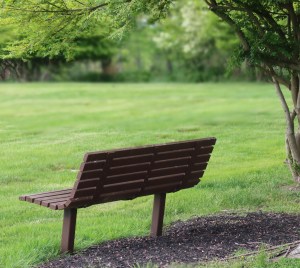
Just sittin’ and chillin’ and dreamin’ of strong bones.
(Photo by Anne Nygård on Unsplash)

Perhaps most importantly, I need to not view this as a failure on my part. Because while I knew that eventually that day would come, I was not prepared to actually accept that it was here. I was still trying to “work my way back up” to where I was before, even when I knew that it was unrealistic.

After all, I remind myself, the fact that I need to adopt a slightly gentler approach to my workouts is a sign of success: the reason I need to be more careful now is because I have survived this long past my diagnosis. That’s not a punishment or a capitulation. It is, in fact, a blessing and a luxury that many cancer patients don’t have.

~~~~~~~~~~~~~~~~~~~~

What now? I am resistant to bone-building bisphosphonates at this time, for a variety of reasons (hello, side effects). I want to see if I can stop/slow the bone loss on my own. I have the exercise part down, no problem. But to be completely honest, my dietary intake of calcium was very low. I had every intention of supplementing with calcium after my first bone density scan, but got spooked by the potential for heart issues.

Since then, I’ve learned about the importance of Vitamin K2 and the Japanese fermented bean natto, which has loads of it and makes sure calcium gets to the bones instead of the heart. I’ve re-started the calcium supplements with a daily serving of the fermented stuff. You could say, I’ve become an aficio-natto.

And now that I am forced to back off the intense exercise, I have the opportunity to focus on mobility work, stretching and rehabilitation as I discover what body parts are going to need the attention of a physical therapist. We’ll see how this new approach to fitness works.

Revisiting Radiation Tattoos

(Title image: Photo by FlyD on Unsplash)

I came across a story from November 2024 about actress Nicole Eggert (“Baywatch”, “Charles in Charge”) discussing her breast cancer diagnosis.

While I admit that I hadn’t watched any of her acting projects, I could completely relate to her reaction to preparing for radiation therapy.

The article focuses on an Instagram post that she made after leaving a doctor’s appointment during which she received her radiation tattoos, expressing surprise at the fact that they were, in fact, actual tattoos.

As the article continues, “She then started to cry as she realized just how permanent the tattoo would be. ‘And it’s minor, it’s nothing but dots, but boy, every step of this process is never gonna let you forget it, there’s just always going to be a constant reminder.’

This really resonated with me because I had a similar reaction to getting my own radiation tattoos. I had never had an interest in getting any kind of tattoo myself. But now, with cancer, nothing was under my control anymore. It felt like my body was not my own.

Nope, never wanted a tattoo. But had to get four anyway (minus the pretty flowers).
(Photo by Lucas Lenzi on Unsplash)

And I remember being told that now I was going to get tattooed, just like that. No fanfare or anything. I don’t remember being told in advance, although I would not be surprised if I had and it simply hadn’t registered. I felt helpless a lot of the time and I had hoped that after chemo I could get a sense of self-ownership back. But the tattoos were a big “NOPE” to that!

I agree with Nicole, it’s the permanence of these things and even the long-term nature of some of the side effects of cancer treatment that add to the emotional impact of the disease.

I don’t know much about Nicole’s tattoos, but because I am pale with lots of moles already, my tattoos were blue to distinguish them from everything else on my skin. So while they were just small dots, to me they were very visible when I looked in the mirror.

My post about the experience (“I Didn’t Expect THAT: Radiation Tattoos“) talks a bit more about this. Now, almost 8 years later, I’ve made peace with the blue dots in the same way that I’ve tried to accept my scars and aches and whatever else has hung around since treatment.

Made peace, yes. But like the tattoos, although their sharpness fades, the memory remains.

Cancer Took the Magic Away, Mindfulness Brought It Back

(Title image: Photo by Ethan Hoover on Unsplash)

And, no, I’m not talking about casting spells.

But I remember “life before cancer” and it felt different. There was a feeling that there was so much life left to live, so many plans still to execute.

I felt bulletproof. My own primary care doctor was impressed that I’d made it through so many years without ever having a major surgery (or any surgery, for that matter). I was looking foward to my future. My workouts were still tough and vigorous and I felt like I was going to age well.

Most importantly, life had a certain magic to it. It felt multidimensional and filled with possibilities, and even with the challenges that I’d had to face, I had hope that things would always get better.

Then I got hit by the locomotive that is cancer and everything ground to a halt. My world went gray and all those plans that I had for “the rest of my life” fell away as all my energy was focused on surviving the diagnosis, surviving chemo…and I didn’t see much past that.

For quite a while after diagnosis, I’d felt like I’d been tossed out by the side of the road.
(Photo by Sven Brandsma on Unsplash)

Emotionally, my life felt like a void. I was too afraid to even let hope in because of the fear of having it dashed to pieces.

It was like being out in the wilderness and calling for help but receiving none, not even an echo. Spiritually, it was the loneliest that I’d ever been.

I was no longer on the highway of life. I was sitting in the breakdown lane.

Forgive me if this sounds melodramatic. All my ‘anxiety chickens’ had come home to roost, so to speak. And I wasn’t handling it well.

I dragged myself around treatment like this…although about two weeks before my cancer surgery, I had started mindfulness meditation, encouraged by my radiation oncologist who suggested it as a non-pharmaceutical way of dealing with anxiety.

It was that little ‘peep’ of mindfulness that had I clung to, terrified, in the beginning, not really sure whether or not it was helping. But at least it was something warm at a point when I felt cold and abandoned.

I can honestly say that mindfulness and meditation were what gave me back the strength to persevere through tough times.
(Photo by Robin van Holst on Unsplash)

As time went on and I stubbornly refused to miss a day of meditation, that little break in the clouds became bigger. In this case, my obstinance was a blessing. Somewhere in the last almost-eight years, not even sure exactly when, something changed.

The fear and loneliness and bitterness crumbled away. Noticing how things were right now, how beautiful the world was when I chose to appreciate it, helped pull me out of the funk.

In our darkest moment we find our greatest strengths. I wish it weren’t like that, I wish there wasn’t a need to hit lowest lows in order to get the biggest spring back up. But I can say that if my life even before cancer had been easier, I would not have experienced the richness of existence as I do now.

Not everything is okay. In many ways, things are even harder and more frightening. But I can accept that and not feel bitter. My expectations have softened and I pause more often to ground myself, to notice that at this moment, I am safe.

And for this moment, I am at peace.

Staying Present in Discomfort: Being Here When You’d Rather Not

Title image: Photo by Tolga Ulkan on Unsplash

~~~~~~
Thank you everyone for your patience during this time of my father’s passing from cancer and dementia. I have appreciated the quiet visit to my childhood home, supporting my mother and being comforted by close friends and relatives.
~~~~~~

There are times that the present moment is an uncomfortable place to be in.

That’s when things are not going well and you want the current situation to be over so that you can move past it and onto healing. But one could argue that this is exactly the time you need to sink even deeper into the present moment.

And even more important to get more granular and still. To observe what is going on even more closely. To understand the important of this very point in time, how it will never come again in the same way. And even in this discomfort there is something to learn, something to lean into, something to accept.

I felt this strain while my father was still in in-home hospice, declining at a pace that was both quick and slow depending on what you’re focusing on. It evoked an axiety in me: wanting to hold on to him and save him–but knowing that this was an impossibility. The tug of time is unrelenting, taking everything with it like a glacier or a tsunami that continues onward no matter what is in its way.

But this is also an opportunity to remember that the impermanence of life does not take away from the joy and beauty of it. Dropping down into what is happening right now, taking a front seat on top of that glacier/tsunami, and allowing everything to be here is the way to appreciate all of this.

So while I would rather that the things that were happening not be happening, I couldn’t stop them. I sat here trying to understand my feelings and allowing gratitude for my father’s long life to remain in the forefront. There was peace in knowing that he was living his last days at home, in familiar surroundings with my mother there.

I could have made all sorts of stories up about what he was feeling or thinking, but the reality is that I didn’t know. So I didn’t pretend and instead noticed the sounds around me, the feeling of the air on my skin and the knowledge that my father’s imminent passing unscored all the many things about him and my own life that I have to be thankful for.

~~~~~~~~~~~~~~~~~~~~~~~

It’s easier to ignore reality and think about other things, but that doesn’t help us deal with them.

A Rock in a Bubbling Stream [Visualization]

(Photo by Hendrik Cornelissen on Unsplash)

There’s a lot going on in my family at this time, most importantly the transition of my father to in-home hospice care, signaling that a life chapter will be coming to a close. That’s one of those things that you know is going to happen but usually don’t want to think about.

It’s these kinds of changes that unsettle us the most because they’re significant shake-ups of life as we know it. In the case of my family, this change was not unexpected and yet it is still not easy.

The uncertainties associated with end-of-life issues can be unsettling.
(Photo by Pylyp Sukhenko on Unsplash)

But I can draw on my meditation practice and ability to stay present to accept things are they are now.

It helps to use a visualization in the midst of emotional upheaval. So I think of myself as being a rock in a rushing stream. You know, one of those rocks that sticks out about the water’s surface and might serve as a comfortable sunning place for a river turtle.

The rock sits still even thought there is a rushing tumult all about. The water parts around it and then rejoins on the opposite side, but the rock remains there, unmoving and unbothered.

The rock doesn’t hinder the flow but neither does it get carried away by it. And as it sits, so do I, observing and understanding and accepting everything that is going on around me. Not getting caught up in my head and taken away by thoughts.

Mindfulness meditation provides me with a stable rock from which I observe the tumult of life as it rushes by.
(Photo by Simon Berger on Unsplash)

There will come a time to grieve but now I focus on what is happening in the moment and how I can support my parents. There is gentle planning as I get more information about the situation. And always, taking deep breaths, feeling into my hands and feet, staying grounded. From this vantage point, I can clearly see what needs to be done today.

“This is what’s happening now. Tomorrow may be different, but at this point in time, I am here.”

So the coming weeks may bring shorter posts, perhaps a skipped one here or there. There will be much to do and it will all get done in time. Decisions will be made as they come up. Focus remains on each task at hand. Even if responsibilities come fast, I find a stable base in my practice that helps support a strong relationship with my family.

The river rushes relentlessly. But I know it’s there and expect the constant movement. Changes become familiar, fear drops away and I am comfortable where I sit, calm as I watch the waters flow past me and then continue onward.

Exactly Where You’re Supposed to Be

(Title image: Photo by David Paschke on Unsplash)

Some time ago, I was thinking how I got to where I am and was seized by a sense of regret and shame. This was not where I thought I’d be by this age.

So many things that I’d worked for education-wise, health-wise, career-wise seemed to have been derailed by decisions I’d made based on life circumstances that I didn’t feel I could control…or by just plain bad luck (cancer, I’m looking at you).

As I pondered this, I became enveloped in it, slipping down a dark hole, trying to squash those negative feelings—the ones that get buried for a while only to pop back up at 3am some night.

But then I thought, “Ok, so how about another way of looking at this?”

What if how I am now was the end goal all along?

What if where you are right now is where you need to be for the rest of your life to work out according to plan?
(Photo by Jon Tyson on Unsplash)

And that shift in perspective allowed me to look at the things that I felt I hadn’t fully achieved as being “the plan” for creating me as I am now.

And what I am now is made up of the valuable experiences that I was labeling as half-done or poorly-executed or forced upon me—but no, perhaps they were all so necessary for setting up myself in this place with this knowledge. And from here, preparing me to move forward.

A master’s degree I haven’t used for a couple of decades, a job situation that falls below my career aspirations, a body that is limping back from injuries and cancer, a mind that can be my worst enemy. The experience of all of these brings with it wisdom and insight. And strength.

Where I am now is exactly where I need to be for the next chapter of my life. The foundation for future-me has been established.

So, how about you?

What if you spin the timeline around, understanding and appreciating who you are now, however “imperfect” it might seem to you, social media, whomever else serves as the judge of your life. This is now your starting point.

What’s your next step?

How can you take everything that’s come before you and allow it to support the incredible you that you will become?

“Left Behind”: An Unanticipated Side Effect of Cancer

(Title image: Photo by Denys Argyriou on Unsplash)

Apologies because this might sound like a rant but this topic has been on my mind a lot lately.

When you’re diagnosed with cancer, you learn about the many side effects of treatments.

You will be informed about the physical and even psychological effects that cancer patients deal with, but there are also considerable financial repercussions. Patients may struggle with hospital bills: some lose their insurance coverage, others might never have had any to begin with, those who have coverage may find that it’s insufficient. It’s not uncommon to hear how cancer has driven survivors and their families into bankruptcy.

On top of that, cancer can do a number on your career aspirations for years to come.

Money issues are one of the side effects of cancer that don’t get a lot of airtime…but really should.
(Photo by Alexander Grey on Unsplash)

In case you think that it’s uncool to complain about one’s career in the face of having survived cancer, let me get this out of the way: being a cancer survivor is a privilege. I’ve written before about how acutely aware I am that I have lasted longer than many cancer patients.

But as the effectiveness of cancer treatments improves, the number of cancer survivors increases and long-term repercussions become a more and more serious consideration, particularly how they affect ongoing quality of life.

For people who are still working out their careers, cancer can derail progress because it plants a huge stop sign in their path.

Think of going into the chemo infusion room: the days leading up to it entail appointments, port placement, purchasing supplies (anti-emetics, anyone?) and in general prepping for being out of commission about a week.

It’s not the time to focus on stressful work deadlines (and most sincere condolences to any patient who has to do that!).

Ironically, as much as I feared infusions, they actually gave me an excuse to focus on myself instead of worrying about everyone else. I posted about that here somewhat sadly that chemo allowed me to rest without feeling guilty.

It was at that point that I’d realized I’d been pushing myself, always expecting more and not feeling like I was measuring up. Chemo gave me a break from that. Which was good…kind of…

But after chemo and radiation came endocrine therapy, so just as I was winding down from one set of side effects, up popped another.

Right? RIGHT?
(Photo by Drew Beamer on Unsplash)

And all those plans I’d had for myself were put off again and again. Career goals seemed more out of reach because my timeline had shifted.

Well, I’m not stupid, so I changed my career goals. Makes sense, right? Cancer provided a different perspective on things and motivated me in another direction.

But in the wake of cancer treatment, I feel like I’m walking in cement shoes…if it’s not one thing it’s another. I got off aromatase inhibitors (early) and then realized that I was having memory and focus issues. Whether Cancer Related Cognitive Impairment (CRCI) or menopause-driven brain fog, all of a sudden I’m dealing with something else.

It feels as though the train to prosperity has left the station and I was just a little too late to catch it.

Great.

Right now I’m looking at sky-rocketing costs-of-living in a part of the country that literally got expensive around me. Instead of moving up in the world, my family and I are desperately searching for less pricey housing which will put us in worse conditions and a longer commute to work.

And at age 57, when most of my friends are looking at enjoying retirement in the years to come, planning for what they’ll do in their golden years, I’m trying to reeducate myself, shifting into a career that doesn’t make much use of previous work experience.

And it feel exhausting. Sometimes I want to cry.

I want to believe this, I really do. But I don’t think that there’s a reward for surviving cancer beyond simply surviving cancer.
(Photo by Nik on Unsplash)

Yes, I’m happy to be alive. But no, this was not the way I thought things would go. When initially I was told that I had a decent chance of surviving for five years, that was all I could think about. In fact, that was all that mattered.

I wasn’t thinking about the fact that if I managed to live through this, I’d still need to find a way to make a living. And the interruption that was cancer could do a number on that.

At this point, I need to stress that my intention is *not* to try to scare cancer patients into dreading survivorship. Goodness knows, there are enough things to navigate within the cancer experience as relate to the usual treatments that will take your energy and attention.

I wish nothing less for you than 100% remission and many years ahead to enjoy your “survivor” label.

At the same time, I encourage you to remain present and mindful of the fact that you might have to pivot if you’re not already well-established in your career. If things start to change in a direction that’s southward of what you expected, be patient and readjust your expectations. Nuture acceptance and keep an eye on how you can put yourself in a good position to meet the future. And be kind to yourself.

I’m still working on it.

Two Anxieties but One Breath

So, something occurred to me as I was dealing with stress about a work project…and then got news of changes that may require us to quickly move from the place in which we’ve lived for over ten years.

I am experiencing two different textures of anxieties. I’ve heard people discuss chronic and acute anxiety, but I would characterize the way I experience anxiety differently.

The first anxiety may wear you down but won’t require a complete change in your life.
Photo by Aiony Haust on Unsplash

The first is anxiety about what may happen or anxiety about what has taken place in the past and I can’t change. That encompasses stressful events that you need to work through, like a job-related project, which requires holding on and managing. It’s more of a chronic type of stress even though it might be time-limited. There are things out of my control or, in the case or what has already taken place, there’s no going back. It doesn’t qualify as life-changing as it may intensify and relax depending on conditions.

The second, however, is anxiety about something that *is* life changing. Those of us who have been handed a cancer diagnosis know what it feels like. It means that the future will look dramatically different from what we expected it be. Other examples are a death of a loved one or losing everything in a natural disaster. A sudden involuntary change in your living situation. This requires letting go and radically recalculating what you’ve become very used to. It can be very difficult to do, especially for those of us who like stability in our lives.

The first anxiety is exhausting. The second is terrifying. Having experienced both, I can definitively state that the first anxiety pales in comparison to the second. In fact, in the face of the second anxiety we may actually let go of the first completely and wonder why it ever bothered us.

The second anxiety is more intense and will alter life as you currently know it.
Photo by Ann on Unsplash

At the same time, as terrible as it may be, the second anxiety offers us a perspective and clarity that we would be hard pressed to accept as quickly any other way.

I do not wish either of these anxieties on anyone, but if there’s a bright side to them it’s that the same type of mindfulness practice that helps us deal with the anxiety of the first kind will also help when the expectation-smashing heaviness of the second anxiety hits.

Although you may still wake in the middle of the night, heart racing and wishing things had not changed, a consistent mindfulness meditation practice will provide you with the tools to smooth the jagged edges of rumination and fear, slowing the breathing and with it the heart rate, even in the presence of frightening thoughts.

~~~~~~~~~~~~~~~~~~~~~~~

Of course, since this is a mindfulness blog in addition to being cancer-related, I cannot resist talking about one of the most effective techniques that I’ve found for calming myself: belly breathing.

Start by simply breathing deeply into the belly, as anxiety often results in shallow breaths. The deeper the inhale, the more air you will have for the exhale – try matching inhales and exhales in length. It won’t happen immediately. Give it time.

Create a breathing cycle and keep going. Establish a breathing practice and stick with it.
Photo by Brett Jordan on Unsplash

Keep breathing into the belly, fully engaging the diaphragm, allowing it to drop and make space for your lungs.

As you do this, focus on the breath. The uncalm thoughts can still be there, but gently allow them to sit on the sidelines for now. I used to try to completely push them away, but they would bob back up to the surface like a balloon pulled under water, bringing the intensity of my anxiety back with it.

So let them be there…keep one eye on them if necessary but give your breath the main stage.

Once the inhales and exhales have evened out in length, insert a short pause between them. Breathe in … pause … breathe out … pause. Just a little stop to elongate the cycle. Consistently breathing into your belly.

Transition to full box breathing, where the inhales, exhales and pauses are all equal in length. If you get very comfortable doing this, for a little extra, try to make the exhales just a touch longer than the inhales.

Or if it gets tiring, simply try to make your exhales a little bit longer than your inhales and dispense with the pauses altogether.

Maintain this type of soothing, intentional breathing for a few minutes or longer, depending on how your body is responding or what your nervous system needs today.

Truly, you don’t have to do this perfectly or adhere to a specific count. Simply focusing on your breath and slowing your breathing will help immeasureably in making space for your thoughts so that you can back away a bit and survey the scene without feeling claustrophobic, no matter which anxiety you’re dealing with at the moment.

Mindfulness 101: You’ve Got Options!

It’s been a long work day so this post has a simple message: you have options in practicing mindfulness meditation. And then for good measure, at the end I toss in an article about other meditation practices you can try.

In a nutshell, mindfulness meditation is the process of noticing your thoughts (“awareness”) and observing them without judgment (“acceptance”). It often involves an anchor, such as the sensation of the breath or a constant sound in the background, that the meditator focuses on for the purpose of grounding and staying present. The anchor is what we return to after we realize we’ve been pulled away by thoughts.

The anchor to presence is what we return to after we find ourselves carried away by thoughts.

This way we explore the concept of impermanence as it relates to life and our own situation. Everything is in flux. Negative experiences pass, positive experiences pass and we move through it all. The more we practice, the more we are able to notice the ups and downs without being as affected by them.

In the same way, I consider mindfulness meditation to be fluid without rigid rules. For example, you do *not* have to be seated in Lotus pose with your hand on your heart. You do not need a special cushion, outfit or music. There are no specific words to recite or candles to light. However, you are welcome to do all of these.

Lying down, seated on a chair, leaning against a tree or riding a crowded bus holding on to a strap are all viable positions. Eyes open, closed or half-shut. Paying attention to bird songs, a light rain, a washing machine or cars whooshing down the road, all good. In the early morning, during a work break, when the kids are napping or when you’re settling in for the evening are all ideal opportunites.

You don’t have to be in a specific location in order to practice mindfulness meditation, although admittedly some places come with a better view than others.

Even carelessly sprawled out on your bed, noticing how it feels to do that, no matter how dorky you think you look. Mindfulness doesn’t judge.

All of these are good conditions under which to practice mindfulness meditation and that is one of the things that I feel makes it an ideal meditation starting point.

As you continue to practice, you develop a tool with which to nurture a sense of peace and calm down a busy mind. It is a tool that you can take with you no matter where you go, like a little gift for yourself that you keep in your pocket, bringing it out whenever there is a need.

And since we’re talking “meditation options”…

I’ll finish up by noting that just as there are different ways to engage in mindfulness meditation, there are a number of other meditations that you can try if you want some variety.

For that, I’m going to punt you over to an article on the website Healthline, written by Holly J. Bertone, CNHP, PMP, and Crystal Hoshaw, entitled, “Which Type of Meditation Is Right for Me?” I really liked the information mentioned here, including the nine types of meditation that they describe:

  • mindfulness meditation
  • spiritual meditation
  • focused meditation
  • movement meditation
  • mantra meditation
  • transcendental meditation
  • progressive relaxation
  • loving-kindness meditation
  • visualization meditation

See the Healthline article for more information.

I do not believe that the above is an exhaustive list by any means, although it is a wonderful place to start if you want to explore other meditative practices. While I feel that mindfulness is one of the most accessible meditations for beginners, if you feel inspired to try something new, there are many options to choose from.

The only thing you “should” do is begin. 🙂