Favorite Calm Things: Orchid Show

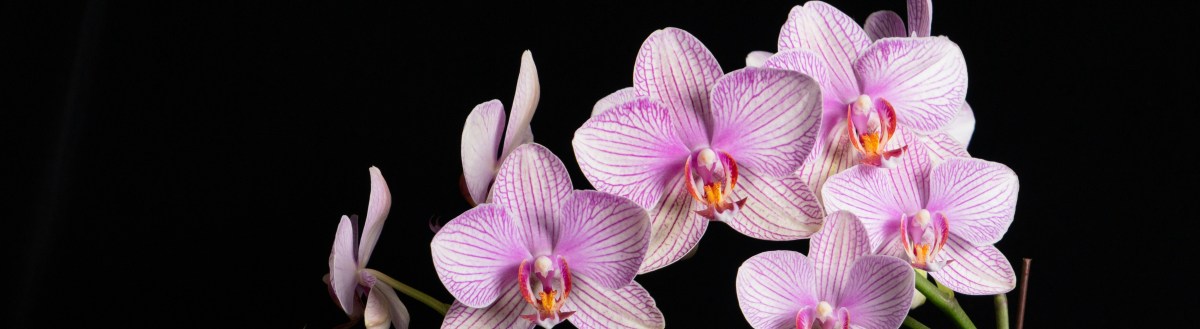
(Title image: Photo by White.Rainforest ™︎ ∙ 易雨白林. on Unsplash)

This post doesn’t need a lot of words, the pictures will be enough.

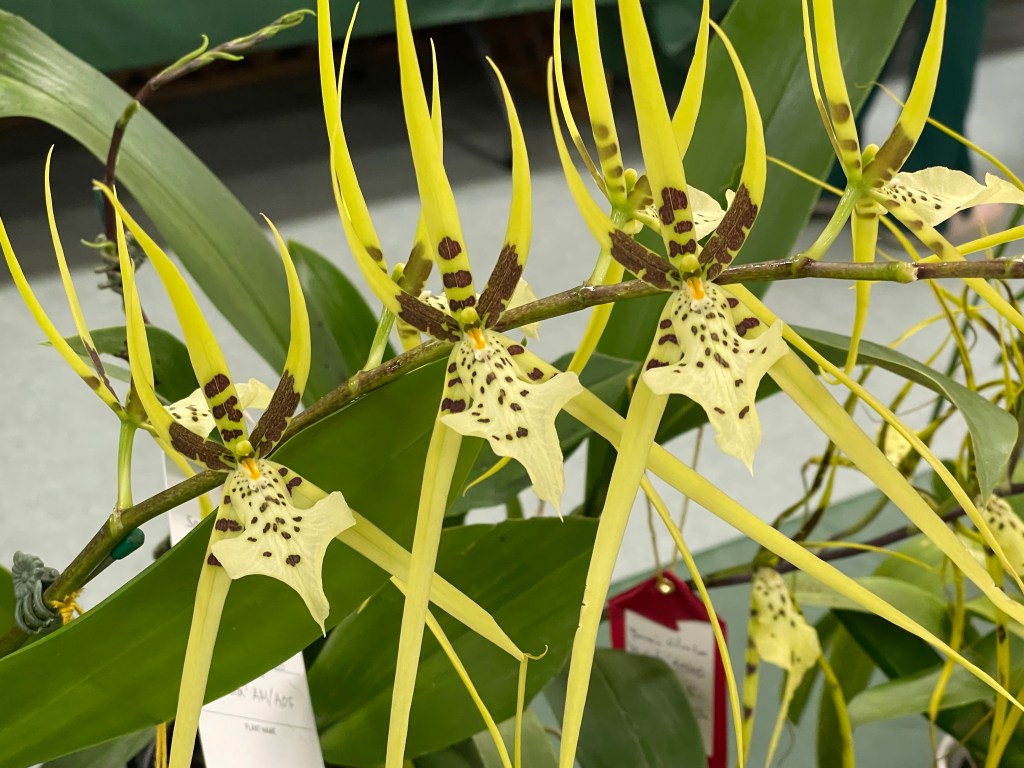
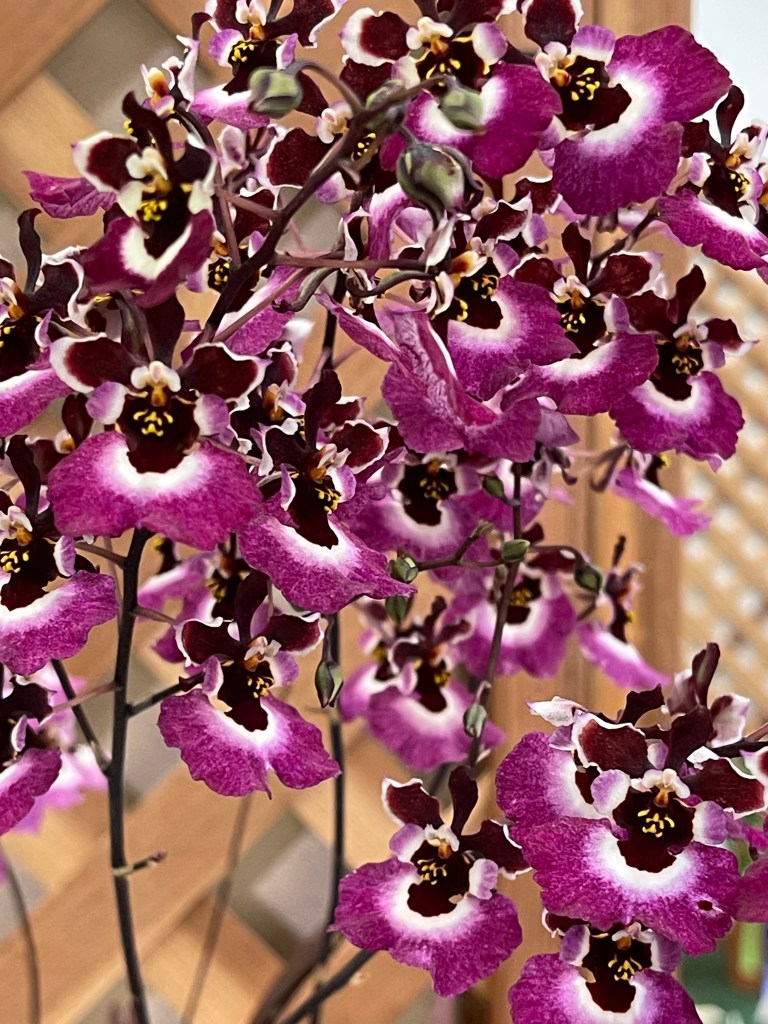
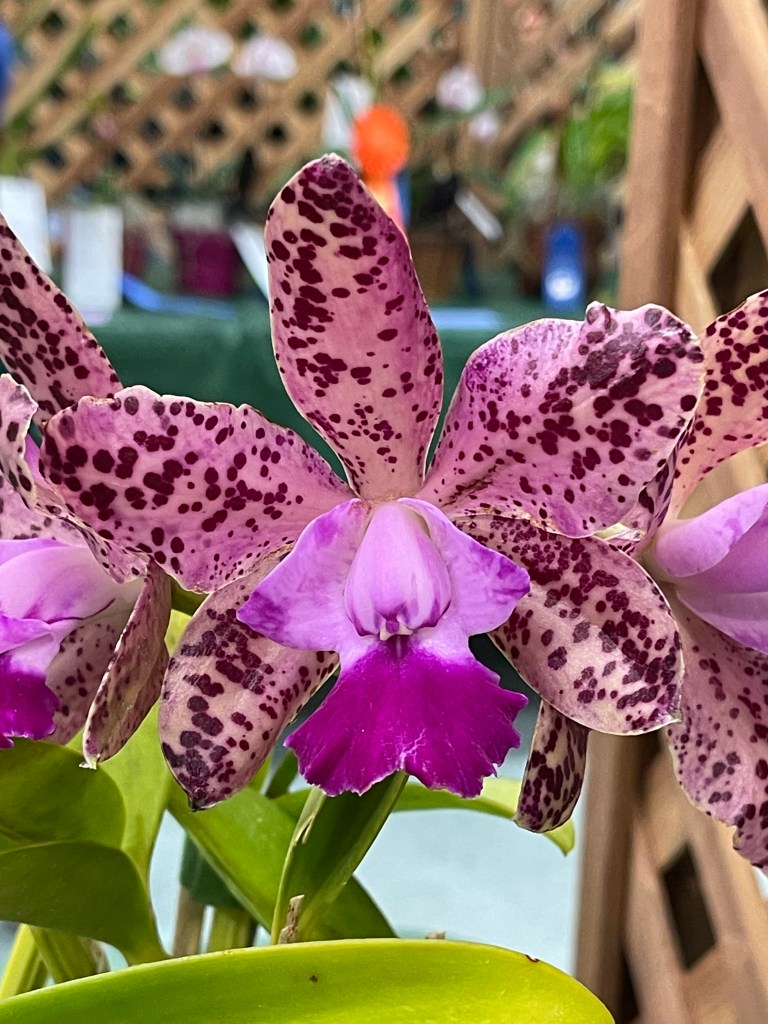
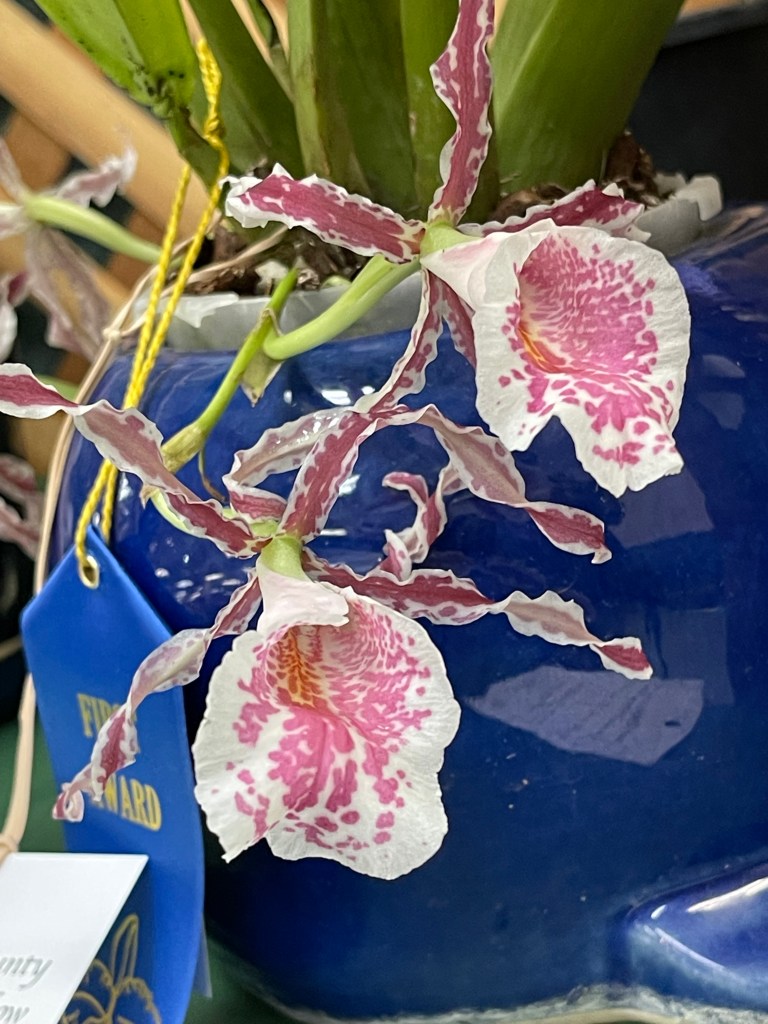
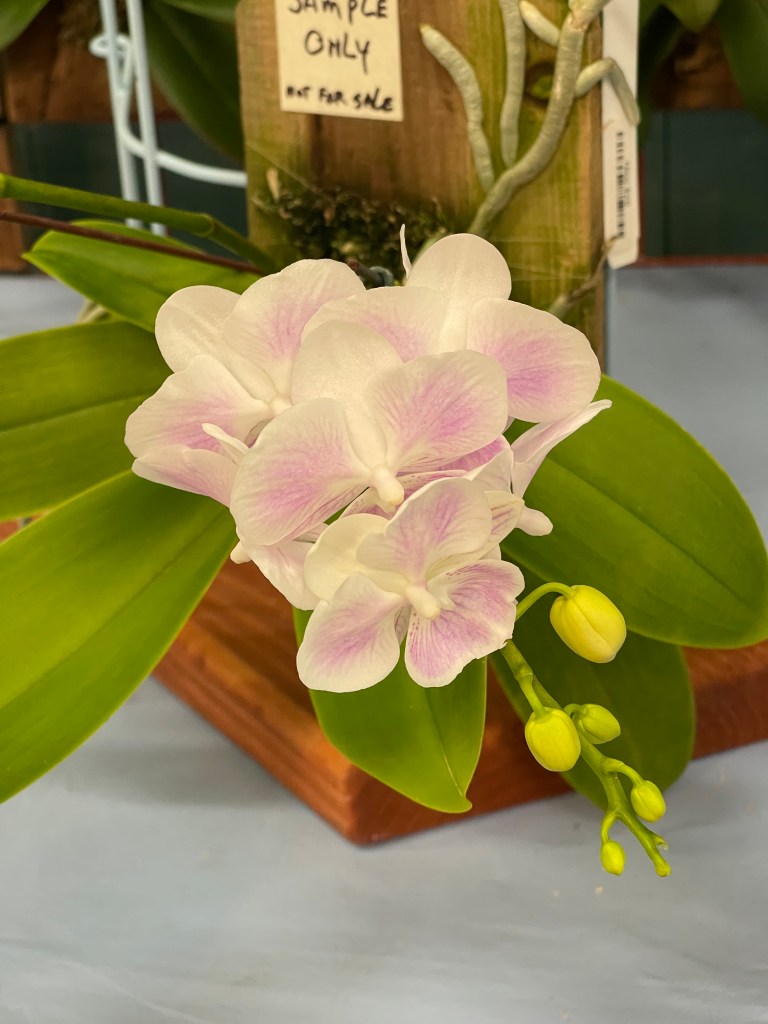
The quick description is that I had the chance to stop by the San Diego Country Orchid Show this past weekend, and the display was as glorious as I expected it to be. Lots of stunningly gorgeous flowers in a brilliant array of colors. It’s the kind of thing that takes my breath away and ushers in a rush of endorphins.

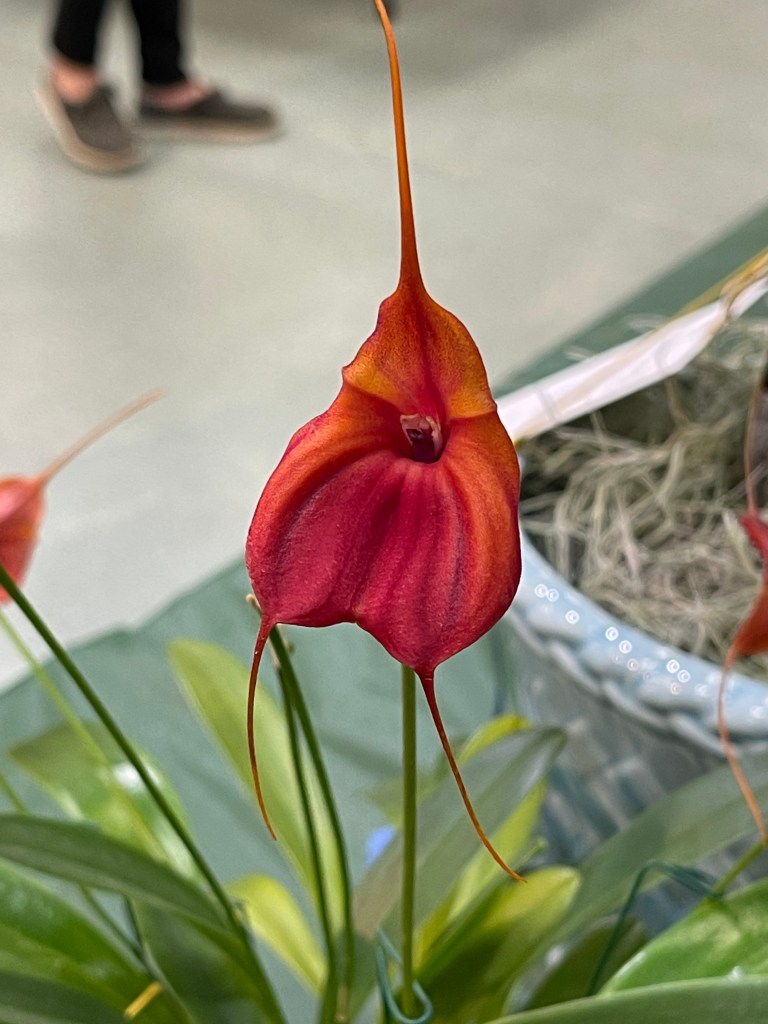
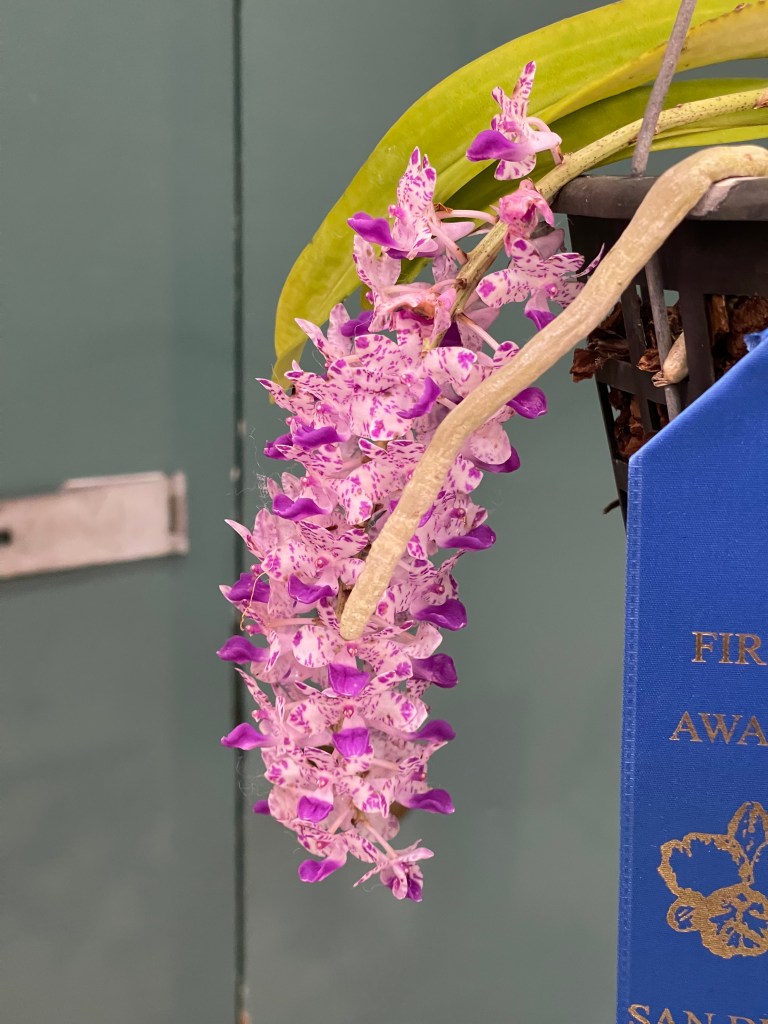
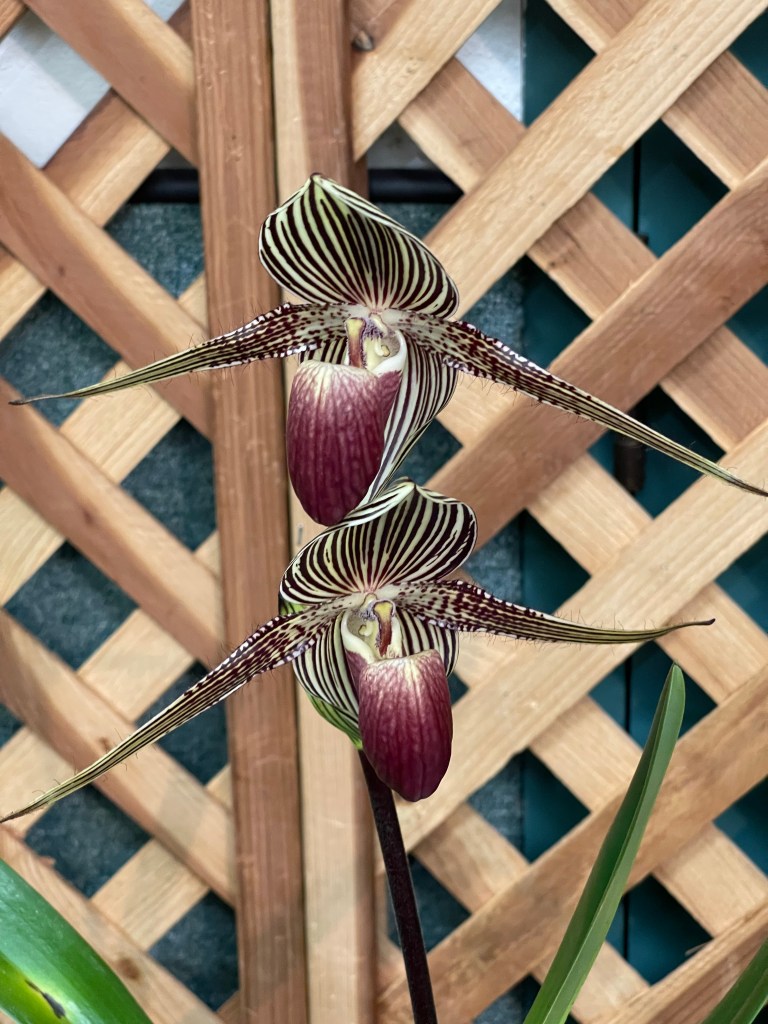
I was happily clicking photos on my phone and I was not the only one. Here is a smattering of the beauty I observed:

(Gallery photos by FranticShanti)

The last image is, of course, not an orchid but rather a very friendly talking parrot who made sure to say “Hi!” to everyone who walked by.

Today I’m Looking Forward To…

(Title image: FranticShanti)

Here’s a slightly different type of gratitude practice. It’s a nice little way to bring more joy into your life.

Instead of looking for things to be grateful for, try simply thinking of things that you might be looking forward to.

They don’t have to be big productions like an expensive vacation or some sort of exclusive party. This works just as well, perhaps even better, with something small.

Grab a pen and a sticky note and start looking forward to the little things.
(Photo by Ravi Palwe on Unsplash)

How small? How about receiving a new calendar you ordered that has pictures you find particularly soothing? Or maybe going to a museum that you haven’t visited in a while. Or visiting a local garden shop just to browse and take in the glorious colors.

Clean out your coffee maker and look forward to having tomorrow’s coffee brew in a clean machine.

Or look forward to getting into bed in the evening and stretching out comfortably.

Consider the things you could potentially look forward to…get granular about it…and try to see what the smallest thing might be that you could look forward to enjoying.

There’s a lot of good stuff in between those pickets.
(Photo by Brad Switzer on Unsplash)

The “grandness” of the thing doesn’t matter—what matters is how you feel about it. And perhaps, at first thought, you consider it insignificant, but when you lean into it, you realize that it truly is something that brings you joy.

The more of these little things we can find, the more we realize that little bits of joy are scattered throughout our lives. And once we become aware of one, we might start noticing them everywhere.

~~~~~~~~~~~~~~~~~~~~

Speaking from personal experience, I find it very easy to become overwhelmed with the negatives in my life. There are times when it seems like all the difficulties come crashing down at once, at the worst possible moment.

However, it is worth shifting our focus and noticing the things that aren’t going wrong. It’s as if you are looking at a picket fence. The fence itself might be the negatives and they’re hard to miss—after all, they’re right in front of you.

But if you look through the posts of the fence, into the space between, that’s where you see everything “not wrong”. And you might find that, in fact, there is more “not wrong” space than there is picket fence.

So I encourage you to take some time when things get difficult to look through the fence and find your little joys to look forward to. Focus on them, write them on a sticky note and put the note somewhere where you’ll see it in the morning.

And then smile.

I have my note ready…

An Inspirational, Motivational Snail

(Title image: Photo by Frederick Yang on Unsplash)

There are good weeks and there are bad weeks…and then there are weeks that you’re kind of managing and getting by, but know that your stressors will still be there for a while.

Last week was one of those for me. On the bright side, such days are a perfect time to practice stress management techniques. Notice the ups and downs. Ride them like waves, understanding that they will peak and ebb in a cyclical manner and eventually wash up on shore. All of this can lead to personal growth, even though we might not have wanted such a lesson in the first place.

At the same time, you might be thinking, “Thanks, but I’d like to pass on the personal growth for now.” In that case, maybe what you need is a short video of a snail doing something that seems impossible.

Here’s a little clip a friend brought to my attention that provides “don’t give up” inspiration for those times when you are waaay out of your comfort zone and will be having to pull yourself along for some time to come.

Hope you get as much inspiration out of this little guy as I did. Enjoy!

When ya gotta keep going, streeeeeeeetch…and then stretch some more.

I Thought I Was Doing Better

(Title image: Photo by Merch HÜSEY on Unsplash)

Last week, I met with a friend that I don’t see often. We were talking about what was going on in our lives and he related how he loved where he lived right now, and put a positive spin on everything in his life, even when talking about negative happenings.
He sounded sunny and was handling the tough stuff that came his way.

But then it was my turn to tell him about what I’d been up to. I started describing what I’d been dealing with: my father’s decline and death last year, worries about my mother’s well-being, concerns about the increasing cost-of-living…

My friend smiled at me. The last time he had talked to me, he said, I was stressed about something else. In fact, every time he calls me, there’s some new thing that I’m stressed about.

And of course he’s right. As much as I’ve improved in handling anxiety using all the tools I’ve developed to calm myself down—and, yes, I’ve found success with that—the overarching feeling that I have is that I’m playing whack-a-mole with my worries.

It’s as if I’m trying to regain my footing, but something new comes up and knocks me off balance again.
I admit it. I’m feeling worn out.
(Photo by Anca Gabriela Zosin on Unsplash)

After getting past cancer treatments like chemotherapy and radiation, you’d think that the skies would look brighter and my outlook would be more positive. And for quite some time that was completely true.

But as endocrine therapy wore on and I went through menopause, my spirit suffered. The luster of surviving cancer started wearing off. That’s embarrasing to admit, especially when I have lost friends and family to the disease and know of many others desperately fighting it.

But even being aware of that, my day-to-day seems to have become darker overall. I start the day with energy to get things done but by evening I’m exhausted and sometimes overwhelmed by what’s in front of me.

I know some of this is my own doing. In fact, one of the big, scary changes that I was faced with this year just sorted itself out. It was simpler than I expected (note my previous post). And then my son was admitted to the college he wanted to attend. All these are refreshing successes that I should have spent time basking in. But it didn’t take long for the clouds to gather again.

After hearing my friend’s assessment of me, I am trying to figure out whether what I’m going through is really getting harder? Or have I gradually been losing my ability to pull myself out of a funk? And once the uncertainties are settled, will I bounce back?

I feel disappointed in myself, which is exactly part of the problem. Lack of self-compassion simply compounds the stress. You know the carrot-and-stick analogy? Well, I’ve tossed the carrot and am just beating myself with the stick.

Back to the drawing board.

But What If Everything Goes Right?

(Title image: Photo by Aaron Burden on Unsplash)

Friends, I am a worrier. You’d be hard-pressed to find something that I wouldn’t worry about.

I know better. And I’ve actually gotten better.

But even with practicing mindful self-awareness, those foreboding thoughts of “what if everything goes wrong” creep in, particularly at night.

Because 2025 is a year of big changes for me, there have been many opportunities to awaken in the darkness, worrying about how this and that can go totally downhill.

A few days ago I was on the same train ride, hurtling through fears, when it hit me that, in the same way that I can imagine everything crashing and burning and my life being miserable and terrifying, I didn’t have to fear the worst. Things could work out.

Call that the “Schrodinger’s Box” philosophy of life. At the same time that things could be awful, they can simultaneously be fabulous—or somewhere along that spectrum. No matter what you’re anticipating, it won’t be until you finish the exam, give the speech, get the biopsy results or have the conversation that you will really know how things turn out.

Fear and avoidance are not the way to go through life.
(Photo by Alexander Grey on Unsplash)

So if you don’t know, you might as well think positively, tempered with a healthy dose of realism. Things are rarely black or white. Just as we shouldn’t be “all negative”, we shouldn’t be “all positive” either.

Ok, so right here I need to backtrack and say a word about “positivity” and “negativity”. When we practice mindfulness, we strive to release expectations, to not attach ourselves to an outcome. Yes, I get that.

That is an ideal. Our minds don’t always allow us this.

But if there is a choice between being morose or upbeat, you are still better off being upbeat. Realistic and upbeat.

I’ve heard people justify constantly being negative by saying that at least they will be “prepared for bad news” so that it’s not a shock. I used to think that too, fearing the precipitous drop in spirit when you’re expecting something good and get something bad instead. But I’m no longer convinced that doom-and-gloom saves you from anything.

Consider the “coward dies a thousand deaths” adage. Perpetual pessimism can lead to all sorts of health issues, mental and otherwise. For example, living in constant fear may result in anxiety, depression and high blood pressure,among other things. And with enough time, those can turn into something worse.

Again, the ‘ideal’ is non-attachment. But if you cannot completely disengage from imagining an outcome, your mind and body will be better served by considering that everything will work out in the end. At least you’ll be able to sleep better at night.

~~~~~~~~~~~~~~~~~~~~

And what is recognized as the optimal way of thinking? There exists the concept of “short-term realism, long-term optimism”. This means that you take care of the tough stuff in the present, facing challenges head on, but keep your chin up and not lose hope for the future.

Naptime with Animal Friends: A Calming Visualization

(Title image: Photo by Kristin Lyse on Unsplash)

I recently came up with a fun visualization for calming myself that I wanted to share with you. It’s ideal if you love animals.

The concept is quite simple. Imagine yourself in a comfortable place outdoors with an environment that is what you like best. As an example, for me, it’s a warm-ish spring or summer day and I’m sitting under an arbor covered in wisteria or another flowering vine with leaves just dense enough to allow dappled light through.

Create a detailed, colorful picture of your perfect place in your mind. And then…start settling. Bringing attention to your body, imagine what it would feel like to be there. As your breath slows, the calmness you generate travels outward and attracts friendly animals to you.

You are the Pied Piper of imaginary animals.
(Photo by Dmitry on Unsplash)

Perhaps a colorful bird alights on your shoulder or next to you. A bunny hops over and snuggles next to you. Or maybe you attract a group of sleepy cats that come, purring, and rub their faces against you before stretching out beside you and perhaps in your lap.

The animals can be whatever you desire. Maybe it’s a family of platypuses? Or perhaps you’re sitting by a natural pool, feet in the water, and koi are languidly swimming around you. Sometimes, I imagine something potentially frightening and powerful like a tiger appearing, then nuzzling my hair before he rolls onto the ground to snooze, pressed up to me.

It doesn’t have to be realistic. It just has to make you feel good. There are no rules.

All animals relax around you as long as you stay relaxed around them.
(Photo by Sandra Vasilenko on Unsplash)

The richer and more vibrant the picture, the more easily you will settle. As you develop the image in your mind, watching the butterflies circle around your head or feel the weight of the wolf’s head as she lays it on your shoulder, you nurture a sense of calm. These animals are attracted to you because you are what soothes them.

And the reason that you soothe them is because you have calmed yourself. Being calm, and tranferring that feeling to others, is your superpower.

If you lose focus and your mind drifts into worry or to-do lists, the animals will scatter, so you have to notice what’s happening and resume the visualization to show them that it’s safe to return. Allow a warm breeze against your skin or the cooing of mourning doves to transition you back to this calm space.

Understand that you have this ability to generate a sense of well-being, in yourself and others. You might not always be aware of it in the middle of a busy day…but it is there. Close your eyes, feel into your feet and call your favorite furry, feathered or scaly friend to you for a snuggle.

~~~~~~~~~~~~~~~~~~~~

If you’d rather not imagine animals, you can make flowers bloom or young children smile and nod off (which might be very satisfying if you are a preschool teacher!).

Favorite Calm Things: Chipmunks and Squirrels

(Title image: Photo by Raymond Eichelberger on Unsplash)

Sometimes I need to shift my attention from the worries of the day and look at little fuzzy critters. One of my favorite outlets for this has become the Twitch stream @Chipmunks_and_Squirrels, on YouTube as @Chipmunksandsquirrels.

As the name suggests, this is a video stream of small woodland animals set in a lovely little backyard sanctuary built on the edge of a Connecticut forest. The audio is recorded at the same time as the video so you get a true sense of being in the woods, watching the little critters eat all the snackies put out for them.

It’s also touted as the perfect stream to leave on for your cats or dogs to keep them occupied. Sadly, I don’t have a pet to test this with, but it certainly serves as a soothing balm for me during a hectic work day! I often leave the stream on in the background as I’m working. It’s the perfect mix of nature sounds to be calming while not too distracting. And it provides a nice break to look at something other than spreadsheets.

Video of the activity from a live stream — “Chipmunks and Squirrels” streams live everyday on YouTube and Twitch.

The most frequent visitors tend to be gray and red squirrels and the high-definition camera focuses quickly to give beautiful closeups of them. But I’ve also seen an array of birds, including colorful bluejays and cardinals, and in the evening, curious raccoons. That’s just within the last couple of months.

Some of the squirrels I’ve seen often enough that I’ve been able to recognize them, including ones I’ve dubbed “Notch” (who has a notch in one ear) and “Slice” (who is missing the top of an ear). But there are quite a few others who come by.

And this is all in the cold of winter. I’m looking forward to warmer weather, longer days and the variety of creatures that spring and summer will bring. Should be lovely!

The YouTube channel (https://www.youtube.com/@Chipmunksandsquirrels) also offers a lot of video clips and shorts for those of us without a lot of time or attention span. Check it out and let me know what you think. 😀

8 Year Cancer-versary and Everything Hurts

(Title image: Photo by Nick Fewings on Unsplash)

This past weekend marked eight years since my breast cancer diagnosis and I recently had another oncologist appointment.

Over the years my appointments have become lighthearted. This one was not so much.

While I was concerned about the migraine auras that I’d been experiencing in the fall of last year, my oncologist had called me in November 2024 with the results of my bone density scan: I’d lost more bone and was deeper in osteopenia.

To be fair, I don’t even know how much more. It had been strange to find myself labeled with osteopenia when I had my first bone density scan over five years ago. Neither my oncologist nor I could understand it. I live a very active life with frequent workouts, including a lot of strength training. By all accounts I should have strong bones. At the time, we figured it was something to do with algorithms applied to the bone density data and my bones were actually in better shape.

Ow, ow, ow, ow, ow!
(Photo by julien Tromeur on Unsplash)

This time around, it was worse. Since the first measurement, I’d had two years of tamoxifen and one of aromatase inhibitors. That didn’t help. But all the exercise? Did it not matter? Apparently not enough.

That was frustrating on its own. But to add to that frustration, I’ve been hit with injuries. My left shoulder, my left hip and most recently my lower back.

Each one of these has taken a toll on my exercise schedule and I will likely have to seek out physical therapy for at least the shoulder. At least. The hip I have been able to manage to a certain extent. Then I tweaked my lower back rowing about two weeks ago…I kept working out, more gingerly for sure…until I managed to re-tweak my back because apparently I am incapable of leaving things well enough alone.

On the bright side, the pain in my back made me completely forget the pain in my hip. Which is not to say that there is no pain, just that it pales in comparison to back spasms.

My oncologist offered to order a spinal scan for me. I graciously declined—I’m pretty darn sure it’s just my back muscles—but his concern is valid. If I’m lifting weights with increasingly porous bones, he’s worried about spinal compression fractures.

I guess he won’t have to worry about it now. I’ve been smacked in the face with a healthy dose of humility. No, I had no intention of pulling back on my workouts, but doing so is unavoidable. The amount of weight I can lift without injury has steadily decreased (injury by injury) and with this last helping of pain, I have to face reality. I need to completely rehaul my workouts along with my expectations.

Just sittin’ and chillin’ and dreamin’ of strong bones.
(Photo by Anne Nygård on Unsplash)

Perhaps most importantly, I need to not view this as a failure on my part. Because while I knew that eventually that day would come, I was not prepared to actually accept that it was here. I was still trying to “work my way back up” to where I was before, even when I knew that it was unrealistic.

After all, I remind myself, the fact that I need to adopt a slightly gentler approach to my workouts is a sign of success: the reason I need to be more careful now is because I have survived this long past my diagnosis. That’s not a punishment or a capitulation. It is, in fact, a blessing and a luxury that many cancer patients don’t have.

~~~~~~~~~~~~~~~~~~~~

What now? I am resistant to bone-building bisphosphonates at this time, for a variety of reasons (hello, side effects). I want to see if I can stop/slow the bone loss on my own. I have the exercise part down, no problem. But to be completely honest, my dietary intake of calcium was very low. I had every intention of supplementing with calcium after my first bone density scan, but got spooked by the potential for heart issues.

Since then, I’ve learned about the importance of Vitamin K2 and the Japanese fermented bean natto, which has loads of it and makes sure calcium gets to the bones instead of the heart. I’ve re-started the calcium supplements with a daily serving of the fermented stuff. You could say, I’ve become an aficio-natto.

And now that I am forced to back off the intense exercise, I have the opportunity to focus on mobility work, stretching and rehabilitation as I discover what body parts are going to need the attention of a physical therapist. We’ll see how this new approach to fitness works.

Farming ‘Likes’ on Instagram

(Title image: Photo by Chelsea Gates on Unsplash)

I am a reasonably flexible person although I’ve become less so with age and especially following cancer treatment. Yoga asanas that I used to be able to do…well, they don’t come so easily anymore, if at all.

After going through my yoga teacher training in my 50s and now in the middle of an Oncology Yoga (y4c) certification program, I spend a lot of time feeling like an imposter.

There’s an element of shame to this. I tell myself I should be more flexible, I should have better balance, I should be able to hold more advanced poses and for longer.

In my y4c training, the manual referenced a concept, versions of which I’ve seen before and have written about myself, but the message continues to hold true (see this article). The proliferation on social media of young, flexible bodies in extremely inaccessible poses for the vast majority of the population not only hurts the practice, but completely misses the point.

It seems like a lot of images that show up as “yoga” on platforms such as Instagram are part (if not wholly) acrobatics and contortions. But yoga is actually a spiritual practice and only one part of it, the one that is overemphasized in the west, is physical.

POV: You’re a cancer patient and your forward-thinking oncologist suggests that you try yoga to help alleviate some of your side effects. But this is what you think of when you hear “yoga”. What are the chances that you’ll try a yoga class? What are the chances that you’ll even find a yoga class that is appropriate for your current condition? Or will be able to afford one?
(Photo by Wesley Tingey on Unsplash)

And that physical practice is a big money maker. If you doubt that, take a look at how many yoga studios exist in affluent areas, and the dearth of studios in more moderate-to-low valued ones.

Yoga was what helped me through my cancer diagnosis, treatments and beyond. But that yoga was minus the “workout”. My workouts during cancer focused more on rowing and lifting weights rather than Sun Salutations and balance asanas. Yoga was for my mind and spirit, to maintain connection and grounding, to not get lost in my fears and to be grateful for what I had.

This is not to say that it’s not impressive when people post challenging asanas on social media. Some of the wonderful teachers that I have trained with have shared those kinds of posts. It’s natural to want to show off a physical achievement that you’ve worked so hard for. In a way, that’s the whole point of social media posts. And that’s also part of the problem with social media.

Frankly, yoga has become deeply entrenched in the United States as a physical practice and nothing is going to change that now. We can be hopeful that those who dutifully attend yoga class, rolled up mat under the arm, will take the time to understand the depth of this ancient practice. But regardless, the flow of the class still brings peace to the mind in a way that my ‘hardcore’ workouts do not.

There are a lot of people who could benefit greatly from the practice of yoga in all its forms, matching breath to movement and developing a mind-body connection. Cancer patients and survivors are some of those people. But if all they know is that yoga demands extreme flexibility, even hypermobility, and statue-like balance, they will avoid the practice as too advanced and inaccessible to them.

If you are a teacher, please keep that in mind. If you are a potential student, please don’t let social media keep you away from such a beneficial form of exercise for both your body and your mind. And if you are a current practitioner, please dig deeper to understand the roots of yoga to honor the cultural tradition from which it arose. It’s not just for likes on Instagram.

Revisiting Radiation Tattoos

(Title image: Photo by FlyD on Unsplash)

I came across a story from November 2024 about actress Nicole Eggert (“Baywatch”, “Charles in Charge”) discussing her breast cancer diagnosis.

While I admit that I hadn’t watched any of her acting projects, I could completely relate to her reaction to preparing for radiation therapy.

The article focuses on an Instagram post that she made after leaving a doctor’s appointment during which she received her radiation tattoos, expressing surprise at the fact that they were, in fact, actual tattoos.

As the article continues, “She then started to cry as she realized just how permanent the tattoo would be. ‘And it’s minor, it’s nothing but dots, but boy, every step of this process is never gonna let you forget it, there’s just always going to be a constant reminder.’

This really resonated with me because I had a similar reaction to getting my own radiation tattoos. I had never had an interest in getting any kind of tattoo myself. But now, with cancer, nothing was under my control anymore. It felt like my body was not my own.

Nope, never wanted a tattoo. But had to get four anyway (minus the pretty flowers).
(Photo by Lucas Lenzi on Unsplash)

And I remember being told that now I was going to get tattooed, just like that. No fanfare or anything. I don’t remember being told in advance, although I would not be surprised if I had and it simply hadn’t registered. I felt helpless a lot of the time and I had hoped that after chemo I could get a sense of self-ownership back. But the tattoos were a big “NOPE” to that!

I agree with Nicole, it’s the permanence of these things and even the long-term nature of some of the side effects of cancer treatment that add to the emotional impact of the disease.

I don’t know much about Nicole’s tattoos, but because I am pale with lots of moles already, my tattoos were blue to distinguish them from everything else on my skin. So while they were just small dots, to me they were very visible when I looked in the mirror.

My post about the experience (“I Didn’t Expect THAT: Radiation Tattoos“) talks a bit more about this. Now, almost 8 years later, I’ve made peace with the blue dots in the same way that I’ve tried to accept my scars and aches and whatever else has hung around since treatment.

Made peace, yes. But like the tattoos, although their sharpness fades, the memory remains.