I’ve taken a month or so off from posting due to our apartment move, but I should be back next week.
If there’s one thing that this move has taught me is that sometimes the things you fear the most (like change, for example) end up being what you need the most.
In our case, this move has come with so many positives…including a major purging of belongings that has created not only physical space, but also some much-needed headspace.
There is a certain lightness of being that releasing possessions we don’t need or use anymore has brought us.
This is just what I needed coming into Thanksgiving season. Granted there have been some unexpected and painful changes too, but I can be grateful for what we have had and enjoyed thus far.
So if you celebrate Thanksgiving, make sure to take time to consider all the things around you and, regardless of whether they’re good or bad, what they have taught you.
This is going to be short because I’m on the cusp of moving my family to a new apartment…and that’s going to take more work now that one of our cars is finally having its damage repaired.
So this is a gentle reminder to slow down and look around once in a while. Life’s obligations can push us like a bulldozer and we might not notice that we’re worn out until something happens that forces us into a mini-vacation.
And if you need a cancer diagnosis (or a broken bone or the flu or…) to give you a break from the pressures of work and family, then I think we can all agree that your mental health needs more love than you’ve been giving it.
Yes, easier said than done. But there are little breaks you can take. A 10-minute body scan meditation or guided breathing practice. A matcha tea break where you focus on the movements of your hands as they prepare your cup. Staring out the window and counting trees/people/cars.
It doesn’t have to be a pricey spa day. You can have a spa inside your head with a phone app and a set of headphones. You just need to care enough about yourself to allow this.
Believe me, I care about you and I don’t even know you. You are the whole reason why I started this blog and why I keep it going, even eight years after my diagnosis. I hope it helps you remember that you are worth being cared for. ❤
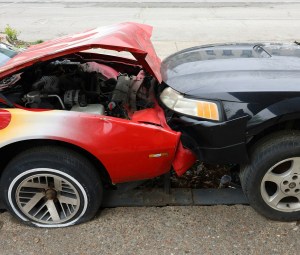
Last week, I walked out to my car, which had been parked on the street, to find that someone had hit it. The driver’s side mirror was ripped off, the wheel cover was smashed and the side was dented.
Two things immediately became evident: 1) we were lucky that the person responsible had left us a note with their phone number, (2) we were going to have to completely restructure our travel expectations for the foreseeable future.
While I found a lot to be grateful for in the situation, it also reminded me of a traffic analogy that I have used to describe what happens after you’re handed a cancer diagnosis.
Diagnosis? That’ll throw a wrench into your current plans. (Photo by Scott Greer on Unsplash)
Being told you have cancer is like getting into a traffic accident: you’re moving along with everyone else in their cars, focusing on getting to where you need to be, and then all of a sudden *CRASH*.
You pull your car over to the side, still stunned by the collision, and take stock of the damage to both your vehicle and yourself.
And as you stand there, all that traffic that you were moving along with has left you behind. You are no longer part of the natural flow of things. All the plans that you had to be somewhere and expectations for what you were going to do this week and next…all of that stops.
You hear the noisy din of traffic and the “Dopplered” sounds of cars zooming by, feeling the whoosh of air as they pass. But when there’s a lull in the traffic, the quiet brings on loneliness, as if the other travelers have moved on and you’ve been forgotten.
Now you have to rework your life. Instead of taking your ability to move through the city for granted, you’re scrambling to figure out what you’re going to have to cancel, how you’ll get to where you need to go and what the immediate future will look like until you get your car back in working order.
In the meantime, you see everyone else progressing along, as they have been, completely unaware of what life looks like in the breakdown lane. Having pleasant conversations, arriving at work on time, meeting with business associates, eating from cafeteria salad bars without the need to double disinfect their lettuce and tomatoes.
Not needing to schedule multiple appointments or surgeries or infusions or radiation treatments. It is such a different life!
~~~~~~~~~~~~~~~~~~~~
Shortly after receiving a cancer diagnosis there’s so much going on that it can be difficult to articulate everything you’re feeling, and those around you might have a hard time relating. I’ve found that this analogy can be helpful in relaying what the experience is like.
I stumbled across an article about another celebrity who has gone through breast cancer treatment. That’s not surprising, given the relatively high percentage of women, in particular, who have been diagnosed or are at heightened risk of the disease.
But this one—about celebrity organizer Clea Shearer (of The Home Edit, a home organizing company/brand/empire)—gave me pause for the specific reason that there was so much cancer-related hardship that continued after she finished her treatment.
In 2022, Clea was diagnosed with stage 2 breast cancer (“invasive mammary carcinoma”) and underwent the familiar treatments of surgery, chemotherapy and radiation therapy. However, it’s the complications of her double mastectomy that make her story very striking. To date (that is, as of the release of this article in People magazine a few days ago), she has undergone 14 surgeries and may be running out of options for breast reconstruction.
And just when you thought you were almost done…
This is not what anyone expects after they “finish” cancer treatment. In fact, Clea was declared cancer-free in November 2022. But it was clearly not the end of cancer-related effects for her.
I think it’s important for us to consider this when we try to be over-optimistic with cancer survivors. Pushing an upbeat attitude or telling survivors to “just be grateful” glosses over the reality of what they may continue to keep going through.
Yes, of course we are grateful. A cancer diagnosis is terrifying and for those of us who grew up when it was considered practically a death sentence, the idea of having it take your life is hard to get out of your head. In this day and age where social media describes the “condition” as d**th…well, cancer survivors have to meet the possibility head-on, minus the asterisks.
However long a survivor has survived is a cause for celebration and gratitude. But it’s not necessarily the end-of-story, fade-into-the-sunset ending. Clea’s experience is proof of that and I wish her strength and perseverance as she navigates the coming months.
Stories like Clea’s underscore the critical need to treat the whole patient, including offering emotional/mental health support, and not to simply stop the support when the cancer center-based treatment ends. Even when it might seem that treatment is done, it may just be the beginning of a new set of challenges.
There is a part of me that would like to stop talking about cancer. Really.
My cancer diagnosis tops my “Worst Things I’ve Gone Through” list, more than any other crappy things that I’ve gone through. Treatment brought me to a screeching halt and forced me to rethink my expectations for what “success” looked like.
It wouldn’t be surprising if I wanted absolutely nothing to do with cancer and chose to never speak of it again.
However, I DID go through this. I WAS angry and frustrated and literally fearing for my life. So I want to own the fact that I faced one of my greatest health fears and was able to come out of the other end of the cancer tunnel.
Undoubtedly, most of my “success” was sheer luck and well-established medical protocols. There are many other cancer patients who go through the same thing but are not so fortunate. Until we know exactly what triggers the development of a tumor and can determine how to effectively avoid that, we will still be riding by the seat of our pants
In that case, isn’t it sort of odd to wear the “cancer survivor” badge like an achievement?
And yet, it does feel like an achievement. Or perhaps, it feels like it gives me a purpose. The entire reason why this blog exists is because I had questions about the experience of being a cancer patient that I could not find answers for, and I wanted to offer what I had gone through in case it might help someone else.
As cancer recurrence became kinda, sorta, maybe less likely with each passing year, I still had an urge to let people know about the disease because it had been so huge in my life. At some point in a conversation, I’d stick in that I was a cancer survivor—it was hard not to, I realized, because there were so many ways that cancer had entangled itself in me.
And people would say congratulations for surviving and then the conversation would become a bit uncomfortable because no one really likes talking about cancer…and everyone would quiet down for a bit. I could easily keep going on about my experiences but I know I’d never get invited to another social event if I did, so I learned to shut up and change the subject.
This blog is my emotional, cancer-indulgent dumping ground.
~~~~~~~~~~~~~~~~~~~~
If someone mentions that they have a cancer diagnosis, I know what not to say first and foremost, but there’s a balancing act between allowing them the space to express themselves (especially if others around them don’t know what to say) and offering supportive bits of random information about things that actually matter to them.
In online forums, I’ve typed out a block of text…only to delete it before sending. Maybe it’s not as important for me to talk about what I went through as it is to simply be there to listen.
So, I have a silly little story about non-attachment.
During Memorial Day weekend, I placed an order with a Maine mushroom company humorously called North Spore. [Note: I am not affiliated with them in any way other than as a customer.]
I ordered two bags of drinking chocolate with functional mushrooms added. While I usually prefer my cacao unsweetened, I was willing to try this as it was a more economical purchase than the orders that I’d placed for “ceremonial grade” cacao. Additionally, I love mushrooms so I considered it a special treat.
I had had several stressful months with no significant break coming up, so I was really looking forward to receiving my package and its delicious contents—a little respite from the tumult that was my life. The package was scheduled to arrive on Saturday, June 7th and you can bet I was tracking its transit via the US Postal Service’s phone app. No matter what kind of a day Saturday turned out to be, I was already imagining enjoying a nice warm cup that evening, making things better in some small way.
Maybe you can see where I’m going with this? I was invested.
Saturday arrived…I received the delivery text…I ran out to our complex’s mailroom. But there was nothing in my mailbox. No package, no key to the larger package holding box, nothing. I groped around inside my mailbox, hoping that maybe I was just blind and the key was actually there. But no.
Frustration!
NOOOOOO!
And it was at that moment, as I was simultaneously (silently) cursing our mail carrier—who has mixed up mailboxes before—and praying that the key had ended up in the box of an honest neighbor, that I was hit square in the face by the suffering that attachment brings.
I had set up an expectation (honestly, a reasonable one), felt into it very deeply, and experienced that ache of having to rip myself away from it when things went in a different direction.
Had I been able to practice non-attachment, I would have taken this in stride. After all, the package was clearly misdelivered and may still show up, and if not, a trip to the post office would follow since I had a tracking number and the shipment was insured. It would have been easier to shake off disappointment because I would not have built up such strong expectations and hung so much on receiving my hot cocoa.
But alas, I am very much an imperfect human being who did a very natural thing in anticipating the arrival of my package, along with expecting the USPS not to louse it up. So after fuming and agonizing over the “unfairness of it all”, I decided to sit with all of this for a while: acknowledging that it made sense for me to look forward to receiving something to brighten my week along with the importance of not beating myself up for doing so; but also cajoling myself into releasing my grip on what I had so wanted as the outcome in addition to stepping back and getting perspective on the situation.
And then I felt better, like a big chunk of tension had been released. It’s not easy being human sometimes.
~~~~~~~~~~~~~~~~~~~~
I realize that not getting a shipment of drinking chocolate is not a devastating outcome, and yet, even something so relatively insignificant felt like a big letdown in the face of expectation. So then, what about a potentially life-changing outcome? The effect could be brutal enough to upset one’s established foundation. It underscores the clinginess of attachment and when possible why we should strive to soften our need to have things be a certain way.
Last week, I met with a friend that I don’t see often. We were talking about what was going on in our lives and he related how he loved where he lived right now, and put a positive spin on everything in his life, even when talking about negative happenings.
He sounded sunny and was handling the tough stuff that came his way.
But then it was my turn to tell him about what I’d been up to. I started describing what I’d been dealing with: my father’s decline and death last year, worries about my mother’s well-being, concerns about the increasing cost-of-living…
My friend smiled at me. The last time he had talked to me, he said, I was stressed about something else. In fact, every time he calls me, there’s some new thing that I’m stressed about.
And of course he’s right. As much as I’ve improved in handling anxiety using all the tools I’ve developed to calm myself down—and, yes, I’ve found success with that—the overarching feeling that I have is that I’m playing whack-a-mole with my worries.
It’s as if I’m trying to regain my footing, but something new comes up and knocks me off balance again.
After getting past cancer treatments like chemotherapy and radiation, you’d think that the skies would look brighter and my outlook would be more positive. And for quite some time that was completely true.
But as endocrine therapy wore on and I went through menopause, my spirit suffered. The luster of surviving cancer started wearing off. That’s embarrasing to admit, especially when I have lost friends and family to the disease and know of many others desperately fighting it.
But even being aware of that, my day-to-day seems to have become darker overall. I start the day with energy to get things done but by evening I’m exhausted and sometimes overwhelmed by what’s in front of me.
I know some of this is my own doing. In fact, one of the big, scary changes that I was faced with this year just sorted itself out. It was simpler than I expected (note my previous post). And then my son was admitted to the college he wanted to attend. All these are refreshing successes that I should have spent time basking in. But it didn’t take long for the clouds to gather again.
After hearing my friend’s assessment of me, I am trying to figure out whether what I’m going through is really getting harder? Or have I gradually been losing my ability to pull myself out of a funk? And once the uncertainties are settled, will I bounce back?
I feel disappointed in myself, which is exactly part of the problem. Lack of self-compassion simply compounds the stress. You know the carrot-and-stick analogy? Well, I’ve tossed the carrot and am just beating myself with the stick.
But I remember “life before cancer” and it felt different. There was a feeling that there was so much life left to live, so many plans still to execute.
I felt bulletproof. My own primary care doctor was impressed that I’d made it through so many years without ever having a major surgery (or any surgery, for that matter). I was looking foward to my future. My workouts were still tough and vigorous and I felt like I was going to age well.
Most importantly, life had a certain magic to it. It felt multidimensional and filled with possibilities, and even with the challenges that I’d had to face, I had hope that things would always get better.
Then I got hit by the locomotive that is cancer and everything ground to a halt. My world went gray and all those plans that I had for “the rest of my life” fell away as all my energy was focused on surviving the diagnosis, surviving chemo…and I didn’t see much past that.
For quite a while after diagnosis, I’d felt like I’d been tossed out by the side of the road. (Photo by Sven Brandsma on Unsplash)
Emotionally, my life felt like a void. I was too afraid to even let hope in because of the fear of having it dashed to pieces.
It was like being out in the wilderness and calling for help but receiving none, not even an echo. Spiritually, it was the loneliest that I’d ever been.
I was no longer on the highway of life. I was sitting in the breakdown lane.
Forgive me if this sounds melodramatic. All my ‘anxiety chickens’ had come home to roost, so to speak. And I wasn’t handling it well.
I dragged myself around treatment like this…although about two weeks before my cancer surgery, I had started mindfulness meditation, encouraged by my radiation oncologist who suggested it as a non-pharmaceutical way of dealing with anxiety.
It was that little ‘peep’ of mindfulness that had I clung to, terrified, in the beginning, not really sure whether or not it was helping. But at least it was something warm at a point when I felt cold and abandoned.
I can honestly say that mindfulness and meditation were what gave me back the strength to persevere through tough times. (Photo by Robin van Holst on Unsplash)
As time went on and I stubbornly refused to miss a day of meditation, that little break in the clouds became bigger. In this case, my obstinance was a blessing. Somewhere in the last almost-eight years, not even sure exactly when, something changed.
The fear and loneliness and bitterness crumbled away. Noticing how things were right now, how beautiful the world was when I chose to appreciate it, helped pull me out of the funk.
In our darkest moment we find our greatest strengths. I wish it weren’t like that, I wish there wasn’t a need to hit lowest lows in order to get the biggest spring back up. But I can say that if my life even before cancer had been easier, I would not have experienced the richness of existence as I do now.
Not everything is okay. In many ways, things are even harder and more frightening. But I can accept that and not feel bitter. My expectations have softened and I pause more often to ground myself, to notice that at this moment, I am safe.
I have been stressed lately, which is a bummer because this year I really wanted to relax and enjoy the holiday season. But once again, it seems like the year has some zingers left for the final months of 2024.
Instead of writing about them in a post, I decided to write them down…and I was surprised by how many stressors had built up.
I made my list carefully, organizing it by time periods: first, I wrote down the things that had been nagging me all year or longer. Stuff like constant increases in rent and cost-of-living. These were exerting continuous pressure on my well-being.
“Dear Santa, please don’t bring me any more stress. I’m good for this year.” (Photo by Mike Arney on Unsplash)
Second, I wrote down things that seemed to have happened in the second half of the year and had a large impact, like my father’s death and experiencing frequent visual migraine auras.
Third, I got more granular and wrote about the things I was experiencing on a daily basis. Like feeling that my words were misunderstood or having to go through the rigamarole of tracking down a package that hadn’t arrived—these are things that work themselves out in a relatively short period of time but are stressful in the moment.
Why bother listing all this? Because it helps sort things out. I get perspective on exactly what’s going on in my life. Without that, it’s like someone throwing a huge blanket over you—suddenly it’s dark and you feel smothered. And that feeling of overwhelm elicits a lot of anxiety.
And once I had started the lists, I considered how I was reacting to these stressors. For example, since my father’s death I had not given myself the opportunity to grieve, not even during the funeral. There were so many other concerns that it didn’t seem like it was “the right time”.
So over the last two weeks, I gave myself the space to cry. If I hadn’t stopped to consider what was actually going on, I might have tried to soldier on and pushed away how much it hurt. I had been affected by not only his loss, but also by how his gentle nature meant he didn’t push back against forces that led him to forsake his own passions, and knowing that compounded my pain.
Ah, here comes that word again: PERSPECTIVE. You really don’t get the whole view until you step back and quietly observe. (Photo by Brigitta Schneiter on Unsplash)
But the reactions don’t have to be as heavy as that. I also noticed that I had been doing a lot of sighing this year, something that is associated with stress and anxiety. Even my body was trying to tell me to take a break.
Writing out the lists gave me a chance to acknowledge what I was already feeling, and pushed me to evaluate whether what I was doing to relieve my stress levels was effective enough for what was going on.
It’s important to note that the purpose of writing up these lists is not to wallow in misery! Everyone has stress of some kind and I’m not unique in that, nor am I trying to make this a bigger thing than it is.
The fact is, some stressors happen to me and some I impose upon myself (unrealistic expectations, perhaps?). It is only when I am able to review them that I can determine which is which, and then take appropriate measures to alleviate whatever pressures I can.
I won’t lie, I have mixed feelings about the color pink these days, along with October’s “breast cancer awareness” paraphernalia popping up in stores, in promotions and all over social media. Some of us don’t need the reminder that breasts get cancer.
Breast cancer is probably the most popularized cancer there is, and I’m willing to bet that’s in part because there is a giddiness associated with yelling “SAVE THE BOOBIES” and not getting into trouble for it. It is also the most funded cancer (McIntosh et al., 2023, Lancet, for example) but to be fair, also one of the most common.
So you would think that by now I would be very accepting of all the pink ribbons on yogurt and fizzy drinks and whatnot. But amidst the rah-rah, October also brings with it the memories of feeling very alone with my disease. Once the chemo and radiation were done, I found myself wading through a new phase of life that I wasn’t prepared for.
This is a reminder to myself that it is a privilege to be here griping about October being so pink! (Photo by Angiola Harry on Unsplash)
I thought I was “done”. And so did everyone else. But dealing with continued Herceptin infusions along with an uncertain future of endocrine therapy frustrated me because I felt I still had an excuse to feel crappy, but no one else thought I did.
And even with that frustration, I have a lot to be grateful for.
All the pink stuff and smiling faces have been so important in bringing so much generous funding to breast cancer research, which has resulted in great strides being made. There are other cancers that are painfully underfunded (for instance, pancreatic cancer, which also has high mortality rates), and I would be lying if I said that I didn’t feel some guilt about that. I cannot gripe about all the pink too much, because I am the beneficiary of all the money that has poured in.
Specifically, my triple-positive breast cancer was actually considered quite aggressive, but research resulted in new pharmaceuticals that have de-fanged that type of breast cancer and resulted in high survival rates. Even my oncologist remarked that he couldn’t remember the last time a HER2-positive patient of his suffered a recurrence, and he’s in his 70s. That says a lot.
So it seems disingenuous of me to lament all the screaming pink at the store. It seems equally disingenuous of me to wonder how much cancer took away from me that I would still have right now. Because one thing it didn’t take away was my life, and not everyone is that fortunate. Remembering that puts everything into perspective.