Some time ago, I was thinking how I got to where I am and was seized by a sense of regret and shame. This was not where I thought I’d be by this age.
So many things that I’d worked for education-wise, health-wise, career-wise seemed to have been derailed by decisions I’d made based on life circumstances that I didn’t feel I could control…or by just plain bad luck (cancer, I’m looking at you).
As I pondered this, I became enveloped in it, slipping down a dark hole, trying to squash those negative feelings—the ones that get buried for a while only to pop back up at 3am some night.
But then I thought, “Ok, so how about another way of looking at this?”
What if how I am now was the end goal all along?
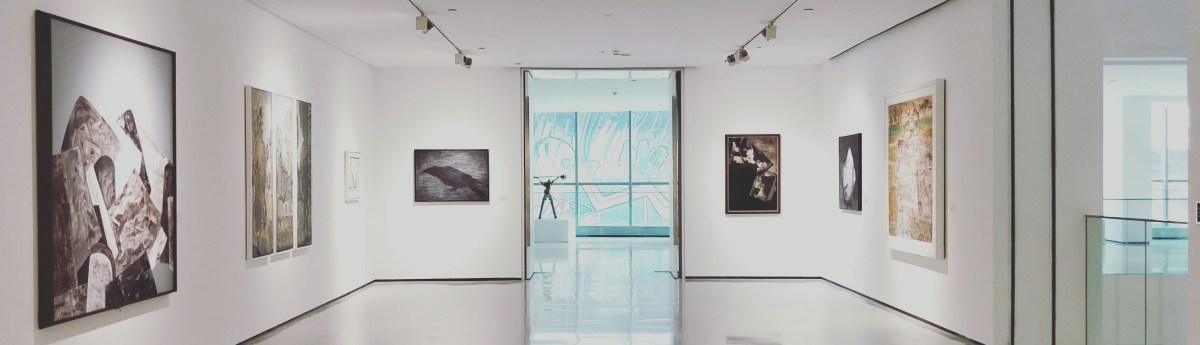
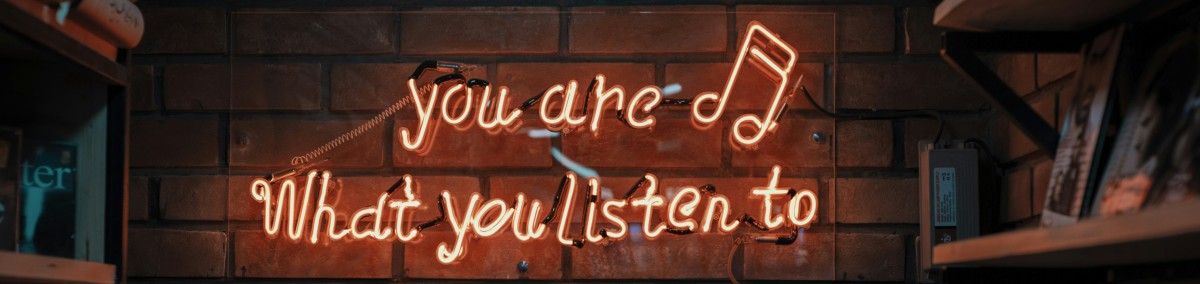
What if where you are right now is where you need to be for the rest of your life to work out according to plan? (Photo by Jon Tyson on Unsplash)
And that shift in perspective allowed me to look at the things that I felt I hadn’t fully achieved as being “the plan” for creating me as I am now.
And what I am now is made up of the valuable experiences that I was labeling as half-done or poorly-executed or forced upon me—but no, perhaps they were all so necessary for setting up myself in this place with this knowledge. And from here, preparing me to move forward.
A master’s degree I haven’t used for a couple of decades, a job situation that falls below my career aspirations, a body that is limping back from injuries and cancer, a mind that can be my worst enemy. The experience of all of these brings with it wisdom and insight. And strength.
Where I am now is exactly where I need to be for the next chapter of my life. The foundation for future-me has been established.
So, how about you?
What if you spin the timeline around, understanding and appreciating who you are now, however “imperfect” it might seem to you, social media, whomever else serves as the judge of your life. This is now your starting point.
What’s your next step?
How can you take everything that’s come before you and allow it to support the incredible you that you will become?
[NOTE: I am not associated with nor do I get any kickbacks from writing about Snail’s House, Pirate Software or Heartbound (except for a sense of well-being) 🙂 ]
Continuing with my “Favorite Calm Things” series, I have found great pleasure in watching ferrets sleep.
Yes, Snail’s House Ferret Rescue stream (https://www.twitch.tv/ferretsoftware or ferrets.live) has a playtime about once a day where you can watch an amazing bunch of curious ferrets racing about, charging through tubes, sneaking off with little toys, play-fighting and pausing the chaos to indulge in a yummy snack. But in between these playtimes, I find great comfort in watching a large cage of about 15 or so ferrets (just a fraction of the actual ferret population there) cuddle together in hammocks and under mats and snooze away the 18-20 or so hours that they spend sleeping during a 24-hour period.
The cameras are always on. Full color overhead view during playtime and front nightvision as they sleep the rest of the time.
Photos of a selection of resident ferrets (more have already been added)
This ferret rescue is the forever home for these wiggly noodles, as the facility accepts ailing animals, rescues from bad situations, ferrets who can no longer be cared for by their owners and the like. These ferrets are provided with high quality food, nurturing environment, medical care and proper stimulation…but are never adopted out. Snail’s House is the loving home from which they will ultimately cross the rainbow bridge, comfortable until the end.
Faces like this are difficult to resist (this is not one of Snail’s House’s ferrets, but cute nonetheless). (Photo by Nikolett Emmert on Unsplash)
This ferret rescue is the pet project of game developer PirateSoftware (https://www.twitch.tv/piratesoftware) led by Jason Thor Hall and exotic vet assistant (and artist) Shaye Rehmel. Due to Thor’s diligent planning and recent explosive success on both Twitch and YouTube, the rescue is ever-expanding, as of this writing home to about 42 ferrets. Ingeniously, Snail’s House is funded by ad revenue from the FerretSoftware stream on Twitch. If you want to support them, all you have to do is tune in to the stream.
This is the only stream where the viewers get excited when ads come on because they know the benefit that advertising funds bring to the furry noodles.
We, the viewers, are the beneficiaries of the ’round-the-clock video because we get to watch the wigglers at any time, day or night. These snoozing ferrets are an anchor that I use to ground myself in the middle of a hectic workday.
For me, watching this stream is a meditation. While there is a varied soundtrack in the background (musical pieces from the Heartbound video game by PirateSoftware), sometimes I find it more peaceful to sit in silence as I watching the little guys sleep, piled up on top of each other. It feels like a perfect pause.
~~~~~~~~~~~~~~~~~~~
The rescue is expanding! Snail’s House has moved to a new and larger location and is still in the process of securing fiber internet; until that time, the stream may occasionally be pixelated.
If you’ve ever seen one of Bob Ross‘ painting shows, you immediately understand why he is magically relaxing.
Bob Ross had an instructional painting series on US Public Television (PBS) in the 80s and 90s, up until his untimely death from complications from lymphoma on July 4, 1985.
He used a wet-on-wet technique with oil paints that allowed him to blend colors on the canvas and he became famous for landscape paintings that he completed within the space of a half-hour video segment. It was amazing watching him work, and even though what he painted wasn’t “high art”, that also wasn’t his purpose. He wanted to remove the intimidation factor from painting and introduce as many people to it as possible.
But it wasn’t just that. Bob was a former master sargeant in the Air Force, a position that required him to be loud and tough, and after he left the service he decided never to raise his voice again. I don’t know whether this story is true, but during his painting shows, Bob used such a calming voice that many would watch just to be soothed by him. It was ASMR (autonomous sensory meridian response) before ASMR became a “thing”.
Additionally, ever-kind, he would drop positive bits of wisdom and encouragement during his shows. Not in a toxic positive way, but gently, to demystify oil painting and empower his audience. He was known for his “happy little trees” and “there are no mistakes, only happy accidents”.
And who can forget Peapod the Pocket Squirrel. Bob loved not only nature, but also the woodland creatures that inhabited it. He would adopt injured or orphaned animals and raise them until they were ready to live on their own, and then he’d let them go, because they needed to be free.
Bob had such a kind heart and even though some poked fun at him for his gentle demeanor and animal-loving nature (and famous permed afro), so many of us appreciated his abilities and sensibilities.
So why am I writing about him here? Every weekend from Friday at 12pm ET (US) through Monday at 12pm ET, there are marathons of about 4 or so of his seasons (out of 31, which rotate through). These stream on Twitch (@BobRoss) and YouTube (@bobross_thejoyofpainting). We put him on and leave him going, allowing his quiet relaxing voice to waft around our apartment over the weekend.
If you’ve ever needed something to help bring your out of the worries in your head while mesmerizing you with artistic aptitude, Bob’s your guy. Next weekend, put him on and watch for a bit, and you’ll quickly understand what I mean.
Let me begin by stating that I have no connection with Jason Stephenson or his YouTube channel, Relax & Rejuvenate with Jason Stephenson, other than that I fell in love with some of the music for which he has posted a (thankfully) loooong version on his channel. Nor am I getting any sort of kickback for writing this post.
The video is called “Happiness Frequency: Serotonin, Dopamine, Endorphin Release Music, Release Negativity”, which is a long title that smacks of click bait and sounds like just about every other positivity-enhancing, negativity-busting title available on YouTube.
But there is something about Jason’s music and this piece specifically. I have used it for yoga, meditation, pre-bedtime wind-down and as a calming backdrop for a stressful day.
What is it about this that is so soothing? (Relax & Rejuvenate with Jason Stephenson)
I usually don’t put much stock into the claims on these videos. You know, the ones that assure you they can increase positivity, bring you good fortune, pay off your student loans, cure your ingrown toenails and improve your gas mileage. But this one…there is something very special about it.
Everyone I’ve played it for feels the same way that I do, and inevitably, they ask me for the YouTube.
So, I’m curious. Do you have the same reaction? Give it a listen and let me know.
This past January, I was delighted to receive an email from work about a day-long mindfulness class being offered to help usher in the new year. What a great idea! I can think of no better way to launch into another journey around the sun than with a sense of calm and acceptance, and I felt myself puff up with enthusiasm.
But as I scrolled down for more details I saw that this retreat had a price tag. Good feelings gone. It was close to $100.
This was an experience offered by my workplace, presumably so that I could be a more mindful employee, and they were charging for it.
I understand the importance of investing in yourself. It’s worth more than a monthly Netflix subscription and will get you much farther in life than a daily Starbucks run. Mindfulness experiences are where I want to put my hard-earned dollars.
But this past year was tough. I needed mindful guidance even more, and yet I kept coming across financial barriers.
Why does all this good stuff need to cost so much? Meditation costs absolutely nothing and offers infinite rewards, and yet, there seems to be a vibe out there that you must spend money (the right cushion, the most beautiful journal, the most blissful island retreat, the perfect yoga pants) in order to do this right.
I live in Southern California where the cost-of-living is high and so are many salaries, but not all. And the gap between those who live comfortably and those who struggle to get by is widening. There are so many who could use the grounding and calm that meditation can offer.
At the same time, I completely get that someone like a yoga teacher or a sound therapist in this area is also struggling. In order for them to be able to offer the services that they do, they must cover their costs.
Yeah, I know. All this mindfulness stuff seems to be unnecessarily pricey. (Photo by Magic Bowls on Unsplash)
So here’s my wish for the remainder of 2024: Hey, workplaces! Yeah, you, the ones who expect a lot from your employees! Make sure they are fully supported in all aspects of wellness. Bring in a meditation teacher or a yoga instructor. Set up a quiet space for people to destress for a few minutes. Don’t expect your workers to shell out part of their paycheck for staying grounded dealing with your expectations.
And for the meditation teachers and yoga instructors and sound therapy practitioners and the like who are actually making a very good living…fine. Do your thing. Charge your prices. I know that trainings and musical instruments and sacred spaces aren’t cheap. There are people who can and will pay a premium for them to get a truly calming and magical experience.
But after that, please. Offer free classes in parks and libraries and community centers. Volunteer your time for a good cause (my favorite has been a charity yoga class at the local Humane Society). Look for opportunities to share your talents in the not-so-bougie parts of town.
It will make a big difference to people who usually are not usually shown such grace.
Wow, 2024 is going by fast! We are now a quarter of the way done with the year and it feels like we just started.
In the midst of the whoosh of weeks flying by, here’s a way to slow things down and get intimate with the present moment. This is a simple little meditation but one that I find to be gloriously soothing.
I often do this in the morning when I awake, still stretched out comfortably in bed. Bringing attention to the weight of my body as it rests on the surface of the mattress. Sinking in.
We usually consider street traffic an annoyance, but it can translate into perfect sounds for a meditation. (Photo by Derek Lee on Unsplash)
And for this meditation, instead of using the breath as a point of focus, I bring attention to the sounds around me. In my room, outside on the street.
There is a lot happening in this soundscape. We have a sound machine going, an air purifier whirring, cars are driving up and down the street below. The sound envelops me and I absorb myself in it. It feels comforting.
Initially, my attention is open, getting settled and taking everything in. Then I shift my focus from the various indoor sounds to the outdoor sounds, traveling around them one at a time, noticing each different one.
Gradually, I select one sound that I can distinguish and move my attention towards it. I get in close. And the closer I get to it, the more my focus turns to a certain aspect of that sound, a certain pitch or rhythm. And then I zoom in even more and try to stay there.
Inevitably, I’ll notice that my attention has been pulled away by thoughts or other sensations, and when I become aware of this, I gently return to that one aspect of that one sound. Exploration continues in this way until I decide to shift my focus to another sound and do the same thing.
It’s a little dance between my thoughts and any given sound. Always returning to the sound.
There are no hard and fast rules to this. The option always exists to pull back from that one sound and open my awareness to everything audible around me. And perhaps instead of finding a specific sound to pour my attention into, I allow the soundscape as a whole to come to me and listen to it as if it were one unit, like a symphony.
This is meant to be uncomplicated and unforced. The idea is to stay present with the sounds around me and notice new textures and dimensions of noises.
I hope you give this a try the next time you find yourself in a perfect spot for it (whether in bed or outside under a tree in the park), and if you do, please let me know how it went!
I’ve been writing a lot lately about using yoga to mitigate cancer therapy-related side effects.
In this post, I want to bring your attention to the white paper entitled, “Yoga Interventions for Cancer Patients and Survivors” [Important: this links to the download page on the yoga4cancer website, *not* directly to the pdf itself]. It’s an evidence-based review of research regarding the benefits of a yoga practice in coping with negative side effects that afflict cancer patients and survivors, followed by recommendations for teaching yoga to this population.
The white paper is written in non-technical language, distilling the research down into a form that doesn’t require a scientific background to understand. Additionally, editions are available in Spanish and Japanese, both available on the download page beneath the English version.
If you’d rather not download, you can read the English version below (or click the “download” button underneath the paper for a pdf):
I’ve been coming across a lot of interesting–and hopefully useful– videos. The one I’m posting here is presented by the nonprofit Fund for Sustainable Tomorrows and the American College of Sports Medicine, the latter being the organization through which I received my personal trainer certification almost 16 years ago.
This is a 20-minute film with a hopeful message!
The film, narrated by former Olympic figure skater and cancer survivor Scott Hamilton, showcases the stories of how survivors are using exercise to make themselves feel better and increase their chances for survival. It also shows how our knowledge about physical activity’s benefits during cancer treatment has increased, and the programs that have been created to help cancer patients become and stay active.
It’s amazing to see how within a decade or two the attitude about cancer and exercise has changed. Whereas individuals undergoing cancer treatment used to be told to rest as much as possible, now it’s understood that exercising through your treatment is one of the best ways to not only minimize associated side effects but also decrease the chances of cancer recurrence.
For me, exercising during my treatment was a way to feel normal when everything else felt out of control.
The current recommendation is aerobic activity for 150-300 minutes per week along with twice weekly resistance training sessions. And it’s best to do both types of exercise for a well-rounded program, if you can manage it.
But the most important thing to remember is that no matter what you do, doing something is better that doing nothing. Research has discovered the existence of myokines, hormones that are produced in the tissue of skeletal muscles. They are released during muscular contractions and seem to have anti-cancer properties, slowing cancer growth and spread. That is very exciting news!
Of course, exercise is not a cure, and there is no guarantee that if you are an avid exerciser you won’t get cancer or won’t have it recur. However, there’s a very good chance that physical activity will make you feel better and help you continue with life-saving treatments.
As E. Ronald Hale, MD, MPH, Medical Director of Radiation Oncology at Kettering Health states (from the video), “The best cancer treatment in the world is useless if you can’t get through the cancer treatment.” The side effects from cancer therapies can be debilitating, but getting out and moving will improve your quality of life and help you finish your treatment.
~~~~~~~~~~~~~~~~~~~~~~~~
It’s worth mentioning that the number of exercise professionals who have had additional training in working with cancer patients is growing, which means that cancer-informed trainers and yoga teachers are becoming easier to find. Now it’s the insurance companies that need to get on board.
In February 2022, I started a yoga teacher training program with a singular goal: to eventually teach yoga to cancer patients and survivors.
With its mix of physical postures (asanas), breathwork (pranayama) and meditation, yoga is ideal for someone going through the traumatic experience that cancer can be. Yoga can provide enough physical exertion to count as moderate exercise and the ability to help the practioner calm their mind, things that are so important for improving cancer treatment outcomes. However, classes must be designed carefully and taught thoughtfully.
Yoga4Cancer Q&A for Cancer Patients and Survivors (Yoga Alliance on YouTube)
Keep in mind, yoga teachers were yoga practitioners first. Many of them got really good at the practice, developed great flexibility and balance and gained respect for the tradition of yoga. But that doesn’t automatically make them appropriate yoga teachers for cancer patients, who need an instructor that understands the nuances of what cancer is and how treatment affects us.
A yoga teacher and breast cancer survivor by the name of Tari Prinster addressed that need by creating yoga4cancer (y4c), “an evidence-informed Oncology Yoga method tailored to address the specific physical and emotional needs left by the cancer and cancer treatments. The approach matches breath and movement to stimulate the immune system, improve flexibility & strength, reduce anxiety and boost overall well-being” (from the y4c website).
I’m planning to begin the y4c advanced 75-hour certification program (see informational video here) either later this year or early next. I’ve been so impressed by y4c’s emphasis on understanding the unique situation that cancer patients and survivors are in–it’s not just your garden variety beginner yoga class with “also for cancer patients” dressing. The program is well-thought out and comprehensive, and I’m so excited to embark on this next leg of moving closer to my teaching goal.
In the meantime, here is a selection of videos created by Tari and her instructors that are specifically geared for the mental and physical needs of cancer patients and survivors:
Yoga4Cancer Oncology Yoga for Cancer Related Fatigue (Yoga Alliance on YouTube)
Yoga4Cancer Yoga for Bone Loss (Yoga Alliance on YouTube)
Yoga4Cancer Yoga for Range of Motion (Yoga Alliance on YouTube)
Yoga4Cancer.com Yoga for Anxiety (Yoga Alliance on YouTube
yoga4cancer.com Yoga for Lymphedema (Yoga Alliance on YouTube)
yoga4cancer.com Yoga for Constipation (Yoga Alliance on YouTube)
Many cancer patients complain of feelings of helplessness after their diagnosis, and I can certainly relate to that. As a result, I’m particularly interested in research that explores whether patients can gain control over the success of their treatments.
The most recent study I’ve come across includes breast cancer patients undergoing treatment at Yale and Dana Farber Cancer Centers.
This study appeared in the Journal of Clinical Oncology(Sanft et al., 2023). Researchers examined the effect of diet and exercise on “relative dose intensity” (RDI), which is the relationship between the amount of chemotherapy delivered to the patient compared to the standard amount prescribed. Low RDI means that there was a reduction in the chemotherapy the patient received and is generally associated with a poorer outcome. Dose reductions result from the patient’s difficulty in tolerating the drug.
The researchers also looked for “pathologic complete response” (pCR), which is “the lack of all signs of cancer in tissue samples removed during surgery or biopsy after treatment with radiation or chemotherapy” (definition from cancer.gov). This was for women receiving neoadjuvant chemotherapy, which is chemotherapy administered prior to surgery.
Yep, once again we come back to diet and exercise, even during chemo. (Photo by Yulissa Tagle on Unsplash)
The subjects of this study were women recently diagnosed with stage I-III breast cancer, who either received the “usual care” or a diet and exercise intervention. Those in the intervention group received nutritional counseling with a focus on a plant-based diet. The physical activity included counseling and support for maintaining a home-based exercise program that included strength training (2x/week) and brisk walking (150 min/week of moderate intensity or 75 min/week of vigorous intensity).
What the research confirmed first was that the subjects in the intervention group were able to increase their exercise and diet quality, which showed that it was feasible to make lifestyle improvements even in the midst of chemotherapy.
However, in this study, the RDI for both groups (“usual care” and diet & exercise intervention) ended up being similar, but also quite high, which meant that women in both groups completed most of their treatment. The researchers noted that the study should be re-run with patients who were at greater risk of not being able to complete all their chemo to see how much of an effect improved diet and exercise would have, especially since exercise has been shown in other studies to have a positive effect on patient outcomes.
But a striking difference was seen for women receiving neoadjuvant (prior to surgery) chemotherapy in that the rates of pCR (disappearance of cancer in the tissues) were 53% for women in the intervention group versus 28% for women receiving usual care. That suggests that the intervention enabled the chemotherapy to be more effective.
There are many physical activities you can choose from–clifftop not required. (Photo by Sigmund on Unsplash)
The researchers stated the following in summarizing their study: “Given that pCR is an accepted predictor of recurrence and mortality, our findings could provide oncologists with a supportive care intervention that affects the ability to potentially improve survival outcomes” (Sanft et al., 2023, J Clin Oncol). And this is very good news indeed.
The take-home message here is not surprising, and it’s good advice for life in general: no matter what your current lifestyle, prioritizing a healthier diet (emphasis on whole foods, plant-based, less processing, etc.) and engaging in regular cardiovascular and strength training exercise will improve your quality of life. It is always worth the effort.
~~~~~~~~~~~~~~~~~~~~~~~~~~
REFERENCE: Sanft et al. (2023) Randomized Trial of Exercise and Nutrition on Chemotherapy Completion and Pathologic Complete Response in Women With Breast Cancer: The Lifestyle, Exercise, and Nutrition Early After Diagnosis Study. J Clin Oncol, 41: 5285–5295. https://doi.org/10.1200%2FJCO.23.00871. [This paper is Open Access and can also be found in PubMed Central: https://www.ncbi.nlm.nih.gov/pmc/articles/PMC10691793/]