“The Gun Show”: Assessing Biceps Muscle Loss Due To Endocrine Therapy [PHOTOS]

In my last post, I whined about the repercussions of taking aromatase inhibitors (in my case, letrozole) as a way to diminish the amount of estrogen in my body, for the purpose of reducing the risk of breast cancer recurrence.

While I also mentioned letrozole’s effects on my exercise habits, in this post I wanted to drill down on one aspect in particular: muscle loss.

Before I go further, I need to add a disclaimer. Since the time the first photo was taken (the morning before my first chemo infusion), three and a half years passed and I went through menopause. Notably, the menopause was pharmaceutically-driven, starting with tamoxifen and then, after my hormone levels were low enough, continuing with letrozole. However, my body now is dealing with the same aging effects as someone who had transitioned naturally.

Except that my transition came before its time.

The below photo is from April 27, 2017, before I headed to the infusion center for my first dose of chemo. I had been training as normally as I could, under the conditions of lumpectomy and port placement that I wrote about here, and finding work-arounds for exercises that I’d been told not to do.

This is my 51-year-old biceps muscle, before I started the pharmaceutical portion of my breast cancer treatment.

While I lost some size and strength throughout my chemo infusions (here are all the photos), I was able to bounce back and had a particularly strong 2018 (sorry, don’t have good photos of that). But as the endocrine therapy with tamoxifen continued in 2019, to be replaced by letrozole in 2020, I could feel the effects of low estrogen.

On December 11, 2020, I struck the same pose again for sake of comparison.

Is something missing? This is my 54-year-old biceps muscle, struggling to keep up. Note: I am still working out as hard as I can!

As far as muscle appearance is concerned, I have experienced a slow downhill slide. My shoulder is not as peak-y, the biceps itself has decreased in size and I even find it more difficult to hold this muscular contraction. In addition, there’s more looseness in my skin, particularly at the back of my arm, which in part may be due to loss of collagen, also affected by estrogen levels (nice dermatological review by Shah & Maibach, 2001, Am J Clin Dermatol).

I’m busting my butt trying to increase the amount that I’m lifting, but I’m not making progress. Not surprisingly, the decrease in estrogen plays a role in this. As stated by Chidi-Ogbolu & Baar (2019, Front Physiol), “estrogen improves muscle mass and strength, and increases the collagen content of connective tissues”.

It makes sense then that lack of estrogen is going to be detrimental to maintaining muscle. To that point, Kitajima & Ono (2016, J Endocrinol), working with animal models, have found that “estrogen insufficiency leads to muscle atrophy and decreased muscle strength of female mice.”

Not just mice, obviously.

This information comes as no surprise to any woman who’s gone through menopause, I’m sure. But the experience of being slammed through menopause instead of having the opportunity to transition more gradually is yet another frustrating way that having cancer pulls the rug out from under you and reminds you that you are not in control of your life.

~~~~~~~~~~~~~~~~~~~~~~~~~

Slowly, yoga is becoming more important in my life and my view of fitness is changing. Good thing too, since I can’t keep beating myself up like this.

A Year on Letrozole

Warning: This is going to be a bit of a gripe-fest…

This coming week marks my one-year anniversary of taking letrozole, an aromatase inhibitor designed to reduce the risk of recurrence of my breast cancer by reducing the levels of estradiol (precurser to estrogen) in the body.

Aromatase inhibitors are problematic. Significant numbers of women discontinue taking these medications prior to the planned end of treatment, and this is due mainly to side effects (Kadakia et al., 2016, The Oncologist).

A year into this, I can completely relate. When I was on tamoxifen, the side effects were less well-defined. With letrozole, they’re unmistakable.

Most infuriating are the physical ones, especially the arthralgia (joint pain). I’m an ardent exerciser, regularly engaging in rowing, lifting weights and interval training. Arthralgia puts obvious limitations on my workouts. Maintaining muscle is harder and as a result I need to work out more intensely. So I push it, but it feels like I’m treading water with an anvil tied around my neck. I know that working out and building muscle is going to be tough at age 54, but I question the benefits of a drug purported to lessen the chance of cancer recurrence when it’s affecting my ability to engage in something (exercise) which is strongly associated with a decreased risk of cancer (Cannioto et al., 2020, JCNI). It doesn’t seem to make sense.

No matter how tired I am in the evening, some nights are restless and NOT refreshing.

Another effect of the drop in estrogen is fatigue, which can be intense by the end of the day. Then, okay, I go to bed early, but my sleep quality is hit-or-miss. Sometimes I experience weird “restless leg” symptoms. This is a “gripping” or aching sensation that can only be aleviated by moving my legs. Any position that feels comfortable at the moment soon won’t, and I do an awkward dance as I move around in bed. Not a great recipe for falling asleep. Luckily this doesn’t occur every night, but when it does, it impacts the next workday.

As a side note, I usually take magnesium supplements before bed, not only to aid in muscle recovery, but also to help with sleep. I don’t know what my nights would be like if I didn’t take them regularly, and I’m not willing to find out.

Over time, the pain in my joints and limbs has increased. It’s most pronounced in my fingers, toes, ankles, hips and elbows, and I’m generally most achey as I’m going to sleep and when I wake in the morning. Sometimes it’s bad enough that it wakes me at night–usually a burning sensation in my fingers and toes–but that happens only occasionally.

By the way, in case you’re wondering if that’s bone metastases instead of side effects, trust me, I’ve already thought about that. I’ve also done the obligatory googling, and while I’ll let my oncologist know about the pain at my next appointment, I don’t think it’s metastasis. These symptoms are just your garden-variety letrozole side effects.

One of the most striking physical side effects (that I could actually show to other people!) didn’t kick in until about Month 8 of taking the letrozole, when the stiffness in my fingers escalated to the point where several of them would lock up in the morning. If I made a fist and then attempted to open my hand, a few of my fingers would “stick” and, as I continued to try to straighten them, they’d suddenly sproing open.

I’ve already mentioned the physical fatigue, but there’s a deeper, darker side to this, which I’ve written about previously. The rest of my family — husband and two teenagers — are up and lively in the evening as I’m dragging my sorry butt to bed. I feel a strong disconnect from them. More specifically, I feel old, which is not surprising, since decreased estrogen is associated with ageing. I feel like I don’t belong with my family anymore, like there’s a distance between us. So, I’m taking a medication to help prevent a possible recurrence of my breast cancer, but the price I’m paying for that reduced risk seems pretty steep.

The disconnect from my family makes me feel alone…and old.

Adding to that feeling of disconnect is the sudden drop in my libido. Perhaps this would have been easier to take if I were single, or divorced (which is the direction it sometimes feels this is heading). I’ve already written about the issue here so I won’t rehash all my frustration. Suffice it to say that while sexual side effects are mentioned in the scientific literature and in doctors’ offices, they’re not really talked about from the standpoint of the effect they have on relationships. This is one of those intangible issues that is difficult to quantify and even more difficult to discuss.

There are also cognitive problems that involve (1) concentration, (2) focus and (3) memory. Listen, I need all three of those for work. I cannot express how crippling it feels trying to learn new convoluted financial software when my brain simply refuses to cooperate. Truly, taking a mindfulness break helps immensely, but it simply doesn’t solve the problem. It just keeps me from putting my fist through my monitor.

Ah, yes, irritability. Put that down as another side effect.

This would be me. If I were a baboon. And used the Oracle Financial System.

So I’m a year into letrozole and I’m searching through the scientific literature to see what, truly, are the rates of recurrence for women who discontinue the medication prematurely, and what other factors come into play in terms of reducing risks.

My goal is to get through at least five years of combined endocrine therapy (tamoxifen and letrozole), and I’m already more than halfway there, having finished two years of tamoxifen before I got on the aromatase inhibitor train. I mean, only two more years of this.

Maybe I’ve hit the high mark of side effects and they won’t get any worse? Maybe?

~~~~~~~~~~~~~~~~~~~~~~~~~~~~

Note: the side effects I’ve mentioned are not the only ones that occur with aromatase inhibitors. These are simply the big ones for me. Before you start any treatment, make sure you discuss with your oncologist what sort of adverse reactions you can expect and what you can do to mitigate them.

Understanding Clinical Research

If you’ve had cancer, you know that the information presented to you following your diagnosis is like a crash course in medicine.

All of a sudden you’re hit with explanations of complex bodily processes, unpronounceable medicine names, and a deluge of statistics. You need to digest all of that and agree to a specific treatment plan, of which there may be several for your type of cancer. It can be overwhelming. But then again, what about cancer isn’t?

Okay, but what does it all mean?

Making the “right” decision for you can be difficult. Many of us gravitate to the Internet for information, but that can be a minefield of questionable value. With some luck, we eventually get to PubMed, which is Ground Zero for medical information. PubMed is the National Institutes of Health’s (NIH) database of published research on a variety of topics. These articles focus on biomedical fields, but the range is quite broad.

There, you can find the background information for the treatment decisions that your oncologist has made about your specific situation.

I would venture that bringing a relevant scientific article to your oncological appointment beats mentioning an ad for a new medicine where the announcer says, “ask your doctor if [insert med name here] is right for you”. But of course the commercial is easier to understand, while the research article is written in “science-ese”.

So, if there’s something that can serve as a true ally as you navigate through your cancer experience, it’s being science-literate. That doesn’t mean you need a PhD in some medical research field. But it does mean understanding how researchers set up experiments, what they’re actually studying, and whether those results are valid for your situation. And then being able to search through clinical studies and see whether they can inform your decisions on cancer treatments.

For digging deeper into the specifics surrounding clinical research, I highly recommend Coursera’s free class, “Understanding Medical Research: Your Facebook Friend Is Wrong.” I use PubMed at work and have studied research design in Psychology, but I realized that I needed a crash course in evaluating clinical studies if I wanted to use scientific literature to make informed decisions about my health. “Understanding Medical Research” is an excellent survey of the types of studies out there, basic research design, terminology, relevant statistics and how to judge whether the study is useful for your personal situation, not to mention warning flags to watch out for.

Dr. F. Perry Wilson teaches the Coursera class, “Understanding Medical Research: Your Facebook Friend Is Wrong.”

The course is free if you don’t need the Coursera certificate. And the instructor, nephrologist F. Perry Wilson, MD from the Yale School of Medicine, is entertaining and occasionally silly, making what could be a dry subject much more palatable.

This might not be the first online class that you’ll want to tackle right after your cancer diagnosis. For that, I would highly recommend seeking out a mindfulness meditation class. But after you’ve gotten relaxation skills under your belt, learning about how to access medical literature and decipher the results may be one of the most important things you can do for yourself.

~~~~~~~~~~~~~

If you’re not ready to commit to a course on understanding medical research, below are two informational links that can still get you on your way to figuring out what all the research means:

The National Cancer Institute (NCI) has a blog that explains findings from the latest cancer studies in lay terms, called “Cancer Currents”. The sidebar on the right allows you to zero in on more specific topics. This is the most science-based information that you can get on cancer, keeping in mind that studies can only speak to what they have specifically been designed to research.

For some general information on clinical studies, NIH’s webpage on “Understanding Clinical Studies” is a good place to start. This is a one-page easy read with a infographic that explains basic facts about clinical studies.

Inviting Gratitude, Gently

Since this week is the Thanksgiving holiday in the US, it’s a good time to revisit the practice of gratitude. I wrote some time back about my nightly practice of writing down three things for which I was grateful. It was a lovely way to close the day on a positive note, as I would always be able to jot something down, even if my day was difficult.

Nightly gratitude journaling started feeling forced, certainly not the point of the practice.

However, after a number of weeks of this, I found it harder to be consistent. I would skip days, and often on the days that I could find something to write in my journal, the process would feel forced. The more I had to work to pull out little things to be grateful for, the less meaningful they became. Eventually, and regrettably, I stopped the nightly practice altogether.

Apparently, this is to be expected. Psychologist Sonja Lyubomirsky and colleagues from UC Riverside found that journaling once a week was more effective for boosting happiness than doing so more frequently. I can see why this would be. Everyone has stressful days that can wring any semblance of happiness out of us. Yes, while I found something to be grateful for any given day, if the overwhelming feeling was that of negativity then I was simply going through the motions of trying to find something–ANYthing–to write down. For me, this waters down the effectiveness of the exercise.

But writing on a weekly (or less) basis allows me to focus on the most powerful feelings of gratitude, and those have a stronger uplifting effect on me. They last longer and evoke a joy that daily journaling couldn’t.

In my life, there have been times that have felt very dark and heavy. In the moment, I have not always been able to find anything positive in them. Take, for example, cancer. Those weeks around my diagnosis were literally the most terrifying of my life, because I felt that this situation could actually cost me my life.

Quite frankly, if someone had told me then that I should stop and think of all the things I was grateful for, I might have told them to go to hell. The intensity of what was taking place right then–the shock and disbelief, the despair, the sheer fear–was too great to let in any light. For someone to have suggested that I should essentially “look on the bright side” would have felt like they were dismissing the reality of what is cancer.

For me, the process of letting gratitude come to me was far more effective than trying to snatch it out of darkness.

But as I passed through those worst weeks, I noticed things that bobbed up to the surface that I could be grateful for, so much so that at times I was overwhelmed with gratitude for how events had unfolded compared to how things could have been. I still had cancer and my life was still upended, but I felt a sense of grace about it all.

So if were to give one piece of humble advice to someone going through desperate times, it would be to remain open to the possibility that no matter how dark things may seem right now, when you finally have a chance to take a breath, you may see that glimmers of hopeful light have been shining through all along.

Yoga Is For Every Body

As my interest in and personal practice of yoga has increased, I’ve noticed something peculiar about images of yoga. They send a message that you have to be young, slender and unnaturally flexible to be a “real” yoga practitioner. That seems daunting to anyone who doesn’t fit that mold.

I noticed something similar after I became certified as a personal trainer. I myself loved the feeling of strength and freedom I got from exercise; however, many people I spoke with were reluctant to go to a gym because they felt they needed to be in a certain physical condition before they even started. At the same time, they were daunted by the idea of striking out on their own. Even worse, in personal conversations with experienced exercisers and even other trainers, I found many would poke fun at those who were just starting out.

Come on, everyone has to start somewhere. An expert is just a beginner who stuck with it.

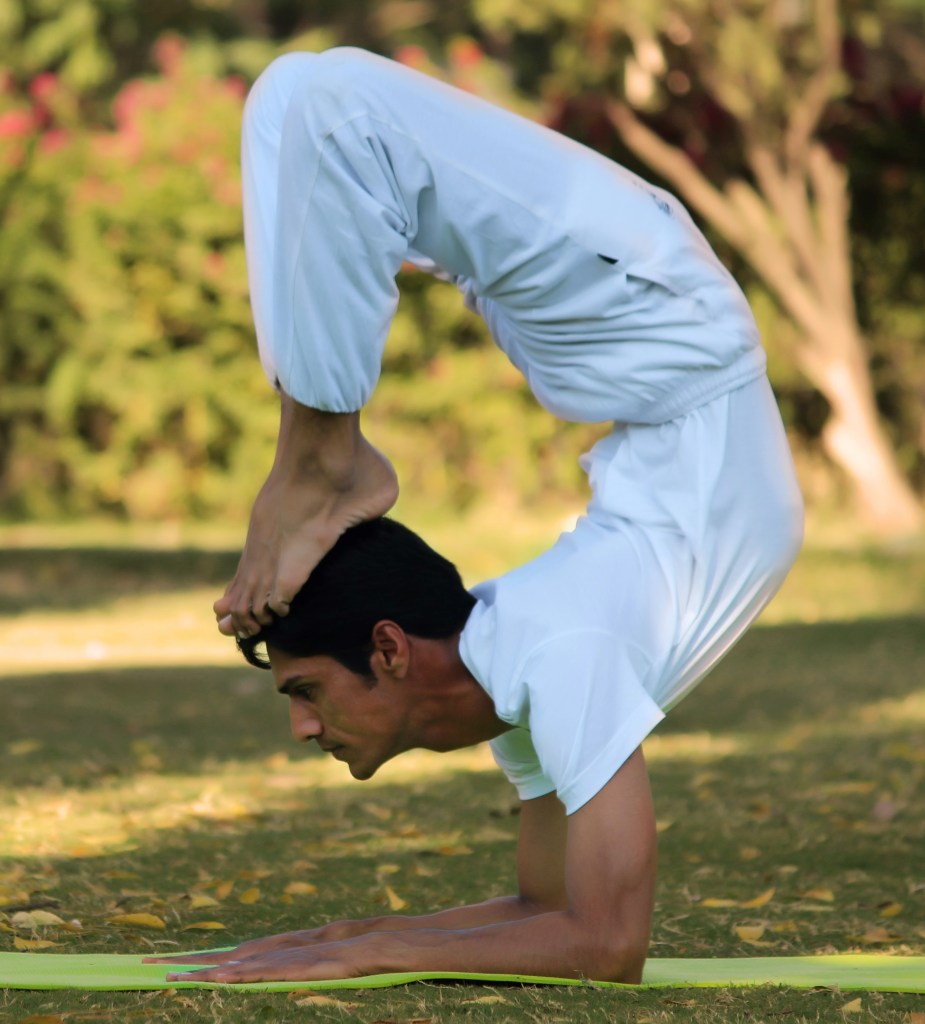
This is unavailable to me.

I thought yoga would be different, given the emphasis on one’s inner state. But I had to get over my apprehension about trying to fit an older creaky body into the unbelievable positions modeled by the yoga teachers I saw online. It was daunting. While I still felt strong, I seemed to lack that which yoga demanded. There were many poses that my old injuries and life-long inattention to flexibility would prevent me from doing.

I mean, google Flying Dragon pose and you’ll see why. Heck, it doesn’t even have to be as exotic as that. Go to Pinterest and search for yoga images – the results seem almost outrageous, with every yogini outdoing the one before them. Is that what we’re supposed to aspire to? I don’t see anyone even close to my age. Are they all in physical therapy? Or traction?

My spine doesn’t bend like that.

This is more my level: still challenging, but quite doable.

But this is yoga, right? There are quite enough poses that most everyone can learn and use to build a regular yoga practice, no matter what the images on the Internet suggest. More importantly, there are modifications for whatever your own body will allow. Can’t put your forehead on your knees in forward-fold? Then how about a ragdoll variation. Guess what, it’s still yoga.

That doesn’t mean that what those super-bendy instructors are doing isn’t impressive. But I view them much as I view someone free-climbing Yosemite’s El Capitan. With awe and admiration for their abilities. And then I delight myself by finally being able to touch my toes again, thanks to my yoga practice.

Look, Ma! No Libido!

This is a delicate issue that isn’t talked about enough. It’s time we brought it out into the open.

Based on the reactions that I’ve received from some health professionals, I believe that loss of libido is a highly underreported side effect of aromatase inhibitors, medications that are prescribed to suppress estrogen production in women who have or have had hormone receptor-positive breast cancer; aromatase inhibitors are generally given only to postmenopausal women. Sure, low libido is listed as a possible side effect on the informational insert that you get with the pill bottle, but its mention feels like an afterthought. The reality is, AROMATASE INHIBITORS STOMP OUT YOUR FREAKIN’ LIBIDO.

Why don’t we talk about this more? This may be due to the average age at diagnosis of breast cancer being the mid-60s, give or take. I’m willing to wager that many women of this age don’t feel very comfortable discussing intimate details of their personal life with (especially male) oncologists.

Couple that with the fact that as much as we’re trying to change as a society, postmenopausal women are still not valued very highly. Youth equates to beauty, and women continue to be judged by their appearance. Even the inhabitant of the White House has reflected the notion that an “older” woman wouldn’t be a fit companion for a high-powered man, presumably because he deserves “better”.

So let me stress, everyone deserves the opportunity to engage in meaningful intimate relationships. As we get older, sexual intimacy may not have the same prominence in our interactions, but it is still an important part of bonding.

This is a perfect example of a “quality-of-life” issue. It can’t be measured by a laboratory test, but it’s something very valuable. When the medical profession obsesses about breast cancer survival rates, and when the pharmaceutical industry develops even more-effective medications, those lives saved can be counted as numbers. But sadly, a drop in desire for intimacy, or a similar quality-of-life marker, can’t be measured in the same way and, therefore, doesn’t bear the same weight in decision-making.

Loss of libido can lead to a decrease in perceived quality-of-life

It rankles me when some of these complicated low-hormone effects experienced by women taking aromatase inhibitors are written off as simply symptoms of natural menopause, as if the cancer survivor is making a big ado about nothing. As someone who was premenopausal when originally diagnosed with breast cancer, and then chemically forced through menopause via chemotherapy and tamoxifen, I can assure you, none of this is what my body would “normally” be doing. The change from what I was to what I am is really striking.

I often think, if a medication could reduce the risk of cancer, but you would have to sacrifice your left arm for it to work, it probably wouldn’t sell well. But if the cost weighs heavily on quality-of-life, taking a toll on intimate relationships, that’s perfectly acceptable? Women who stop aromatase inhibitors are called “non-compliant”, as if they’re foolish and don’t know what’s good for them. But maybe doctors need to consider more than just statistics when it comes to treatment recommendations.

So why aren’t we forcing this conversation with more medical professionals? It’s easy to write prescriptions for medications. It’s much more uncomfortable to navigate the complexities of how intimacy suffers from them. The level of detriment will differ from person to person, as will the value of an intimate experience. While oncologists work to improve the length of our lives, as cancer survivors we need to apply pressure in the other direction, to make sure that their decisions are also informed by the quality of our lives.

~~~~~~~~~~~~~~~~~~

It’s important to note that while libido takes a huge hit from hormone-suppressing medications, it’s not even the main reason women stop aromatase inhibitors. There are other side effects that make the medicines difficult to continue. If you are having troublesome side effects, then tell your doctor as soon as possible. If your doctor doesn’t listen and doesn’t offer ways of alleviating your complaints, it’s time to find another doctor.

Sleep Peacefully, Sweet Aira

“[A pet is] a little tuft of consciousness that circles around a person like a moon around a planet, and completes their energy field making them more whole.”

Dr. Rachel Naomi Remen quoting a spiritual teacher, as related by Dr. Nancy Novak on the Nancy’s List email newsletter, November 1, 2020.

There are few reminders of impermanence as poignant as life transitions. I experienced this over the weekend as we said goodbye to our beautiful Siberian husky, Aira. I knew the time was coming and that it was right to let her go, just a month shy of her 15th birthday.

Retirement: living the good life in her “golden years”, in her own room. Lots of naps and loads of love.

Aira’s transition was gentle. My mother held and stroked her as she lay on her favorite rug in her bedroom in my parents house. She fell asleep quietly with the first injection, and after the I.V. drug was administered, passed into peace, surrounded by the people she knew and loved in familiar surroundings.

She now lies beneath the window outside her room, one of her favorite places in the yard to sit during the winter, as it was almost guaranteed to have a snow mound. She loved that. As the days became warmer, that mound was one of the last to melt.

In her younger days, bright with husky energy.

I remember the silkiness of the fur on the backs of her ears. And the unbridled joy she exhibited when she would get loose and start tearing around the neighborhood. And how she would roll around in freshly fallen snow in ecstasy. And how wonderful she smelled after rooting around in a rosemary bush. And how we would find a dog treat hidden in a shoe, under a pillow or anywhere else she thought was a safe spot that she could return to later for a snack.

Everything changes. Aira matured and calmed down. She followed us from Chicago to California, then due to stifling housing constraints in the Golden State, was welcomed by my parents in Connecticut, where she got a beautiful yard, lots of snow and unbelievable amounts of attention. Years after their three kids had left, my parents and Aira formed their own little family unit and went almost everywhere together.

My father’s health faltered and Aira, too, started showing her age. The last year brought on the most striking changes. Aira sprouted a fast-growing mast cell tumor on her shoulder. By the time it was removed, the mass weighed almost five pounds, and her prognosis was guarded. That was in April of this year.

Some weeks ago, my mother noticed a hard spot in Aira’s belly. As with the previous tumor, this one grew lightning fast. And unlike the tumor on her shoulder, this one was among her organs and taking a toll on her. This one was not coming out.

I would lie away at night, wondering how this would end. Had I known how blissfully she would transition out of this world, my heart would not have felt so heavy.

Newly arrived at my parents home in New England, looking forward to the cooler air and, after years of California warmth, SNOW.

~~~~~~~~~~~~~~~~~~~~~~~~~~~~

I am Roman Catholic. When I was young, I remember a humble missionary priest speaking of how anyone could baptize someone with the sign of the cross and holy water. So, logically, I pilfered some holy water that my grandmother kept on a shelf and baptized our dog at the time, a good-natured chihuahua named Rudis.

Several decades later, when Aira was part of our family, I was already an adult (so I have no excuses), and as I was holding a small vial of holy water brought back from mass, Aira came to sniff at it. I thought, “Why not?” and baptized her.

I’m sure that I’ll be punished for this brazen transgression. And you know what? That’s okay. I hope that I’m banished to the place where animals go after they die, because I’d rather give up my spot in Heaven to spend eternity with my dogs.

There Goes Another Cancer Milestone…Big Deal

On October 23, 2017, I finished radiation therapy for my stage 1, triple-positive breast cancer. That was three years ago. At that point, I imagined myself being through all the “tough stuff”. I’d already had surgery that March, spent the summer enduring chemo infusions, and then six weeks of radiation in autumn.

October 23rd seemed like a “marker” day. I rang the gong in the radiology waiting room, with all the staff present and smiling. It was a day that I knew I’d remember.

Except that it didn’t end up being a very important milestone. At that point, I didn’t fully realize that the treatment doesn’t really end. I can only say that it’s been three years since I finished chemo and radiation. But the truth is that a few weeks after that I started tamoxifen (surprise!), which came with its own worries. And I still had more than half of my infusions of Herceptin (trastuzumab, a monoclonal antibody) left, which stretched into April of 2018.

I guess next April, I’ll mark THAT as another milestone.

This coming December I can mark a full year of taking letrozole (aromatase inhibitor), which came after two years on tamoxifen. But I’m still supposed to be on that stuff for “a few more” years – it’s funny that my oncologist has not been specific about that. And I’m not very interested in asking, unusual for me.

I really thought I’d have said “goodbye” to all things cancer by now, but its spectre still seems to follow me around.

What once seemed like a very clear treatment plan, a definite path through the cancer jungle, now seems fuzzy and gray. In one of my first posts here, I talked about being able to put everything behind me, with the more time that passed after “finishing” chemo and radiation. Who was I kidding?

When mammogram time comes up, there’s that familiar rush of anxiety, knowing that I’ll be sitting in that comfy robe in the quiet waiting room, pretending to enjoy a cup of tea, but my tummy will be floating and I’ll try to not to think of much. That’s the work of cancer.

When I wake up in the middle of the night with my hand aching and fingers painfully stiff, medication side effects that are deemed, by the medical community, to be “worth it”. That’s the work of cancer.

When I wonder whether my 18-year-old daughter should be doing breast self-exams now. And whether she’s be hurt by whatever “mistake” my body made in not cleaning up some tumorigenic genetic defect. That’s the work of cancer.

So it makes all those “milestones” a little less fun and exciting.

~~~~~~~~~~~~~~~~~

But I have to be honest — I still note the time that’s passed by. For my breast cancer, the two-year mark is most important, followed by the five-year mark and then the 10-year one. Each year cancer-free makes me more cocky. But the truth is, one “bad” scan, and I’m back to square one: cancer patient. And then I’ll regret not having appreciated those milestones more.

The Magic of the Exhale

If there is one thing that I can point to that has had the most profound effect on my reaction to anxiety-provoking stimuli, and also brought more calm into my entire day, it is deep, diaphragmatic breathing.

Diaphragmatic breathing (sometimes referred to as “belly breathing”) is an effective way to bring air into the lungs than simply inhaling into the chest. As the belly pushes outward, it pulls the diaphragm down, allowing the lungs to fully inflate.

This deep breath, in conjunction with my favorite breathing pattern — Dr. Andrew Weil’s 4-count inhale, 7-count hold, 8-count exhale — is what I call my magic pill. I have found this type of breathing to be very soothing. Dr. Weil based the 4-7-8 pattern on pranayama, an ancient yogic breathing technique, but the benefits are well-supported by modern science (Gerritsen & Band, 2018, Front Hum Neurosci, for example).

Neuroscientifically Challenged presents a short video introduction to the vagus nerve: “2-Minute Neuroscience: Vagus Nerve (Cranial Nerve X)“. It’s everything you never knew you really needed to know about the vagus nerve.

For me, it is the extended exhalation that is key. When the length of the exhale equals or particularly exceeds that of the inhale, a signal is sent to the vagus nerve. The vagus nerve is the 10th cranial nerve, and the longest one, running from the brain down to the abdomen, innervating a number of major organs along the way. The vagus nerve is also a major part of the parasympathetic nervous system (think: “rest and digest”) (Breit et al., 2017, Front Psychiatry).

The extended exhale has been shown to increase heart rate variability (HRV), slow down the heart rate itself and relax the body. HRV “represents the healthy fluctuation in beat-to-beat intervals of a human or animal’s heart rate. … Higher HRV is associated with stronger vagus nerve function, lower chronic stress levels, better overall health, and improved cognition” (Bergland, 2019, Psychology Today).

When I notice that I’m rushing through my day or experience wakefulness in the middle of the night, I have learned to turn my attention to my breath. Regardless of whether or not I’m feeling anxious, I often find myself breathing more rapidly and shallowly (chest breathing). As soon as I become aware of this, I take a deep, diaphragmatic breath and deliberately extend the exhale.

That first deep breath makes me realize how much I needed to slow things down.

That first deep breath is like putting the breaks on a runaway locomotive. It make take several more breaths to fall into that full pattern. I don’t force it — I simply allow each breath to be slower and deeper than the previous one. The sense of grounding feels amazing. I keep a lot of tension in my neck and shoulders, so I take care to release those muscles with each exhale. The result is that I feel a gentle sinking and relaxing.

One of the ways that I’ve benefitted most significantly by taking a “breath break” like this is that it has linked my formal, “on-the-cushion” meditation to the rest of my life. Even after I had established a daily meditation practice, I struggled to bring that same sense of calm into the rest of my day. Breathwork was the missing piece of the puzzle.

This deep breathing slows the overwhelming rush of sensations and provides an immediate connection to “now”, inviting stillness and spaciousness. Noticing my breathing in the midst of chaos exercises mindfulness. All this results in a sense of contentment and well-being.

Who wouldn’t want that?

How Mindfulness Helped Me Enjoy Cleaning

Full confession here: For years (ahem, decades), I disliked cleaning. I understood the importance of keeping things clean and tidy. But I never connected a positive feeling with it. Even as an adult, I would put it off. And off. And then someone would want to stop by and I’d be filled with dread. Never was the disheveled state of my home as apparent to me as when an outsider walked though the front door. Suddenly, I saw everything with fresh eyes, and it didn’t look great.

My approach to cleaning changed when I did one small thing: I noticed that my life was not one big overwhelming mess. It was a series of little challenges. So, too, my home. I stopped looking at everything as a whole. The whole was overwhelming. The whole meant a day spent cleaning and organizing. It didn’t have to be like that.

Just as life is in flux, so is the order in your home. Think of is as a wave, never, standing still. Things fall out of order and then are put back in order. Consistency in effort is what gives music to the dance. So you never have to “miss it”.

When I started looking at the work as distinct items, it was so much easier to take care of things. A small pile of papers. Scrubbing out the kitchen sink. Cleaning three windows.

It was that simple. I stopped thinking about “all the stuff I need to do”. Instead, I thought, “Oh, look! This is done already.” The boost of positivity that I got from taking care of the finite tasks was infinitely rewarding.

Most importantly, I made this a working meditation. My focus was on “now”. Scrubbing this spot of the bathtub. When it was done, I went to another spot. And that way traveled around the bathroom and out to other rooms until I was done for the time being. The rhythm made the day bright.

My personal strategy for cleaning mindfully:

  1. Set a timer for a reasonable amount of time, say, 10-15 minutes — you will quickly find a time that’s right for you based on how much you bristle when it’s time to start. Pick out a manageable “project” (or perhaps several) that you can get done during that time. Start when the timer starts. When the alarm rings, you’re done.
  2. Whatever you are doing, do it with a focus on the present moment. Give your full attention to what you’re working on. This is not the time to worry about what else needs to be done — stay with what you’re doing now, just as you would stay with your breath during meditation.
  3. Decide to do it again tomorrow. That stuff you did today? It’s done and no one can take that away from you, so whatever you do tomorrow only adds to the satisfaction of moving forward. Consistency is what makes this strategy work.
  4. Bring lightness and joy to the task. Play music, run an essential oil diffuser. Mark your success with staying on task by bringing in fresh flowers, even just foliage clippings in a colorful vase. Help yourself feel positive through the process. THIS IS NOT A PUNISHMENT.
  5. Pick up after yourself throughout the day. There is great power in putting things away right after you’re done with them. It feels so silly to even have to write that, but trust me, it’s a useful reminder, and one that I needed until it became a habit. (Who am I kidding? I STILL need the reminder.)
  6. The corollary to #5 is not to procrastinate on starting. If you start now and recycle five papers that you don’t need, there will be five fewer papers cluttering your desk. If you do that again tomorrow, that will be ten. Do it now. I have missed out on so many wonderful opportunities in my life because I put things off, a clean home being the least of them.
  7. Notice how good it makes you feel to invite order into your life.
I feel unsettled simply looking at this image. The disarray elicits anxiety, like I’ve lost something important, with little hope of easily getting it back.

I’ve found that the state of my surroundings is representative of my emotional state. And my emotional state likewise responds to the environment around me. When I was diagnosed with breast cancer, my world crumbled around me, physically and emotionally. Everything felt out of control and my surroundings reinforced that sense of despair. It took months for me to finally get a grip and move past the overwhelm.

Bringing order into my life was like an anchor that helped me recover, in many senses of the word. When I focused on what was good in my world, I spent less time worrying about what was wrong.

I’m betting you have 10 minutes in your day…