Try a Little Tenderness

(Title image: Photo by Alin Luna on Unsplash)

This is a bit of a departure from the usual posts. But I was thinking about how my emotions get pushed and pulled during the course of the day…

Suffice it to say, we live in contentious times where people are compelled to take sides. That leads to an environment where we think badly of each other which, in turn, adds an underlying level of stress to our daily lives.

Perhaps you feel it like an annoying irritation, maybe a quickening of the heartbeat or an increase in your blood pressure. Heat under the collar. And suddenly you are imagining what a jerk the other person is.

All that based upon a single interaction. This is an unfair snapshot judgment of people and brings with it the kind of stress I don’t need.

So this is what I do. And I love the instant effect that it has on me.

When I find myself getting annoyed with someone—whether it’s a rude customer service representative, someone interviewed on the news with an extreme political view, even a person who cuts me off in traffic—instead of muttering something hateful under my breath, I pause and think.

What might be going on in someone’s life to cause them to act or think this way?

If you had the kind of day they did, you’d be in a bad mood too.
(Photo by Alex Greenberg on Unsplash)

Did the customer service rep receive bad news at home followed by an interaction with an aggressive customer?

Has the person with distinctly different world views had a frightening personal experience that affected them deeply?

Is the driver who cut me off in a hurry to help someone with a medical condition?

You can say that, no, all those people are just malicious, egotistical jerks. But in reality, they are far more than the two-dimensional view that we have of them. Their lives are as full as ours and they share the same struggles and dreams that we do.

I sit with these thoughts. The “empathy” muscle is an important one to exercise.

For some, this is hard work to do. When we feel slighted, it can be difficult to give someone the benefit of the doubt. And when political tensions are high, some people may feel that being emotionally generous towards someone with views they find odious is like “giving in” to them, letting them “win”.

But you are not losing anything by practicing empathy.

Why do I bring this up? Because this helps give us peace. It makes us less reactive and helps us see things more clearly. It provides space for our brains to function in. It relieves anxiety.

In the end, it makes the world a better place. And we all need that.

~~~~~~~~~~~~~~~~~~~~

Anger is exhausting. Hate bleeds around the edges. Welcome peace back into your life regardless of whether or not the other person deserves it.
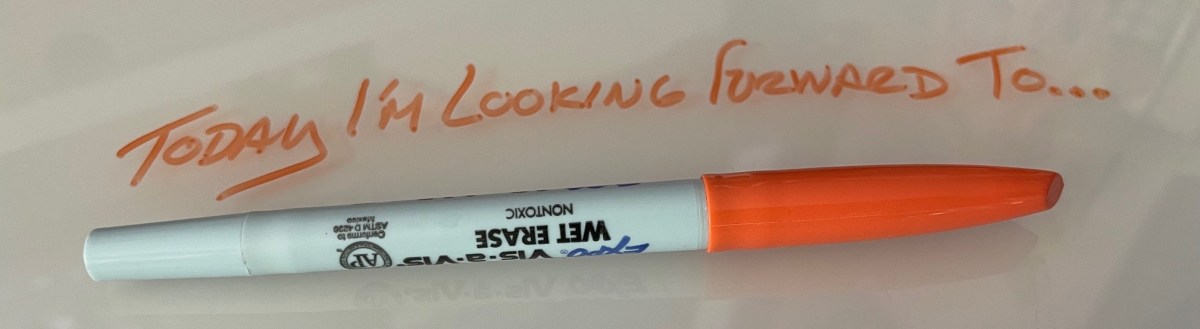
Today I’m Looking Forward To…

(Title image: FranticShanti)

Here’s a slightly different type of gratitude practice. It’s a nice little way to bring more joy into your life.

Instead of looking for things to be grateful for, try simply thinking of things that you might be looking forward to.

They don’t have to be big productions like an expensive vacation or some sort of exclusive party. This works just as well, perhaps even better, with something small.

Grab a pen and a sticky note and start looking forward to the little things.
(Photo by Ravi Palwe on Unsplash)

How small? How about receiving a new calendar you ordered that has pictures you find particularly soothing? Or maybe going to a museum that you haven’t visited in a while. Or visiting a local garden shop just to browse and take in the glorious colors.

Clean out your coffee maker and look forward to having tomorrow’s coffee brew in a clean machine.

Or look forward to getting into bed in the evening and stretching out comfortably.

Consider the things you could potentially look forward to…get granular about it…and try to see what the smallest thing might be that you could look forward to enjoying.

There’s a lot of good stuff in between those pickets.
(Photo by Brad Switzer on Unsplash)

The “grandness” of the thing doesn’t matter—what matters is how you feel about it. And perhaps, at first thought, you consider it insignificant, but when you lean into it, you realize that it truly is something that brings you joy.

The more of these little things we can find, the more we realize that little bits of joy are scattered throughout our lives. And once we become aware of one, we might start noticing them everywhere.

~~~~~~~~~~~~~~~~~~~~

Speaking from personal experience, I find it very easy to become overwhelmed with the negatives in my life. There are times when it seems like all the difficulties come crashing down at once, at the worst possible moment.

However, it is worth shifting our focus and noticing the things that aren’t going wrong. It’s as if you are looking at a picket fence. The fence itself might be the negatives and they’re hard to miss—after all, they’re right in front of you.

But if you look through the posts of the fence, into the space between, that’s where you see everything “not wrong”. And you might find that, in fact, there is more “not wrong” space than there is picket fence.

So I encourage you to take some time when things get difficult to look through the fence and find your little joys to look forward to. Focus on them, write them on a sticky note and put the note somewhere where you’ll see it in the morning.

And then smile.

I have my note ready…

Exactly Where You’re Supposed to Be

(Title image: Photo by David Paschke on Unsplash)

Some time ago, I was thinking how I got to where I am and was seized by a sense of regret and shame. This was not where I thought I’d be by this age.

So many things that I’d worked for education-wise, health-wise, career-wise seemed to have been derailed by decisions I’d made based on life circumstances that I didn’t feel I could control…or by just plain bad luck (cancer, I’m looking at you).

As I pondered this, I became enveloped in it, slipping down a dark hole, trying to squash those negative feelings—the ones that get buried for a while only to pop back up at 3am some night.

But then I thought, “Ok, so how about another way of looking at this?”

What if how I am now was the end goal all along?

What if where you are right now is where you need to be for the rest of your life to work out according to plan?
(Photo by Jon Tyson on Unsplash)

And that shift in perspective allowed me to look at the things that I felt I hadn’t fully achieved as being “the plan” for creating me as I am now.

And what I am now is made up of the valuable experiences that I was labeling as half-done or poorly-executed or forced upon me—but no, perhaps they were all so necessary for setting up myself in this place with this knowledge. And from here, preparing me to move forward.

A master’s degree I haven’t used for a couple of decades, a job situation that falls below my career aspirations, a body that is limping back from injuries and cancer, a mind that can be my worst enemy. The experience of all of these brings with it wisdom and insight. And strength.

Where I am now is exactly where I need to be for the next chapter of my life. The foundation for future-me has been established.

So, how about you?

What if you spin the timeline around, understanding and appreciating who you are now, however “imperfect” it might seem to you, social media, whomever else serves as the judge of your life. This is now your starting point.

What’s your next step?

How can you take everything that’s come before you and allow it to support the incredible you that you will become?

Dampening the Echoes of the Past

(Title image: Photo by Anastasiya Badun on Unsplash)

The Advent season is a perfect time for introspection and mindfulness. For me, 2023 has had challenges and as a result has served as a proving ground for different calming techniques.

One of the things I’ve grappled with, usually in the wee hours of morning, is the persistence of uncomfortable memories from the past.

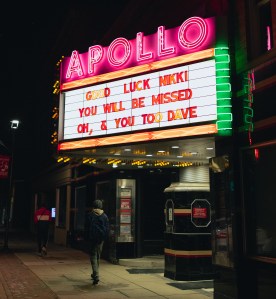
It reminds me of a one-panel comic that I saw some time ago: a person lying in bed, eyes wide, a theater marquis over their head that reads in bright lights: PLAYING AT 3AM! EVERYTHING YOU SAID AT THE PARTY LAST NIGHT! [A cartoon in the same general vein by Hilary Fitzgerald Campbell appeared in The New Yorker on Jan 21, 2019 (#11 of 15), but I’m not posting it here because they might be touchy about copyright infringement.]

In the middle of the night, being hit with an glaring memory of something that sends your stress levels rocketing…goodbye sleep.
(Photo by Gregory Brainard on Unsplash)

How many of us have had a similar experience? I occasionally find myself tortured by things I said or did even decades ago. DECADES! Or they could have happened yesterday. A simple image can trigger shame, embarrassment or regret that feels real and vivid and, yes, while this generally happens at night for me, it’s certainly not limited to that time.

How odd that we give the past so much power over us when it’s not even real anymore. While we’re shaped by our experiences, allowing ourselves to be haunted by them serves no purpose, especially not once we’ve learned whatever we needed to from them.

Soooo, one early morning in the darkness I found a way to add some perspective to the memories that bully me: I started thinking of them as echoes, wispy harmless reminders of what happened.

And there in bed at 3am, I am safe. My body is not in the imagined situation, it’s under the covers, lying on my mattress. Here is where mindfulness is so helpful because it brings me back to the present. The past is echoing, trying to get my attention. But the more aware I am of where I am in space currently, the easier it is to step back and simply observe the echoes, watching them fade away.

I’m making this sound simple, I know–as with all the things that bounce around inside our heads, taming a stressful memory is not necessarily easy. But identifying it as just an echo has been remarkably helpful for me. It has provided a different viewing angle that enabled my perspective to shift.

Echo…echo…echo…

Thinking of thoughts as echoes can dispell them, but simultaneously focusing on a sense helps ground us in reality.
(Photo by Mariana Rascão on Unsplash)

I’m not there now, those other people are not there now, that event is not happening now–just because I remember it so vividly doesn’t mean that anyone else does. And most of the time, I don’t remember it either. Only during the limited, wee-morning-hour viewing window during which it appears because I’m susceptible to the tickle of anxiety.

The senses can bring me back to reality. Opening the eyes, feeling where my body contacts the surface that it’s on, hearing the hum of a fan or sound machine. Anything occuring in the present anchors me to what’s going on now.

And in the present, that echo cannot hurt me because it’s just an airy thought.

Of course, this all comes back to the basic idea that the more we practice presence, the easier it will be to minimize the impact of thoughts that unsettle us. It may take some exploration to find what works best for you, but in the end, being patient and consistent will be the best way to calm your mind and bring you back to what is real at the moment.

Just One Day

If you had one day to live, how would you live it?

I pondered this question last week as I was trying to calm myself down before teaching my first official public yoga class, while also juggling emotions about certain events at home over which I had no control. Read that as: anxiety.

And in the midst of this all-too-familiar emotional turmoil I felt myself being consumed by my thoughts. And yet, if I had only one day left on this earth, I can’t image that I’d let myself get mired in everyday worries. My perspective would immediately snap into a megawide view of everything that exists in the world.

Never was I so aware of every palm tree…

It would be easier to see the beauty everywhere. Consider this: when I returned to Southern California after four bitterly cold years in a Northern climate, I noticed every.single.palm tree. I was so aware of everything that I had missed during my years away and appreciated every ray of warm sunshine. Other cares temporarily fell away as I was filled with gratitude to be back.

If I had only one day to enjoy the world, I hope that I wouldn’t spend it lamenting over little things. I would sit with my face to the sun, smell the breeze, take deep breaths and appreciate the here and now. Accepting that I had only 24 hours, I imagine that I wouldn’t be ruminating about something a co-worker said to me in passing or how I really should be cleaning the bathroom more often.

So interesting that it would take facing the end of my days to begin truly appreciating them.

So how about this (and this was what I meditated on last week in the midst of nervous feelings), why not imagine the feelings of that last precious day every single day? Stop and feel into my feet on the ground and the air in my lungs. There is so much wonder all around us and what a pity that it takes a drastic event to experience a perspective shift.

It feels so glorious to be alive.

~~~~~~~~~~~~~~~~~~~~~~

Don’t get me wrong, the shock of knowing that your end is near could be devastating. So if you’d like to use this idea as a meditation prompt, perhaps consider if you were on vacation in a paradise-like location and if your plane were leaving in a day, how would you enjoy your remaining time there?

Perspective: The Broom that Sweeps the Mind

Last week, I had a good reminder about the importance of maintaining perspective.

It had been a stressful few days at work. At the height of it I found myself in a problematic situation, trying to “fix” an issue that wasn’t my responsibility by sending a quick email. I would have done better to pause, but I was in “go-go-go” mode, driven by anxiety that the situation was causing.

Afterwards, I found myself obsessing about what had happened and how I had reacted. So even though I had initially felt that my email response was the best course of action, by evening I was convinced that it was the worst. This opened the door to allow in unrelated doubts about myself. That frustration carried into my nightly meditation, and ultimately, into fitful dreams.

In a few seconds, a perspective shift changes your entire view of things.

The next morning, I felt marginally better. But it wasn’t until I checked my text messages that my perspective shifted. I received photos of my father, leg in a cast, at the local hospital’s emergency room. Reason? Cracked tibia bone and deep vein thrombosis.

In an eyeblink, I forgot about what had happened with work. I needed to get more information about my father’s predicament.

As news of exactly what had happened filtered down to me (it was a much more controlled situation than I had initially understood it to be), I went into the office with a different mindset. The work stress that had been top-of-mind and in-my-face was now way over there in the back of the room.

FYI, my father is fine and the trip to the ER was actually a follow up from the previous day’s visit to his doctor where they discovered the fracture and the blood clot. The doc had encouraged the ER trip to get quicker access to an orthopedist. My dad is in good spirits and my mother (a former nurse) has been tasked with administering the clot-dissolving injections.

But the shift in perspective that morning reminded me so much of a similar shift several years ago: prior to my cancer diagnosis I had been experiencing a lot of anxiety at work…but once I learned that the lump in my breast was cancer, everything else fell away. It was as if the roar of work stress suddenly became muffled and all I heard was my beating heart, my health, the important stuff.

When I had cancer, the things that used to bother me, stopped. I knew then what was really important.

I distinctly remember that as I was going through my cancer treatments, in all the concern about what was happening in my body, I experienced the least amount of anxiety about anything going on at work that I’d ever had at that job. It felt like I could handle anything that they threw at me.

Perspective. That’s what I had as I sat in the infusion room. And that’s what I regained last week.

How curious that the shift in perspective was so simple to achieve. All I needed was to remember what was really and truly important and everything changed within a few seconds.

~~~~~~~~~~~~~~~~~~~~~~~~~~~~~~~~~~

“Simple” is not necessarily “easy”. We have so many things coming at us in the course of the day and we try to triage them as quickly as we can. It’s expected that we will make “little mistakes” and give more weight to the problem right in front of us–those things that are immediate. But with practice, we can realize that most of those are transient and the important stuff is what deserves our deepest attention and appreciation.

And even the “important stuff” needs to be swept out once in a while.