Try a Little Tenderness

(Title image: Photo by Alin Luna on Unsplash)

This is a bit of a departure from the usual posts. But I was thinking about how my emotions get pushed and pulled during the course of the day…

Suffice it to say, we live in contentious times where people are compelled to take sides. That leads to an environment where we think badly of each other which, in turn, adds an underlying level of stress to our daily lives.

Perhaps you feel it like an annoying irritation, maybe a quickening of the heartbeat or an increase in your blood pressure. Heat under the collar. And suddenly you are imagining what a jerk the other person is.

All that based upon a single interaction. This is an unfair snapshot judgment of people and brings with it the kind of stress I don’t need.

So this is what I do. And I love the instant effect that it has on me.

When I find myself getting annoyed with someone—whether it’s a rude customer service representative, someone interviewed on the news with an extreme political view, even a person who cuts me off in traffic—instead of muttering something hateful under my breath, I pause and think.

What might be going on in someone’s life to cause them to act or think this way?

If you had the kind of day they did, you’d be in a bad mood too.
(Photo by Alex Greenberg on Unsplash)

Did the customer service rep receive bad news at home followed by an interaction with an aggressive customer?

Has the person with distinctly different world views had a frightening personal experience that affected them deeply?

Is the driver who cut me off in a hurry to help someone with a medical condition?

You can say that, no, all those people are just malicious, egotistical jerks. But in reality, they are far more than the two-dimensional view that we have of them. Their lives are as full as ours and they share the same struggles and dreams that we do.

I sit with these thoughts. The “empathy” muscle is an important one to exercise.

For some, this is hard work to do. When we feel slighted, it can be difficult to give someone the benefit of the doubt. And when political tensions are high, some people may feel that being emotionally generous towards someone with views they find odious is like “giving in” to them, letting them “win”.

But you are not losing anything by practicing empathy.

Why do I bring this up? Because this helps give us peace. It makes us less reactive and helps us see things more clearly. It provides space for our brains to function in. It relieves anxiety.

In the end, it makes the world a better place. And we all need that.

~~~~~~~~~~~~~~~~~~~~

Anger is exhausting. Hate bleeds around the edges. Welcome peace back into your life regardless of whether or not the other person deserves it.

Stop and Do This Now

(Title image: Photo by Ruslan Zh on Unsplash)

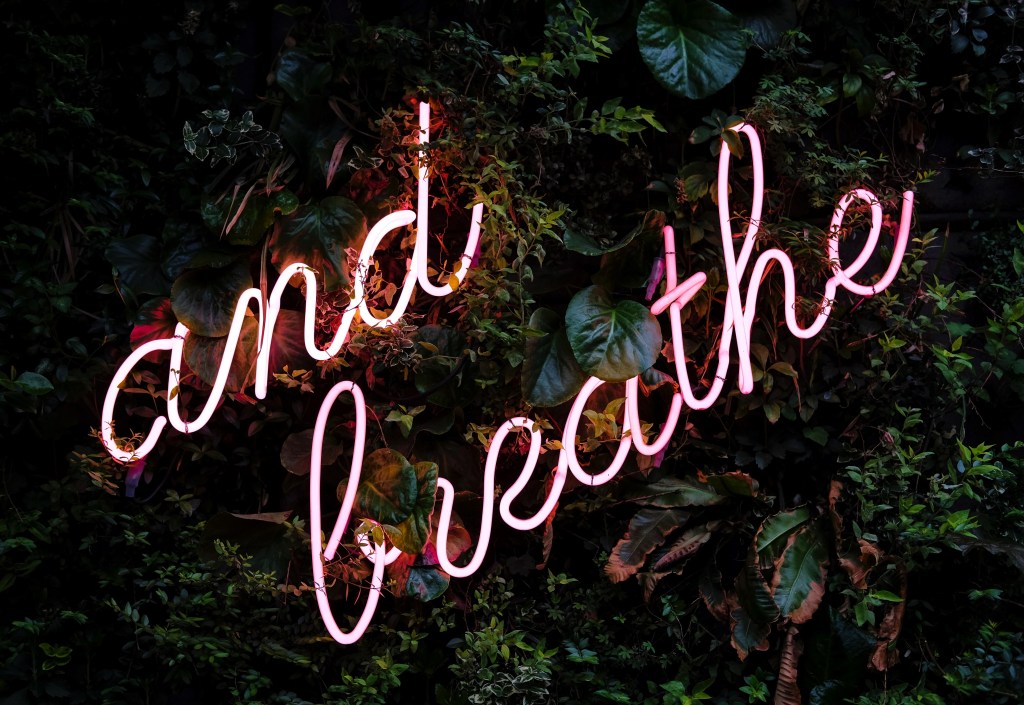
No matter where you are reading this, pause now and take a deep breath.

And exhale.

How did that feel? How you were breathing right before you took that breath? Were you relaxed with deep breaths already? Or was your breathing quick and shallow and that sudden deep inhale felt very different?

For me, my breath is a reflection of my internal state. It’s a compass that points me to what is happening to me, regardless of what is going on around me. Many times, I’m not aware of how I am responding to things around me until I stop to notice my breathing.

And don’t forget to exhale.
(Photo by Kelly Jean on Unsplash)

Sometimes it takes a number of tries to achieve a deep inhale. Then I realize how shallow my breaths have been. That opens the door for me to consider how I’ve been reacting to things throughout the day. And it also leads to more deeper breaths as I settle down.

If I’m home, I may grab my flute — it is a Native American-style flute of red cedar wood. Holding it in my hands, enjoying the pleasant scent of cedar, playing a few bars of a mournful melody…all that helps to calm and ground me. It demands a controlled lungful of air for a clear tone, an elongated exhale that soothes me.

Did you take a deep breath at the start of this post? If not, try it now. And notice. Notice if it’s easy for your diaphragm to drop and pull in a good lungful of air, or does your body resist, as if something is squeezing your lungs, or your torso is bound tight?

Take several more breaths and allow them to expand your ribcage, coaxing more air in with every inhale and slowly releasing with every exhale. Until, like a balloon that has been stretched, the lungs fill fully, comfortably, easily.

And then just breathe. Allow yourself to stay where you are with whatever is taking place around you and keep breathing. Breathe mindfully for few minutes. Shake off the pressures of the day.

Then take one more deep breath…and carry on.

Take-a-Break Monday

(Title image: Photo by Clem Onojeghuo on Unsplash)

For anyone who’s been wondering, it is true that I did not post last Monday.

There was so much going on at home, including cleaning and prepping for out-of-town guests who were coming in for my eldest child’s university graduation that was taking place over the weekend.

I had so much to do that I knew trying to squeeze out a post would pile on even more pressure on top of what I was already feeling.

At the same time, I have a strong sense of responsibility that keeps me on track with all the things that I need to accomplish. This has been a very good thing that helped me establish a lot of healthy habits.

Can you tell when you’ve got pressure building up? And do you know when to slow down?
(Photo by Wim van ‘t Einde on Unsplash)

However, I’ve been mindfully reconsidering some of the rules that I’ve made for myself. Missing last week’s post was an opportunity to gently relax my stringent requirements for consistency, since what I really needed was a break.

It felt good to give myself permission to release at least one responsibility. And as soon as I made the decision to take a break for that one Monday, I realized how much my overworked self deserved that tiny bit of grace.

It also reminded me of going through chemo. Several infusions in, once the terror of unknown side effects had ebbed, I found myself relaxing into my chemo seat, knowing that chemo gave me an excuse to release all my “shoulds”. Don’t get me wrong, I wanted nothing to do with chemo and couldn’t wait for my treatment to finally be done. But there was also that strange relief that at least I could use the infusions as a reason for people to not expect too much of me.

It wasn’t until very recently that someone asked me whether I had been burned-out even before my cancer diagnosis. I realized that I had been under so much stress at work with responsibilities at home too, that all the anxiety associated with that was only relieved by getting cancer.

Pause. Breathe.
(Photo by Flash Dantz on Unsplash)

“Relieved by getting cancer”!!! What a ridiculous statement, and yet so true and telling. Sometimes we barrel forwards carrying so much responsibility (and, yes, guilt) that we don’t stop to question whether there’s a way to do this without driving ourselves into the ground.

And that, my friends, is why I’m forcing myself to stop pausing from time to time to reevaluate whether my expectations for myself are reasonable. No, that doesn’t mean practicing “deleterious self-care” that can be harmful–for the record, eating half a box of donuts in bed while binge-watching an entire season of a Netflix series does not qualify as true “self-care”, no matter what Instagram is trying to get you to believe.

Rather, I’m noticing where I am applying pressure on myself in a way that ultimately may have negative effects. It’s all about finding a healthy balance.

And so, there was no post last Monday. My hope for you is that you also take a break when it’s beneficial for you to do so. Have a great week!

A Different Take on Advent

(Title image: Photo by Niklas Ohlrogge on Unsplash)

For anyone here who has celebrated Advent, you know it as the period of time comprised of the four Sundays (and the weekdays in between) leading up to Christmas in preparation for the arrival of the Messiah. The 2023 season of Advent starts this coming Sunday, December 3rd. [Edit: Many consider Advent to run from Dec 1 – Dec 24, and that suits the purpose of this post also.]

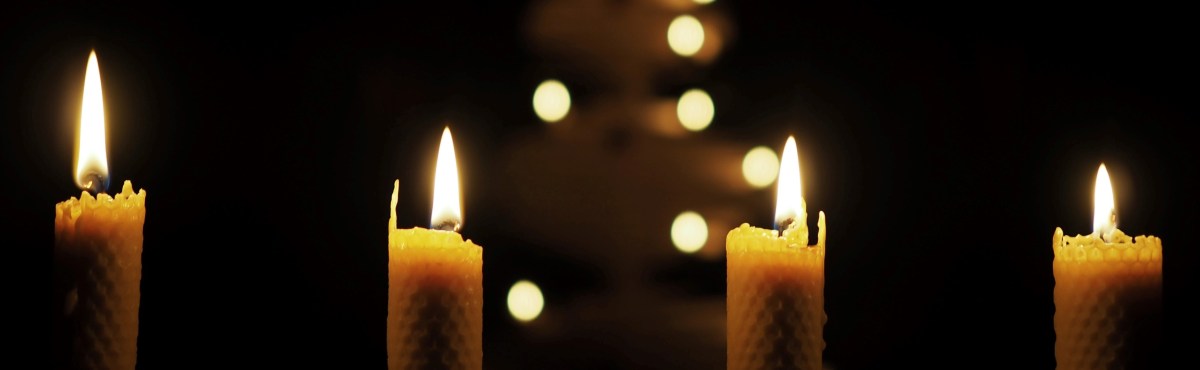
Advent has historically been observed by Christian religious dominations and is marked by the lighting of four candles, one for each Sunday. But it is most famously known by everyone as the four or so weeks before Christmas when you “give up” something.

Advent wreath with four colored candles representing hope, peace, joy and love, one lit every Sunday of Advent. The white candle can be lit on Christmas Eve or Christmas.
(Photo by KaLisa Veer on Unsplash)

Growing up, we’d usually give up sweets during this time, only being allowed a little something each Sunday, with the idea that we would appreciate the candies and cakes at Christmas all the more.

But you know what? I don’t really think it had that effect. That was something geared more towards our stomachs than our souls. Sure, we’d look forward to finally indulging in holiday goodies…but that was about it.

And as the years went on and treats played an ever-decreasing role in my life, I flailed around looking for something else to deny myself. Let’s face it, I was missing the point.

More recently, I’ve turned Advent into a different kind of spiritual opportunity.

So I’d like to offer a most positive way of observing those last weeks of the year for everyone, regardless of religious affiliation. And it has nothing to do with depriving yourself of anything.

Rather, it’s a blissful gift for yourself…and your soul, if you will.

Not everyone lives where the winter weather is warm enough to pick up trash on the beach…but I’m willing to bet that most of us live in a place where we can lend a hand to a charitable organization.
(Photo by Brian Yurasits on Unsplash)

For this Advent, I invite you to commit to several weeks of establishing a new thoughtful behavior. This can look different for everyone:

Perhaps, it’s time to set aside a few minutes in prayer and contemplation, as it suits your own spiritual tradition.

Perhaps it’s an opportunity to commit to volunteering for a charity, giving to others without expecting anything in return.

Perhaps it’s a time to establish a simple meditation practice, a few minutes a day at a specified time.

Perhaps it’s an opportunity to practice daily mindfulness, say, when you make your morning coffee or tea, truly focusing on the process and what the items feel like in your hands.

Perhaps, it’s time to think before reacting, pausing before getting angry and saying something hurtful.

This Advent might be the perfect opportunity to establish a practice of mindful contemplation.
(Photo by Ümit Bulut on Unsplash)

Perhaps this is the time to go through your belongings, a little every day, and gather up what you can give to others in need, or discard if the item is no longer of use to anyone.

Perhaps this is time to think about all the things for which you’re grateful, starting or ending your day in this way. And if there’s nothing that you can be grateful about, then consider what you’re grateful that is *not* happening.

Choosing what to focus on for Advent can be a very mindful process in itself. And after about a month of this practice, you will emerge with a beautiful new habit.

Give it a try and I wish you a beautiful Advent season!

~~~~~~~~~~~~~~~~~~~~

Please note: I realize that there is a much deeper religious meaning of Advent for Christians, and I’m not trying to minimize that. However, in this time of hyperpolarization when we’re so focused on what sets us apart from those around us, this is a thoughtful way to share the Advent tradition with everyone, with love. And isn’t that the spirit of Christmas?

Mindfulness 101: Noticing the Qualities

The main reason why I started a meditation practice was because I had been diagnosed with breast cancer and was, to put it mildly, freaking out.

As a naturally anxious person, the diagnosis blew the roof off my ability to cope and plunged me into a nightmarish situation. Anyone who’s ever dealt with severe anxiety will tell you that nothing is more important than making it stop.

Over the years, my anxiety gathered enough power that it was able to blindside me. Cancer anxiety practically wrecked me.

When my radiation oncologist recommended mindfulness meditation, I felt empowered by the thought of gaining control of my runaway anxiety without the need for medication.

I was hoping meditation would enable me to sit in peace in the midst of chaos. But I imagined that as feeling no stress, as in, being numb to anxiety-provoking stimuli.

That simply doesn’t exist. I wanted to not experience any stressful situations, but there is always stress. We can’t change that. Mindfulness meditation was only going to help me change the way I reacted to it.

So here I am, more than six years after initally starting a daily meditation practice and guess what? I still have stress, I still feel anxiety.

However, what did change is that I can define it now. When I become aware of agitation and anxiety, I know to pause and bring attention to how it manifests in my body.

What does it feel like? Tightness, heat, rapid breath?

Where does it show up? Face, temples, chest, stomach?

Is there a color or sound or smell associated with it? Does it have a “texture”?

Does anxiety have an odor? Next time stop and take a whiff.

I can relax my muscles, sink into the earth, breathe deeply and notice the qualities of anxiety. By pulling apart what is happening, I slow time down. Instead of being hit by a locomotive full force, I walk around the train cars. I can notice how I feel as I pass through the experience.

Is it pleasant? No. Does it always work immediately? No. However, I can see it coming, and as a result, I relax into it. It is the awareness of the anxiety that helps me through it, not a numbness to it. This leads me to acceptance of the situation instead of bracing against it.

On one level, it’s a little discouraging to still be dealing with the unsettling nature of stressors. But I am heartened by the empowerment that mindfulness offers. I have evolved enough that I know I don’t have to go back to being thrashed by the whirlwind. I can sit inside it and watch it swirl and pass through. Every time I do this, it gives me more confidence for the next time.

Is this something that might help you too?

Staying Present: Dual Focus Meditation

If you’re new to mindfulness meditation, you might have found it difficult to hold focus on your breath. But the reality is that you don’t need to be a beginner to struggle with this. There are some days that the mind refuses to be still and even a long-time meditator will find themselves carried away by thoughts.

In an effort to help keep my head here and now, I started paying attention to how it was that I lost focus. For me, it happens during the lull between breaths.

The breath remains the main focus.

What is that lull? Well, there’s a very short, almost imperceptible pause between my inhale and exhale. I’m okay during that time because I can focus on the sensations in my chest and belly. That’s not the pause that gives me problems.

It’s after the exhale that I experience a longer pause before the next breath begins, especially if my breaths are slower and deeper, because my body doesn’t require another breath right away. And that’s when I’m more likely to “see something shiny” and my mind wanders off.

But I found that by focusing on my hands during this pause, I could keep my random thoughts at bay.

If you’re having focus issues and would like to try this, all you need to do is consider your focus as cyclic. First, with the inhale and exhale, focus on the breath sensation–choose wherever you feel the air movement most distinctly, such as the rising & falling of your chest, the rushing of air in and out of your nostrils, or similar. It will be different from person to person.

Next, during the pause between your breaths, turn your focus to the sensations in your hands and fingers. There may be some tingling or throbbing, or perhaps nothing discernable. That’s okay. Just see if there’s anything there that you can feel.

Then, when your next inhale begins, pay attention to the breath again.

The main point of this exercise is to stay present during those times that the mind is very active.

It may sound like you’re jumping from one body part to another, but in reality the transition is very smooth. The focus on the hands gives you a place to go until the next breath returns, all the while keeping you present.

When I first tried this, I thought I was “cheating” because I wasn’t staying with the breath. And I had to remind myself that the purpose of this wasn’t to earn a gold star for being the best “focus-on-only-the-breath” meditator. It was to stay with whatever was happening “now”.

Allowing a slight change in focus when my mind is active keeps me present. Staying present calms me more effectively. And that helps me return to the meditation cushion day after day after day.

~~~~~~~~~~~~~~~~~~~~~~~~~~~~~~~~~~~

There is beauty in the stillness that we experience between breaths. This dual focus practice isn’t meant to pull us away from that. Rather, it gives us a focus for those days when the mind is active and easily distracted, and appreciating that stillness is not available to us.

Does Mindfulness Make a Difference?

Yes, yes it does.

I am AWARE.

What used to feel like a jumbled mess of emotions and sensations before, now makes sense to me. Intense feelings don’t come at me as quickly as they used to and there’s more space between a stimulus and my response to it.

There is a PAUSE.

I may still feel overwhelmed by circumstances when something unexpected happens, but now I know what’s happening and can pull myself out of it.

That doesn’t mean that I’m perfectly calm and don’t get frightened, anxious or frustrated. I do. You can see that in some of my posts, because I try to be very honest about what I’m experiencing in the moment. But no matter how deeply I dip into fear, I don’t stay there.

I can find the CALM amidst the CHAOS.

When things get intense, I know how to feel into my body. I recognize the physical sensations and I focus on releasing them. Smoothening them out. Breathing through them.

All those abilities were always available to me, but I resisted calming myself. I am aware that on some level I used to feel that anxiety was a necessary way to express my fear; that it was necessary to descend into fear to express my emotional state to others, so that I would be taken seriously. While it sounds odd to read that now, it was only through learning that I was able to soothe myself that I learned I didn’t need to commit to the torture.

I return to the PRESENT.

When I start thinking about fretful things in my past or fearing the possibilities of the future, I can now recognize that my mind has drifted away and I can pull myself into the present, feeling into my bodily sensations. I can break through the dark tumult that’s enveloping me. And suddenly, the noise is gone and I’m standing with my feet firmly planted in my room. I hear the birds and I find peace.

I know I am SAFE.

I have learned how to feel into my body to help it bring me back to the present and away from fearful thoughts.

I realize that there were behaviors that I engaged in during times of anxiety in the past, like pacing back and forth, that actually soothed my nervous system. Just as rhythmic rocking soothes a child. My body was wise and knew what I needed. When, years ago, the burden of my workload chained me to my desk and prevented me from movement, my anxiety skyrocketed and became almost unbearable. That was a clue, but at that point in my life, I didn’t know how to listen to my body.

Now I know what I must do to calm down and I allow myself to do it. But this change didn’t come about suddenly.

It takes PRACTICE.

Practicing mindfulness meditation when I am at peace allows me to build up the habit that carries me through difficult times. I practice daily. Somedays I can focus on my breath perfectly; other times I lose myself in thought shortly after I’ve begun. Regardless, I don’t give up. Even the “bad meditation” days are better than no meditation at all. Each session strengthens my mindfulness habit.

Every day. No matter what. It makes a difference.