Pictures at an Exhibition: Re-framing Your Fears

(Title image: Photo by Dannie Jing on Unsplash)

I have a history of getting myself wrapped up in future fears and past regrets. It can be terrifying and difficult to shut off, especially during very stressful events.

I have to be honest, there was a time when I was afraid that if something seemed so real in my head, something I could describe in fine detail and feel the fear via physiological responses in my body, it was more likely to come true.

I don’t know how that actually started. It might have been some form of “magical thinking” that suggested that if I’m having a response, it was a premonition that accurately predicted the future. Or maybe I was so frightened by how real it felt. Regardless, it was difficult to shake.

With the help of mindfulness, meditation and expert guidance from a counselor, I found it easier to notice when this was happening. It took years to get to this point and the shift was very gradual.

It’s not a perfect shift, however. From time to time, I still get run through the wringer by fearful thoughts so I’ve developed a silly practice to help myself defang this beast. When I realize I’ve been caught, I grab the thought and run to the nearest art gallery–in my mind.

It’s the ability to step back and put space between yourself and your fears that makes this such a helpful practice.
(Photo by Xavier von Erlach on Unsplash)

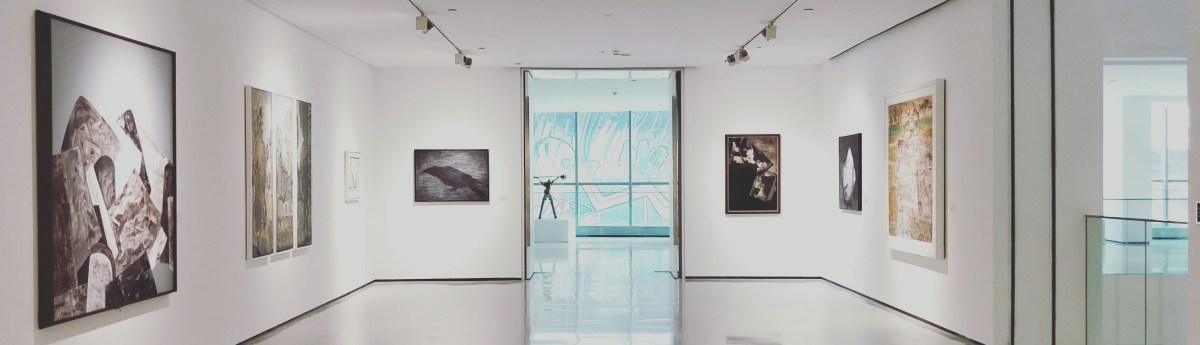
Yes, I realize this sounds strange, but hear me out: (1) I recognize that an anxious thought is particularly sticky, (2) I compress it into a two-dimensional image, and (3) place it in an imaginary frame on an imaginary wall in an imaginary environment that I define, and finally (4) I step back to give myself some space–as if I were at an art gallery evaluating a painting–and note that it is only a picture, one that I could potentially remove from the exhibition and send to storage.

Then I ground myself in the present, feeling my feet on the real floor where I actually am.

This kind of manipulation requires some imagination and, like I mentioned, this practice can seem a little silly. But it does help to recognize that the thing that elicited such a strong response in us is really just a simple thought. We can choose what to do with that thought.

IMPORTANT: I acknowledge that the physical responses are real and they might be driven by the real possibility of something bad happening. We don’t have a crystal ball to tell us with 100% certainty what will take place in the future. But what we do know is that nothing is happening now. If you can clear the foreboding images out of your mind you will realize that in this moment you are safe. And that is a very comforting place to be.

Putting Pen to Paper for the Ultimate Mental Vacation

When I wrote my last post — a visualization and body scan for helping calm yourself and prepare for sleep — I knew I would enjoy immersing myself in describing a space that felt safe to me.

But what I didn’t expect was the effect that the actual process of writing the visualization would have on me.

As I continued describing the “healing bath” scene, searching for reference pictures and letting my imagination create a restful place, I realized that I myself was feeling more and more relaxed — breathing slower and experiencing a sense of placid grounding.

This got me thinking.

Beautiful journals may be appealing to some. But making use of technology in searching for images and recording your words provides you with the most flexibility for documenting ideas and bringing in visual aids…without risking writer’s cramp.

While there is no doubt that listening to a guided meditation can be very soothing, sitting down and writing one yourself takes you to another level. This is an exercise in finding what the most salient relaxing cues are for you personally.

Immersing yourself in locating photographs of environments that you consider your ideal for a retreat getaway helps you isolate those elements that exemplify what relaxation and grounding mean to you. I highly recommend sites like Pinterest for this; if you’re not interested creating an account there, just start out with Google image searches and see where they lead.

And when you start writing, turning your focus towards describing the scene that you’re imagining means that you are truly “in it” in your mind. As you write about sights, smells, sounds, textures and other sensations, and hold them in your imagination, you sink deeper into them than you might even in a meditation where someone else is describing the surroundings to you.

It’s your writing and therefore everything you select is your choice, suited to your tastes. There’s no need to use complicated language, simply tune in to your mind’s eye and write what you see. Because this is for you alone, there’s no requirement that it be a complete representation of your safe space and no need to judge the quality of your mental picture. There only has to be enough imagery there to trigger the wonderful feeling of peace and calm that you have when you’re there. However, the more descriptive you can be, the better you can lock in the imagery.

Not a scribe? An oral description of your special place can be just as immersive as writing it out. And if you feel so inclined, recording it for yourself can help you preserve the images to return to at a later time.

Finally, each one of us has different experiences with putting words on a page. If you feel that being required to write out your thoughts will be frustrating, then find a quiet space where you have privacy, close your eyes and audibly describe your safe space, perhaps even record it. Imagine that you’re moving through it and explain to yourself what’s there and how it makes you feel.

Whether you choose to write or speak, the reason this can be such a powerful tool is because you focus on something that feels so relaxing. This may turn out to be the ultimate grounding meditation for you.

Give it a try and see where it takes you.

“Healing Bath”: A Body Scan with Visualizations

As a visual person, I have days when my “mind’s eye” has difficulty focusing during meditations. For those times, listening to guided visualizations is my best option for a calming tool.

Additionally, body scans are excellent pre-bedtime wind-downs. So when I recently heard of a great visualization that includes a body scan, I wanted to share it here.

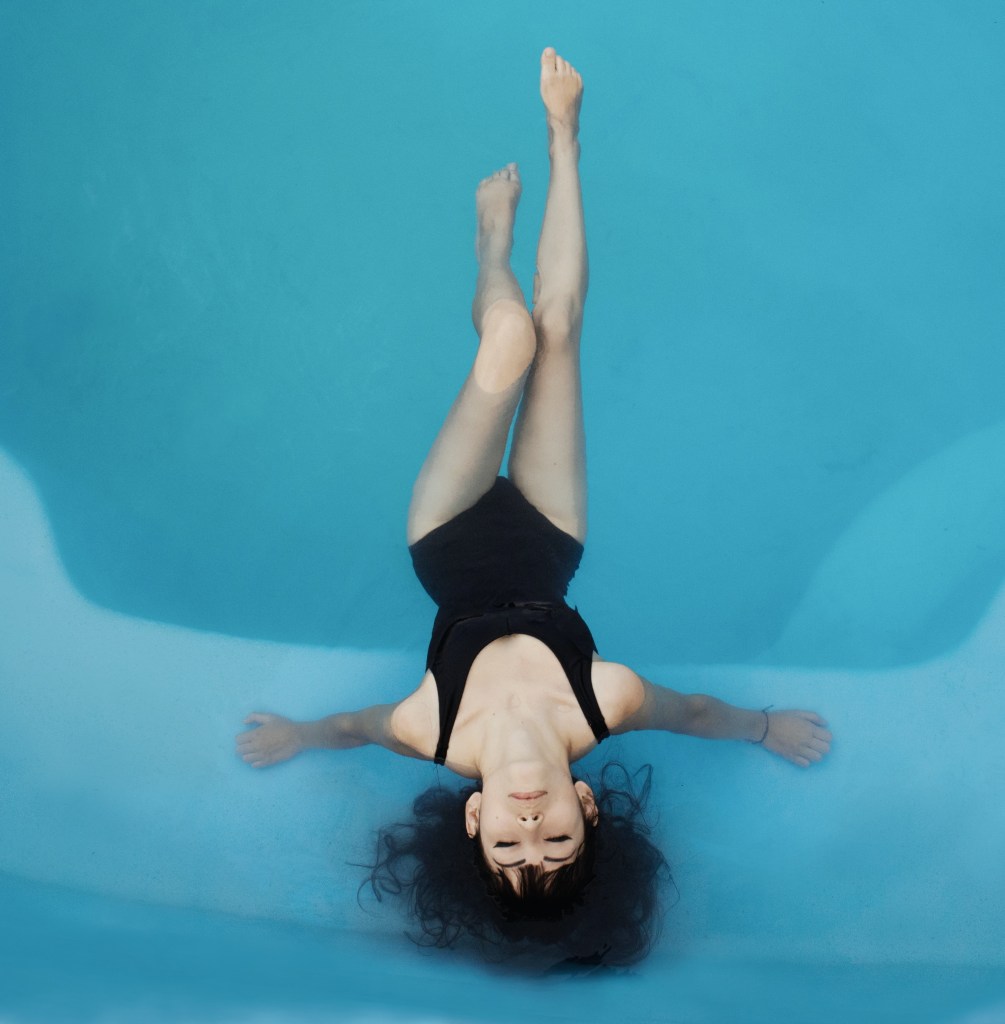
Your private pool can be anywhere you want, even indoors. Source: https://pin.it/4UeEa1U

This one is based on a “healing bath” visualization that was presented by an MSW/Oncological Therapist who leads Friday morning meditation at my cancer center. Putting the focus on vivid visuals and including your other senses fills your awareness with rich imagery that works so well to soothe an overworked nervous system. While this will not be an auditory experience, use your imagination as you read this to paint yourself a picture of a safe, soothing space that you will remember.

Here’s the basic imagery (add details that resonate with you): you arrive at a beautiful natural location, walking down a path surrounded by lush greenery, wearing a luxurious fluffy robe and cushy slippers. As you follow the path, flowery fragrances waft on a gentle breeze that carries bird songs to you. The sun is at a height most soothing for you; for me, it is early morning with a mist in the air. Bright enough to see everything, but imparting a feeling of safety and privacy.

As you continue down the path, it opens up into a small secluded beach with a round pool of water, clear and sparkling; part natural pond and part constructed, with beautiful white stone steps leading into it. Surrounded by flowering plants, it invites you in.

Create a secluded place for yourself. Source: https://pin.it/3j88oEw

You feel the sensation of the fluffy robe and slippers sliding off of you as you leave these items by the entrance to the steps. Then, you dip the toes of one foot into the water and find that the temperature is perfect for you. Notice the sensation of the warm water as you step onto the stone stairs with both feet, holding onto a sturdy railing. You stand up to your ankles in the pool and sense the difference in the temperature between the misty air and inviting water.

Take two more steps down and the water slides up to your calves, soothing your lower leg muscles. Then step further in as the water line slowly travels up past your knees and halfway up your thighs, so that most of your legs are submerged in the placid, warm pool, now feeling more like a bath.

The bottom of the pool is easily visible through the clear water. Unhurriedly, take a few more steps down as your toes reach the white sandy pool floor and the water rises up to your waist, enveloping your lower body in warmth.

Feel the gentle support of the water.

By one side of the pool is a smooth sculpted stone bench to which you glide, feeling the slip of the water against your skin as you move, drawing the tips of your fingers across the pool’s surface, leaving gentle streaks as you go.

As you lower yourself onto the seat, sense the warmth rise up your torso and arms, traveling up as you settle down. The bench is deep enough for your body to submerge but comfortably keep your head out of the water.

The soothing water supports you as the seat cradles your body. Rest your head on the side of the pool – the edge is sloped and comfortable. Then listen. What do you hear? Sweet songs of birds? The meditative buzz of gentle honeybees that flit among the flowers? Waves on a faraway beach?

Can you smell the fragrances of the flowering plants that surround you? As you breathe, as your chest rises and falls, feel the water glide around you. Warm, secure, safe, secluded. This pool is whatever you need it to be for you to feel nurtured and loved.

As evening falls, lights illuminate the pool. Source: https://pin.it/2KpwRO8

Stay here for as long as you like, watching light sparkle on the surface of the water. If you stay until evening, warm lighting illuminates the pool and surrounding plants, dispersing dark shadows and bringing a sleepy tranquility into the area.

Finally, when it’s time to return to present world, lift yourself out of your seat and glide back to the stairs, keeping yourself submerged to your shoulders until you take a hold of the handrail. Slowly, slowly release yourself from the pool, noticing the sensation of air on your skin as you emerge, feeling the waterline move down your body as you climb the steps.

With the final step, you leave the pool and take up the fluffy, soft robe waiting for you, wrapping yourself in it. Slip your feet into the cozy slippers. Your body dries quickly. Make your way up the path. And although you leave this magical space behind, it is always available for you whenever you want to return.

~~~~~~~~~~~~~~~~~~~~~~~~~~~~~~~~~~~

If you are uncomfortable with water or if the visualization keeps bringing in disturbing images such as a very deep pool, dark water or something foreboding lurking underneath the surface, or it feels constrictive or claustrophobic, substitute a sparkling mist or a golden light for the water. You can still feel the body sensations as you enter into the pool. There are no rules here, it is your safe space and you can set it up as you please.

Finally, to bring this from a visualization into reality, create a real-life pool for yourself in your bath, with ample tealights, a soundtrack of nature sounds or gentle music and water temperature that is right for you. Feel your arms and legs float, prop up your head with a towel on the side of the tub. Breathe deeply. This is a perfect way to end the day and prepare yourself for a restful slumber.

Presence by Touch: A Visualization

Staying present is key for not letting your thoughts take you on a wild ride.

Maintaining presence, however, takes practice so I’m always on the lookout for new ways to imagine the state of being in the “now”. Some of these are simpler exercises than others, but the upside of a more “complex” technique means that all my mental energy remains on staying present instead of, say, worrying whether I embarrassed myself at a party three nights ago.

The following is a visualization and mental exercise rolled into one:

What if only what you’re touching exists and everything else falls into nothingness?

Seated, close the eyes. Breathing deeply, allow everything that is around you to fall away in your mind, leaving only those points where your body makes contact with the surface beneath you.

Imagine that the soles of your feet sit on top of sole-shaped pieces of support material. Your buttocks and thighs contact like-shaped material, as does any place your back rests against your chair. If you touch your fingers to the side of your chair seat, small oval-shaped pieces of material appear where your fingers make contact.

Everything else disappears against a background of light (or darkness, if that is more calming). The chair and floor and even the room you are in? Gone. The point of this visualization is maintaining focus on only what you are physically experiencing at any given moment.

It is a strange sensation to imagine, floating through the ether but still feeling support from the slightest bits of material that touch you. This is the ultimate in being 100% present and turns the concept of object permanence on its head.

You don’t feel it? It doesn’t exist.

Our brain wants to fill in the parts that we can’t see because the brain has formulated an image of what is out there. However, in this practice we try to do the opposite–let go of what we do not have immediate physical evidence for.

This is a good analogy for dealing with thoughts that our brain fabricates based on the expectations that it has. What if we let go of them, if only for a short while, and simply sit in the stillness of what is happening right now?

Breathing into Limbs: A Grounding Visualization

I’m perpetually on the lookout for different ways to ground myself.

When things get tough and I feel my anxiety rising, I’ve gotten better at pausing and pulling a grounding technique out of my “mental tool bag” before the feelings become too intense.

One that I came up with recently works quiet well, especially if you can take a quick break and find a quiet corner.

As I breathe, I visualize my breath inflating my limbs, filling them with relaxation.

The idea behind this one is that you take a few deep breaths to help slow your breathing down, and then start imagining that your breath is going down into one arm, inflating it.

I’ve visualized it in two ways. The first being breathing into the arm as if it were a balloon that inflates in all directions, all the way down to the fingertips, until it’s completely full. I imagine it glowing from within.

The second entails imagining the breath filling the arm in the way that a fern leaf unfolds. The expansion starts at the shoulder, then upper arm, elbow, lower arm, wrist, hand and finally fingers. As the arm fills with the inhalation, it brightens. This visualization is best when your breathing has already slowed considerably, as it may take a longer breath for your entire limb to sense the serial expansion down to your fingertips.

If my breathing has slowed enough, I imagine the breath entering my limb gradually, just like a fern leaf gently unfurls, part by part.

Either way, I wiggle my fingers at the end of the in-breath, and then as I exhale, the fingers fall still again and the breath exits my arm as it arrived.

Then I do the same with my other arm, followed by one leg and then the other.

On days that I’m really rushed, I might only have time for one limb, particularly if I’m sitting at my desk at work. But that’s okay. Even that short bit is better than letting stress run away with me. That little pause may be exactly what I need.

If this “extremity inflation” sounds too complicated in the heat of the moment, I urge you to try it when you’re lying in bed with your eyes closed. Then you can focus on the sensation of expansion and get familiar with it, so that when you need to call upon it in a stressful situation, you’ll have an easier time bringing up that imagery.

My limbs glow as the breath brings brightness into them.

What I particularly like about this visualization is that it’s a touch more complex, and therefore requires more attention from you. The inhalation all the way to the wiggling fingers makes it more difficult to be thinking about other things. So while it may demand more, I feel that it also delivers more, since everything else decreases to a dull roar in the background as you visualize the air rush in and inflate your body.

And of course, there are different variations of this that you can play with, such as expanding your entire body.

If you are able to practice with this, or even duck out to the bathroom for a few moments of eyes-closed peace, I think you’ll find it a lovely way to give your nervous system a needed break.

Floating Above It: A Visualization

Sometimes, you really need to get away.

I’ve written about pulling back to get perspective, but this isn’t about that. There are times that you can’t handle looking at a situation, and even less getting close and curious about it. Once in a while, you need to cut your losses and allow yourself to check out for a bit.

From time to time, I have dreams in which I’m fighting an adversary (like a monster), and I leap up into the air and float over the baddie’s head. Not all the way up into the sky, but just-just-just out of reach of their clawing hands, where I’m safe.

That’s what it feels like to release my hold on the earth and allow myself to imagine floating upwards. It is a freeing and positive feeling, often helped by music containing binaural beats and a gentle relaxing drone, as if I were being softly cradled and rocked by the sounds.

Be a bird, just for a little while.

And then I travel. In my mind, the most pleasant view is that over the water, as if a camera had been set free to follow a broad river, meandering along its twists and turns. Or head across the sea towards the shimmering horizon, as the sun descends to kiss the earth in the late afternoon.

Or letting go of gravity and rising upwards into bright, puffy clouds, so far up that the landscape below blurs into purples and blues as you float high above.

This is not about being present and grounded. There will be other opportunities to sit with difficult emotions and create space for them. This is about being able to give yourself what you need during the more difficult times and escape for a short while, breathing into the spaciousness of being somewhere else.

Take a deep breath and enjoy your flight.

~~~~~~~~~~~~~~~~~~~~~~~~~~~~

While it is true that avoiding difficult emotions is not a recommended practice, consider this your glass of wine. Just for today, just to catch your breath.

Can’t Let Go? Try Setting It Aside

With everything that’s going on right now, it would not be surprising if you were having trouble sleeping.

I myself have an internal alarm that wakes me up around 3am, giving frightening thoughts a chance to land hard punches. It’s far easier to keep negative emotions at bay during the daylight hours, but our defenses are down when we’re groggy. Before I know it, I’m already on that hamster wheel, getting nowhere and working up an anxious sweat in the process.

Ok, nighttime. Wanna go?

There’s a lot to worry about in the time of COVID-19. Take your pick of stressors: finances, physical health, relationships, emotions. At night, our brain wants to fix everything that we’re hit with during the day, but obviously, that’s not the time for it. Few things are as critical for dealing with stress as a good night’s sleep, which you won’t get if you’re trying to calculate how many months’-worth of rent you have left.

The mistake we make is trying to let go of things completely. When “danger is imminent”, as in, the worst-case scenario is a distinct possibility, it’s unrealistic to pretend it’s not. I promise you, as a former cancer patient, I had terrors breathing down my neck. I could not simply “let go” of them. They were life-changing and oh-so real. But with a little effort I could loosen their grip on me.

Your concerns need some respect. So instead of trying to avoid them, try gently putting them aside. You know they’re still there, they know they’re still there, but you’re not butting heads. This may take some mental calisthenics.

Even the tiger needs some shut-eye.

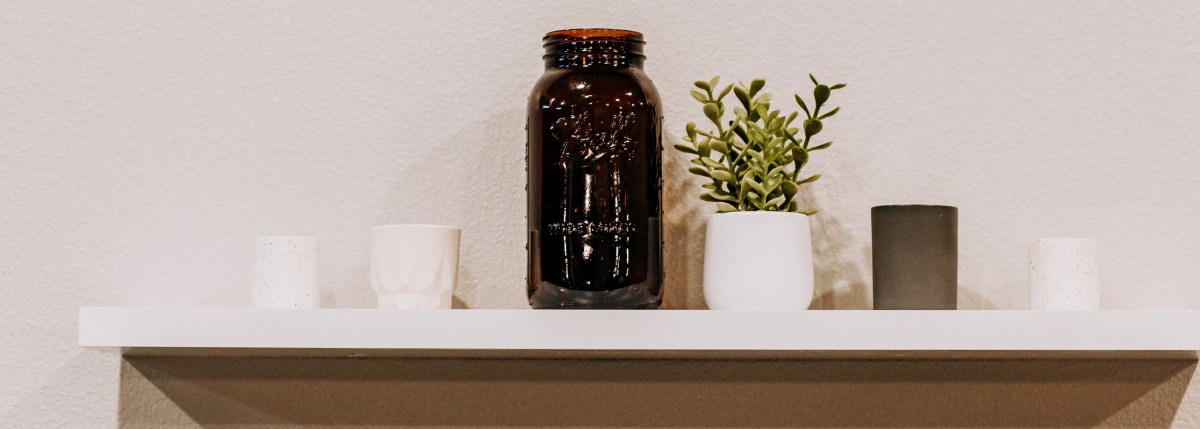
Ask yourself, “Can I do anything productive right now?” If the answer is no (hint: unless the house is on fire or there’s a tiger loose in your bedroom, the answer is no), then create a mental shelf for your anxious thoughts. You can build one for yourself, right there lying in bed, no hammering required.

Find yourself a jar with a secure lid. I know you have one somewhere in your mind. Scoop your thoughts in there, screw the lid on tightly and place the imaginary jar on that imaginary shelf. This may take several tries — unpleasant thoughts are slippery — but that’s okay. Make sure the shelf is across the room from you. The jar will still be there in the morning when you wake, thoughts swirling inside. But in the darkness, you’ll have some space between them and yourself.

As you lie in your bed, take a deep breath, feel the weight of your body on your mattress, feel the softness of your sheets on your skin. Look at the shelf, way over there. Way, way over there, and you safe in your bed. Allow yourself to relax.

That’s what you need most in the wee hours of the morning. So rest easy now. Tackle the problems tomorrow.