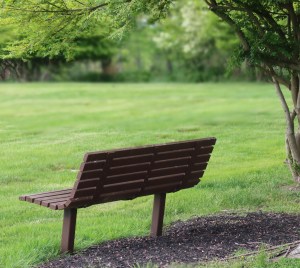
Advent 2025: Expectation vs. Reality

(Title image: Photo by Dayne Topkin on Unsplash)

Or, “if at first you don’t succeed…”

I had planned out my Advent to incorporate a return to peace through mindfulness after a particularly difficult year. It wasn’t supposed to be overly involved or unattainable.

As a matter of fact, I figured it would be simple to slide back into staying more present, particularly since we are heading into one of my favorite times of the year. Hourly check-ins, more dedicated meditation time, a concerted effort at staying present all day long and avoiding anxious reactivity—oh, the blissful calm that would flood my life!

Hmmm, this did not go according to plan.
(Photo by Alan Rodriguez on Unsplash)

Instead, none of that happened. I was still running up until bedtime when I’d scramble to meditate. Continuously forgot to set an hourly reminder to return to mindfulness. Found myself being yanked around emotionally. And I didn’t even unpack any of the remaining moving boxes that are sitting around the new apartment.

An entire week of Advent was gone and I felt like I frittered it away. I was expecting to feel a bit more grounded by now, but I’m not even getting a decent night’s sleep.

So, I sat down to take a look at where I ran off the road. And truthfully, I was never even on one.

I stated my intention for Advent in last week’s post…and then aimlessly wandered off into the woods.

This is a good reminder that mindfulness doesn’t happen on its own, no matter how long you’ve been practicing it. By its very definition, it requires attention.

Funny, in order to practice mindfulness, you kinda need to be mindful about it.

This time, I had a brilliant idea: why not actually DO the thing that I planned to do?
(Photo: @FranticShanti)

Enough belly-aching. I brushed myself off, hiked up my pants and did the following: I set a timer. This could have been any sort of timer, but I used the Plum Village smartphone app’s “Bell of Mindfulness” timer, set to ring (well, “bong” actually) once every 20 minutes from 8am to 8am.

It’s a low, soulful tone that rumbles through whatever else I’m doing, while at the same time not sounding intrusive.

When I hear the “bong”, I take a deep breath and notice what that feels like. Quite often, that breath turns into a deep sigh and I realize that my breath before was shallower. So I take a few more deep breaths.

That type of diaphragmatic breathing, into the belly, activates the parasympathetic (“rest and digest”) nervous system, and thereby the relaxation response.

Then I go back to my work until I hear the next “bong” and this process repeats.

By mid-afternoon, I found that I was much more aware of my breath and was breathing deeper during the interval between the bonging. And that was just the first day.

Ahhhh, this was a much better plan than my previous “no-plan” plan. Yes, I was bummed that I hadn’t implemented an actual plan a week ago, but here I am now and it’s working well.

The best part is, you can’t really “fall behind” on being mindful. Unlike where I am with my Advent cheese calendar…

Two Anxieties but One Breath

So, something occurred to me as I was dealing with stress about a work project…and then got news of changes that may require us to quickly move from the place in which we’ve lived for over ten years.

I am experiencing two different textures of anxieties. I’ve heard people discuss chronic and acute anxiety, but I would characterize the way I experience anxiety differently.

The first anxiety may wear you down but won’t require a complete change in your life.
Photo by Aiony Haust on Unsplash

The first is anxiety about what may happen or anxiety about what has taken place in the past and I can’t change. That encompasses stressful events that you need to work through, like a job-related project, which requires holding on and managing. It’s more of a chronic type of stress even though it might be time-limited. There are things out of my control or, in the case or what has already taken place, there’s no going back. It doesn’t qualify as life-changing as it may intensify and relax depending on conditions.

The second, however, is anxiety about something that *is* life changing. Those of us who have been handed a cancer diagnosis know what it feels like. It means that the future will look dramatically different from what we expected it be. Other examples are a death of a loved one or losing everything in a natural disaster. A sudden involuntary change in your living situation. This requires letting go and radically recalculating what you’ve become very used to. It can be very difficult to do, especially for those of us who like stability in our lives.

The first anxiety is exhausting. The second is terrifying. Having experienced both, I can definitively state that the first anxiety pales in comparison to the second. In fact, in the face of the second anxiety we may actually let go of the first completely and wonder why it ever bothered us.

The second anxiety is more intense and will alter life as you currently know it.
Photo by Ann on Unsplash

At the same time, as terrible as it may be, the second anxiety offers us a perspective and clarity that we would be hard pressed to accept as quickly any other way.

I do not wish either of these anxieties on anyone, but if there’s a bright side to them it’s that the same type of mindfulness practice that helps us deal with the anxiety of the first kind will also help when the expectation-smashing heaviness of the second anxiety hits.

Although you may still wake in the middle of the night, heart racing and wishing things had not changed, a consistent mindfulness meditation practice will provide you with the tools to smooth the jagged edges of rumination and fear, slowing the breathing and with it the heart rate, even in the presence of frightening thoughts.

~~~~~~~~~~~~~~~~~~~~~~~

Of course, since this is a mindfulness blog in addition to being cancer-related, I cannot resist talking about one of the most effective techniques that I’ve found for calming myself: belly breathing.

Start by simply breathing deeply into the belly, as anxiety often results in shallow breaths. The deeper the inhale, the more air you will have for the exhale – try matching inhales and exhales in length. It won’t happen immediately. Give it time.

Create a breathing cycle and keep going. Establish a breathing practice and stick with it.
Photo by Brett Jordan on Unsplash

Keep breathing into the belly, fully engaging the diaphragm, allowing it to drop and make space for your lungs.

As you do this, focus on the breath. The uncalm thoughts can still be there, but gently allow them to sit on the sidelines for now. I used to try to completely push them away, but they would bob back up to the surface like a balloon pulled under water, bringing the intensity of my anxiety back with it.

So let them be there…keep one eye on them if necessary but give your breath the main stage.

Once the inhales and exhales have evened out in length, insert a short pause between them. Breathe in … pause … breathe out … pause. Just a little stop to elongate the cycle. Consistently breathing into your belly.

Transition to full box breathing, where the inhales, exhales and pauses are all equal in length. If you get very comfortable doing this, for a little extra, try to make the exhales just a touch longer than the inhales.

Or if it gets tiring, simply try to make your exhales a little bit longer than your inhales and dispense with the pauses altogether.

Maintain this type of soothing, intentional breathing for a few minutes or longer, depending on how your body is responding or what your nervous system needs today.

Truly, you don’t have to do this perfectly or adhere to a specific count. Simply focusing on your breath and slowing your breathing will help immeasureably in making space for your thoughts so that you can back away a bit and survey the scene without feeling claustrophobic, no matter which anxiety you’re dealing with at the moment.

The Magic of the Exhale

If there is one thing that I can point to that has had the most profound effect on my reaction to anxiety-provoking stimuli, and also brought more calm into my entire day, it is deep, diaphragmatic breathing.

Diaphragmatic breathing (sometimes referred to as “belly breathing”) is an effective way to bring air into the lungs than simply inhaling into the chest. As the belly pushes outward, it pulls the diaphragm down, allowing the lungs to fully inflate.

This deep breath, in conjunction with my favorite breathing pattern — Dr. Andrew Weil’s 4-count inhale, 7-count hold, 8-count exhale — is what I call my magic pill. I have found this type of breathing to be very soothing. Dr. Weil based the 4-7-8 pattern on pranayama, an ancient yogic breathing technique, but the benefits are well-supported by modern science (Gerritsen & Band, 2018, Front Hum Neurosci, for example).

Neuroscientifically Challenged presents a short video introduction to the vagus nerve: “2-Minute Neuroscience: Vagus Nerve (Cranial Nerve X)“. It’s everything you never knew you really needed to know about the vagus nerve.

For me, it is the extended exhalation that is key. When the length of the exhale equals or particularly exceeds that of the inhale, a signal is sent to the vagus nerve. The vagus nerve is the 10th cranial nerve, and the longest one, running from the brain down to the abdomen, innervating a number of major organs along the way. The vagus nerve is also a major part of the parasympathetic nervous system (think: “rest and digest”) (Breit et al., 2017, Front Psychiatry).

The extended exhale has been shown to increase heart rate variability (HRV), slow down the heart rate itself and relax the body. HRV “represents the healthy fluctuation in beat-to-beat intervals of a human or animal’s heart rate. … Higher HRV is associated with stronger vagus nerve function, lower chronic stress levels, better overall health, and improved cognition” (Bergland, 2019, Psychology Today).

When I notice that I’m rushing through my day or experience wakefulness in the middle of the night, I have learned to turn my attention to my breath. Regardless of whether or not I’m feeling anxious, I often find myself breathing more rapidly and shallowly (chest breathing). As soon as I become aware of this, I take a deep, diaphragmatic breath and deliberately extend the exhale.

That first deep breath makes me realize how much I needed to slow things down.

That first deep breath is like putting the breaks on a runaway locomotive. It make take several more breaths to fall into that full pattern. I don’t force it — I simply allow each breath to be slower and deeper than the previous one. The sense of grounding feels amazing. I keep a lot of tension in my neck and shoulders, so I take care to release those muscles with each exhale. The result is that I feel a gentle sinking and relaxing.

One of the ways that I’ve benefitted most significantly by taking a “breath break” like this is that it has linked my formal, “on-the-cushion” meditation to the rest of my life. Even after I had established a daily meditation practice, I struggled to bring that same sense of calm into the rest of my day. Breathwork was the missing piece of the puzzle.

This deep breathing slows the overwhelming rush of sensations and provides an immediate connection to “now”, inviting stillness and spaciousness. Noticing my breathing in the midst of chaos exercises mindfulness. All this results in a sense of contentment and well-being.

Who wouldn’t want that?