Breast Cancer: Life in the Breakdown Lane

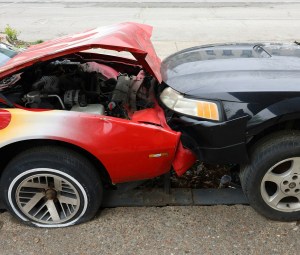
Last week, I walked out to my car, which had been parked on the street, to find that someone had hit it. The driver’s side mirror was ripped off, the wheel cover was smashed and the side was dented.

Two things immediately became evident: 1) we were lucky that the person responsible had left us a note with their phone number, (2) we were going to have to completely restructure our travel expectations for the foreseeable future.

While I found a lot to be grateful for in the situation, it also reminded me of a traffic analogy that I have used to describe what happens after you’re handed a cancer diagnosis.

Diagnosis? That’ll throw a wrench into your current plans.
(Photo by Scott Greer on Unsplash)

Being told you have cancer is like getting into a traffic accident: you’re moving along with everyone else in their cars, focusing on getting to where you need to be, and then all of a sudden *CRASH*.

You pull your car over to the side, still stunned by the collision, and take stock of the damage to both your vehicle and yourself.

And as you stand there, all that traffic that you were moving along with has left you behind. You are no longer part of the natural flow of things. All the plans that you had to be somewhere and expectations for what you were going to do this week and next…all of that stops.

You hear the noisy din of traffic and the “Dopplered” sounds of cars zooming by, feeling the whoosh of air as they pass. But when there’s a lull in the traffic, the quiet brings on loneliness, as if the other travelers have moved on and you’ve been forgotten.

The rest of life whooshes by you.
(Photo by Viktor Kiryanov on Unsplash)

Now you have to rework your life. Instead of taking your ability to move through the city for granted, you’re scrambling to figure out what you’re going to have to cancel, how you’ll get to where you need to go and what the immediate future will look like until you get your car back in working order.

In the meantime, you see everyone else progressing along, as they have been, completely unaware of what life looks like in the breakdown lane. Having pleasant conversations, arriving at work on time, meeting with business associates, eating from cafeteria salad bars without the need to double disinfect their lettuce and tomatoes.

Not needing to schedule multiple appointments or surgeries or infusions or radiation treatments. It is such a different life!

~~~~~~~~~~~~~~~~~~~~

Shortly after receiving a cancer diagnosis there’s so much going on that it can be difficult to articulate everything you’re feeling, and those around you might have a hard time relating. I’ve found that this analogy can be helpful in relaying what the experience is like.

See if this works for you too.

Breast Cancer: Finding Gratitude as a Cancer Patient

(Title image: Photo by Diego PH on Unsplash)

I’m not going to lie, gratitude can be difficult to navigate as a cancer patient.

When you’re mourning your diagnosis and trying to hold yourself together from the shock, the last thing you want is for some sunny person to tell you to think about everything you’re grateful for.

At such a time, it can be very difficult to think of anything. I, personally, felt a lot of anger, bitterness and even betrayal after I was told I had breast cancer. It wasn’t a great set of feelings to sink into, but that was my reality.

While I tried doing gratitude practices, in the beginning the process was miserable and felt “fake”. The whole notion of being grateful struck me as forced and required me to think about things I didn’t want to focus on.

Tough to be grateful? Make a list of what doesn’t suck.
(Photo by Hannah Olinger on Unsplash)

However, what helped me was making a list. It started out as a list of things about which I could say, “well, at least this didn’t happen” and slowly shifted to “well, this thing made my life easier”. It enabled me to find positives that I had otherwise overlooked.

I wasn’t grateful for getting cancer. But having bosses whose wives had survived breast cancer made it easier for them to understand what I was going through…and also to offer some useful advice (as did their wives).

I didn’t have the luxury of not working throughout treatment, but I was glad that a series of big projects had ended the previous year, so I didn’t have a huge workload waiting for me at the office. And while I really wished I could have had a full-time income, my part-time position meant that I had an easier time shifting my schedule to accommodate appointments and days off following infusions.

Additionally, it was fortunate that the region in which I live had a number of highly lauded cancer centers. And my cancer center offered free counseling by excellent therapists specifically trained to work with cancer patients.

It was also a plus that the summer during which I had my chemo infusions ended up being mild—luckily, since we didn’t have air conditioning—and my fear of enduring nausea through hot summer days never became a reality.

My list got longer and longer.

Opening the door to gratitude soothes the overwrought mind.
(Photo by Pedro Ramos on Unsplash)

So little by little, I started to pick through all the things that ended up better than they could have been. I didn’t call it “gratitude” at first because I was still bitter and refused to accept that there was anything to be grateful for. But the more things that came up that made me realize how much better the situation had turned out…the easier it was to finally come around to the idea that, even in the midst of the crappiest-thing-that-could-happen, there truly were things that I could l squeeze out a bit of gratitude for.

It took time. But when I loosened my grip on bitterness, I allowed in a swell of gratefulness, so much so that it was almost overwhelming how, if I had to get cancer, if it truly had to happen, there were so many things that had gone right. I started feeling so much better emotionally.

So my advice to anyone who wants to try out that “gratitude stuff” to see why it’s so great for your mental health: be gentle, start slowly and don’t tell anyone you’re doing it. This is a private practice for you. When you finally allow yourself to zero in on those little things that aren’t so bad or are kind of fortuitous given the situation, you may find that they buoy your spirits.

That’s all it takes. Not need to rush. Let the appreciation come to you.

Cancer This, Cancer That

(Title image: Photo by National Cancer Institute on Unsplash)

Cancer, cancer, cancer.

There is a part of me that would like to stop talking about cancer. Really.

My cancer diagnosis tops my “Worst Things I’ve Gone Through” list, more than any other crappy things that I’ve gone through. Treatment brought me to a screeching halt and forced me to rethink my expectations for what “success” looked like.

It wouldn’t be surprising if I wanted absolutely nothing to do with cancer and chose to never speak of it again.

However, I DID go through this. I WAS angry and frustrated and literally fearing for my life. So I want to own the fact that I faced one of my greatest health fears and was able to come out of the other end of the cancer tunnel.

Undoubtedly, most of my “success” was sheer luck and well-established medical protocols. There are many other cancer patients who go through the same thing but are not so fortunate. Until we know exactly what triggers the development of a tumor and can determine how to effectively avoid that, we will still be riding by the seat of our pants

In that case, isn’t it sort of odd to wear the “cancer survivor” badge like an achievement?

This goes without saying.
(Photo by National Cancer Institute on Unsplash)

And yet, it does feel like an achievement. Or perhaps, it feels like it gives me a purpose. The entire reason why this blog exists is because I had questions about the experience of being a cancer patient that I could not find answers for, and I wanted to offer what I had gone through in case it might help someone else.

As cancer recurrence became kinda, sorta, maybe less likely with each passing year, I still had an urge to let people know about the disease because it had been so huge in my life. At some point in a conversation, I’d stick in that I was a cancer survivor—it was hard not to, I realized, because there were so many ways that cancer had entangled itself in me.

And people would say congratulations for surviving and then the conversation would become a bit uncomfortable because no one really likes talking about cancer…and everyone would quiet down for a bit. I could easily keep going on about my experiences but I know I’d never get invited to another social event if I did, so I learned to shut up and change the subject.

This blog is my emotional, cancer-indulgent dumping ground.

~~~~~~~~~~~~~~~~~~~~

If someone mentions that they have a cancer diagnosis, I know what not to say first and foremost, but there’s a balancing act between allowing them the space to express themselves (especially if others around them don’t know what to say) and offering supportive bits of random information about things that actually matter to them.

In online forums, I’ve typed out a block of text…only to delete it before sending. Maybe it’s not as important for me to talk about what I went through as it is to simply be there to listen.

“Them’s Fightin’ Words!”: Discussing Cancer Language

(Photo by Thao LEE on Unsplash)

Here’s something that I want to share from my Yoga4Cancer teacher training class. It’s an episode from a BBC podcast on the language that we use to talk about cancer, and it is excellent.

The podcast features a group of people touched by cancer: survivors who have finished their treatment and those who are still undergoing it. In one case, there is a woman who will never finish treatment because she needs to stay on it for the rest of her life.

Their topic of conversation circles around how they describe their situations and how they feel about the words that others use. I don’t want to give too much away because the discussion is engaging and even humorous, so I do encourage you to listen for yourselves.

BBC Radio 4 “Fighting Talk: How Language Can Make Us Better” (https://www.bbc.co.uk/programmes/m0001g8w).

I’d be really interested in knowing what your opinion on this is. Many of us might start with more aggressive talk concerning our cancer diagnoses: fight, beat, battle, etc. And yet as you’ll see, those terms can become problematic. We may get worn down by them as the treatment progresses.

How about “toxic positivity” from others? This is the tendency to push a narrative of upbeat positivity no matter what, even when it’s not appropriate to the situation. Such encouragement often ignores the tumultuous inner state of the cancer patient and can lead to a feeling of isolation

Open discussions about cancer help maintain an active support network for the diagnosed individual.
(Photo by Helena Lopes on Unsplash)

Everyone is different and as cancer survivors, we don’t expect well-meaning friends and family to know what personally irks us: for instance, there are differences between men and women in how they react to “fighting” metaphors. But it’s useful to bring a conversation like this into the open because cancer is one of those diseases that may make people around us feel uncomfortable.

A lot of people may not know what to say in response to your diagnosis, so they’ll say something vague and positive, or even nothing at all…and some may avoid you altogether. That can be unfortunate at a time where community support is especially important.

If you are currently undergoing treatment, understand that many around you might not have the vocabulary for talking about cancer in a way that resonates with you.

And if you are one of those friends who doesn’t know what to say, it can be best to admit that. Trying, “I don’t know what to say because I don’t want to say anything wrong,” can be more heartfelt and helpful than an awkwardly-cheery, “You got this!” or “Don’t give up the fight!”

I hope you enjoy the podcast episode!