Finding A Path Through It

There are few things more terrifying than the unknown.

I experienced this with my cancer diagnosis, although it would be the same with any catastrophe that significantly alters your life, such as losing a job when you’re already financially strapped. You’re hit with the news and then…everything stops. It doesn’t matter who else is talking or what other information is relayed, because the gravity of the situation stops up your ears and you hear nothing else.

A powerfully negative event throws up a wall that you cannot see around. When the future is undefined, it can take any form. This is a positive and liberating concept when you’re embarking on a new venture — “the sky’s the limit!” But in the case of something that’s painfully life-changing, our minds race to frightening prospects, often culminating in a terrifying extreme that we can’t see our way out of.

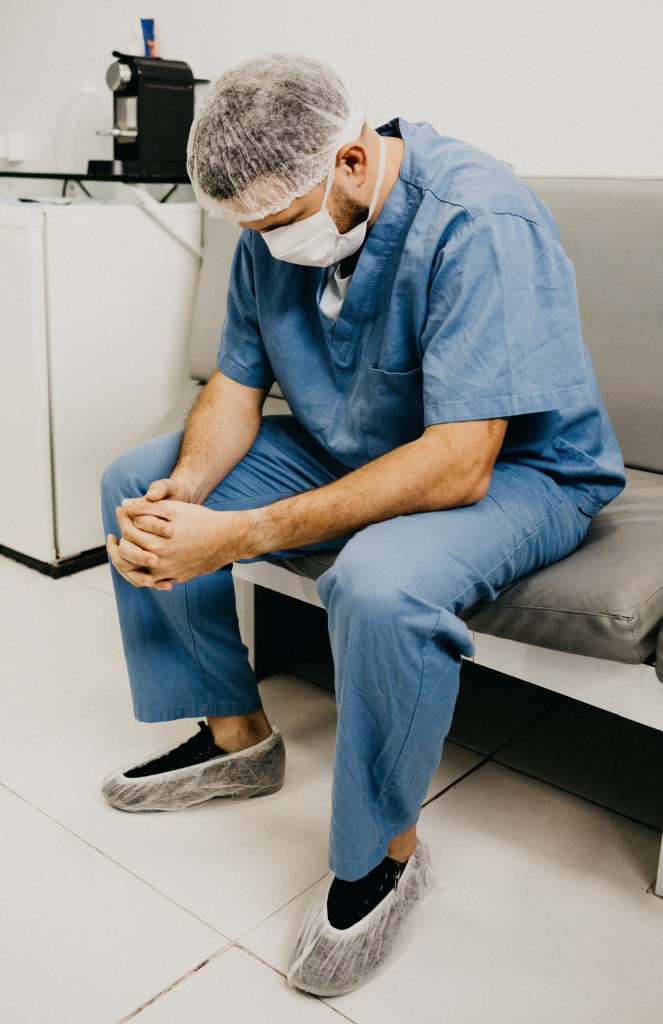
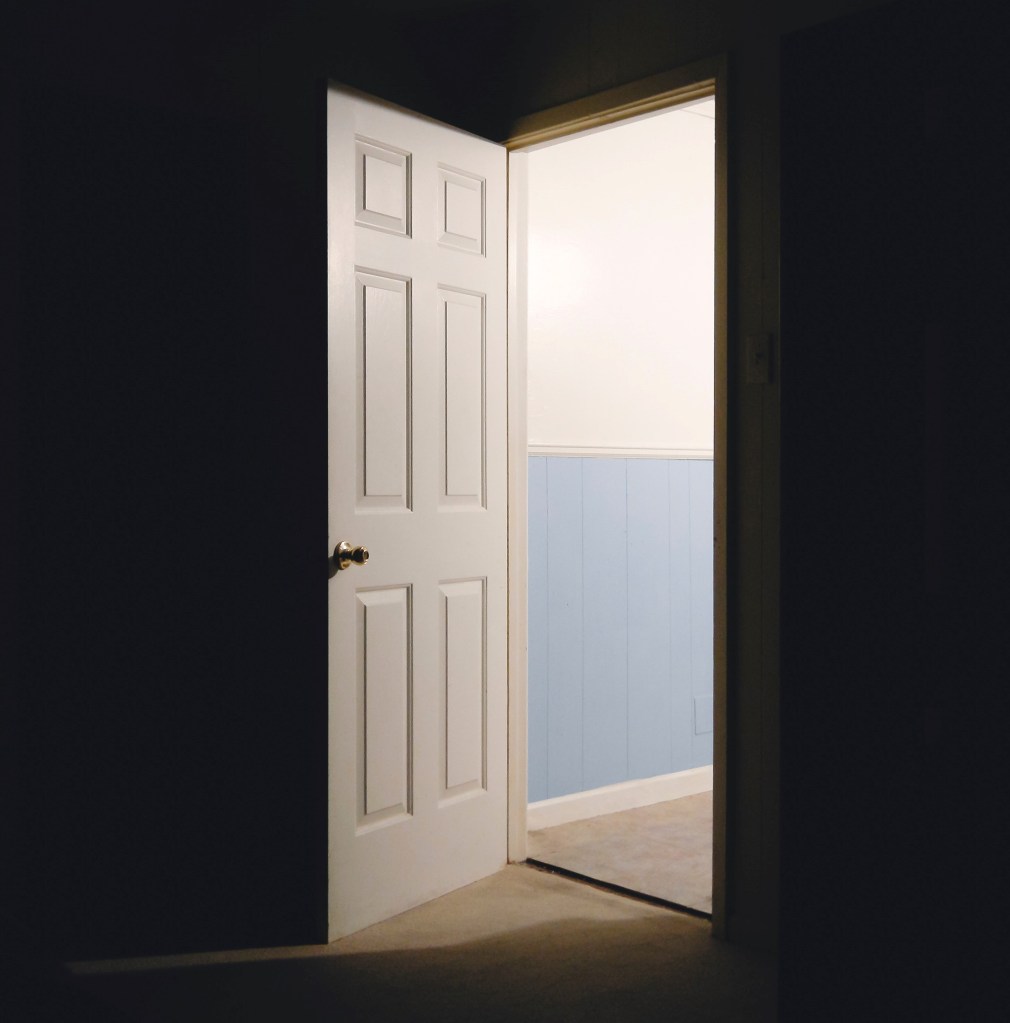
This is where you pause and breathe. Get your facts together and see what your options are. Things get easier when the darkness in front of you parts and you see a path to follow. After my cancer diagnosis, it was when I met with the oncologist who explained the possible variations of my condition, what the treatments would be for each, and yes, even what the potential outcomes were.

Once you get a grip, the climb gets easier.

Sitting there, digesting the information, I finally felt like I had something to hold on to. If the diagnosis was a hulking monolith, smooth and slippery, blocking my way, my doctor’s words gave me handholds with which to climb.

Right then, the future looked more manageable. I still desperately wished that it had been different, but I saw the path through the ordeal and it gave me something to follow as I strode forward.

~~~~~~~~~~~~~~~~~~~~~~~

April 27, 2017 was a Thursday. It was also the day of my first chemo infusion. If you’ve ever gone through chemotherapy, you’ve sat through the full disclosure of all potential side effects. There’s so much that it can be disorienting.

But on that Thursday when my husband and I went to the infusion room, I learned that there was a process. Everything doesn’t hit you at once, you take it in steps as you make your way down the path.

I’m still walking. But at least I’m still walking.

Can’t Let Go? Try Setting It Aside

With everything that’s going on right now, it would not be surprising if you were having trouble sleeping.

I myself have an internal alarm that wakes me up around 3am, giving frightening thoughts a chance to land hard punches. It’s far easier to keep negative emotions at bay during the daylight hours, but our defenses are down when we’re groggy. Before I know it, I’m already on that hamster wheel, getting nowhere and working up an anxious sweat in the process.

Ok, nighttime. Wanna go?

There’s a lot to worry about in the time of COVID-19. Take your pick of stressors: finances, physical health, relationships, emotions. At night, our brain wants to fix everything that we’re hit with during the day, but obviously, that’s not the time for it. Few things are as critical for dealing with stress as a good night’s sleep, which you won’t get if you’re trying to calculate how many months’-worth of rent you have left.

The mistake we make is trying to let go of things completely. When “danger is imminent”, as in, the worst-case scenario is a distinct possibility, it’s unrealistic to pretend it’s not. I promise you, as a former cancer patient, I had terrors breathing down my neck. I could not simply “let go” of them. They were life-changing and oh-so real. But with a little effort I could loosen their grip on me.

Your concerns need some respect. So instead of trying to avoid them, try gently putting them aside. You know they’re still there, they know they’re still there, but you’re not butting heads. This may take some mental calisthenics.

Even the tiger needs some shut-eye.

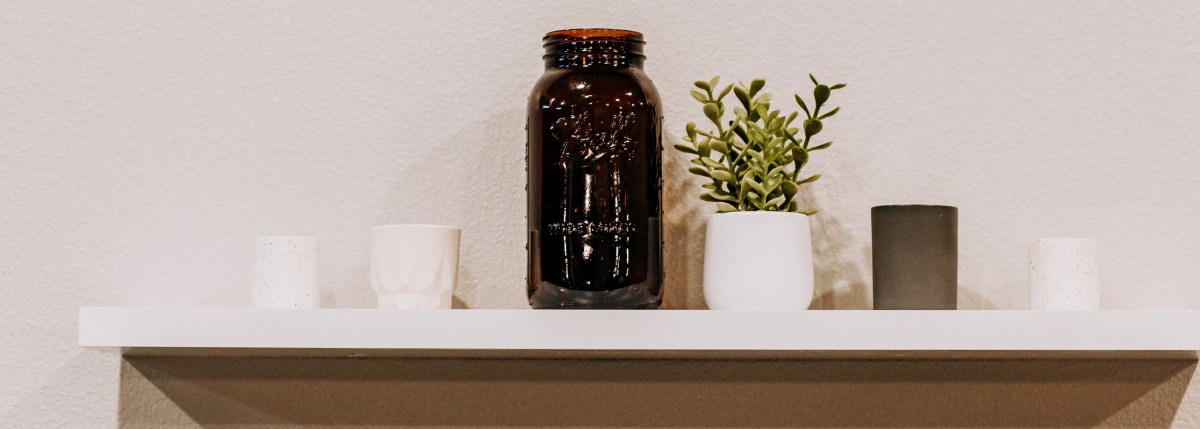
Ask yourself, “Can I do anything productive right now?” If the answer is no (hint: unless the house is on fire or there’s a tiger loose in your bedroom, the answer is no), then create a mental shelf for your anxious thoughts. You can build one for yourself, right there lying in bed, no hammering required.

Find yourself a jar with a secure lid. I know you have one somewhere in your mind. Scoop your thoughts in there, screw the lid on tightly and place the imaginary jar on that imaginary shelf. This may take several tries — unpleasant thoughts are slippery — but that’s okay. Make sure the shelf is across the room from you. The jar will still be there in the morning when you wake, thoughts swirling inside. But in the darkness, you’ll have some space between them and yourself.

As you lie in your bed, take a deep breath, feel the weight of your body on your mattress, feel the softness of your sheets on your skin. Look at the shelf, way over there. Way, way over there, and you safe in your bed. Allow yourself to relax.

That’s what you need most in the wee hours of the morning. So rest easy now. Tackle the problems tomorrow.

And Now We Wait…

Last Monday night my daughter and I noticed that we had sore throats. No big deal most of the time, but we’re in the middle of a global pandemic.

Of course, a sore throat can develop for a number of reasons. And we’ve been washing our hands, using hand sanitizer when soap and water aren’t available, keeping our distance from people. Nothing much to worry about, right?

Right. Except that it seems like a sibling of mine had actually suffered through an illness resembling COVID-19, with first symptoms appearing over a month ago, with a gradual onset. At that point, like many in the United States he wasn’t in a position to get tested (and with a fever of 103.9, he wasn’t about to drive himself to the doctor).

Now, I haven’t been in physical contact with him for about a year. But since I had a sore throat, I casually asked him what his symptoms were. I mean, I wasn’t exhibiting the same COVID-19 indicators everyone talks about.

Here we go again.

Apparently, his illness also started with a sore throat, no other symptoms for about a week, at which point the cough started. That was followed by a shortness of breath and fever, including two days that the fever was dangerously high. Eventually, the symptoms subsided, with the sensation of an elephant sitting on his chest, along with a lingering cough, being the last to go.

This would be extremely disconcerting to me, if not for the fact the sore throats that both my daughter and I had lasted only a few days before going away.

Phew, right? Well, kind of. Because if this had been COVID-19, we would have been dealing with the monster head-on. Now, we’re prepped for a fight with no opponent. Back to being vigilant, washing hands and crossing fingers.

Sound familiar? Any cancer survivor will tell you they’ve been down this road. It’s all about the waiting, trying to shed the anxiety about cancer coming back. Trying to shed the hypervigilance. There is no “end date”, there’s just an “I’ve made it this far so maybe my risk is decreasing?”

With COVID-19, we experience that lack of “end date” on a smaller scale. Eventually, there’ll be a vaccine. But we have no idea how long we’ll be waiting and how long our lives are going to be so drastically different. However, relief will eventually come and we can exhale.

As a cancer survivor, I’m kind of jealous.

Musings from a Lockdown State

If there’s one thing that the COVID-19 pandemic has illustrated, it’s that all of us on this planet are inextricably interconnected.

In times of disease spread, this may seem like a bad thing, but it’s also an opportunity to pause and reflect that no matter where we live, we all belong to the same species. We are all vulnerable to the coronavirus, no matter whether someone is a high-profile lawmaker, a movie star, a famous athlete or the custodian at an elementary school.

So this is similarly a good time to think about the importance of sharing resources and considering the common good. I’m looking at you, Ms. “I’m-cramming-three-packs-of-toilet-paper-into-my-cart-even-though-the-limit-is-one.” C’mon, don’t be like that. Leave the stampeding to cattle herds. And the rebellious college students who feel the right to crowd beaches for Spring Break celebrations? Time to grow up.

We should be above that. And I believe we are.

As many hiccups as there have been, communities are adjusting to the changing situations at a breakneck pace. My university has ordered all “non-essential” personnel to work from home, within a week, we scrambled to move meetings online and eke out a research plan. Likewise, university courses are transitioning to an online platform, as is my kids’ high school. Restaurants have switched to take-out wherever possible. And my daughter joined her fellow fencers for a ZOOM training session with their coach last night.

This is not to say that this has been effortless. My daughter will probably lose her restaurant job, which means that she won’t have the income to continue fencing, as the classes are a financial burden on our family. But she has a place to live, food to eat and incoming college acceptance letters. Others are losing their livelihood and looking at a far bleaker future. Many of our favorite small businesses are suffering. Therefore, as much gratitude as I have for the ability to work from home and not face immediate financial consequences, I have great compassion for those who are struggling through what could be a long and difficult situation.

Blink and the numbers increase…

And this isn’t even counting the number of infected individuals, some with severe complications. These days, “hot spots” are less about internet connections and more about loss of life. Few saw this coming and we won’t see the end of it for some time to come. My heart goes out to COVID-19 patients, their loved ones and the uncertainties they all face.

At the same time, I’m concerned about a group with which I’m more familiar: newly-diagnosed cancer patients. Getting a cancer diagnosis is frightening enough; getting that diagnosis when the treatment for the disease puts you at significantly higher risk for succumbing to a global pandemic is unimaginably unfair.

This is painful, so I look for the bright spots in the world: the clothing designers distributing patterns for people to make their own masks so they don’t compete with hospitals for supplies, and the designers making gowns, scrubs and face mask covers for doctors; the local seamstresses who are firing up their sewing machines and using their skills in the same way; the alcohol distilleries and perfume producers who are switching to making hand sanitizer; the millions of dollars raised to support intensive care units. All this gives me hope that we are bigger than the virus and we’ll pull ourselves out of this.

So Far, So Good

I had a mammogram last Thursday to ascertain whether or not I was still in remission from breast cancer.

For the record, I still am, although it’s easy to say that like it’s no big deal. Not only is it a huge deal, but getting through last week was more difficult that I anticipated.

One of the basic tenets of mindfulness that I practice, with varying degrees of success, is non-attachment. This is particularly useful when dealing with cancer because the disease involves so many scary things, and as a result, so much wishing that things were different. Of course, the more you agonize over the fact that you’re going through something you desperately don’t want to be going through, the more suffering you experience.

I can personally attest to this.

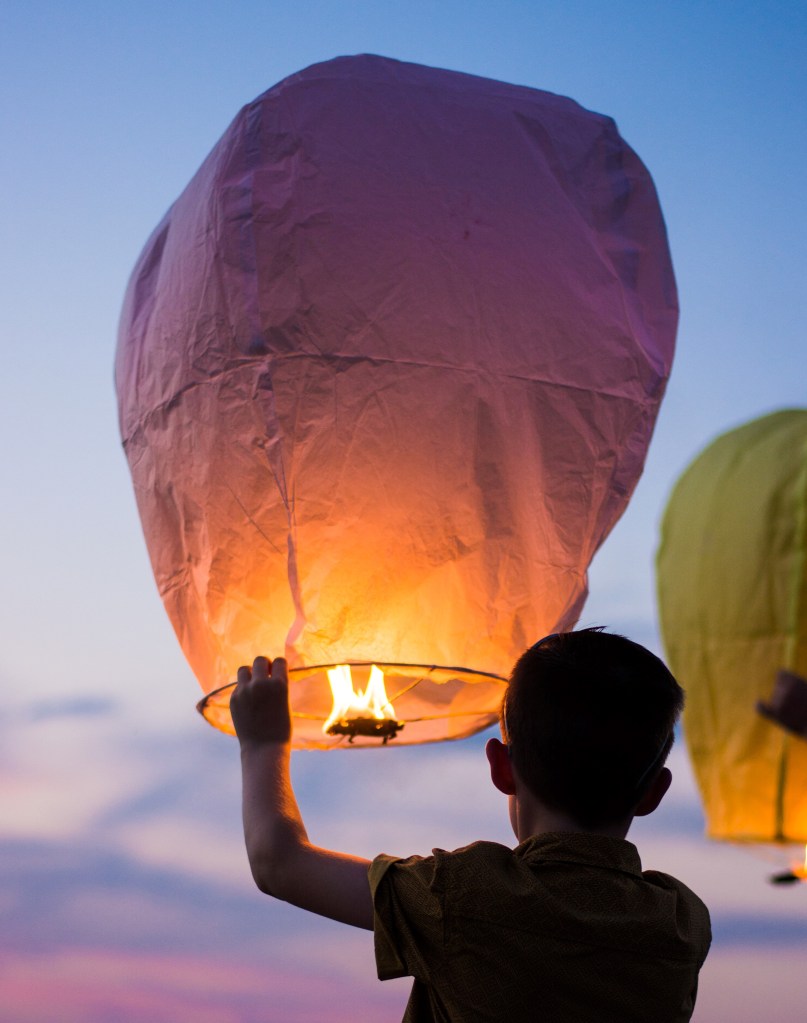
It would be great if letting go of expectations would be as simple as releasing a paper lantern, but it’s not that easy.

To counter this, I do my best to release expectations of specific outcomes. When it come to scans, every cancer patient wants to hear that tumors are shrinking and every cancer survivor wants to be told that the tumor hasn’t returned. It’s REALLY, REALLY, REALLY hard not to cling to those wants, but the harder you cling, the more painful the separation if things don’t turn out the way you hope, and even if they ultimately do, there’s fear that they might not.

So for the past several weeks, I’ve been practicing letting go. It’s funny that “letting go” is so easy to type out, but so incredibly difficult to accomplish. I’m not good at it when it comes to the things I desperately fear.

To counter my clinginess, I’ve adopted a concept I call, “so far, so good”. That means that up to this point, I’ve been able to handle everything that’s happened to me. This doesn’t mean that it’s been easy or pleasant — in fact, at times it’s been horrible — but somehow I’ve made it through to this point. And tomorrow? I cannot predict what will happen then, but right now I’m still here.

This way, I can feel positive without the burden of hopeful expectations — and the fearful possibility that those expectations will be dashed to smithereens. Of course, all of this sounds great because I’m speaking theoretically. But as we know, that ain’t real life, as I’ll illustrate in my next post…

A Month of Fear-Driven Memories

Here we go again…

Around this time of the year, I get uneasy. It’s February, which means it’s time for my mammogram and the determination of whether I’m still in remission from breast cancer. It’s also the month when, in 2017, my life was slammed in a different direction and the best I could do was try to hang on.

February 8, 2017: Doctor’s appointment. After feeling a lump in my breast for six months (SIX MONTHS!!!), I finally met with my general practitioner to have her tell me it was nothing. Except that’s not what she said. Instead, she gave me a referral for a diagnostic mammogram and warned me not to put it off.

My own mammogram is on February 27, 2020. I don’t think I’m going to get bad news, but I just want it over.

February 23, 2017: My mammogram and diagnostic ultrasound. I had not expected that waiting two weeks for a screening would be so horrible, but my anxiety worsened with every day. I also had not expected the radiologist to come in and tell me that I had cancer. Technically, he wasn’t supposed to do that without biopsy results, but he knew what he was looking at. One in eight women is diagnosed with breast cancer at some point in her life, so he’d seen his share. Things spiraled downhill after that.

February 28, 2017: Biopsy. This procedure was anticlimactic in the sense that I knew I had cancer (see above). What I didn’t yet know was how aggressive it was. The procedure itself wasn’t bad but the mammography technicians were unable to get a clear picture of the titanium markers that the radiologist who biopsied me had inserted as surgical guides, so they took over eleven mammogram images on that left breast. The physical squeezing was miserable, but I was being squeezed mentally too. I think they eventually got the image they wanted…or maybe they didn’t. It was all a blur. I didn’t want to remember.

But now it’s three years later and I remember everything too clearly. Every February, I lose my footing on the Earth and hover for a few weeks in limbo, starting from when I make my mammogram appointment.

I’ll have an uneasy feeling until I get the “all clear” from the radiologist, or “I’m so sorry, but…”. On one end of the continuum, there’s glorious relief, on the other, mind-numbing anxiety, and I’m standing here in the middle. Most of my life now is lived in this middle ground and it’s a struggle to release expectations and attachments to how I want things to be. I’m not great at it, but I have the rest of my life to learn to deal. I hope that’s enough time.

What My MonkeyMind Needs, Part 2

There’s more to the story I began in Part 1 and what better time than the start of a new decade to relate it?

I have a monkey. Those of you aware of your monkey minds know exactly what I mean.

But at this moment, “I have a monkey” means something more tangible. After giving it some thought, after going through struggle after exhausting struggle over all the negative chatter in my head, it was clear that I needed to change my strategy.

A quick Amazon search provided the result I needed: a gloriously soft, appropriately small, unbelievably cute plush monkey that would serve as my previously-maligned nemesis. It is a physical representation of my MonkeyMind (my little MoMi), but not one that I’d want to stay away from. This one begs for soft cuddles.

(To be clear, I bought a stuffed toy from the Amazon site, not an actual primate from the Amazon!)

How can something so darling be a nemesis? It shouldn’t be.

This is not about avoiding thoughts or wrestling my mind into submission, which I’d been trying to do. This is about acceptance of something that is a part of me.

Instead of tossing and turning at night, instead of succumbing to anxiety, instead of frantically trying not-to-think about what’s bothering me, I take that comfy manifestation of my worries and shower it with affection. I hold it gently, and then I hold my thoughts gently too.

Spread the love in 2020. We desperately need it.

The best part of this is that MoMi, a representation of that which upsets me, is actually so easy to hold and love.

What does my MonkeyMind need? The same thing this world needs a lot more of: LOVE.

May this New Year bring you lots of it.

What My MonkeyMind Needs, Part 1

This post was inspired by Smilecalm’s beautiful combination of words and pictures. He has a very insightful monkey!

I got thinking about my MonkeyMind. Most of the time it’s doing a lot of chattering, distracting me from the present and keeping me up at night. I meditate in an effort to shut it up, but that’s a struggle.

We have had a tumultuous relationship, MonkeyMind and I.

I’ve tried to wrestle it into submission, but WOW does it put up a fight! We stand at odds, I in one corner and my MonkeyMind in the other, dukes up, gritting our teeth.

Headaches result. This is tiring. Something needs to change.

After numerous fruitless boxing matches, I decide to try something else, something I hadn’t thought of before. I invite MonkeyMind into my home. While I had, in the past, taken it by the scruff of the neck and attempted to toss it outside–an exercise in futility–now I’m opening the door…

We stare at each other. MonkeyMind looks a lot smaller sitting on the rug by the front door than when it’s screaming in my ear at 3am. Gentler and less menacing. Even a little scared, unsure of what’s going to happen.

MonkeyMind doesn’t look so scary there on the ground by itself. You mean, this is the little guy who’s been giving me so much grief?

I pat it on the head. Its fur is silky soft! I expected a rough, bristly coat, but it’s nothing like that. I can’t resist, I pick MonkeyMind up and then, as I look down at its anxious little face, I’m struck by an overwhelming urge to hug the little bugger, so I do.

And then something new happens: MonkeyMind burbles contentedly. I’ve never heard that before!

Then again I’ve never held MonkeyMind before. I’ve never given it the attention it required to make its needs known, never been sincerely patient with it, never cuddled it. I’ve just tried to push it away.

This is so much nicer.

Now when I wake in the middle of the night and notice MonkeyMind chattering in my ear, I take it in my arms and rub its tiny feet. I stroke its little back and feel the softness of its fur against my face. We take a deep breath together.

I feel grounded and present. MonkeyMind settles down. We both go back to sleep.

(Read Part 2 of this story here.)

Hi-Ho, Hi-Ho, On Letrozole We Go

Starting up again…

After giving me a six-week respite from tamoxifen and then running bloodwork that revealed I was postmenopausal, my oncologist made good on his threat to put me on letrozole, an aromatase inhibitor. This breast cancer medication is supposed to block “the enzyme aromatase, which turns the hormone androgen into small amounts of estrogen in the body. This means that less estrogen is available to stimulate the growth of hormone-receptor-positive breast cancer cells” (breastcancer.org). It’s also better suited for postmenopausal women.

Perhaps it’s more correct to say that the journey is BACK on. I enjoyed my time off tamoxifen, but I really didn’t notice much of a difference in myself whether I was taking it or not, suggesting that maybe what I thought were side effects, weren’t. So I’m willing to humor my oncologist and try an aromatase inhibitor.

Not gonna lie, I really did not want to go on yet another medication, but for this appointment, I left all the journal articles at home and put away the boxing gloves. I promised my oncologist that I would stay off the forums, stay off PubMed, quit overthinking things and give letrozole a chance.

The reason? My oncologist thinks that my earlier frustration with tamoxifen was, to put it bluntly, in my head. And my clinical counselor suggested that what I complained of could be explained by anxiety. But I swore that my memory and focus issues started with tamoxifen.

You know what? I’m not so sure now.

The fact is, everything that I was experiencing could have been caused by anxiety (or menopause). And even more striking were the things that I didn’t experience. Not only did I not have significant hot flashes (maybe a “warm flush” here or there, easily countered by taking off a sweater), I never had night sweats. Heck, I had more night sweats before my cancer.

No weight gain, either, which had been another big concern of mine. I’ve been disciplined in maintaining healthy fitness habits throughout my adult life, probably to the point that most people wouldn’t tolerate. Tamoxifen didn’t manage to mess with that, which was extremely gratifying.

While I really want to peg the concentration problems, distractability, flagging libido and other negatives on estrogen-blockers, a retrospective look at my emotional history suggests that (1) I’m highly suggestible (I need to stay off the internet!), (2) there have been loads of anxiety-amplifying events in my life, even before cancer, that I haven’t handled well, and (3) I would be better off shutting up, taking the pill and working on getting my mental state in order.

I mean, I already knew most of this. But some things need to hit me between the eyes a number of times before they actually register.

Wow, dizziness and impaired ability to drive are bad enough to merit a prominent place on the label? Yay! I’m going to pretend that this is a sleep inducer that will leave me better rested. I’ll let you know if that works.

So, while my oncologist warned me about “a little joint pain” (eek!), I’ve avoided anything but a cursory glance at what I might experience on letrozole, besides what reactions would necessitate calling the doctors.

We’ll see how bad these side effects really are.

~~~~~~~~~~~~~~~~~~

A FINAL NOTE – According to what was written on the bottle, this stuff can cause dizziness and impair my ability to operate a vehicle. Seriously? I didn’t expect that, but here’s what I’m going to do with that tidbit of information: I’m going to view letrozole as a reason to get to bed earlier, since I’ll obviously have to take it in the evening. And I’m going to tell myself that this is going to help me sleep. Who knows, maybe it will?

What No One Told Me About Cancer and Hair Regrowth

More than two years after finishing chemo, after being afraid my hair would not grow back, and after being delighted with the way it did…I’m experiencing follicular drama, once again.

Once chemo was over, my sleepy follicles took their time getting roused into action. To say that I worried would be an understatement. I was still caught up in the unfairness of being smacked down by breast cancer. Confronting the possibility that after enduring the nastiness of cancer treatment, I might not get my hair back? That was too much.

Well, if you’ve read my posts on hair, you’ll know that my hair finally did come back. And there was much rejoicing.

And that’s where my hair posts stopped. But as happens with these kinds of things, that wasn’t the end of the story.

While still bald, I had been fed reassuring anecdotes by well-meaning supporters about hair coming back even better than before, lush locks that served as well-deserved rewards for undergoing the anxiety and strain of cancer diagnosis and treatment.

But as much as cancer patients feel like they don’t know what’s going on, those around them have even less of an idea. They want you to “stay positive” at all costs, so they overload you with lots of good news.

The forest isn’t as dense as it used to be.

By now you can probably guess where I’m going with this. Because in Spring 2019, things started changing. Within a few months, my uber-cool spikey rockstar hair lost fullness as my strands thinned. Then, I saw “bald spots”.

So, let me explain how I define “bald spots”: these areas have hair, but due to the color (um, WHITE) and thinness, the hair seems translucent, even transparent. And along the part? You can’t see the roots well at all.

My reward for enduring cancer is invisible hair.

My hairstylist confirmed that the hair that comes back in after chemo is different from the hair that eventually settles in. And mine had settled.

Tamoxifen also played a role, since choking off estradiol and moving into menopause will age both you and your hair, particularly if you are premenopausal going into treatment, as I was. So this should have been expected, but in the hustle and bustle of all the other little things, like, oh, wondering if you’re going to survive the ordeal, no one really talks about the fact that there will be other changes that take place.

And now, I’ve been off tamoxifen for almost six weeks, but can’t tell whether there’s been any regrowth, not that I expect any. I meet with my oncologist this Tuesday and you can bet your panties he’s going to prescribe an aromatase inhibitor for me, so the pharmaceutical depression of estrogen will continue.

I am dealing. Mostly. Am I happy about this? Of course not. The last few years have felt like running a gauntlet of misery, but one where I’m only hobbled and not completely taken out. Given that, I’m ashamed of complaining, as there are many others doing so much worse. But not ashamed enough to stop writing about it, as this is my reality and it affects me. If I’m going through this, there’s a good chance that many others are too.

I’m supposed to be moving on and leaving cancer behind me, right? But like an annoyingly nosy neighbor, it keeps waving at me through my kitchen window, reminding me that it’s living next door.