Farming ‘Likes’ on Instagram

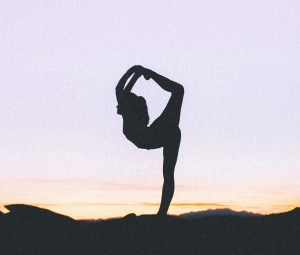
(Title image: Photo by Chelsea Gates on Unsplash)

I am a reasonably flexible person although I’ve become less so with age and especially following cancer treatment. Yoga asanas that I used to be able to do…well, they don’t come so easily anymore, if at all.

After going through my yoga teacher training in my 50s and now in the middle of an Oncology Yoga (y4c) certification program, I spend a lot of time feeling like an imposter.

There’s an element of shame to this. I tell myself I should be more flexible, I should have better balance, I should be able to hold more advanced poses and for longer.

In my y4c training, the manual referenced a concept, versions of which I’ve seen before and have written about myself, but the message continues to hold true (see this article). The proliferation on social media of young, flexible bodies in extremely inaccessible poses for the vast majority of the population not only hurts the practice, but completely misses the point.

It seems like a lot of images that show up as “yoga” on platforms such as Instagram are part (if not wholly) acrobatics and contortions. But yoga is actually a spiritual practice and only one part of it, the one that is overemphasized in the west, is physical.
POV: You’re a cancer patient and your forward-thinking oncologist suggests that you try yoga to help alleviate some of your side effects. But this is what you think of when you hear “yoga”. What are the chances that you’ll try a yoga class? What are the chances that you’ll even find a yoga class that is appropriate for your current condition? Or will be able to afford one?
(Photo by Wesley Tingey on Unsplash)

And that physical practice is a big money maker. If you doubt that, take a look at how many yoga studios exist in affluent areas, and the dearth of studios in more moderate-to-low valued ones.

Yoga was what helped me through my cancer diagnosis, treatments and beyond. But that yoga was minus the “workout”. My workouts during cancer focused more on rowing and lifting weights rather than Sun Salutations and balance asanas. Yoga was for my mind and spirit, to maintain connection and grounding, to not get lost in my fears and to be grateful for what I had.

This is not to say that it’s not impressive when people post challenging asanas on social media. Some of the wonderful teachers that I have trained with have shared those kinds of posts. It’s natural to want to show off a physical achievement that you’ve worked so hard for. In a way, that’s the whole point of social media posts. And that’s also part of the problem with social media.

Frankly, yoga has become deeply entrenched in the United States as a physical practice and nothing is going to change that now. We can be hopeful that those who dutifully attend yoga class, rolled up mat under the arm, will take the time to understand the depth of this ancient practice. But regardless, the flow of the class still brings peace to the mind in a way that my ‘hardcore’ workouts do not.

There are a lot of people who could benefit greatly from the practice of yoga in all its forms, matching breath to movement and developing a mind-body connection. Cancer patients and survivors are some of those people. But if all they know is that yoga demands extreme flexibility, even hypermobility, and statue-like balance, they will avoid the practice as too advanced and inaccessible to them.

If you are a teacher, please keep that in mind. If you are a potential student, please don’t let social media keep you away from such a beneficial form of exercise for both your body and your mind. And if you are a current practitioner, please dig deeper to understand the roots of yoga to honor the cultural tradition from which it arose. It’s not just for likes on Instagram.

Revisiting Radiation Tattoos

(Title image: Photo by FlyD on Unsplash)

I came across a story from November 2024 about actress Nicole Eggert (“Baywatch”, “Charles in Charge”) discussing her breast cancer diagnosis.

While I admit that I hadn’t watched any of her acting projects, I could completely relate to her reaction to preparing for radiation therapy.

The article focuses on an Instagram post that she made after leaving a doctor’s appointment during which she received her radiation tattoos, expressing surprise at the fact that they were, in fact, actual tattoos.

As the article continues, “She then started to cry as she realized just how permanent the tattoo would be. ‘And it’s minor, it’s nothing but dots, but boy, every step of this process is never gonna let you forget it, there’s just always going to be a constant reminder.’

This really resonated with me because I had a similar reaction to getting my own radiation tattoos. I had never had an interest in getting any kind of tattoo myself. But now, with cancer, nothing was under my control anymore. It felt like my body was not my own.

Nope, never wanted a tattoo. But had to get four anyway (minus the pretty flowers).
(Photo by Lucas Lenzi on Unsplash)

And I remember being told that now I was going to get tattooed, just like that. No fanfare or anything. I don’t remember being told in advance, although I would not be surprised if I had and it simply hadn’t registered. I felt helpless a lot of the time and I had hoped that after chemo I could get a sense of self-ownership back. But the tattoos were a big “NOPE” to that!

I agree with Nicole, it’s the permanence of these things and even the long-term nature of some of the side effects of cancer treatment that add to the emotional impact of the disease.

I don’t know much about Nicole’s tattoos, but because I am pale with lots of moles already, my tattoos were blue to distinguish them from everything else on my skin. So while they were just small dots, to me they were very visible when I looked in the mirror.

My post about the experience (“I Didn’t Expect THAT: Radiation Tattoos“) talks a bit more about this. Now, almost 8 years later, I’ve made peace with the blue dots in the same way that I’ve tried to accept my scars and aches and whatever else has hung around since treatment.

Made peace, yes. But like the tattoos, although their sharpness fades, the memory remains.

Stop and Do This Now

(Title image: Photo by Ruslan Zh on Unsplash)

No matter where you are reading this, pause now and take a deep breath.

And exhale.

How did that feel? How you were breathing right before you took that breath? Were you relaxed with deep breaths already? Or was your breathing quick and shallow and that sudden deep inhale felt very different?

For me, my breath is a reflection of my internal state. It’s a compass that points me to what is happening to me, regardless of what is going on around me. Many times, I’m not aware of how I am responding to things around me until I stop to notice my breathing.

And don’t forget to exhale.
(Photo by Kelly Jean on Unsplash)

Sometimes it takes a number of tries to achieve a deep inhale. Then I realize how shallow my breaths have been. That opens the door for me to consider how I’ve been reacting to things throughout the day. And it also leads to more deeper breaths as I settle down.

If I’m home, I may grab my flute — it is a Native American-style flute of red cedar wood. Holding it in my hands, enjoying the pleasant scent of cedar, playing a few bars of a mournful melody…all that helps to calm and ground me. It demands a controlled lungful of air for a clear tone, an elongated exhale that soothes me.

Did you take a deep breath at the start of this post? If not, try it now. And notice. Notice if it’s easy for your diaphragm to drop and pull in a good lungful of air, or does your body resist, as if something is squeezing your lungs, or your torso is bound tight?

Take several more breaths and allow them to expand your ribcage, coaxing more air in with every inhale and slowly releasing with every exhale. Until, like a balloon that has been stretched, the lungs fill fully, comfortably, easily.

And then just breathe. Allow yourself to stay where you are with whatever is taking place around you and keep breathing. Breathe mindfully for few minutes. Shake off the pressures of the day.

Then take one more deep breath…and carry on.

“Them’s Fightin’ Words!”: Discussing Cancer Language

(Photo by Thao LEE on Unsplash)

Here’s something that I want to share from my Yoga4Cancer teacher training class. It’s an episode from a BBC podcast on the language that we use to talk about cancer, and it is excellent.

The podcast features a group of people touched by cancer: survivors who have finished their treatment and those who are still undergoing it. In one case, there is a woman who will never finish treatment because she needs to stay on it for the rest of her life.

Their topic of conversation circles around how they describe their situations and how they feel about the words that others use. I don’t want to give too much away because the discussion is engaging and even humorous, so I do encourage you to listen for yourselves.

BBC Radio 4 “Fighting Talk: How Language Can Make Us Better” (https://www.bbc.co.uk/programmes/m0001g8w).

I’d be really interested in knowing what your opinion on this is. Many of us might start with more aggressive talk concerning our cancer diagnoses: fight, beat, battle, etc. And yet as you’ll see, those terms can become problematic. We may get worn down by them as the treatment progresses.

How about “toxic positivity” from others? This is the tendency to push a narrative of upbeat positivity no matter what, even when it’s not appropriate to the situation. Such encouragement often ignores the tumultuous inner state of the cancer patient and can lead to a feeling of isolation

Open discussions about cancer help maintain an active support network for the diagnosed individual.
(Photo by Helena Lopes on Unsplash)

Everyone is different and as cancer survivors, we don’t expect well-meaning friends and family to know what personally irks us: for instance, there are differences between men and women in how they react to “fighting” metaphors. But it’s useful to bring a conversation like this into the open because cancer is one of those diseases that may make people around us feel uncomfortable.

A lot of people may not know what to say in response to your diagnosis, so they’ll say something vague and positive, or even nothing at all…and some may avoid you altogether. That can be unfortunate at a time where community support is especially important.

If you are currently undergoing treatment, understand that many around you might not have the vocabulary for talking about cancer in a way that resonates with you.

And if you are one of those friends who doesn’t know what to say, it can be best to admit that. Trying, “I don’t know what to say because I don’t want to say anything wrong,” can be more heartfelt and helpful than an awkwardly-cheery, “You got this!” or “Don’t give up the fight!”

I hope you enjoy the podcast episode!