Aging Muscle: After Cancer Treatment and Menopause [PHOTOS]

(Title image: Photo by Samuel Girven on Unsplash)

This is a reality check to demonstrate how, even with the greatest of intentions and planning, coupled with a serious love of exercise, you can’t turn back time.

And that’s okay.

But first, the comparison. Taken from this previous post, here’s a photo right before I started chemotherapy for triple-positive breast cancer, April 27, 2017:
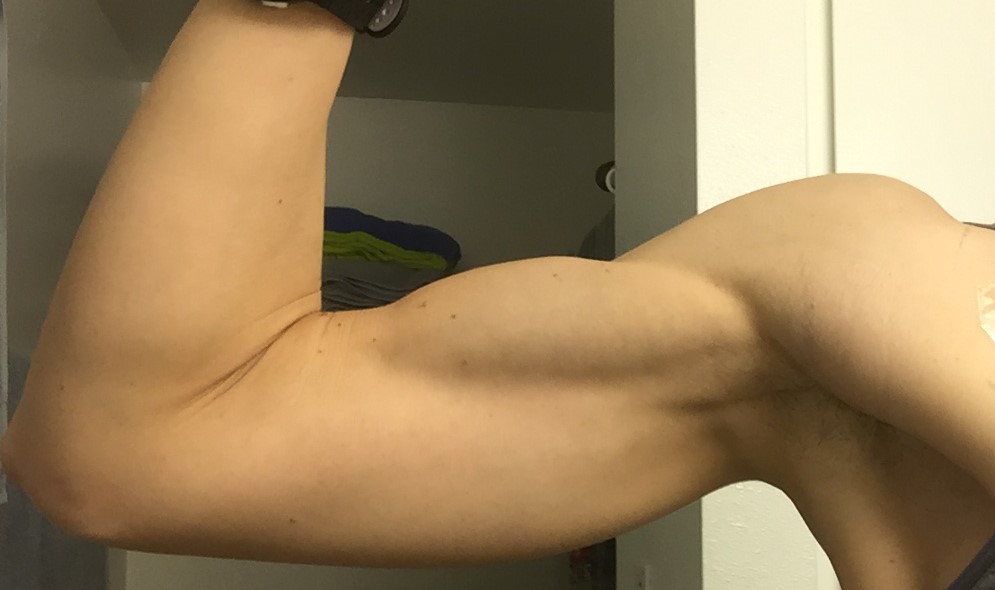
April 27, 2017: I was exercising with a vengeance

After finishing chemo, radiation and Herceptin, AND after two years of estrogen-lowering Tamoxifen and a year into Letrozole, I’d lost some muscle even though I was lifting as heavy as I could.

This photo is from December 11, 2020:

December 11, 2020: Still exercising with a vengeance, but…

While I was still working out hard, endocrine therapy and menopause took their toll on my progress. Interestingly, estrogen is not simply a “feminizing” hormone; in women, it also helps preserve both muscle and bone mass. Menopause puts the breaks on estrogen production.

This becomes worrying as we age because less estrogen means weaker muscles which can lead to a greater risk of falls and chance of bone fractures. Endocrine therapy, which is designed to decrease the estrogen in the body in order to lessen the recurrence risk of hormone-sensitive breast cancer, adds to the problem.

And more than seven years after the top photo, this was taken today before posting, September 23, 2024:

September 23, 2024: New phone, different lighting (sorry!), more wrinkles, same moles. I’m working hard just to keep what I have, but loss is inevitable.

I’m still lifting but the entire landscape of my workout routines has changed. I have to give myself more recovery time between strength training sessions. I am much more susceptible to injuries—seriously, I can tweak something by turning or stretching out in a weird way. I have neuropathy in my feet which makes getting up on my toes (such as in plank or doing lunges) painful.

We recently had an intense heat wave: for a week the temperature inside our apartment didn’t fall below 80F degrees, and during the day it climbed as high as 95F degrees (again, INSIDE our apartment). I managed to work out through a chunk of that week, but the heat eventually got to me. And recovering from that took almost another week.

So, the spirit is willing but the flesh is barely managing at times.

However, there is an upside to being 58 years old with a lifetime of fitness experience. I still love working out. Even tough training sessions are manageable because they feel like an awesome accomplishment, and I feel bouyed afterwards.

Even on the days that I don’t do a formal workout, I make sure that I’m moving as much as I can. Fitness is an integral part of my life, even though it looks different now than it did seven years ago. In the post that I reference earlier, at the very bottom I wrote about how yoga was becoming a larger part of my life.

And that’s continued. Through my yoga teacher training in 2022 and upcoming yoga4cancer advanced training starting in January 2025, this direction feels so right for me.

While I don’t plan to give up my gym sessions anytime soon, yoga has given me a path to physical and mental fitness as I age. I am gradually moving into a more meditative approach to exercise that is less about intensity and more about staying healthy by integrating mind and body.


Don’t Take Stress Sitting Down

About a year or so before I felt a cancerous lump in my breast, I was tasked with planning an academic conference, which I’d never done before. The project was running behind schedule, procedures had changed and I felt panicky and lost.

As a result, I was working seven days a week with most workdays lasting into the night. This was in addition to having to break in the early afternoon to pick up my children from school, then continuing work from home.

Everything was a rush and I had a constant lightheaded feeling.

When you have the least time to move is when you need to move the most!
Photo by niu niu on Unsplash

Most non-work activities fell by the wayside (Cooking? Cleaning? What’s that?). But the most pivotal of these was exercise. I’d been through highly stressful situations before but always had the opportunity to work off my anxiety. This time there was none of that.

Anxiety sat like a boulder in my stomach. I could feel my brain buzzing from the stress but couldn’t do anything about it. There was SO MUCH to take care of that my work-life balance was non-existent. There was only work, and this went on for weeks. My mental well-being plummeted, sleep was filled with night sweats…and the agony of not having the time to work out magnified my anxiety.

We know how bad sitting is for you physically, but not everyone is aware of the psychological ramifications of being sedentary, especially when it comes to managing stress. I found it so ironic that after my tumor was confirmed, the doctors estimated that it had started developing a year or so prior…during the time that I felt my life falling apart.

Stress did not cause my tumor. But it didn’t help my body counter it either.

~~~~~~~~~~~~~~~~

I personally am convinced that there’s no healthier, more positive way to tame anxiety than exercise. COVID’s remote work situation demonstrated to me that I feel much saner when I can stick a workout into the middle of my day, even if it lengthens my workday a bit, and the increased blood flow helps with my mood and productivity.

There is a Zen saying: “If you don’t have time to meditate for an hour everyday, you should meditate for two hours.” I believe that this saying also holds true if you substitute the word “exercise” for “meditate”.

Find movement that you enjoy and then stick it into your day.
Photo by Ahmad Odeh on Unsplash

Obviously, I’m not suggesting that you do either for two hours. The idea is that when you are overwhelmed with responsibilities and stress, that is an indication that you need meditation AND exercise all the more.

Frankly, it’s also time to reevaluate your life priorities, but that can be difficult.

How to get more movement into your day? Based on the research* that I’ve seen, it’s best to take breaks about every half hour. That might seem impossible for some people and some work situations, but do the best you can. The last thing you need is more pressure on yourself.

Even just standing up and stretching is better than sitting glued to your seat. If you can walk around, take the long way to the bathroom. Hike up and down the stairs. Breathe deeply. Start there and you can add more later, keeping in mind that energy begets energy: the less you move, the harder it will be to get started; the more you move, the easier.

If you have time for a considerably longer break and don’t yet have an established training program, start by picking a rhythmic movement like walking, running, cycling or swimming and lose yourself in the rocking motion. Not only does that give you exercise, but the gentle back-and-forth is soothing for the nervous system.

Most importantly, make the experience a positive one.

My personal recipe for mind-happy exercise is: (1) indoor rowing (for the rhythm and cardio load), (2) strength training (with a focus on each repetition) and of course (3) yoga (for deep breathing and unwinding the stressed-out body). But these recipes will vary for every individual. What’s yours?

*I had a choice between getting my workout and meditation in or digging up these references. Guess which I chose? 😉 I’ll be back with the science in another post.