Exercise and Cancer Cells: High-Intensity Exercise = High-Intensity Results [RESEARCH]

(Title image: Photo by Blocks Fletcher on Unsplash)

I am a huge proponent of exercise, both for prevention of cancer and its recurrence and in management of cancer treatment side effects, not to mention improving quality-of-life. Now a new study shows how even just one exercise session can have a powerful effect on cancer cells.

A randomized controlled trial conducted by researchers in Australia (Bettariga et al., 2025, Breast Cancer Res Treat) explored the effects of a single bout of vigorous activity (either weightlifting or interval training) on the production of anti-cancer myokines and investigated how blood drawn from study participants affected live cancer cells in the laboratory.

There has been a lot of research on the efficacy of exercise in reducing the risk of both developing cancer and preventing recurrence. However, this study focused exclusively on breast cancer survivors, which was important given that the physiology of survivors is affected by the treatments that they’ve gone through.

What was so gratifying to me was to see the significant effect of strenuous exercise. While the greatest benefit was seen from high-intensity interval training regarding its lethal effect on live breast cancer cells due to particularly high levels of a myokine called IL-6, the researchers stressed that strength training was likewise important as a cancer-fighting activity because building muscle through exercise also increased the amount of myokines circulating through the body.

The study participants engaged in strenuous exercise, but the program was created with noice exercisers in mind.
(Photo by Intenza Fitness on Unsplash)

It’s important to note that all thirty-two participants in this study were not exercising prior to joining the research group. Even so, they were able to tolerate the high intensity of the workouts. Keep in mind that “high intensity” is relative to the individual. That means strenuous exercise (for this study, reaching an effort level of at least a 7 or 8 on a scale of 1 to 10) will be different for a novice exerciser versus a highly-trained professional athlete.

So often, I encounter people who are willing to take a plethora of medications with considerable side effects, but roll their eyes when exercise is mentioned. Some people view physical activity as being only for those who are interested in looking a certain way or being mainly for those who have already reached a certain level of fitness.

Nothing could be further from the truth. Exercise is for everyone. We all start at different points; where exactly that is doesn’t matter. What does matter is that we are willing to exert enough energy to make a difference in our physiology and our well-being.

This is not “diet culture” or anything to do with body shaming. This is about doing what you can personally to increase your chances of a cancer-free life.

Survivors can talk to their healthcare team, show them this research and request that doctors lobby their insurance companies. Personal training, subsidized exercise equipment and gym memberships, fitness classes at cancer centers—all of these should be considered a critical part of cancer treatment and survivorship.

REFERENCES

Reader-Friendly Article:
Reynolds G (September 11, 2025) “A single exercise session may slow cancer cell growth, new study shows.” Washington Post. Free access via MSN: https://www.msn.com/en-us/health/other/a-single-exercise-session-may-slow-cancer-cell-growth-new-study-shows/ar-AA1Ml2oc?ocid=socialshare

Research Study:
Full publication
Bettariga F, Taaffe DR, Crespo-Garcia C, Clay TD, De Santi M, Baldelli G, Adhikari S, Gray ES, Galvão DA, Newton RU (2025) A single bout of resistance or high-intensity interval training increases anti-cancer myokines and suppresses cancer cell growth in vitro in survivors of breast cancer. Breast Cancer Res Treat, 213, 171-180. https://link.springer.com/article/10.1007/s10549-025-07772-w
PubMed Listing
https://pubmed.ncbi.nlm.nih.gov/40608178/

When Gratitude is Hard, Try Appreciation

(Title image: Photo by Amadeo Valar on Unsplash)

After last week’s post about writing out your stressors, I wanted to follow up with something positive so that we’re not left thinking about all the rough stuff that we have to deal with.

And how better to do that than by counting your blessings? Ok, so I realize that sometimes it’s not so easy to get excited about a great cup of coffee or the fact that it’s almost Friday when you are drowning under a pile of bills or dreading the arrival of combatative relatives.

But part of a resistance to gratitude, at least as far as I’ve experienced it, is feeling that it’s forced. I’ve written a number of posts about this—seems like I hit on this topic at least once a year—and guess what? It’s time for this year’s version.

This week, I’m posting on the magic of gratitude again, but this time for the recalcitrant ‘gratituder’. Full disclosure: sometimes that’s me.

When gratitude doesn’t come easily then maybe we just need to reinterpret how we view gratitude and what it expects of us.

And that can be achieved by switching out the term “gratitude” with “appreciation”.

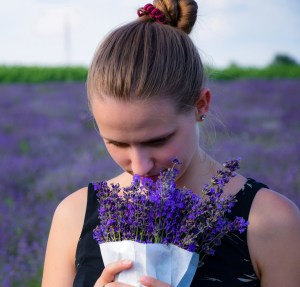
Appreciating the glorious scent of a bunch of lavender? Yep, that’s gratitude!
(Photo by Richárd Ecsedi on Unsplash)

That’s it. You don’t have to do anything else. Looking at a sunset? Just appreciate the beautiful colors—no need to “wallow in gratitude” about it. You have a cup of coffee? Just appreciate that you’ve got that cup of coffee warming your hands.

Sounds too simple? It is simple and that’s why I love this. Because thinking of it as appreciation rather than GRATITUDE takes some pressure off. All of a sudden, there is a whole world of things that we can appreciate without feeling like we need to crawl on our knees to be grateful for them.

And of course, the silly little truth about this is that appreciation IS gratitude. No matter what label you place on it, it gets us to the same place. It’s quite beautiful how suddenly we find that we can be appreciative, meaning we can be grateful for the little things in our lives without a need to force anything.

One of the posts I wrote about this included the realization that it can be the little things in life (for instance, being able to walk around pain-free after a tweaked muscle heals) that mean so much for our quality of life. And that is a very important thing indeed.

I encourage you to try it out this week: look around and see how many things you can genuinely appreciate, no gratitude required. 😉

(And yes, I’m making a list again.)

Elle Macpherson’s Cancer Story and the Missing Tumor Info

(Title image: Photo by Pierre Bamin on Unsplash)

Following on the heels of my Elle Macpherson post last week, I wanted to fill in some missing info…

To back up, former supermodel Elle Macpherson revealed that she took the holistic route when deciding to treat her breast cancer in 2017. However, most of the news stories that reported and offered opinions on her choices left out some critical information, as noted by this article in The Guardian (“Crucial information missing in Elle Macpherson breast cancer story, experts warn“). In this case, that information makes a big difference.

While it seems that Elle’s cancer was HER2-receptor positive, which suggests a more aggressive cancer, it was considered “non-invasive”, meaning it was contained within the mammary ducts. Often, this is referred to DCIS, or Ductal Carcinoma In Situ, and at this point those of us with personal knowledge of the disease will knowingly go, “OOooooooh.”

This is basically a “precancerous” mass of cells and often the treatments are more conservative. It’s considered stage 0. Yes, it becomes more dangerous if you do nothing, but clearly Elle did something: she had it removed.

DCIS is a stage 0 cancer, which doesn’t necessitate the most aggressive treatment.
(Photo by Bernard Hermant on Unsplash)

Beyond that, there are other conventional treatments offered, depending on how aggressively you want to go. This introduces the issue of potential overtreatment, which is gaining more attention among physicians and the public. It’s easy to throw the kitchen sink at anything that looks like cancer, but that increases the chances that patients unnecessarily experience damaging side effects. Not everyone needs to be smacked that hard with treatment.

So, given that Elle’s cancer was DCIS, her holistic treatment starts looking less extreme. In perspective, for stage 0, a radical mastectomy topped off with chemotherapy and other treatments leans towards overkill with minimal benefits, potentially affecting quality of life. So this is less about the types of Elle’s holistic treatments and much more about her cancer not requiring the same level of aggressive action as stage 1+ tumors.

However, very few of the news stories mentioned this. As a matter of fact, my own blog post last week might have confused the issue—I was writing without having all the facts. This underscores the importance of learning as much about your cancer as you can and understanding that your version of the disease may be very different from that of a friend with cancer.

In light of this, the pile-on regarding Elle’s treatment seems unfair…but only as it regards her personal situation. Because all the opinion pieces that came out against her choices, including my post, did so for a critical reason: that Elle’s story (“follow your heart”) may turn a cancer patient away from much-needed and beneficial treatment that can prolong their lives.

Get the facts, talk to your team, understand what you’re up against and what your risks are—yes, meditate, pray, exercise, change your diet. But don’t try to wish your cancer away.

~~~~~~~~~~~~~~~~~~~~

To clarify, Elle did indeed decline even less radical treatments such as endocrine therapy, so one could argue that she’s still taking a risk. We don’t have a crystal ball to determine whether this was the wisest choice, Elle believed it was the right choice for her.

“Left Behind”: An Unanticipated Side Effect of Cancer

(Title image: Photo by Denys Argyriou on Unsplash)

Apologies because this might sound like a rant but this topic has been on my mind a lot lately.

When you’re diagnosed with cancer, you learn about the many side effects of treatments.

You will be informed about the physical and even psychological effects that cancer patients deal with, but there are also considerable financial repercussions. Patients may struggle with hospital bills: some lose their insurance coverage, others might never have had any to begin with, those who have coverage may find that it’s insufficient. It’s not uncommon to hear how cancer has driven survivors and their families into bankruptcy.

On top of that, cancer can do a number on your career aspirations for years to come.

Money issues are one of the side effects of cancer that don’t get a lot of airtime…but really should.
(Photo by Alexander Grey on Unsplash)

In case you think that it’s uncool to complain about one’s career in the face of having survived cancer, let me get this out of the way: being a cancer survivor is a privilege. I’ve written before about how acutely aware I am that I have lasted longer than many cancer patients.

But as the effectiveness of cancer treatments improves, the number of cancer survivors increases and long-term repercussions become a more and more serious consideration, particularly how they affect ongoing quality of life.

For people who are still working out their careers, cancer can derail progress because it plants a huge stop sign in their path.

Think of going into the chemo infusion room: the days leading up to it entail appointments, port placement, purchasing supplies (anti-emetics, anyone?) and in general prepping for being out of commission about a week.

It’s not the time to focus on stressful work deadlines (and most sincere condolences to any patient who has to do that!).

Ironically, as much as I feared infusions, they actually gave me an excuse to focus on myself instead of worrying about everyone else. I posted about that here somewhat sadly that chemo allowed me to rest without feeling guilty.

It was at that point that I’d realized I’d been pushing myself, always expecting more and not feeling like I was measuring up. Chemo gave me a break from that. Which was good…kind of…

But after chemo and radiation came endocrine therapy, so just as I was winding down from one set of side effects, up popped another.

Right? RIGHT?
(Photo by Drew Beamer on Unsplash)

And all those plans I’d had for myself were put off again and again. Career goals seemed more out of reach because my timeline had shifted.

Well, I’m not stupid, so I changed my career goals. Makes sense, right? Cancer provided a different perspective on things and motivated me in another direction.

But in the wake of cancer treatment, I feel like I’m walking in cement shoes…if it’s not one thing it’s another. I got off aromatase inhibitors (early) and then realized that I was having memory and focus issues. Whether Cancer Related Cognitive Impairment (CRCI) or menopause-driven brain fog, all of a sudden I’m dealing with something else.

It feels as though the train to prosperity has left the station and I was just a little too late to catch it.

Great.

Right now I’m looking at sky-rocketing costs-of-living in a part of the country that literally got expensive around me. Instead of moving up in the world, my family and I are desperately searching for less pricey housing which will put us in worse conditions and a longer commute to work.

And at age 57, when most of my friends are looking at enjoying retirement in the years to come, planning for what they’ll do in their golden years, I’m trying to reeducate myself, shifting into a career that doesn’t make much use of previous work experience.

And it feel exhausting. Sometimes I want to cry.

I want to believe this, I really do. But I don’t think that there’s a reward for surviving cancer beyond simply surviving cancer.
(Photo by Nik on Unsplash)

Yes, I’m happy to be alive. But no, this was not the way I thought things would go. When initially I was told that I had a decent chance of surviving for five years, that was all I could think about. In fact, that was all that mattered.

I wasn’t thinking about the fact that if I managed to live through this, I’d still need to find a way to make a living. And the interruption that was cancer could do a number on that.

At this point, I need to stress that my intention is *not* to try to scare cancer patients into dreading survivorship. Goodness knows, there are enough things to navigate within the cancer experience as relate to the usual treatments that will take your energy and attention.

I wish nothing less for you than 100% remission and many years ahead to enjoy your “survivor” label.

At the same time, I encourage you to remain present and mindful of the fact that you might have to pivot if you’re not already well-established in your career. If things start to change in a direction that’s southward of what you expected, be patient and readjust your expectations. Nuture acceptance and keep an eye on how you can put yourself in a good position to meet the future. And be kind to yourself.

I’m still working on it.

Cancer Survivorship Ain’t For Sissies

With all the focus on breast cancer during October, pushing us to be warriors and fight our way through this, the concept of survivorship can get lost in the fray.

We talk about cancer treatment and get very granular about the procedures, whether surgery, chemotherapy or radiation therapy. And those do deserve a lot of discussion as they can be difficult to endure. Some, like chemo, have an almost legendary reputation and it’s important to be able to separate fact from fiction.

After all the noise and attention associated with cancer treatment, survivorship can leave some of us feeling alone.
Photo by Atharva Tulsi on Unsplash

Consider: how many of us, upon hearing that we have breast cancer, preoccupy ourselves with worrying about what life will be like five years down the road? More likely, we’re thinking about what treatment will be like and are hoping that we’ll be around when it’s done!

But with so many women surviving breast cancer, it’s important to talk about what happens after the dust settles and you realize you’re on the other side of the treatment that you had so feared. Is it really the “other” side?

So much of my blog has been devoted to the life after cancer. After I documented my treatment journey, I turned around to get hit in the face with all the stuff that I wasn’t expecting.

One of those was endocrine therapy. Women with hormone receptor positive cancers aren’t done when the “tough stuff” is over. Tamoxifen and aromatase inhibitors are a whole new round of treatment that can affect your hair, your libido, your joints and more. Some women get hot flashes and night sweats. Some experience weight gain. And these are medications intended to be taken for a number of years.

There may be body image issues. Breast cancer surgery can leave women looking very different from their pre-cancer days. Like it or not, breasts are associated with womanhood. Whether lumpectomy or mastectomy, with or without reconstruction, there is a new normal that needs to be dealt with.

By seeking support and relating your story, you help not only others who are dealing with something similar in addition to yourself.
Photo by Ivana Cajina on Unsplash

And then cognitive issues like distractibility, loss of memory and difficulty processing concepts may come up. To make things more complicated, these may appear after treatment is in our rear view mirror and our loved ones may simply not appreciate what we’re dealing with. The bodies and minds of survivors may change in a way that they are not prepared for. Because, how do you anticipate something like this?

Survivorship does not mean that you never again have to think about cancer or its repercussions. There will be adjustments to your expectations as to how your life will be from now on. It’s important that those around you understand that just because you are done with the major cancer treatments, things might not feel familiar or normal.

So we need to be having this conversation with those around us and making opportunities for affected women to seek help and support. There is no shame in being a survivor who is also struggling. While it’s true that we are “lucky to be alive”, it does not mean that we have no right to seek a higher quality of life.

Don’t be afraid to talk about it. ❤

Don’t Call It a Boob Job…

I remember telling people that I had breast cancer. Most tried to be as supportive as they could, some weren’t quite sure what to say. But regardless of how they reacted, there was a general expectation that breast cancer surgery meant that I had lost both breasts to the disease.

A few people went as far as trying to get me to “look on the bright side” that I had gotten a “nice rack” out of the deal. For the record, I had opted for a lumpectomy, otherwise known as breast-conserving surgery, which removes only the tumor and some surrounding healthy tissue to ensure that the entire diseased part is removed. There was no “nice pair” to be had.

So maybe this is a good place to clarify a few things.

A mastectomy is performed to remove all breast tissue, usually (but not always) along with nipples, areolae and lymph nodes, of one or both breasts. It’s done to treat breast cancer or, in the case of prophylactic mastectomy, prevent development of cancer in the breasts.

There are alternatives to reconstructive surgery that may be very meaningful to the breast cancer survivor, including creating something beautiful out of what she might otherwise consider an ugly experience.

Whether or not a woman chooses to have a mastectomy vs. a lumpectomy is a very personal decision and based on a number of physiological and even emotional considerations. No one should ever be judged for their decision regarding this.

Similarly, well-intentioned folks should not assume that breast cancer means a bouncing new set of perky breasts. Not everyone who gets a mastectomy will opt for reconstructive surgery. In fact, there are tattoo artists who specialize in using mastectomy scars and the newly-flat chest as a canvas to create meaningful and beautiful artwork.

It’s also important to note, total removal of the breast does not come without its downsides. Surgical complications are more likely with mastectomies, and because so much breast tissue and skin is removed, there may be loss of sensation in the chest area that in some cases is permanent.

A newly published study in JAMA Surgery (Dominici et al., 2021; note, the free PMC version of this article does not appear until Sept 2022) with a reader-friendly version appearing in the NCI blog Cancer Currents) compares quality-of-life scores between a variety of breast cancer surgery types, including lumpectomy, unilateral mastectomy (one breast) or bilateral mastectomy (both breasts). All subjects were young (under age 40 at time of diagnosis) cancer patients with early stage breast cancer who gave scores to their perceptions of items such as breast statisfaction following surgery and both psychosocial and sexual well-being. Having a bilateral mastectomy with radiation treatments resulted in the poorest quality-of-life scores out of all surgery options.

Important: while the sample size of this study was ample, with 560 subjects filling out the questionnaire, the women were predominantly white, married and financially stable. A more diverse subject pool might affect the scores and the study must be replicated with inclusivity in mind in order to extrapolate the findings to the general female population. It should also be noted that no surgical groups’ quality-of-life scores were particularly stellar – such is the way with cancer surgery – but those of bilateral mastectomy patients were worse.

All women, regardless of age, have the right to have their questions answered before making a decision about breast cancer surgery.

Given the notable difference between these scores, and the fact that all the different surgical options were open to these young women due to their early-stage tumor status, it stands to reason that women should be informed by their oncologists and surgeons of the possible outcomes of their decisions and second opinions should be encouraged.

That doesn’t mean that a bilateral mastectomy isn’t the right choice for a younger woman with early-stage breast cancer, only that she should be aware of the possibilities of complications and persistent quality of life issues. She should not be pressured in either direction because there is a lot to consider and it’s not an easy choice, nor does it come at an easy time in her life.

So please, don’t call it a free boob job.

~~~~~~~~~~~~~~~~~~~~~~~~~~~~~~~

If you are contemplating a prophylactic mastectomy in the absence of a genetic predisposition (BRCA+) and have early-stage breast cancer, please read this article from breastcancer.org and discuss your options with your medical team.

Look, Ma! No Libido!

This is a delicate issue that isn’t talked about enough. It’s time we brought it out into the open.

Based on the reactions that I’ve received from some health professionals, I believe that loss of libido is a highly underreported side effect of aromatase inhibitors, medications that are prescribed to suppress estrogen production in women who have or have had hormone receptor-positive breast cancer; aromatase inhibitors are generally given only to postmenopausal women. Sure, low libido is listed as a possible side effect on the informational insert that you get with the pill bottle, but its mention feels like an afterthought. The reality is, AROMATASE INHIBITORS STOMP OUT YOUR FREAKIN’ LIBIDO.

Why don’t we talk about this more? This may be due to the average age at diagnosis of breast cancer being the mid-60s, give or take. I’m willing to wager that many women of this age don’t feel very comfortable discussing intimate details of their personal life with (especially male) oncologists.

Couple that with the fact that as much as we’re trying to change as a society, postmenopausal women are still not valued very highly. Youth equates to beauty, and women continue to be judged by their appearance. Even the inhabitant of the White House has reflected the notion that an “older” woman wouldn’t be a fit companion for a high-powered man, presumably because he deserves “better”.

So let me stress, everyone deserves the opportunity to engage in meaningful intimate relationships. As we get older, sexual intimacy may not have the same prominence in our interactions, but it is still an important part of bonding.

This is a perfect example of a “quality-of-life” issue. It can’t be measured by a laboratory test, but it’s something very valuable. When the medical profession obsesses about breast cancer survival rates, and when the pharmaceutical industry develops even more-effective medications, those lives saved can be counted as numbers. But sadly, a drop in desire for intimacy, or a similar quality-of-life marker, can’t be measured in the same way and, therefore, doesn’t bear the same weight in decision-making.

Loss of libido can lead to a decrease in perceived quality-of-life

It rankles me when some of these complicated low-hormone effects experienced by women taking aromatase inhibitors are written off as simply symptoms of natural menopause, as if the cancer survivor is making a big ado about nothing. As someone who was premenopausal when originally diagnosed with breast cancer, and then chemically forced through menopause via chemotherapy and tamoxifen, I can assure you, none of this is what my body would “normally” be doing. The change from what I was to what I am is really striking.

I often think, if a medication could reduce the risk of cancer, but you would have to sacrifice your left arm for it to work, it probably wouldn’t sell well. But if the cost weighs heavily on quality-of-life, taking a toll on intimate relationships, that’s perfectly acceptable? Women who stop aromatase inhibitors are called “non-compliant”, as if they’re foolish and don’t know what’s good for them. But maybe doctors need to consider more than just statistics when it comes to treatment recommendations.

So why aren’t we forcing this conversation with more medical professionals? It’s easy to write prescriptions for medications. It’s much more uncomfortable to navigate the complexities of how intimacy suffers from them. The level of detriment will differ from person to person, as will the value of an intimate experience. While oncologists work to improve the length of our lives, as cancer survivors we need to apply pressure in the other direction, to make sure that their decisions are also informed by the quality of our lives.

~~~~~~~~~~~~~~~~~~

It’s important to note that while libido takes a huge hit from hormone-suppressing medications, it’s not even the main reason women stop aromatase inhibitors. There are other side effects that make the medicines difficult to continue. If you are having troublesome side effects, then tell your doctor as soon as possible. If your doctor doesn’t listen and doesn’t offer ways of alleviating your complaints, it’s time to find another doctor.

Balancing Side Effects vs. Quality of Life

“Remember that your doctor has prescribed this medication because he or she has judged that the benefit to you is greater than the risk of side effects.”

I can’t tell you how many times I’ve read that statement on the informational leaflets from various bottles prescribed for me. When it comes to a disease like cancer, it might as well say, “You think these side effects are bad? Hohoho, just try not taking your meds!”

This does not give warm, fuzzy feelings of hope. Then again, there’s not much about cancer that’s warm and fuzzy.

It can feel like the treatment is as bad as the disease.

I, admittedly, am generally accepting of the advice given by knowledgeable professionals. When my oncologist laid out a treatment plan, I didn’t argue, although when offered a choice between an effective targeted therapy versus an even more effective but also more toxic one, I opted for lower toxicity.

For me, it was a quality of life issue. If I’m “cured” of cancer but end up with severe heart problems…well, I’d rather take my chances with a less damaging option.

Cancer still remains life-threatening, now as it did decades ago. The difference is that patients are living longer and some go completely into remission. Survivorship should be considered a factor when designing a treatment plan, as should long-lasting repercussions of side effects.

So if I had one request of oncological health teams, it would be that they look beyond simply bombarding the cancer and consider the physical and mental condition in which they leave the patient, being sensitive to the possibility of ‘overtreatment’ in their exuberance to squash as much of the disease as possible.

Should you use a sledgehammer when a rubber mallet might be sufficient? Is “just to be sure” a justification for side effects than can compromise your quality of life, however long that is?

It’s not always easy to find that sweet spot between acceptable risk and tolerable side effects.

There is no “right” answer to this as everyone’s situation and risk tolerances are different. So if I could have a second request of the medical community, family and friends of the patient, it would be that they respect the limits and decisions of the one who’s going through this.

To be able to weigh the risks and decide what’s acceptable and where to draw the line — that might offer at least a semblance of control in the crazy roller-coaster ride that is cancer.