Farming ‘Likes’ on Instagram

(Title image: Photo by Chelsea Gates on Unsplash)

I am a reasonably flexible person although I’ve become less so with age and especially following cancer treatment. Yoga asanas that I used to be able to do…well, they don’t come so easily anymore, if at all.

After going through my yoga teacher training in my 50s and now in the middle of an Oncology Yoga (y4c) certification program, I spend a lot of time feeling like an imposter.

There’s an element of shame to this. I tell myself I should be more flexible, I should have better balance, I should be able to hold more advanced poses and for longer.

In my y4c training, the manual referenced a concept, versions of which I’ve seen before and have written about myself, but the message continues to hold true (see this article). The proliferation on social media of young, flexible bodies in extremely inaccessible poses for the vast majority of the population not only hurts the practice, but completely misses the point.

It seems like a lot of images that show up as “yoga” on platforms such as Instagram are part (if not wholly) acrobatics and contortions. But yoga is actually a spiritual practice and only one part of it, the one that is overemphasized in the west, is physical.
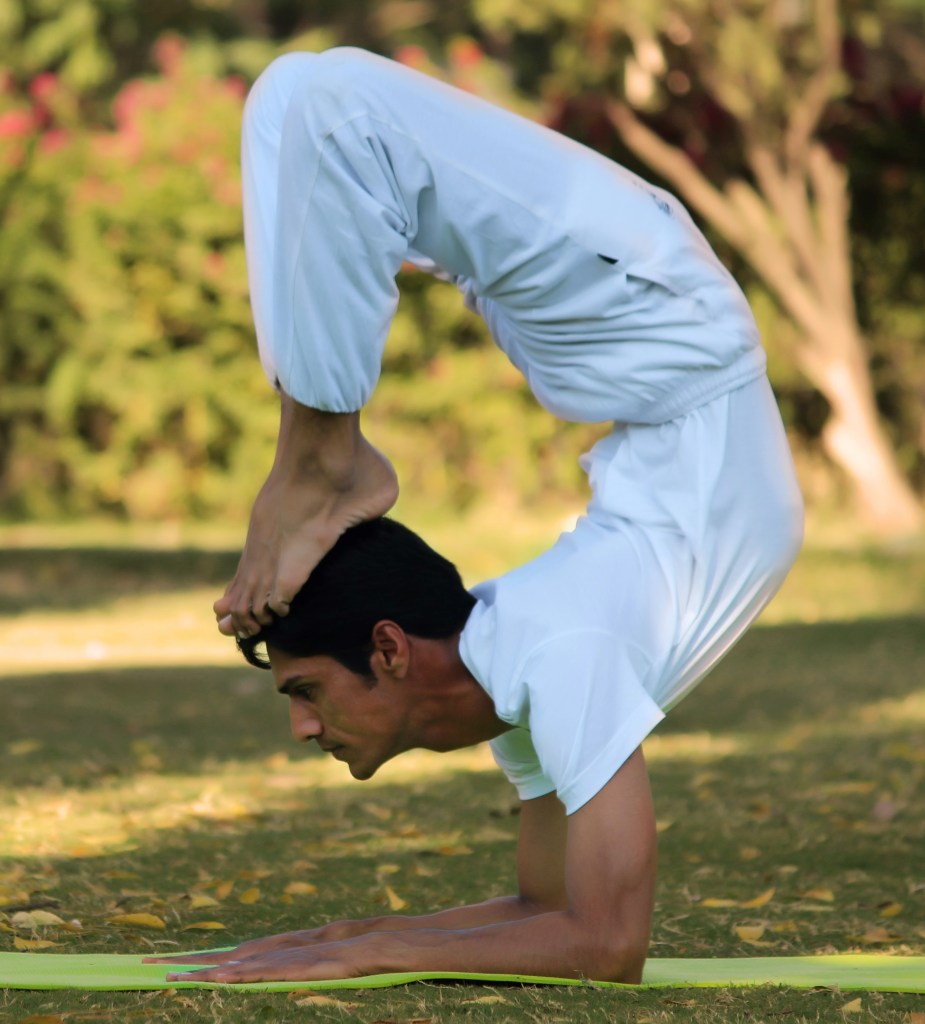
POV: You’re a cancer patient and your forward-thinking oncologist suggests that you try yoga to help alleviate some of your side effects. But this is what you think of when you hear “yoga”. What are the chances that you’ll try a yoga class? What are the chances that you’ll even find a yoga class that is appropriate for your current condition? Or will be able to afford one?
(Photo by Wesley Tingey on Unsplash)

And that physical practice is a big money maker. If you doubt that, take a look at how many yoga studios exist in affluent areas, and the dearth of studios in more moderate-to-low valued ones.

Yoga was what helped me through my cancer diagnosis, treatments and beyond. But that yoga was minus the “workout”. My workouts during cancer focused more on rowing and lifting weights rather than Sun Salutations and balance asanas. Yoga was for my mind and spirit, to maintain connection and grounding, to not get lost in my fears and to be grateful for what I had.

This is not to say that it’s not impressive when people post challenging asanas on social media. Some of the wonderful teachers that I have trained with have shared those kinds of posts. It’s natural to want to show off a physical achievement that you’ve worked so hard for. In a way, that’s the whole point of social media posts. And that’s also part of the problem with social media.

Frankly, yoga has become deeply entrenched in the United States as a physical practice and nothing is going to change that now. We can be hopeful that those who dutifully attend yoga class, rolled up mat under the arm, will take the time to understand the depth of this ancient practice. But regardless, the flow of the class still brings peace to the mind in a way that my ‘hardcore’ workouts do not.

There are a lot of people who could benefit greatly from the practice of yoga in all its forms, matching breath to movement and developing a mind-body connection. Cancer patients and survivors are some of those people. But if all they know is that yoga demands extreme flexibility, even hypermobility, and statue-like balance, they will avoid the practice as too advanced and inaccessible to them.

If you are a teacher, please keep that in mind. If you are a potential student, please don’t let social media keep you away from such a beneficial form of exercise for both your body and your mind. And if you are a current practitioner, please dig deeper to understand the roots of yoga to honor the cultural tradition from which it arose. It’s not just for likes on Instagram.

Reconsidering Yoga Adjustments

(Title image: Photo by Shashi Chaturvedula on Unsplash)

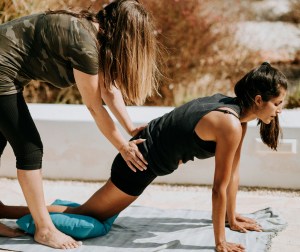
There is an expectation in the US that yoga practitioners are all young and flexible with great balance, but we know that’s not the case. Many people who might benefit the most from a yoga practice are certainly not.

When I started Yoga Teacher Training (YTT), there were two assumptions that most of us made:

“Full expression of the pose” is not accessible to every yoga practitioner.
(Photo by Carl Barcelo on Unsplash)
  1. Every yogi strives for the “full expression of the pose”, suggesting that there is one perfect way to perform a yoga asana.
  2. An important responsibility of a yoga teacher is to move students into the full expression of the pose, using hands-on adjustments if necessary.

Those two assumptions may:
(1) discourage students from yoga practice, particularly when you consider that yoga originally developed as a practice for men, and asanas do not necessarily take into consideration the female body (or diverse body shapes) even though the majority of practitioners in the US are female; and (2) may compel newly-minted yoga teachers to push students into positions that are wrong for their body shapes and can cause harm to them.

During YTT, however, we learned that the “full expression of the pose” as a concept was no longer taught and teachers were discouraged to refer to asanas in that way, no doubt in an effort to be more welcoming to a broad range of people.

My person belief is that hands-on adjustments are not necessary for yoga under most circumstances.
(Photo by Annie Spratt on Unsplash)

We also learned how to do hands-on adjustments. The idea was that you needed to check with the student whether they wanted to be adjusted.

However, I myself have received adjustments in classes that I hadn’t requested or agreed to. It’s never been harmful to me and generally felt good, especially in settings where I couldn’t check my form in a mirror. Futhermore, the classes tended to be higher level, so there was probably an assumption on the part of the instructor that you’re in a more intense class for a reason, otherwise you’d be in a lower level class.

But you can probably see where I’m going with this. I tended to be one of the oldest students in these classes. I’ve done yoga (and a range of other exercise modalities) for decades, but my flexibility and balance have taken a hit from cancer treatment and various injuries. Unless a teacher is sensitive to that, we can run into trouble.

Additionally, I’ve seen less-experienced students attend more difficult classes because they were coming with a friend or couldn’t get to the easier class that they wanted, and decided to just “do their best”. That should always be good enough without putting a student at harm.

Yogis come in different shapes, sizes and levels of flexibility…and that’s okay.
(Photo by LOGAN WEAVER | @LGNWVR on
Unsplash)

My personal feeling? Stick with gentle verbal adjustments to relay the spirit of the asana and cue according to the class’ level, understanding that students will have varying ranges of flexibility. I do not feel comfortable doing hands-on adjustments unless the student is requesting it AND I know the student well enough to be familiar with their limitations, if any. That means verbal adjustment for students in a general class vs. POSSIBLY hands-on adjustments for a student that I’m teaching privately, where we can talk through how the asana feels in their body. Quite often, I will forgo hands-on adjusting altogether.

Finally, I leave you with a quote from the YogaUOnline.com website. Charlotte Bell proposes a difference definition of “full expression”, in an excellent article titled, What is Full Expression in Yoga Practice?: “Full expression arises in a pose when our bodies are aligned such that the wave of the breath is free to circulate throughout the body. It also happens when we have invested our full attention into the sensations arising as we move and breathe in the pose. The full expression is not dependent on what a pose looks like.”

yoga4cancer: Bringing the Benefits of Yoga to Cancer Patients and Survivors [VIDEOS]

(Title image: Photo by Zoltan Tasi on Unsplash)

In February 2022, I started a yoga teacher training program with a singular goal: to eventually teach yoga to cancer patients and survivors.

With its mix of physical postures (asanas), breathwork (pranayama) and meditation, yoga is ideal for someone going through the traumatic experience that cancer can be. Yoga can provide enough physical exertion to count as moderate exercise and the ability to help the practioner calm their mind, things that are so important for improving cancer treatment outcomes. However, classes must be designed carefully and taught thoughtfully.

Yoga4Cancer Q&A for Cancer Patients and Survivors (Yoga Alliance on YouTube)

Keep in mind, yoga teachers were yoga practitioners first. Many of them got really good at the practice, developed great flexibility and balance and gained respect for the tradition of yoga. But that doesn’t automatically make them appropriate yoga teachers for cancer patients, who need an instructor that understands the nuances of what cancer is and how treatment affects us.

A yoga teacher and breast cancer survivor by the name of Tari Prinster addressed that need by creating yoga4cancer (y4c), “an evidence-informed Oncology Yoga method tailored to address the specific physical and emotional needs left by the cancer and cancer treatments. The approach matches breath and movement to stimulate the immune system, improve flexibility & strength, reduce anxiety and boost overall well-being” (from the y4c website).

I’m planning to begin the y4c advanced 75-hour certification program (see informational video here) either later this year or early next. I’ve been so impressed by y4c’s emphasis on understanding the unique situation that cancer patients and survivors are in–it’s not just your garden variety beginner yoga class with “also for cancer patients” dressing. The program is well-thought out and comprehensive, and I’m so excited to embark on this next leg of moving closer to my teaching goal.

In the meantime, here is a selection of videos created by Tari and her instructors that are specifically geared for the mental and physical needs of cancer patients and survivors:

Yoga4Cancer Oncology Yoga for Cancer Related Fatigue (Yoga Alliance on YouTube)
Yoga4Cancer Yoga for Bone Loss (Yoga Alliance on YouTube)
Yoga4Cancer Yoga for Range of Motion (Yoga Alliance on YouTube)
Yoga4Cancer.com Yoga for Anxiety (Yoga Alliance on YouTube
yoga4cancer.com Yoga for Lymphedema (Yoga Alliance on YouTube)
yoga4cancer.com Yoga for Constipation (Yoga Alliance on YouTube)

Enjoy!

Yogis, Find Your Own Balance

I am a newly minted registered yoga teacher (RYT-200), having passed my Yoga Teacher Trainer (YTT) final exam in mid-May 2022. When I tell people I’m a yoga teacher, they naturally assume that I am extremely flexible and have impeccable balance.

But, no.

Yes, yes, when I’m warmed up I can touch my toes with straight legs, even put my palms flat on the floor…but in yoga practice, I prefer to keep a slight bend in the knee in forward fold. My balance is a little wonkier and I’ve been known to wobble and trip my way around a corner if I’m moving quickly.

I enjoy a deep yogi squat because I’ve been practicing that pose since childhood, but neuropathy pain in my feet prevents me from holding my back heel up high in lunges. So my abilities are spotty.

The gift of yoga is that it is available to all.

When I took level 2 yoga classes, part of the prerequisite for my YTT, I would regularly lose my balance in some of the moves that the younger class participants easily nailed. It took more brain power and concentration to keep my body steady (possibly chemo brain played a part). I’m sure other students would have been surprised that I was in yoga teacher training.

I mean, WHY would I even consider becoming a yoga teacher?

Because I want people to know that yoga is for everyone. While I’ve ranted about this before here, going through YTT classes really underscored the fact that, at least in the United States, yoga practitioners tend to be very homogeneous: young, white, female, flexible, affluent.

Come as you are. Nothing special needed.

This is particularly disappointing because there are other populations that would benefit greatly from establishing a yoga practice and arguably might need it even more for their well-being. Slowly, yoga is being made available to “the rest of us”. But it’s going to take a while.

So I urge you, seek out yoga in parks and free classes at the Y. Explore YouTube for gentle beginner yoga videos so you can practice from home. You don’t need the burning sage, expensive yoga pants, organic cork blocks or trendiest mat. You just need to show up, follow along with the poses and breathe.

~~~~~~~~~~~~~~~~~~~~~~~~~~~~~~

To be fair, my balance and flexibility have improved significantly with regular yoga, and that’s my point: I didn’t need to be super flexible to begin. No one does. But if the message that yoga studios and fellow yogis are sending is that you already need to be able to strike a complicated advanced pose, think of all the people who won’t even consider starting.

And I have learned to seek out modifications for those yoga poses that throw me off center. The old self-conscious me would have thought that made me a failure. But I know better now.

Because I know I can do the most important pose very well: sit quietly and breathe.

Namaste ❤

Yoga Is For Every Body

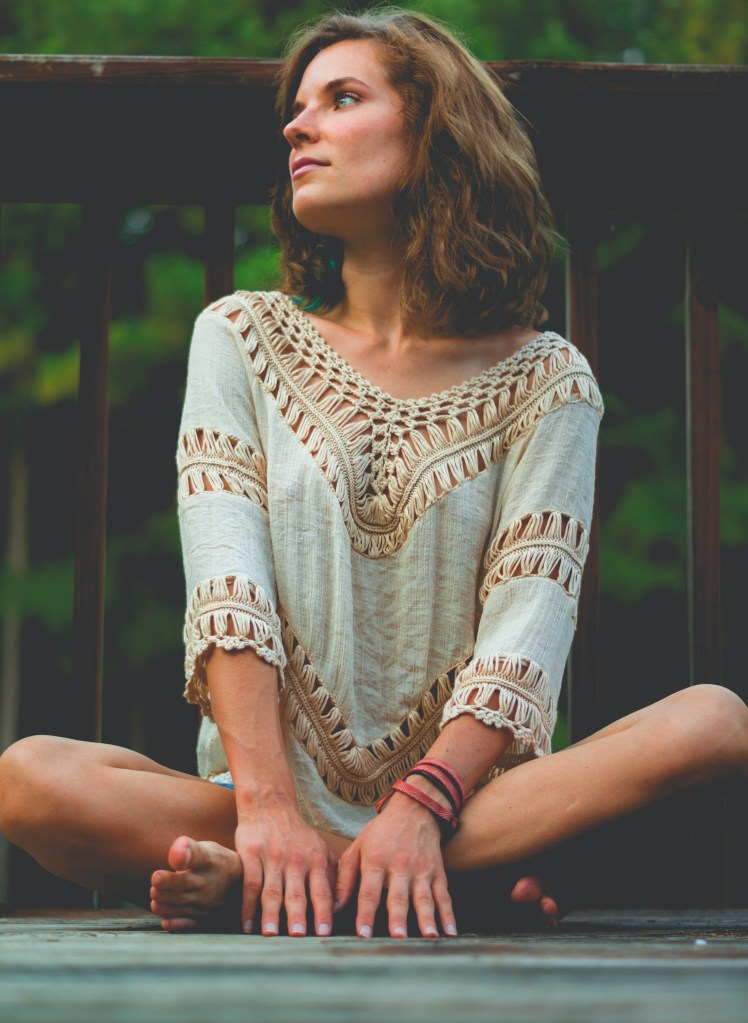
As my interest in and personal practice of yoga has increased, I’ve noticed something peculiar about images of yoga. They send a message that you have to be young, slender and unnaturally flexible to be a “real” yoga practitioner. That seems daunting to anyone who doesn’t fit that mold.

I noticed something similar after I became certified as a personal trainer. I myself loved the feeling of strength and freedom I got from exercise; however, many people I spoke with were reluctant to go to a gym because they felt they needed to be in a certain physical condition before they even started. At the same time, they were daunted by the idea of striking out on their own. Even worse, in personal conversations with experienced exercisers and even other trainers, I found many would poke fun at those who were just starting out.

Come on, everyone has to start somewhere. An expert is just a beginner who stuck with it.

This is unavailable to me.

I thought yoga would be different, given the emphasis on one’s inner state. But I had to get over my apprehension about trying to fit an older creaky body into the unbelievable positions modeled by the yoga teachers I saw online. It was daunting. While I still felt strong, I seemed to lack that which yoga demanded. There were many poses that my old injuries and life-long inattention to flexibility would prevent me from doing.

I mean, google Flying Dragon pose and you’ll see why. Heck, it doesn’t even have to be as exotic as that. Go to Pinterest and search for yoga images – the results seem almost outrageous, with every yogini outdoing the one before them. Is that what we’re supposed to aspire to? I don’t see anyone even close to my age. Are they all in physical therapy? Or traction?

My spine doesn’t bend like that.

This is more my level: still challenging, but quite doable.

But this is yoga, right? There are quite enough poses that most everyone can learn and use to build a regular yoga practice, no matter what the images on the Internet suggest. More importantly, there are modifications for whatever your own body will allow. Can’t put your forehead on your knees in forward-fold? Then how about a ragdoll variation. Guess what, it’s still yoga.

That doesn’t mean that what those super-bendy instructors are doing isn’t impressive. But I view them much as I view someone free-climbing Yosemite’s El Capitan. With awe and admiration for their abilities. And then I delight myself by finally being able to touch my toes again, thanks to my yoga practice.

Revisiting Yoga After Cancer: Finally Coming Around

Decades ago, my introduction to yoga took place in my parents’ library, a small paneled room with wall-to-wall, floor-to-ceiling books. There I found an illustrated guide, replete with black and white photographs of odd contortions and strange nasal flossing. It seemed weird.

Oh, the moves I could do!

I had barely begun elementary school, and at that age was a natural-born yogi, as many young children are. Lotus pose? I could get my legs into position without using my hands. King Pigeon was no big deal, and nothing hurt when I folded myself up. I didn’t have a regular yoga practice at that age, but I would get occasional exposure to yoga moves at school, and I imagined all yogis wore diaper-like pants and lived on mountaintops.

High school provided an opportunity to do more. One of our French teachers practiced yoga, and I took a season of classes with her. Really, I remember little from that time. At that point, I was still limber but not as lanky, and yoga wasn’t particularly exciting. Volleyball was my game and I had no appreciation for how yoga could improve my playing. Had I practiced it properly, yoga could have helped immeasurably and prevented many a lost serve. But I lacked introspection and so barreled on as before.

Yoga resurfaced in my life now and again, but obsessed with more active ways of sweating, I steered away from it. I swam, ran and eventually strength-trained my body into shape. Yoga didn’t have a place in my view of what fitness should be.

Holding poses for a prolonged time? Not for me. Sweating through hot yoga? You’ve got to be kidding. A friend sustained a serious back injury from a yoga teacher who tried to force her into a pose. That was it; I was done with the idea of incorporating yoga into my already packed fitness routine.

Then I got cancer.

And I realized that my mind was victim to free-ranging anxiety. Desperate, I immersed myself in learning to meditate. I know they say that you need to find calm in the midst of chaos, but being thrown into chaos is not the best place to learn to be calm. I limped through cancer treatment and clung to the hope of peace. The only relief came from my love of fitness and drive to exercise as soon as the worst side effects of each infusion had passed.

Still, I pushed yoga away. Not interested. I needed to get my body back to where I’d been pre-cancer, not do slow movements that might tweak something and burned too few calories.

But the more meditation I did, the more mindfully I moved, yoga kept coming up, like a refrain in a song. Movements paired with breath.

I have made space in my life for yoga.

And then, it hit me. Movements paired with breath. I was all about the breath by then. Yoga provided the movements. And I found bliss.

When I opened myself up to yoga and invited it into my workout routine, something magical happened: my body started stretching out. All that tension that I’d carried for decades that had gradually tightened me up started releasing. My fingers found the floor in a forward bend again, and gently brought my palms with them. My heels easily pressed against the ground in a downward dog, with little peddling required. Moves that I could once do became available to me again.

So here’s the thing about breast cancer: after surgery, you lose some mobility in the affected side. Even now, side bends stretching my left side “pull” uncomfortably compared to my right side. Anyone who’s had lymph nodes plucked out of their armpits knows that that area stays tender for a good long time. Often, this brings an imbalance to the body.

My workouts had consisted of pounding myself through rowing, conditioning intervals, strength training with heavy weights and swinging kettlebells around. But without yoga, something critical was missing. Initially, I was afraid that “sacrificing” exercise sessions to yoga would result in faster decline of my physical ability and a push towards a more sedentary existence. Oh, how wrong I was! If anything, yoga has moved me towards vitality, flexibility and a sense of youthfulness that straight strength training had never allowed. Yoga opened up my whole body and allowed it to breathe freely.

What this has offered me is another way to look at how my cancer journey is progressing. After the aches and pains associated with never-ending adjuvant therapies, I admit I felt it was all going to be downhill, and that all I could do was desperately cling to my workout routines as my abilities gradually slipped away. Yoga brought back an element of fitness that I’d forgotten, and now, even though I know that I will be lifting less and rowing slower as time goes on, there is a new, perhaps more gentle world of fitness that I have yet to fully discover.