Following up on my “Exercise and Cancer Cells” post from September 2025, here is another paper by the same authors that was published this month that offers more evidence about the importance of exercise for cancer survivors.
This study by Bettariga et al. (2026, Med Sci Sports Exer) investigated what effect different types of exercise would have on the production of myokines in breast cancer survivors. Why myokines? Because myokines are chemicals released during a muscular contraction. Once in the bloodstream they have various effects on the human body, but the most important for our discussion is that some myokines have been shown to decrease the growth of cancer cells, although the mechanism by which they do that is still unclear.
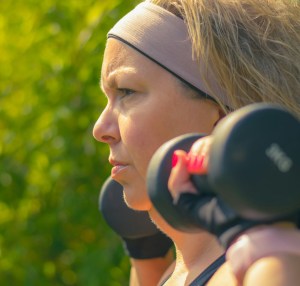
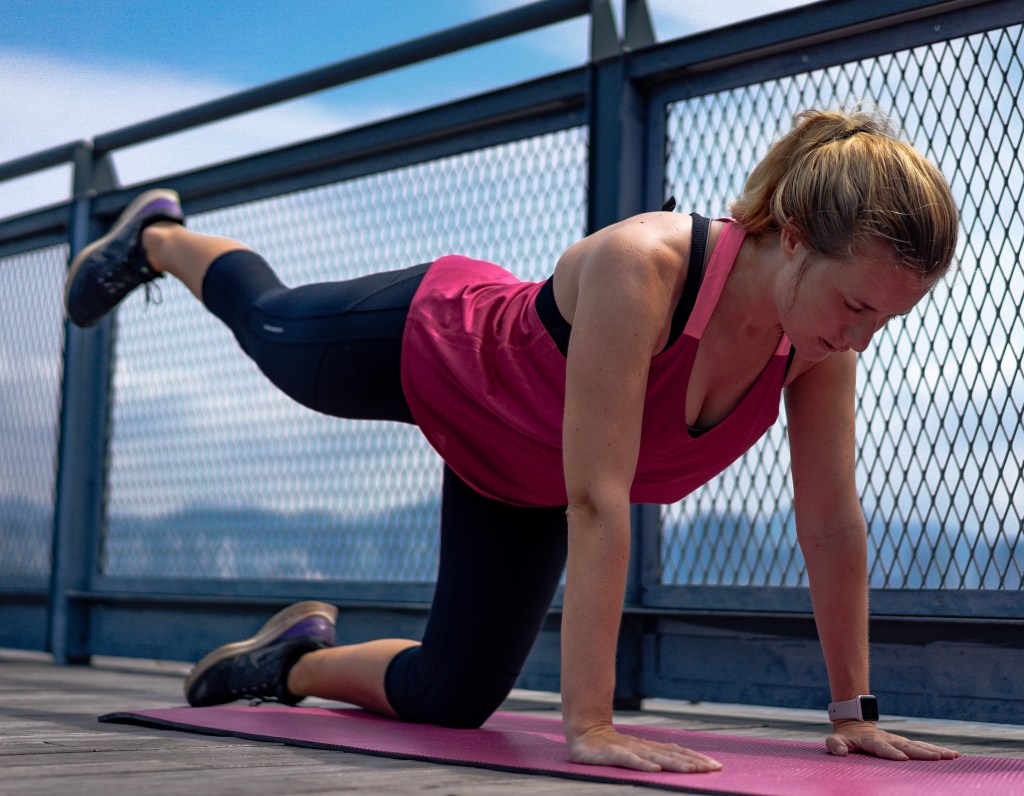
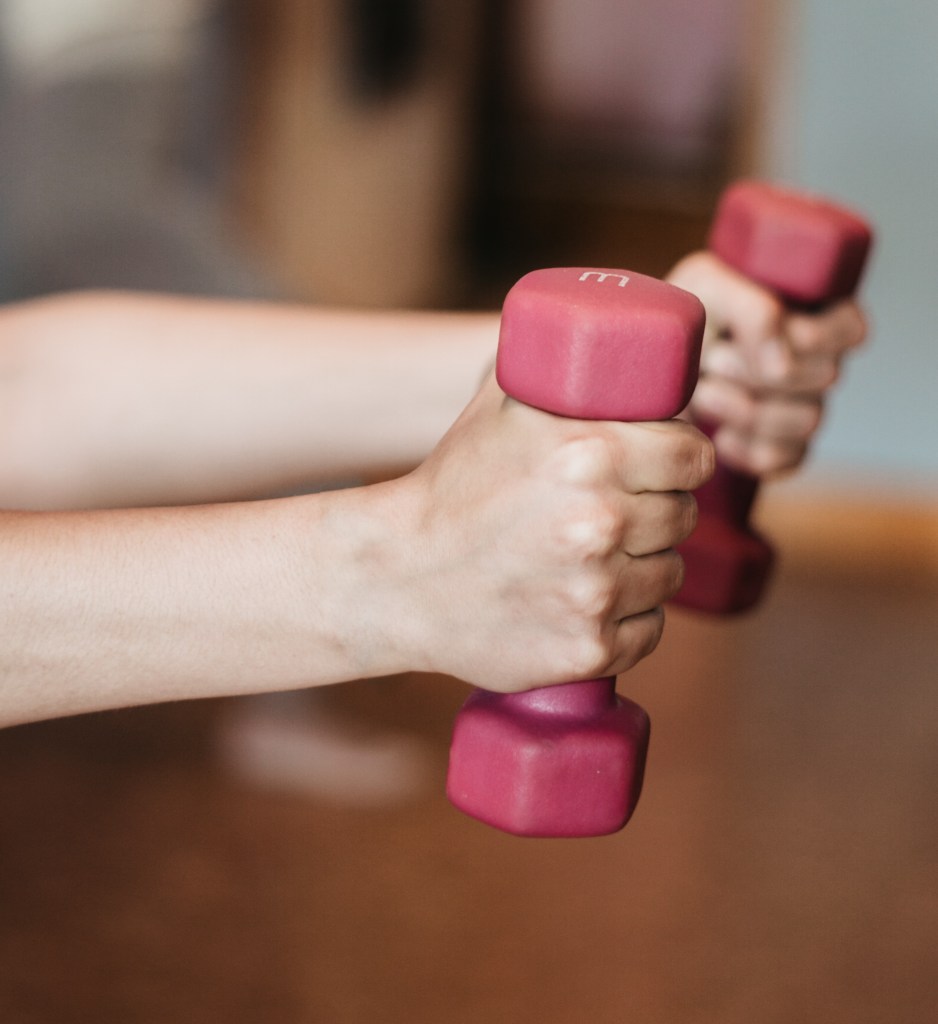
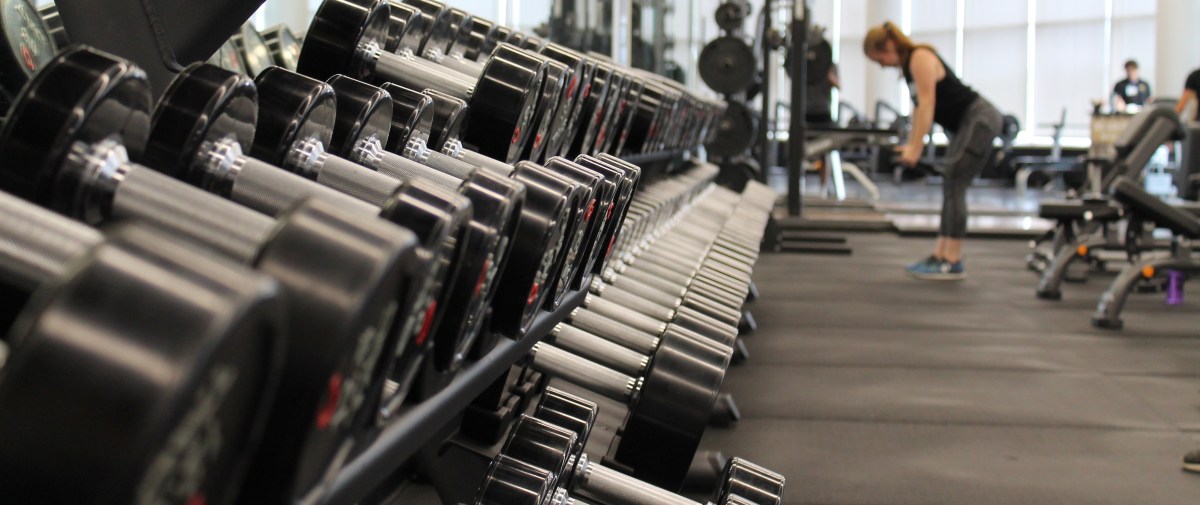
The study participants, all breast cancer survivors, were assigned to either strength (resistance) training or HIIT groups. (Photo by Robert Stump on Unsplash)
This study compared resistance training against high-intensity interval training, or HIIT. For twelve weeks, twenty-eight breast cancer survivors engaged in either resistance training or HIIT, three days per week. Exercise was performed at moderate-to-high levels of intensity, which means that the participants were challenged by the activities.
At the end of the twelve weeks, regardless of which exercise group the subjects were in, the cancer-busting myokines circulating in their bloodstreams had increased by as much as 15%; both resistance training and HIIT were equally effective. Furthermore, when serum taken from the study participants was applied to metastatic (in this case, triple-negative) cancer cells in the lab, there was a 22-25% reduction in the growth of the cells.
These are excellent results. While the study group (28 participants) was quite small and additional research with a larger set of subjects should be done, the effect of exercise was striking.
As mentioned above, the exercise was medium-to-high intensity. What exactly this means for each individual will vary, as intensity is specific to the exerciser and depends a lot on their current fitness levels. For this study, none of the participants had exercised in the previous three months, so they weren’t gym rats to start out with. Their results were still significant.
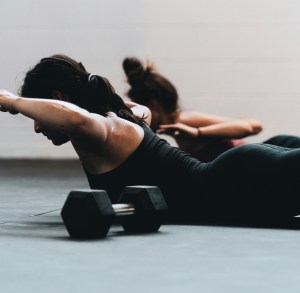
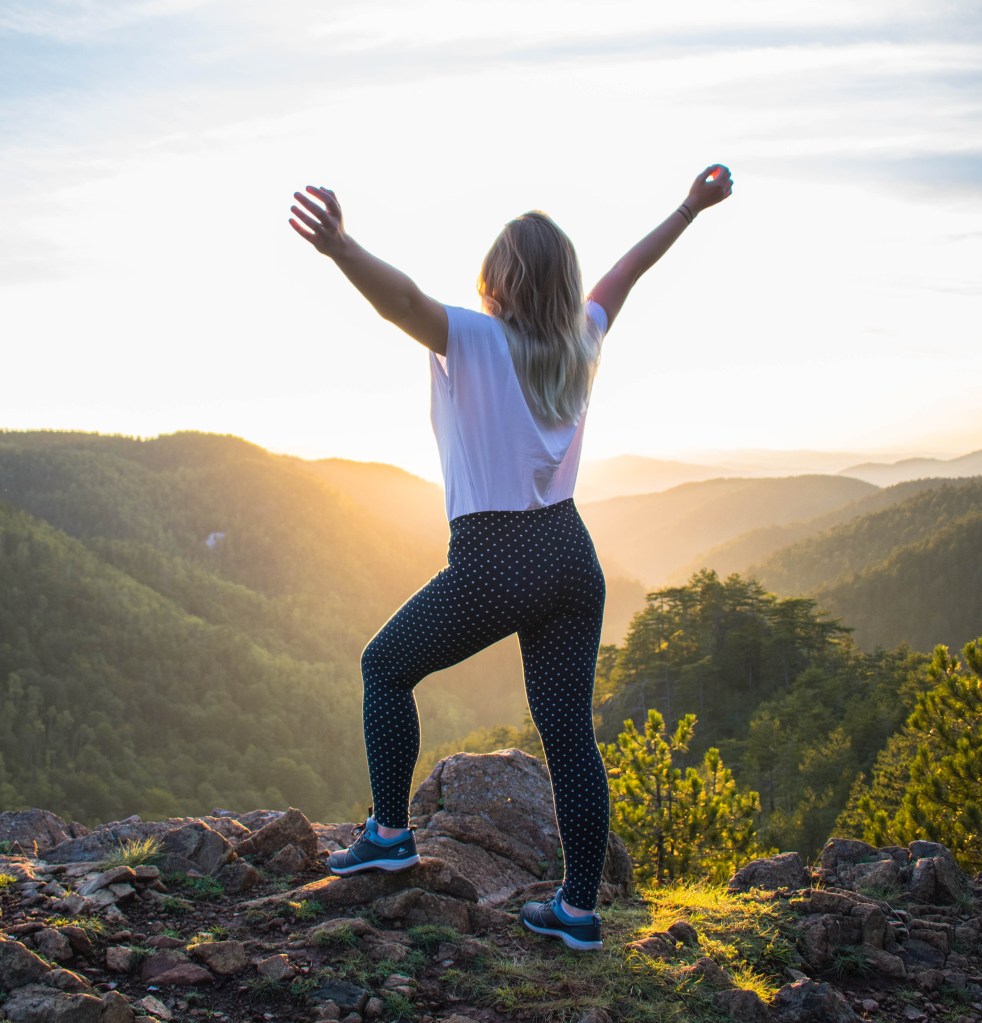
Everyone has different abilities. Begin at your own starting point and take it from there. (Photo by LOGAN WEAVER | @LGNWVR on Unsplash)
As I’ve said in previous posts, being diagnosed with cancer leaves you feeling out of control and powerless about your own body. It can feel like things are happening to you and there’s little you can do about it. This is one way that you can effect a positive change and improve your chances of recurrence-free survival, and it is something over which you have control.
The take-home message? There is a constantly-expanding body of scientific literature that supports maintaining as high a level of physical activity as you personally can, while still respecting the limitations that your body may have. Start slowly, increase intensity gradually, keep going…and don’t ever stop.
This is a reality check to demonstrate how, even with the greatest of intentions and planning, coupled with a serious love of exercise, you can’t turn back time.
And that’s okay.
But first, the comparison. Taken from this previous post, here’s a photo right before I started chemotherapy for triple-positive breast cancer, April 27, 2017:
April 27, 2017: I was exercising with a vengeance
After finishing chemo, radiation and Herceptin, AND after two years of estrogen-lowering Tamoxifen and a year into Letrozole, I’d lost some muscle even though I was lifting as heavy as I could.
This photo is from December 11, 2020:
December 11, 2020: Still exercising with a vengeance, but…
While I was still working out hard, endocrine therapy and menopause took their toll on my progress. Interestingly, estrogen is not simply a “feminizing” hormone; in women, it also helps preserve both muscle and bone mass. Menopause puts the breaks on estrogen production.
This becomes worrying as we age because less estrogen means weaker muscles which can lead to a greater risk of falls and chance of bone fractures. Endocrine therapy, which is designed to decrease the estrogen in the body in order to lessen the recurrence risk of hormone-sensitive breast cancer, adds to the problem.
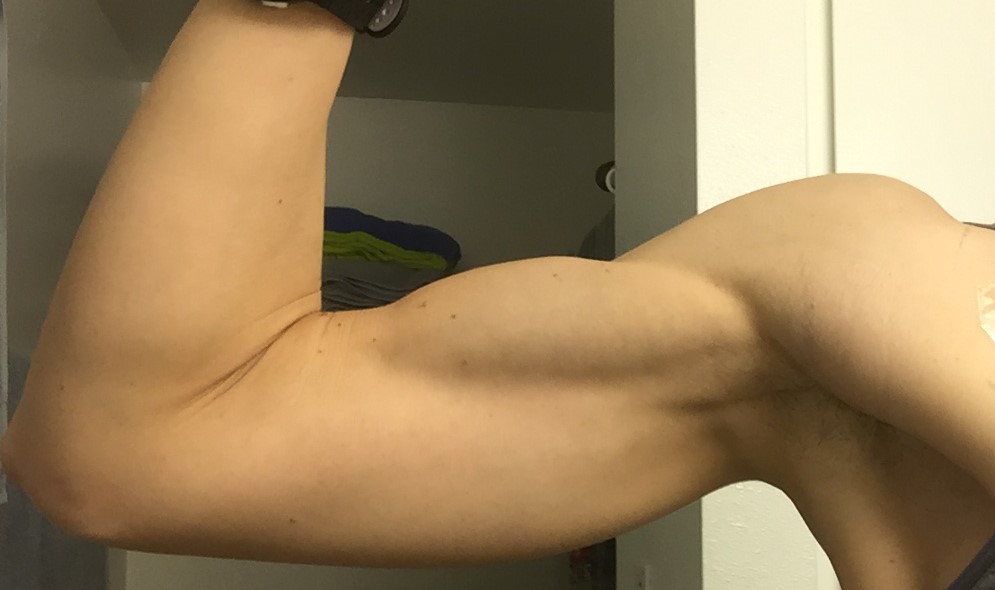
And more than seven years after the top photo, this was taken today before posting, September 23, 2024:
September 23, 2024: New phone, different lighting (sorry!), more wrinkles, same moles. I’m working hard just to keep what I have, but loss is inevitable.
I’m still lifting but the entire landscape of my workout routines has changed. I have to give myself more recovery time between strength training sessions. I am much more susceptible to injuries—seriously, I can tweak something by turning or stretching out in a weird way. I have neuropathy in my feet which makes getting up on my toes (such as in plank or doing lunges) painful.
We recently had an intense heat wave: for a week the temperature inside our apartment didn’t fall below 80F degrees, and during the day it climbed as high as 95F degrees (again, INSIDE our apartment). I managed to work out through a chunk of that week, but the heat eventually got to me. And recovering from that took almost another week.
So, the spirit is willing but the flesh is barely managing at times.
However, there is an upside to being 58 years old with a lifetime of fitness experience. I still love working out. Even tough training sessions are manageable because they feel like an awesome accomplishment, and I feel bouyed afterwards.
Even on the days that I don’t do a formal workout, I make sure that I’m moving as much as I can. Fitness is an integral part of my life, even though it looks different now than it did seven years ago. In the post that I reference earlier, at the very bottom I wrote about how yoga was becoming a larger part of my life.
And that’s continued. Through my yoga teacher training in 2022 and upcoming yoga4cancer advanced training starting in January 2025, this direction feels so right for me.
While I don’t plan to give up my gym sessions anytime soon, yoga has given me a path to physical and mental fitness as I age. I am gradually moving into a more meditative approach to exercise that is less about intensity and more about staying healthy by integrating mind and body.
If you needed yet another reason to turn to meditative exercise practices in the course of cancer treatment, here it is.
A recent, unpublished study that was presented at the 2023 ASCO (American Society of Clinical Oncology) Quality Care Symposium, entitled “Virtual Mind–Body Fitness Classes Show Unexpected Benefit in People with Cancer” (Mao et al., 2023), examined the effects of virtual mind-body fitness classes on visits to urgent care or unplanned hospitalizations for cancer patients who were in active treatment and were dealing with moderate or greater fatigue.
While mind-body practices are already recommended for cancer patients to help deal with the symptoms of treatment and its emotional fallout, the results of this study illuminated specific benefits. Those patients who had been assigned to the group given access to virtual live mind-body and fitness classes (called Intergrative Medicine at Home, or IM@Home) had fewer hospitalizations and shorter hospital stays, in addition to fewer visits to urgent care, compared to those subjects who were only given access to pre-recorded online meditation resources (Enhanced Usual Care, or EUC).
It’s not surprising that mindfulness benefits cancer patients, although it’s striking how those benefits manifest themselves.
This study was run at the renown Memorial Sloan Kettering Cancer Center (MSKCC) with 200 cancer patients randomized into the two groups (IM@Home and the stan, which makes the design more solid and increases confidence in the results. Nonetheless, as the lead author Dr. Jun Mao (Chief of Integrative Medicine at MSKCC) stated in the National Cancer Institute’s Cancer Currents blog, “I do want to caution that the current trial was designed as an early-phase trial, so we would like to do a larger study with longer follow-up to confirm our results before we are completely confident in the findings.”
A larger study is currently in the works. Dr. Mao would like to explore whether these classes help patients follow through on their treatment plans, and if so, whether these patients also live longer.
The IM@Home group’s classes included a variety of classes (again, quoted from Cancer Currents blog): “Some of the classes taught participants movement-based activities such as yoga, tai chi, and dance therapy; other classes taught meditation-based practices, such as music therapy and mindfulness.” It is already known that exercise during cancer treatment can reduce fatigue, but the researchers felt that part of the success of this study was due to the participants’ ability to choose the level of exertion based on how they were feeling at the time of the class.
Looking forward to further research on the ways that we can support cancer patients physically, emotionally and spiritually!
As Dr. Mao pointed out, more directed research on this must be done before drawing specific conclusion, but this was a very valuable pilot program, the results of which would not surprise those of us who have made use of various exercise modalities, particularly those with a mind-body angle, for calming ourselves during our cancer journeys.
The more this subject is studied, the greater the chance that cancer centers focusing on whole-patient treatment will be offering such classes to their patients. COVID taught us that there are ways to make classes accessible to people with limited mobility or conditions that may prevent physical travel to classes.
While I believe that attending mind-body oriented classes in person is ideal, this study illustrated that even virtual opportunities can have significant benefits for the patient.
It’s worth pointing out that of the 200 study participants, 91% were female and 77% were white. That is not a diverse spread and reflects the typical clientele at your average yoga studio (based mainly on my personal observations), with the exception being that the average age of these study participants was 60 years. I would be willing to bet that less-represented groups would benefit greatly from the stress relievers offered here and I hope that the researchers expand their subject pool to balance out the participants in their future study.
Regardless, these are intriguing results that underscore the important of mind-body focused classes, and exercise in general, in the well-being and improvement of cancer patients. This study joins a growing list of research that is changing the way that we look at managing cancer treatment side effects.
Research Study Abstract Mao, JJ et al., Effect of virtual mind-body fitness program on reduction in unplanned hospitalizations among patients undergoing active cancer treatments: A pragmatic randomized clinical trial, presented at 2023 ASCO Quality Care Symposium, October 28, 2023: https://meetings.asco.org/2023-asco-quality-care-symposium/15514?presentation=227485#227485 (note: click on “Abstract 473” on right side panel for abstract text)
With the upcoming longest day of the year on June 21st, many yogis celebrate the Summer Solstice by performing 108 repetitions of the series of movements known as a Sun Salutation, or Surya Namaskar in Sanskrit.
Why 108? The number 108 is significant in a number of dharmic traditions, including Hinduism, Jainism, Buddhism and Sikhism, and appears many times in sacred ancient texts (see more info at sites such as himalayanyogainstitute.com, yogajournal.com, hinduamerican.org).
Practicing 108 Sun Salutations traditionally has been done during the changing of the seasons to usher in the new phase of the year by generating an internal heat for purification (stoked by the energy of the movements), cultivating a will that pushes the practitioner forward and breaking through mental and physical barriers (youaligned.com).
Prior to getting cancer, I would have reveled in the challenge of 108 Sun Salutations. My body was ready to go hard and fast and have everything be perfect. Today, I approach such practices more mindfully, so this post is about a more forgiving alternative to churning through so many Sun Salutations.
This is because high repetitions of these movements are not for everyone, and even otherwise fit people may begin having wrist, shoulder and back issues as they move through the repeats. Proper preparation is essential in avoiding injuries. My own body protests high volumes of some movements so I accept my limitations, reset my expectations and opt for gentler variations.
Does participating in this tradition interest you but you find the high number daunting? Don’t insist on doing all 108 repetitions; set out to do one. And if that flows well, do another. Feel into your body from the very first sequence to the very last one you do, no matter the number.
However, if it helps, set a repetition goal for yourself — keeping in the spirit of the practice, let it be a factor of 108 as there many ways to evenly divide this number: 9, 18, 27, 54 — but don’t make that goal your sole purpose. Instead, keep your attention on your breath and the flow of your body.
This is a meaningful sequence to immerse yourself in as you cycle through the movements.
Avoid worrying about how you look, wondering whether you’re “beating” the pace of others, thinking about what you’re going to do afterwards or how many calories you burned. I would argue that a single Sun Salutation done consciously, appreciating the connection between the ancient origins of the sequence and the present day, is more valuable than 108 repetitions done with your mind elsewhere, focused only on the achievement.
For this practice, send your ego off to wait patiently by itself until you’re done.
IMPORTANT: For this post, I am focusing on the mindful and spiritual benefits of Sun Salutations. It is true that there is the purely physical practice of the sequence, a full-body exercise that has benefits in its own right. If you are more interested in treating this as a workout rather than a symbolic detoxification as you transition to the next season of the year, I’m the last person to try to talk you out of it. But be aware that this is a very sacred practice for some; I encourage you to pause and approach it with respect.
Whatever number you end on, let that be the right number for you, no judgments. This is a beautiful way to add meaning to your yoga practice and nurture a connectedness to everyone else engaged in this tradition.
The next change of seasons, the Autumnal Equinox, is only three months away…
Perhaps this Solstice’s Sun Salutations will lead to a mindful daily practice of Surya Namaskar. This may blossom into the next opportunity to join everyone in the tradition for the Autumn and welcome in a season full of new possibilities…and maybe even the full 108 repetitions.
But for now, start with just one.
For a beginner-friendly version of Surya Namaskar, try the version below:
Cancer, perhaps more than any other disease, has a formidable reputation that precedes it. Because of this, cancer “lore” can affect your expectations of treatment effects and anticipated prognosis if you are unfortunate enough to receive a diagnosis.
There were a number of things that I didn’t realize about breast cancer that might have made my experience, if not better, at least slightly less harrowing. Here are a few of them, in no particular order:
1. Breast cancer research remains more highly funded than that any other cancer(source: 2019 Northwestern University estimate) and is therefore the best-studied type of cancer. As a result the treatment plan is solid. While this does depend somewhat on the type of breast cancer you have (Triple-Negative, Triple-Positive, Hormone Receptor-Positive, Inflammatory, etc.), the fact remains that there is great interest in “saving the boobies”.
We are living in an era where research in breast cancer is churning out valuable findings at a break-neck pace.
Your treatment plan has likely been well-tested with ample positive outcomes. Combine this with the tendency for this cancer to be diagnosed at earlier stages due to the relative ease in finding a tumor (I mean, you can feel the lump even if it’s not very big), survival rates tend to be very good. Understandably, that might not be very comforting at the time that you’re hit with the news that you have breast cancer, but it is a blessing that you’ll appreciate later.
2. Getting breast cancer is not your fault. I struggled with this one for a loooong time. If you’ve read some of my earliest posts, you know that I not only had a hard time getting my head around my diagnosis, but also a lot of anger about everything I did that was considered “protective” that seemed not to make any difference.
The reality is, as much as we do know about cancer, there’s still a lot we don’t, which means you can be doing everything right — even “perfectly” — and still be diagnosed with breast cancer.
The message I got from cancer-prevention campaigns was that there was so much you could do to avoid the disease. I checked off all those boxes and thought that I was at very low risk. I was “the fit one”, the vegetarian, a dutiful breast-feeding mom allowing myself no indulgences — the last person you’d imagine this happening to, but it did.
I felt ashamed about the diagnosis, even feared that I would be accused of lying about my healthy habits. I was terrified that my healthy lifestyle had somehow backfired. While this sounds ridiculous now, feeling so out-of-control about my own health was demoralizing and depressing.
3. A healthy lifestyle goes a long way in making recovery easier. While I felt dejected about not being able to avoid breast cancer, my exercise and dietary habits helped me recover from treatment side effects faster and not gain weight afterwards. And as I learned later, by maintaining an active lifestyle, I was significantly decreasing my chances of cancer recurrence. I wrote about those findings in this post.
So all my efforts were not for naught. Word to the wise: if you don’t exercise regularly, start now. If you do exercise, keep going!
In the darkness I found a little light.
4. There is light in dark places. I must stress that cancer isn’t some “great” thing that happens to you and it carries with it big side effects and an ever-present risk of death. I lost two friends to breast cancer who were both diagnosed about the time that I was and they were far too young to die.
But given that I had to go through this, I had the option of “sink or swim” when it came to how I would view my experience. Eventually I found the light in the darkness of the cancer tunnel, but it did take a number of years and many ups-and-downs before I was able to appreciate the lessons that the disease taught me: being able to accept and live with uncertainty, identifying a clear purpose in my life, finding gratitude in small things, even coming to grips with my own mortality. These lessons were difficult but also valuable, and I admit that I wouldn’t have learned them if I had not gotten cancer.
Perhaps some of the most important of these were identifying that I had suffered from anxiety for a good part of my life and understanding how it had shaped my decisions. Yes, it took cancer for me to realize all that! This led to incorporating mindfulness and meditation into my daily routine.
If you’ve hung around this blog for a while, you know that I am a firm believer that exercise will make just about anything better.
That was certainly the experience I had with cancer, as maintaining my fitness was critical to lifting my spirits. A nice workout was the best way for me to shake off the remaining side effects of a chemo infusion.
Moving makes you feel better.
That’s why I’m not completely surprised that a group of researchers (Heissel et al., 2023, Br J Sports Med) are suggesting, based on a meta-analysis of 41 studies comprised of a total of 2264 participants, that exercise be used as a primary treatment for depression. That means they feel the results of their research demonstrated exercise to be just as effective as psychotherapy and medication.
The study authors conclude boldy, “Exercise is efficacious in treating depression and depressive symptoms and should be offered as an evidence-based treatment option focusing on supervised and group exercise with moderate intensity and aerobic exercise regimes.” [Emphasis mine]
However, while no one is arguing against the importance of exercise in helping individuals treat their depression, an article appearing in The Washington Post cites other researchers who feel that it may be premature to use exercise as a primary treatment for people suffering from clinical depression and suggest that additional studies should be conducted.
More research needs to be done to determine the specifics of how to use exercise to lift depression.
In particular, as a meta-analysis, although the total number of research participants was large (2,264), the individual studies on which the analysis was based tended to have smaller participant sizes, due in no small part to the fact that running studies like this can be costly.
There are still a number of questions that need to be addressed, such as exercise type, frequency, intensity and amount. Depression is different for everyone both in scope and origin, and an “exercise prescription” should be personalized for the individual. Still, no one is disupting that any form or length of exercise is far better than doing nothing.
In light of these results, what should you do?
Do the type of exercise you enjoy. The best results in this particular meta-analysis were obtained from moderate intensity exercise, although intense exercise was still beneficial, and benefits were also gained from even light exercise. Avoiding sedentary behavior was key.
If you’re just starting out, find a simple exercise that you’ll enjoy doing and will look forward to.
My personal suggestion for anyone who is not currently exercising would be to try to maintain consistency with a simple exercise like brisk walking. If you are able to get outside into nature, perfect! If you’re deadset on bingewatching the latest season of your favorite show and decide to march in place, swinging your arms while you watch, that is great too! It still beats the pants off of crashing out on the couch as the show plays on.
There are many ways to incorporate more movement into your life and also ways to make it pleasant so that you look forward to it. At the least, find a simple exercise that you don’t dread…and then keep doing it. In the meantime, we will await future studies that can offer more insights into the psychological benefits of exercise.
REFERENCES
The Study, a Meta-analysis Heissel A, et al. (2023) Exercise as medicine for depressive symptoms? A systematic review and meta-analysis with meta-regression. Br J Sports Med. http://dx.doi.org/10.1136/bjsports-2022-106282.
Although this is a blog about cancer and mindfulness, I hardly think there is any lifestyle habit as effective as exercise at helping survive cancer. And what better time to discuss this than the start of a hopeful new year?
I’ve been certified as a personal trainer by the American College of Sports Medicine (ACSM) for well over a decade, and although I haven’t actively taken on clients, I’ve had enough time to develop my own fitness philosophy. I must stress, this is a conceptual post and not designed to guide you to specific exercises (although I mention some modalities as examples). However, if you’ve had trouble getting your head around how to maintain an active lifestyle, these ideas may help.
In my experience, there are three critical aspects to a successful exercise program: (1) consistency, (2) progression and (3) balance.
CONSISTENCY
This is the most important concept of my three and worth spending the most time on.
Consistency is the concept that seems to be most difficult for people, and it’s usually the “make-or-break” aspect of fitness. It’s quite simple to get motivated to start a new program, whether it be signing up for classes, planning out home workouts or simply deciding to go for a brisk walk every day.
The hard part is sticking with it. But I can promise you, that’s where the magic is. Be realistic about how much time you have to devote on a daily basis and what your exercise will consist of. This should not be something far out of your realm of experience or else it will be too difficult to maintain. Make it familiar.
When starting out, pick something you enjoy doing and it’ll be easier to keep doing it!
For example, if you do not already have a consistent history with a piece of exercise equipment (say, treadmill), do not purchase one under the assumption that the high price tag will surely motivate you to use it. It will not. The greatest workout you’ll get with it is carrying it to the basement or attic after you can no longer stand the guilt of watching it gather dust.
If you can’t maintain your workouts, you will have to go through the “beginner” phase every time you summon the wherewithal to restart again.
That also means going through “beginner soreness”. Honestly, there’s little pleasure in a Groundhog Day-like experience of not being able to get past the little aches and pains you might feel after getting your body into motion again. Don’t do this to yourself.
How to avoid it? Look at exercise as a lifelong habit, not something you do just to “get in shape” for a specific event like a wedding or reunion. Take smaller bites of exercise, something very doable that you won’t dread, especially if you have negative associations with workouts. Set goals like “train 5 days a week” and plan them out, not “lose 15 pounds” or even worse “look better” (what’s that?). It’s more motivating being able to tick off a specific, finite goal than never reaching one that’s vague, arbitrary and even judgemental.
And DO consider it “training”. You are training for living the rest of your life with more ease, maintaining your flexibility, balance, strength and endurance just that much longer. As in the tale of the tortoise and the hare, starting something that seems “not vigorous enough” but that you can see yourself doing, say, every day, in a year will put you miles ahead of someone who started an ambitious and complicated exercise program and burned out in a matter of weeks.
The fitness industry is banking on the fact that people will start exercising and then give up, only to start again later. And eventually give up again.
Look at it this way: the trillion-dollar exercise industry is betting on you giving up, and so it always comes up with a new shiny object to tempt you with. Often the program is unsustainable and the promised results are unrealistic. You don’t need that. You need consistency.
Again, decide what you can do and do it regularly. Realize there will be days when it won’t be possible to get it done. That’s okay – no guilt, no shame. But then get right back to it as soon as you can. Think of every workout as something positive and precious that provides you with health benefits that no one else will be able to take away. Each day you exercise is one more step towards establishing a habit that will lead to a lifetime of fitness.
Got your exercise in? MARK IT OFF!
IMPORTANT: Put up a high-visibility calendar where you can mark off your workouts and easily see how consistent you are.
But what if it gets TOO easy? That’s when the next pillar comes in…
PROGRESSION
Once you’ve established an exercise habit, your body will eventually adapt to what you’re doing. This is a very good thing. It also means that it’s time to change things up a bit, always giving yourself permission to dial back down to what you’d been doing previously if you have a harder time getting going on any given day.
Is your walking route getting too easy? Make a detour to a set of stairs and get your heart rate up!
The trick is to maintain consistency while also challenging yourself. For example, if you were doing a walking program, incorporate bodyweight exercises (squats, modified push-ups) that you can do along the way. Climb more hills. Pick up the pace.
If you want to get a PhD, you don’t keep taking freshman-level classes. Challenge is where growth happens. We get an unmistakable sense of satisfaction putting in the work and seeing results.
This is also where your self-confidence blossoms. And that’s exactly the bouyed spirit that keeps you going.
Don’t ramp everything up at once. Add a little at a time, but definitely make it count. Be realistic about whether or not you’re challenging yourself: if you need to push it even more and can do so safely, go for it. If you honestly try but can’t do as much as you expected, halve the amount and try again. Don’t beat yourself up. You will get there. But don’t short-change yourself either.
Keep writing it down! When you’re ramping up your fitness program it’s important to keep track of your progress.
Most importantly, unlike high school PhysEd class, you’re in charge. That also means you’re responsible for your own progress. Some workouts will be better than others, but always remember, doing anything is STILL better than binge-watching Netflix with a bowl of chips on your lap. Congratulate yourself for making the decision to exercise!
Hey, why not watch Netflix while marching in place? It still counts so write it down!
So let’s assume that you’re being consistent and gradually increasing the duration/intensity of your workout. That’s perfect, but there’s one more pillar to consider…
BALANCE
In this case, I don’t mean balance as in being able to hold tree pose throughout your entire lunchbreak. I mean are your workouts well-rounded? I’ve seen runners do little else but run. If this is you, incorporate some variety into your life. Your running will improve if you are also training for strength and flexibility.
Hey, your other shoulder needs massaging too!
Here’s a simple analogy for balancing out your workouts: imagine getting a massage regularly, but on only the left side of your body. That side will feel great, but you’re missing something. Your right side needs some love too. Eventually that imbalance will affect you negatively.
Exercise programs are best when they are a melange of endurance, conditioning, strength work and staying limber. It is extremely tempting, once you become adept at an exercise modality, to keep at it at the exclusion of everything else. After all, you’re an expert in it. But you’re also opening yourself up to injury and that’s something no one needs.
Treat your body to something new just to keep things interesting.
Take the time to explore different modalities. Often a type of exercise (say, yoga) can cover a number of bases, but you will still need to supplement with other exercises to stay truly well-rounded. Even strength training (which I consider critically important, btw) can have a cardio effect, but much will depend on how your workout is structured.
Do some research but don’t over think this. Just make sure that you are supporting all your body’s needs. Taking the runner’s example again, strength training will help you maintain muscle mass that you might lose from too much running, and it, along with flexibility and mobility work, will help prevent overuse injuries.
This doesn’t mean that you have to significantly increase the number of workouts you do, just that you have to be creative in what you add to your exercise session. The idea is to incorporate what else your body needs to keep it humming optimally. And then, write it down.
BOTTOM LINE
Bottom line when you’re just starting out? Move. Even if you don’t really know what exercise you “should” do, just find a way to move. Dance. Wave your arms over your head. Break up sedentary times as much as possible. If you sit for an hour, stand up and walk in place for three minutes, swinging your arms. Don’t be afraid to work up a sweat.
Then keep doing it.
When you establsh one healthy habit, it’s easier to incorporate others to support it.
Above all, make it pleasant, so that you look forward to exercise as a break from those things in our environment that keep us sedentary. The human body was meant to move. That is its natural state. Give it the opportunity to do what it’s supposed to do, then let it recouperate and nourish it with healthy food. The idea is to start now and keep going for the rest of your life.
~~~~~~~~~~~~~~~~~~~~~~~~~~~
Being an avid exerciser enable me to recover from cancer treatment much more quickly. Up until my last couple of infusions, I was rowing and lifting weights within a week after each chemo (mine were spaced three weeks apart). In an out-of-control situation like cancer, exercise was one constant that made me feel like I still had a grip something, and that made the whole experience better.
Decades ago, my introduction to yoga took place in my parents’ library, a small paneled room with wall-to-wall, floor-to-ceiling books. There I found an illustrated guide, replete with black and white photographs of odd contortions and strange nasal flossing. It seemed weird.
Oh, the moves I could do!
I had barely begun elementary school, and at that age was a natural-born yogi, as many young children are. Lotus pose? I could get my legs into position without using my hands. King Pigeon was no big deal, and nothing hurt when I folded myself up. I didn’t have a regular yoga practice at that age, but I would get occasional exposure to yoga moves at school, and I imagined all yogis wore diaper-like pants and lived on mountaintops.
High school provided an opportunity to do more. One of our French teachers practiced yoga, and I took a season of classes with her. Really, I remember little from that time. At that point, I was still limber but not as lanky, and yoga wasn’t particularly exciting. Volleyball was my game and I had no appreciation for how yoga could improve my playing. Had I practiced it properly, yoga could have helped immeasurably and prevented many a lost serve. But I lacked introspection and so barreled on as before.
Yoga resurfaced in my life now and again, but obsessed with more active ways of sweating, I steered away from it. I swam, ran and eventually strength-trained my body into shape. Yoga didn’t have a place in my view of what fitness should be.
Holding poses for a prolonged time? Not for me. Sweating through hot yoga? You’ve got to be kidding. A friend sustained a serious back injury from a yoga teacher who tried to force her into a pose. That was it; I was done with the idea of incorporating yoga into my already packed fitness routine.
Then I got cancer.
And I realized that my mind was victim to free-ranging anxiety. Desperate, I immersed myself in learning to meditate. I know they say that you need to find calm in the midst of chaos, but being thrown into chaos is not the best place to learn to be calm. I limped through cancer treatment and clung to the hope of peace. The only relief came from my love of fitness and drive to exercise as soon as the worst side effects of each infusion had passed.
Still, I pushed yoga away. Not interested. I needed to get my body back to where I’d been pre-cancer, not do slow movements that might tweak something and burned too few calories.
But the more meditation I did, the more mindfully I moved, yoga kept coming up, like a refrain in a song. Movements paired with breath.
I have made space in my life for yoga.
And then, it hit me. Movements paired with breath. I was all about the breath by then. Yoga provided the movements. And I found bliss.
When I opened myself up to yoga and invited it into my workout routine, something magical happened: my body started stretching out. All that tension that I’d carried for decades that had gradually tightened me up started releasing. My fingers found the floor in a forward bend again, and gently brought my palms with them. My heels easily pressed against the ground in a downward dog, with little peddling required. Moves that I could once do became available to me again.
So here’s the thing about breast cancer: after surgery, you lose some mobility in the affected side. Even now, side bends stretching my left side “pull” uncomfortably compared to my right side. Anyone who’s had lymph nodes plucked out of their armpits knows that that area stays tender for a good long time. Often, this brings an imbalance to the body.
My workouts had consisted of pounding myself through rowing, conditioning intervals, strength training with heavy weights and swinging kettlebells around. But without yoga, something critical was missing. Initially, I was afraid that “sacrificing” exercise sessions to yoga would result in faster decline of my physical ability and a push towards a more sedentary existence. Oh, how wrong I was! If anything, yoga has moved me towards vitality, flexibility and a sense of youthfulness that straight strength training had never allowed. Yoga opened up my whole body and allowed it to breathe freely.
What this has offered me is another way to look at how my cancer journey is progressing. After the aches and pains associated with never-ending adjuvant therapies, I admit I felt it was all going to be downhill, and that all I could do was desperately cling to my workout routines as my abilities gradually slipped away. Yoga brought back an element of fitness that I’d forgotten, and now, even though I know that I will be lifting less and rowing slower as time goes on, there is a new, perhaps more gentle world of fitness that I have yet to fully discover.
In Part 1 of this series I wrote about breast loss (which I ended up not having to deal with) and how strongly I equated breasts with being female. In Part 2, it was about my fear of having no control over my body and being susceptible to weight gain as a cancer survivor.
In Part 3, I’m writing that my body reacted in a way completely opposite of what I feared, and I managed to regain some semblance of control.
As mentioned, many women with breast cancer, particularly those whose tumors are hormone receptor positive like mine, put on weight. On top of the “my-out-of-control-body-is-killing-me” feelings brought about by cancer, the threat of runaway weight gain added to my frustration.
Yes, this was another example of how, throughout my fact-finding research, I took to heart what I read and immediately assumed that if it happened to others, it was also going to happen to me. Except that it didn’t. Just as how statistically I shouldn’t have gotten breast cancer, I also shouldn’t have ended up almost 10 pounds below where I started pre-diagnosis.
My body is quite reactive. If you’ve read my posts about how I respond to anxiety, you know that I shed weight quickly. I am not an emotional eater; I am an emotional non-eater, and more often than not don’t have to fight cravings. I have to fight a lack of appetite
As weird as this may sound, the resulting weight loss was one of the strongest indicators that I wasn’t completely out of control, that my body hadn’t completely turned against me. And more than that, it was another reminder that my situation was not typical. So by maintaining a very doable 6 day/week workout schedule, I broke through the mentality that what others experienced was necessarily what I would.
Right side of my ribcage. I can see my serratus and external obliques, but have to focus on building strength, not losing weight.
In addition, and arguably more important is the fact that cancer recurrence and episodes of lymphedema have been associated with higher weight levels (see this Susan Koman web article addressing this issue, including journal references). According to a bioelectrical impedance analysis (BIA) body fat monitor, I’m sitting at about 20% body fat. The actual number doesn’t really matter, since these monitors are notorious for being inaccurate. What matters is that those numbers are stable and that I’m able to build muscle.
What also matters is that with my level of activity both pre- and post-diagnosis, recovery has been quite good. I feel strong. I feel lean and fit. My sense of self-efficacy is high. And I’m finally able to exhale after holding my breath about all the things that were happening to my body.
Piece by piece, I’m reclaiming my physical self again. At that same time, I’ve still got a lot to sort out in my head. I know that keeping my body fat in check doesn’t mean that I’m protected from cancer, despite what numerous news reports suggest. It makes me uncomfortable being bombarded with that message, though. According to the December 20, 2018 National Health Statistics Report (Fryer et al. (2018)), the average woman in the U.S. is obese. In the interest of public health, the “lose weight” message is trumpeted constantly. Every time I’m exposed to that, my perfectionism kicks in and I have to fight the urge to clamp down on my fitness and nutrition.
Being an outlier doesn’t gain me much sympathy, and it does comes with its own challenges. In the process of sorting out everything that’s happened to me, I’m working to keep an even keel going forward and not go to extremes. As with everything, moderation.
Oddly enough, one of the things that scared me about cancer was that it threatened all the work I’d put into my body. Being a bit under six feet tall since my teenage years, I was called “big” a lot whether or not I was overweight. At 16, I went through a phase of disordered eating. That passed, but I retained a sensitivity to how I was perceived by others. Always, I was fearful of being judged, and that pushed me towards perfectionism.
Fast-forward to 2017 and my diagnosis. When I started researching breast cancer, one thing that struck me was that the information I found didn’t mesh with my conception of what cancer was, in terms of what the treatment did to the patient. I had always thought of cancer treatment as having a wasting effect on the sufferer. But then I read of the propensity that many breast cancer patients had for putting on excess weight, not only throughout chemo, but also due to taking estradiol-blocking medications like Tamoxifen.
Wait, what? Gaining weight? But I’d always thought that cancer patients lost weight! Sure enough, google “breast cancer weight gain” and you get a lot of entries from reputable sources that warn about this tendency to pack on weight. My Nurse Navigator echoed that point, noting that many women “put on 10-15 pounds.”
Many decisions in my life have been motivated by a fear of being judged.
This provoked a lot of frustration. I had established excellent diet and fitness habits for the very purpose of building strength and endurance and avoiding the weight gain that accompanies advancing age. I had kept emotion out of my food choices (kudos to my mother for being careful about not connecting food and emotion). During my time as a stay-at-home-mom, I’d obtained a highly-respected personal trainer certification because I wanted to be sure I knew what I was talking about. My standards were high, but even if I couldn’t attain my version of “perfection”, I put in 100% effort and that made me feel good.
And then, cancer. Despite doing everything I could think of to maintain peak health, I still had not been able to prevent the development of my tumor. That was extremely unsettling. But for me, having my whole body shape change as a result of this was almost worse.
Predictions of the future raced through my mind: I was going to lose my lean mass, lose my fitness and put on ten or more pounds. I would be judged for “letting myself go”. None of this would be under my control. Just like the cancer, it was all happening to me, and as far as I was concerned it was bound to ruin my life, whether or not it actually killed me.
However, as with so many other things related to my cancer, this didn’t go the way statistics predicted. And that’s why there’s a Part 3 to this body image series…
![Sweatin’ for Myokines [RESEARCH]](https://franticshanti.com/wp-content/uploads/2026/01/annemiek-smegen-rrcrgbbyhbs-unsplash_cropped.jpg?w=1200)
![Aging Muscle: After Cancer Treatment and Menopause [PHOTOS]](https://franticshanti.com/wp-content/uploads/2024/09/samuel-girven-bbr_zigemyq-unsplash_cropped.jpg?w=1200)







 Frantic Shanti