Hey Doctors! Before You Give a Cancer Diagnosis…

From time to time, I think back on my cancer experience (who am I kidding, I think about it every single day!) and wonder how things might have gone differently. Generally, I write for the cancer patient, but this post is directed at the doctor who delivers the diagnosis.

So…dear doctors:

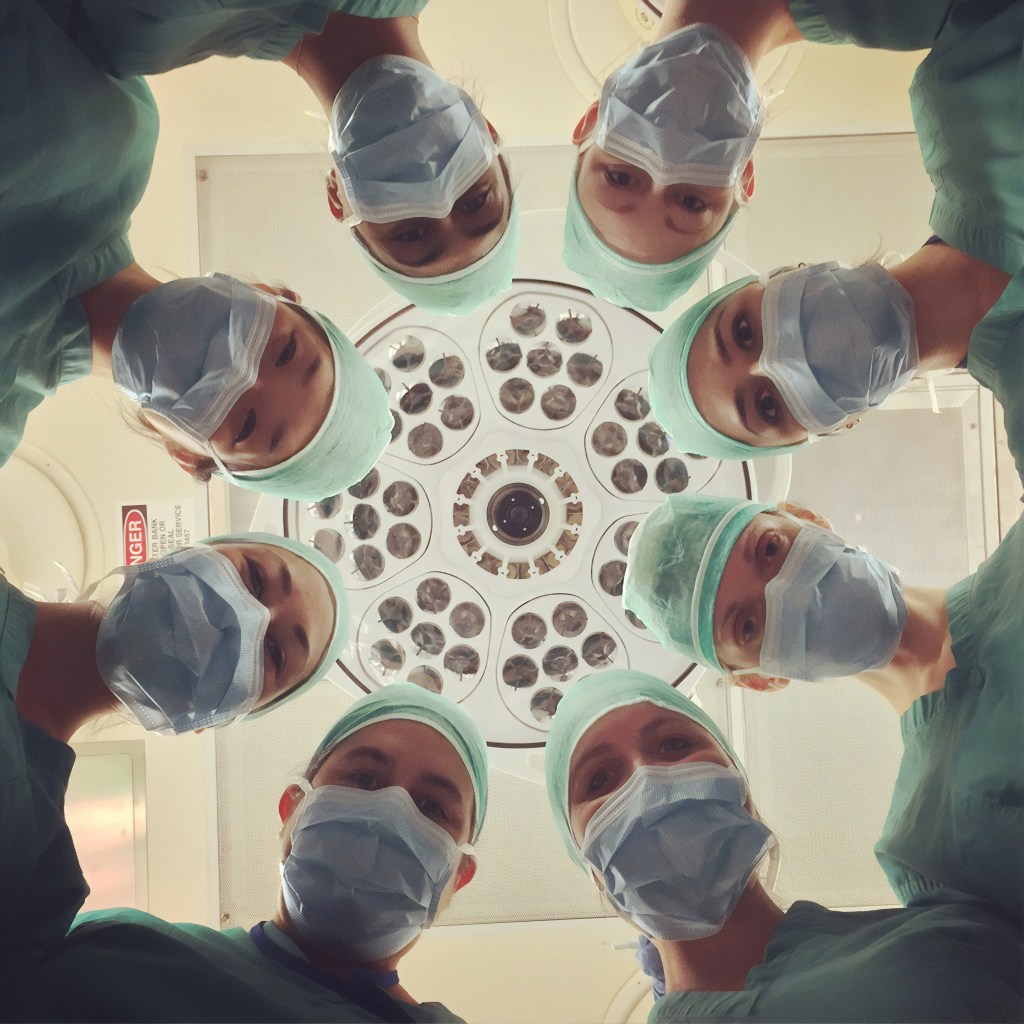
Think very carefully about what else you want to tell a new cancer patient right after you tell them that they have cancer. It better not be important, because they’re not going to hear it. Once you deliver the diagnosis, a cancer patient’s executive level cognitive processes freeze, making comprehension difficult. Any further speech sounds like the “wah-wah-wah” talk of the adults in Charlie Brown cartoons.

For example, I was told two things by my radiologist, when he came into the room after he looked at my diagnostic ultrasound: (1) you have cancer, and (2) you’re going to be alright. Guess which one of those points I didn’t remember. I’m sure my doctor was trying to be cheery and supportive, but I can guarantee you it didn’t work.

Let’s face it, no matter how gently a doctor tries to break it to you, being told that you have cancer is devastating. It’s perfectly normal to be blown back by the news because your life is going to change drastically for at least a while, and maybe permanently. But, geez, doc, you should be prepared to repeat the same info at least several times and cut out the unnecessary bits. Your newly-designated cancer patient is going to have to need time to process the news!

Tip to the patient: bring someone with you to your subsequent visits who’s good at taking notes and is on an even keel. I brought my husband but he barely wrote anything down. Turns out, he was just as shocked as I was and wasn’t taking the news any better.
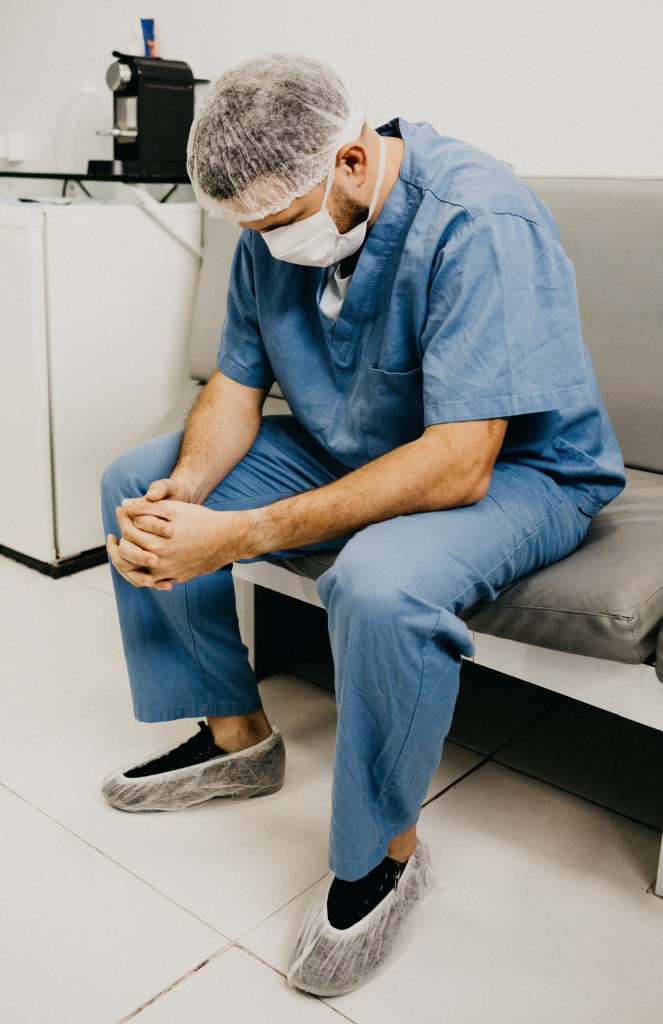
Hey, doc, I get that this is hard on you too. So please don’t think I don’t appreciate what you do (especially these days!). But please consider some of these things before you deliver your next cancer diagnosis. Thanks. 🙂

Following up on that, doc, the next thing that I would suggest is that you not give overly specific responses to questions based on assumptions you’re making. I asked about the recovery time from surgery, since I was terrified by the thought of going under the knife. Mine was early stage breast cancer, and ultimately I had a lumpectomy, but that same radiologist had warned me that recovery would take 4-6 weeks. Up to a month and a half?!? I whimpered something along the lines of, “But I have to work,” at which point he reminded me that my health was more important than my job.

I don’t know where he pulled out such a long recovery time, but being given that sort of time frame compounded my anxiety. Maybe he also said that some people have a shorter recovery time, but of course, I wasn’t processing info well and all I could remember was “4-6 weeks”.

So I would recommend to doctors, (1) if you really don’t know specifics, don’t offer estimates–I was back to work the week after my surgery, btw–and (2) please don’t blow off a patient’s concern about the importance of other aspects of their lives, like going to work. Yes, ultimately, as the saying goes, “if you don’t have your health, you don’t have anything.” But for many of us, if you don’t have a job, you don’t have health insurance! Everything in our lives is interconnected. It’s all important. Please keep that in mind.

Hey, nobody likes to deliver bad news and I know you’re trying your best. But the only thing worse than telling someone they have cancer is being the one it’s being told to. So please, be gentle. You will go home that evening possibly bummed that another one of your patients has cancer.

The patient is going home that evening embarking on one of the most frightening journeys of their life.
Making Space for Cancer Emotions

While I myself am celebrating three years since the summer of my chemo for breast cancer, I was shocked to hear of actor Kelly Preston’s death from the disease. It’s a reminder that in an egalitarian way, cancer doesn’t care how famous you are.

I’ve been reading about those who are dealing with late-stage cancer. Most notable for me is actor Shannen Doherty, whom those of my generation remember from “Beverly Hills 90210” (although, admittedly, I didn’t watch the series).

Shannen, along with well-known names like Alex Trebek, Olivia Newton-John, Congressman John Lewis and others have been interviewed by the press. We hear about daunting odds and their strength of character. Anyone battling the late-stages of cancer shows a lot of bravery.

They speak of gratitude, perseverance, patience, a forward-thinking mentality. But as anyone with cancer can tell you, they would rather not be fighting this fight. Yes, there are “bright moments” (and I use that term loosely) that come with learning you have a “serious” cancer diagnosis, but that’s because you find those breaks in the darkness.

Cancer brings powerful emotions, often negative ones. And that’s perfectly okay.

However, I think it’s critical that cancer patients be given the uninterrupted space to talk about the fear and anxiety associated with this situation. It’s not all happy trips to the infusion room as everyone cheers you on. Shannen is quoted as saying, “The unknown is always the scariest part…Is the chemo going to work? Is the radiation going to work? You know, am I going to have to go through this again, or am I going to get secondary cancer? Everything else is manageable. Pain is manageable, you know living without a breast is manageable, it’s the worry of your future and how your future is going to affect the people that you love.”

This is something that must be addressed. When others call you a warrior, they need to understand that you’ve not been given a choice in the matter. And you yourself have a right to feel all the emotions that you feel, whether it’s anger, fear, helplessness or numbness. That must be allowed because it’s real.

Most importantly, no one should tell a patient that they need to only think positive. That is telling them that they shouldn’t feel what they feel. And that’s never a good thing.

So just as Shannen has done and others continue to do, we must accept the weight of the emotions felt by cancer patients, not diminish it. We should hold space for them to express everything they’re feeling. And then actively offer all the support and love that they need.

Revisiting Yoga After Cancer: Finally Coming Around

Decades ago, my introduction to yoga took place in my parents’ library, a small paneled room with wall-to-wall, floor-to-ceiling books. There I found an illustrated guide, replete with black and white photographs of odd contortions and strange nasal flossing. It seemed weird.

Oh, the moves I could do!

I had barely begun elementary school, and at that age was a natural-born yogi, as many young children are. Lotus pose? I could get my legs into position without using my hands. King Pigeon was no big deal, and nothing hurt when I folded myself up. I didn’t have a regular yoga practice at that age, but I would get occasional exposure to yoga moves at school, and I imagined all yogis wore diaper-like pants and lived on mountaintops.

High school provided an opportunity to do more. One of our French teachers practiced yoga, and I took a season of classes with her. Really, I remember little from that time. At that point, I was still limber but not as lanky, and yoga wasn’t particularly exciting. Volleyball was my game and I had no appreciation for how yoga could improve my playing. Had I practiced it properly, yoga could have helped immeasurably and prevented many a lost serve. But I lacked introspection and so barreled on as before.

Yoga resurfaced in my life now and again, but obsessed with more active ways of sweating, I steered away from it. I swam, ran and eventually strength-trained my body into shape. Yoga didn’t have a place in my view of what fitness should be.

Holding poses for a prolonged time? Not for me. Sweating through hot yoga? You’ve got to be kidding. A friend sustained a serious back injury from a yoga teacher who tried to force her into a pose. That was it; I was done with the idea of incorporating yoga into my already packed fitness routine.

Then I got cancer.

And I realized that my mind was victim to free-ranging anxiety. Desperate, I immersed myself in learning to meditate. I know they say that you need to find calm in the midst of chaos, but being thrown into chaos is not the best place to learn to be calm. I limped through cancer treatment and clung to the hope of peace. The only relief came from my love of fitness and drive to exercise as soon as the worst side effects of each infusion had passed.

Still, I pushed yoga away. Not interested. I needed to get my body back to where I’d been pre-cancer, not do slow movements that might tweak something and burned too few calories.

But the more meditation I did, the more mindfully I moved, yoga kept coming up, like a refrain in a song. Movements paired with breath.

I have made space in my life for yoga.

And then, it hit me. Movements paired with breath. I was all about the breath by then. Yoga provided the movements. And I found bliss.

When I opened myself up to yoga and invited it into my workout routine, something magical happened: my body started stretching out. All that tension that I’d carried for decades that had gradually tightened me up started releasing. My fingers found the floor in a forward bend again, and gently brought my palms with them. My heels easily pressed against the ground in a downward dog, with little peddling required. Moves that I could once do became available to me again.

So here’s the thing about breast cancer: after surgery, you lose some mobility in the affected side. Even now, side bends stretching my left side “pull” uncomfortably compared to my right side. Anyone who’s had lymph nodes plucked out of their armpits knows that that area stays tender for a good long time. Often, this brings an imbalance to the body.

My workouts had consisted of pounding myself through rowing, conditioning intervals, strength training with heavy weights and swinging kettlebells around. But without yoga, something critical was missing. Initially, I was afraid that “sacrificing” exercise sessions to yoga would result in faster decline of my physical ability and a push towards a more sedentary existence. Oh, how wrong I was! If anything, yoga has moved me towards vitality, flexibility and a sense of youthfulness that straight strength training had never allowed. Yoga opened up my whole body and allowed it to breathe freely.

What this has offered me is another way to look at how my cancer journey is progressing. After the aches and pains associated with never-ending adjuvant therapies, I admit I felt it was all going to be downhill, and that all I could do was desperately cling to my workout routines as my abilities gradually slipped away. Yoga brought back an element of fitness that I’d forgotten, and now, even though I know that I will be lifting less and rowing slower as time goes on, there is a new, perhaps more gentle world of fitness that I have yet to fully discover.

(Almost) Six Months on Letrozole

WARNING: IF YOU ARE STARTING ON AN AROMATASE INHIBITOR, I highly recommend that you not read this and instead give yourself the chance to gauge the medication’s effects without being influenced by someone else’s experiences. Note that I started letrozole just out of menopause, so my side effects from this drug have been more dramatic than they might be for a women who’s been postmenopausal for longer.

First a bit about aromatase inhibitors: according to breastcancer.org, “Aromatase inhibitors work by blocking the enzyme aromatase, which turns the hormone androgen into small amounts of estrogen in the body. This means that less estrogen is available to stimulate the growth of hormone-receptor-positive breast cancer cells.” Think of this as starving a hormone-positive cancer of its food.

Aromatase inhibitors have been shown to be more effective than tamoxifen, with fewer serious side effects, although they are certainly not risk-free as they can cause “more heart problems, more bone loss (osteoporosis), and more broken bones than tamoxifen.” (breastcancer.org)

When it was time to start letrozole, I took a different tack than when I began tamoxifen. For the latter drug, I did all the research I could, researching relevant studies, digging into possible side effects and visiting lots of forums to learn about what other women were experiencing.

I wish I hadn’t. I think all the negatives affected my perception and made me anxious about taking the medication.

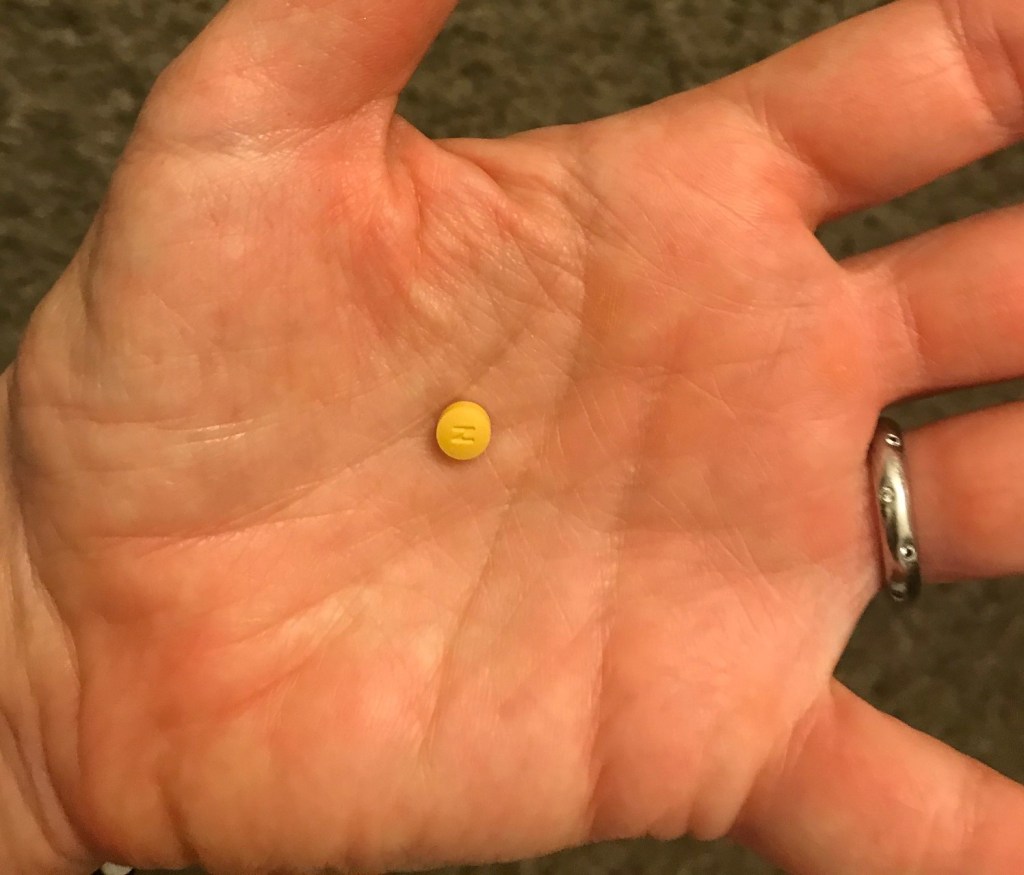
The letrozole pill looks so teeny and cute – how bad could the side effects be?

So after two years of tamoxifen, when my hormone levels suggested that I was postmenopausal and it was time to switch to an aromatase inhibitor, I stayed away from clinical literature about letrozole. I decided to give it a chance, since my oncologist felt that I had confused the effects of anxiety about taking tamoxifen with the actual effects of tamoxifen.

Okay, then. As I was leaving my oncologist’s office, letrozole prescription in hand, he added that some women complain of “joint pain”. I think he felt it was his duty to warn me.

My experience? I’m finding it harder to recover from workouts. I train with free weights and am a rower (currently, indoor) and the change in my resilience and stamina is striking. In 2018, a year after finishing up chemo, I was able to power through tough workouts and felt like I’d gotten most of my pre-cancer strength back.

Fast-forward to now, just two years later, I feel old. My joints are creakier and I’m having increased muscle pain and overall stiffness. I’m experiencing bone pain in the leg that I broke skateboarding when I was 12. Yeah, I push through workouts, but they’re taking their toll on me.

I’m fortunate to have a full complement of gym equipment at home, so the COVID-19 lockdown didn’t hinder my workouts. To get some fresh air, I incorporated more hiking into my routine, in addition to my regular workouts.

It was too much and left me with hip pain that made it difficult to fall asleep. So I took a rare break from vigorous workouts and for two weeks incorporated more gentle movements and focused on yoga, which I had been doing intermittently.

When I started ramping back up, I didn’t feel rested, I felt weak! Weights that had been easy to lift a couple of weeks before felt challenging. I had to restart the process of building my strength. You could pass it off as simply “age”, but I’m only 54, and the drop in strength and energy has felt precipitous, even demoralizing. While it’s true that I went through menopause during the last two years, it was a medication-induced menopause and I was literally shoved through the change.

Letrozole has been shown to be very effective in preventing cancer recurrence, presumably because it works to keep estrogen levels low. However, most women on letrozole are in their 60s and have been postmenopausal for a number of years. For a woman in her 50s, the aging effect of estrogen suppression has felt dramatic.

My libido dipped even lower than I’d experienced with tamoxifen, something I was warned about by my GP and gynocologist (both females). My male oncologist didn’t talk about it. I believe this is a seriously underreported side effect of aromatase inhibitors and one that many women suffer from in silence, because they don’t feel comfortable bringing it up.

Likewise, I feel my appearance changed. Now, this may simply be my perception of myself, as my post-chemo hair transitioned from super-cool and spikey to thin and limp (and, now, untrimmed!), and my eyebrows never recovered. But it’s not just in my head: A bus driver recently tried to offer me a senior citizen discount, whereas four years ago someone had told me they thought I was in my late 30s! That’s a big difference. The fact that the lack of estrogen is making me look like I’m older than I really am has become distressing:

And that difference is felt in my relationship with my family. There have been times that I’ve looked at my husband (four years my junior) and my high school-aged kids, and I feel like don’t belong with them. I feel like a stranger, an old lady that’s just hanging around. That hurts a lot.

And on my worst days, I feel dark clouds rolling in, bringing with them frustration and hopelessness. Is it letrozole or menopause? Does it even matter? Take a woman, throw her in a bag, tie it to a tree branch and then beat it with a stick. That is how I feel when I have to take a pill that does these things to me. No control, no future, lots of pain. The longer that I continue with medications like this, the more I feel that they are pointless, since I’m starting to not care whether or not the cancer comes back. And that’s the worst side effect of all.

~~~~~~~~~~~~~~~~~~~~~~~~~~~

So, this blog is about being honest about the cancer experience. But it’s also about mindfulness. I have to open the door and let the negative feelings into the room so that I can offer them compassion and a kind ear. I sit with them for a while, and eventually, I feel better.

A Funny Thing Happened on the Way to My Mammogram

Of course, maybe not funny at the time. File this under, even the best laid plans can be undone.

I had been preparing mentally for my mammogram over the past weeks, and everything was going smoothly. I had a nice mammographer, not overly chatty, very matter of fact. There were video screens on the walls of the mammography room projecting peaceful nature scenes for me to watch as I got squooshed, as if ocean waves would make me forget that my breasts were being clamped in a mechanical vice.

Then, finally, I was done and back in the intimate waiting room. There were only two of us women there (along with my husband, who, since my breast cancer diagnosis, no longer lets me get scans alone). The other woman’s mammographer came out and told her that everything looked good and she was free to go; they’d see her in a year. She happily left.

Several minutes later, my mammographer came out and said something along the lines of, “The doctor is looking at your scans. I’ll bring you to the consultation room so that we don’t have to talk out here.”

Had I not just heard the exchange between the other woman and her technician, I would have been fine. But since I’d heard it, my heart started to pound. My husband and I were led to a cozy little room…with an array of informational pamphlets about biopsies and breast surgeries on a side table, and you can imagine where my mind went.

Forget mindfulness, forget non-attachment, forget letting go of expectations. Forget three years of daily meditation. I was terrified. I tried slowing down my breathing, but it only made me feel like I was being starved of oxygen.

I unloaded all my fears on my husband, who up to that time, was not experiencing the same level of concern.

“I don’t feel good about this. Why did they bring us into this room?”

“They always bring us into a separate room.” He was right, we always went to a consultation room for the results. But the other woman hadn’t.

“Why are all those pamphlets there?” I motioned to the biopsy pamphlets on the table.

“They’re always there.”

“Why did they tell the other woman out in the hall?”

“Maybe because you’re having a 3-D mammogram so there’s more to look at, or maybe because you’re a cancer survivor, and they probably bring all the former cancer patients in…”

Yup, I was having flashbacks.

Yes, he was giving me solid, rational explanations, but I would have none of it. I was in the middle of a “fight or flight” moment and struggling to regain composure, but it was too much.

I simply could not let go of intense feelings. They were too much like what I’d experienced three years earlier, at a time when I so desperately feared bad news. And then got it. It’s difficult to articulate what that feels like to someone who hasn’t experienced it, but if you’ve been there, you know exactly what I mean.

Throughout all of this, however, there was a small, reasonable piece of my brain that was collecting data. I had noted the time when the other woman had received her news (1:20pm), so I would have a better idea of how long this was taking. I sensed the tightening in my muscles and attempted, with difficulty, to release them. I’d been frozen into a block of ice and was trying to chip my way out with a butter knife.

Then at 1:27pm, the radiologist knocked and came in.

In that first fraction of a second that I saw her face, my brain ran a scan of it, and it told me…nothing. I’m betting that doctors are honing their “stone-face” look, so as not to give a clue one way or the other. My radiologist said hi and stretched out her hand, I shook it, and she told me everything looked good.

Just like that.

The rational part of my brain exhaled, but it took hours for my body to shake off the hype. By the evening, I felt like I’d gotten a year’s-long extension on a tenuous lease. So, I thought, I have another twelve months do something useful with my life. Go!

A week later, when I told my oncologist about this mammogram episode, he explained that as a cancer survivor, I get diagnostic mammograms from now on, and those always involve a consultation with the radiologist afterwards.

Oh. I’ll try to remember that for next time.

So Far, So Good

I had a mammogram last Thursday to ascertain whether or not I was still in remission from breast cancer.

For the record, I still am, although it’s easy to say that like it’s no big deal. Not only is it a huge deal, but getting through last week was more difficult that I anticipated.

One of the basic tenets of mindfulness that I practice, with varying degrees of success, is non-attachment. This is particularly useful when dealing with cancer because the disease involves so many scary things, and as a result, so much wishing that things were different. Of course, the more you agonize over the fact that you’re going through something you desperately don’t want to be going through, the more suffering you experience.

I can personally attest to this.

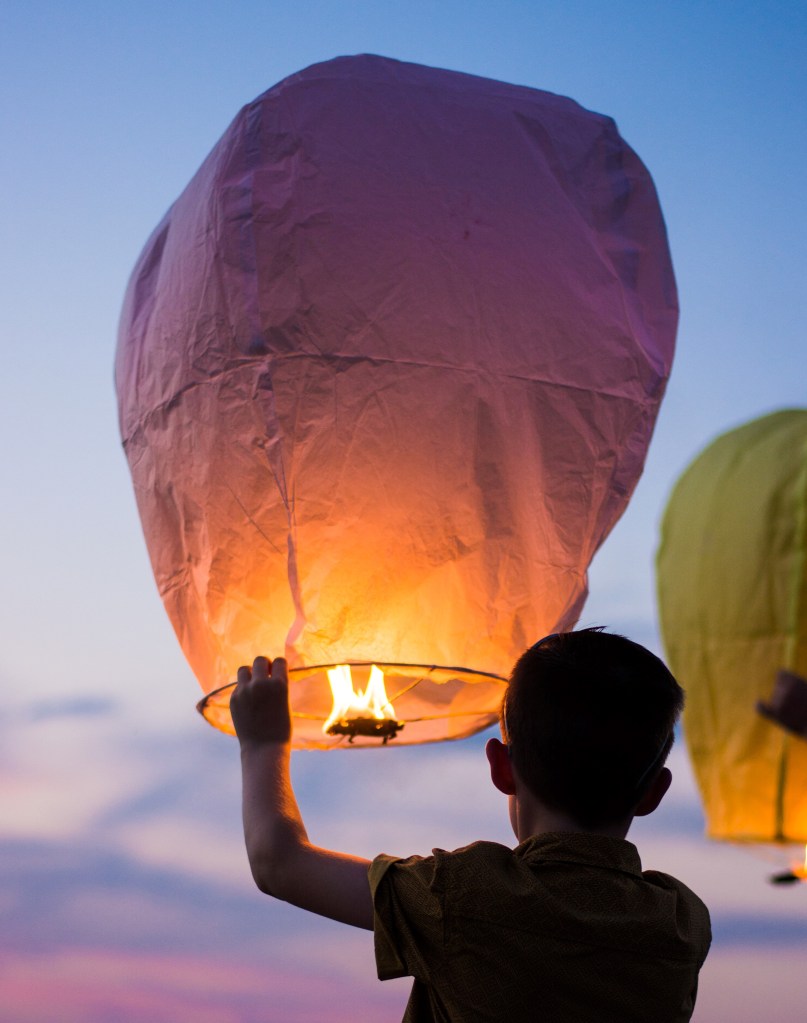
It would be great if letting go of expectations would be as simple as releasing a paper lantern, but it’s not that easy.

To counter this, I do my best to release expectations of specific outcomes. When it come to scans, every cancer patient wants to hear that tumors are shrinking and every cancer survivor wants to be told that the tumor hasn’t returned. It’s REALLY, REALLY, REALLY hard not to cling to those wants, but the harder you cling, the more painful the separation if things don’t turn out the way you hope, and even if they ultimately do, there’s fear that they might not.

So for the past several weeks, I’ve been practicing letting go. It’s funny that “letting go” is so easy to type out, but so incredibly difficult to accomplish. I’m not good at it when it comes to the things I desperately fear.

To counter my clinginess, I’ve adopted a concept I call, “so far, so good”. That means that up to this point, I’ve been able to handle everything that’s happened to me. This doesn’t mean that it’s been easy or pleasant — in fact, at times it’s been horrible — but somehow I’ve made it through to this point. And tomorrow? I cannot predict what will happen then, but right now I’m still here.

This way, I can feel positive without the burden of hopeful expectations — and the fearful possibility that those expectations will be dashed to smithereens. Of course, all of this sounds great because I’m speaking theoretically. But as we know, that ain’t real life, as I’ll illustrate in my next post…

Who Knew a Grapefruit Could Create So Much Confusion?

A few days ago, I decided to eat a grapefruit. We had gone to a Korean market earlier that day, and the citrus fruits beckoned to me with an enticing fragrance. I couldn’t resist.

So as I was finishing up one of the most delicious grapefruits that I’d had in a long time, I started thinking. Back when I was taking tamoxifen, I’d come across an admonishment not to eat grapefruit because it could interfere with absorption of the medication. But I wasn’t taking tamoxifen anymore, I was taking letrozole. Could the same be true?

I started googling, first on my phone. And as the search results came in, I had to switch to my computer because things were looking confusing. Many sites said “NO” in no uncertain terms. Grapefruit can prevent the letrozole from breaking down in the body completely, leading to higher levels remaining than could be safe.

It wasn’t that the grapefruit was hindering the efficacy of the letrozole, it was that grapefruit could set up a dangerous situation of “overdose”.

Of course, googling often results in messages that are big on warnings and short on details. So I dug further and happened upon forum posts where other women were asking the same questions.

I read the following exchange: one woman said she’d spoken to two different hospital pharmacists, both of whom had given her the okay to eat grapefruit. A number of other women (like, everyone else) chimed in on how they had unequivocably been warned to stay away from grapefruit (for the above mentioned reasons). The first woman reiterated that she had been told by HOSPITAL PHARMACISTS that she could each grapefruit with impunity…and so it went.

Do I LOOK like I know what I’m doing?

What really bothers me about this is that so many websites suggest that, it really it best to avoid grapefruit due to possible interactions with letrozole. But I slogged through the entire bloody informational insert from the manufacturer of my drug and NOWHERE did it mention that I shouldn’t eat grapefruit. There was also nothing on the bottle itself, nor did my oncologist say anything about that.

However, WebMD’s grapefruit interactions webpage, while not mentioning letrozole by name, did suggest issues with estrogen and also Cytochrome P450 substrates (of which letrozole is one, but I just happen to know that; others wouldn’t necessarily). WebMD’s letrozole info pages made no mention an issue with grapefruit. I mention WebMD mainly because many people consider it a reputable site and may go there for information.

If it truly is that dangerous to eat grapefruit while taking letrozole, why is that not explicitly stated on the container? Why would any woman think to google a random fruit or vegetable, like, “I think I’ll eat an artichoke and shiitake mushrooms today, but first I’ll do an internet search to make sure they don’t affect my medication.” Who plans their meals like that?

The bottom line is, the effect the grapefruit has depends on a variety of factors. It depends on when you’re eating and how much you’re eating, and how many days in a row. But all of that is so unsatisfying to me, who wants a concrete answer. Cancer is not about answers, however, it’s about getting comfortable with living with the unknown.

So, back to the grapefruit. Spooked, I skipped the medication that evening, although I’m sure I could have taken it and still lived through the night. I’ll ask my oncologist about it during my next visit, but I expect that his answer will be, “just don’t overdo it.”

And there’s another fragrant grapefruit sitting on the counter, which I will eat at sometime in the future, maybe half at a time. Here’s to living with uncertainty!

A Month of Fear-Driven Memories

Here we go again…

Around this time of the year, I get uneasy. It’s February, which means it’s time for my mammogram and the determination of whether I’m still in remission from breast cancer. It’s also the month when, in 2017, my life was slammed in a different direction and the best I could do was try to hang on.

February 8, 2017: Doctor’s appointment. After feeling a lump in my breast for six months (SIX MONTHS!!!), I finally met with my general practitioner to have her tell me it was nothing. Except that’s not what she said. Instead, she gave me a referral for a diagnostic mammogram and warned me not to put it off.

My own mammogram is on February 27, 2020. I don’t think I’m going to get bad news, but I just want it over.

February 23, 2017: My mammogram and diagnostic ultrasound. I had not expected that waiting two weeks for a screening would be so horrible, but my anxiety worsened with every day. I also had not expected the radiologist to come in and tell me that I had cancer. Technically, he wasn’t supposed to do that without biopsy results, but he knew what he was looking at. One in eight women is diagnosed with breast cancer at some point in her life, so he’d seen his share. Things spiraled downhill after that.

February 28, 2017: Biopsy. This procedure was anticlimactic in the sense that I knew I had cancer (see above). What I didn’t yet know was how aggressive it was. The procedure itself wasn’t bad but the mammography technicians were unable to get a clear picture of the titanium markers that the radiologist who biopsied me had inserted as surgical guides, so they took over eleven mammogram images on that left breast. The physical squeezing was miserable, but I was being squeezed mentally too. I think they eventually got the image they wanted…or maybe they didn’t. It was all a blur. I didn’t want to remember.

But now it’s three years later and I remember everything too clearly. Every February, I lose my footing on the Earth and hover for a few weeks in limbo, starting from when I make my mammogram appointment.

I’ll have an uneasy feeling until I get the “all clear” from the radiologist, or “I’m so sorry, but…”. On one end of the continuum, there’s glorious relief, on the other, mind-numbing anxiety, and I’m standing here in the middle. Most of my life now is lived in this middle ground and it’s a struggle to release expectations and attachments to how I want things to be. I’m not great at it, but I have the rest of my life to learn to deal. I hope that’s enough time.

Hi-Ho, Hi-Ho, On Letrozole We Go

Starting up again…

After giving me a six-week respite from tamoxifen and then running bloodwork that revealed I was postmenopausal, my oncologist made good on his threat to put me on letrozole, an aromatase inhibitor. This breast cancer medication is supposed to block “the enzyme aromatase, which turns the hormone androgen into small amounts of estrogen in the body. This means that less estrogen is available to stimulate the growth of hormone-receptor-positive breast cancer cells” (breastcancer.org). It’s also better suited for postmenopausal women.

Perhaps it’s more correct to say that the journey is BACK on. I enjoyed my time off tamoxifen, but I really didn’t notice much of a difference in myself whether I was taking it or not, suggesting that maybe what I thought were side effects, weren’t. So I’m willing to humor my oncologist and try an aromatase inhibitor.

Not gonna lie, I really did not want to go on yet another medication, but for this appointment, I left all the journal articles at home and put away the boxing gloves. I promised my oncologist that I would stay off the forums, stay off PubMed, quit overthinking things and give letrozole a chance.

The reason? My oncologist thinks that my earlier frustration with tamoxifen was, to put it bluntly, in my head. And my clinical counselor suggested that what I complained of could be explained by anxiety. But I swore that my memory and focus issues started with tamoxifen.

You know what? I’m not so sure now.

The fact is, everything that I was experiencing could have been caused by anxiety (or menopause). And even more striking were the things that I didn’t experience. Not only did I not have significant hot flashes (maybe a “warm flush” here or there, easily countered by taking off a sweater), I never had night sweats. Heck, I had more night sweats before my cancer.

No weight gain, either, which had been another big concern of mine. I’ve been disciplined in maintaining healthy fitness habits throughout my adult life, probably to the point that most people wouldn’t tolerate. Tamoxifen didn’t manage to mess with that, which was extremely gratifying.

While I really want to peg the concentration problems, distractability, flagging libido and other negatives on estrogen-blockers, a retrospective look at my emotional history suggests that (1) I’m highly suggestible (I need to stay off the internet!), (2) there have been loads of anxiety-amplifying events in my life, even before cancer, that I haven’t handled well, and (3) I would be better off shutting up, taking the pill and working on getting my mental state in order.

I mean, I already knew most of this. But some things need to hit me between the eyes a number of times before they actually register.

Wow, dizziness and impaired ability to drive are bad enough to merit a prominent place on the label? Yay! I’m going to pretend that this is a sleep inducer that will leave me better rested. I’ll let you know if that works.

So, while my oncologist warned me about “a little joint pain” (eek!), I’ve avoided anything but a cursory glance at what I might experience on letrozole, besides what reactions would necessitate calling the doctors.

We’ll see how bad these side effects really are.

~~~~~~~~~~~~~~~~~~

A FINAL NOTE – According to what was written on the bottle, this stuff can cause dizziness and impair my ability to operate a vehicle. Seriously? I didn’t expect that, but here’s what I’m going to do with that tidbit of information: I’m going to view letrozole as a reason to get to bed earlier, since I’ll obviously have to take it in the evening. And I’m going to tell myself that this is going to help me sleep. Who knows, maybe it will?

What No One Told Me About Cancer and Hair Regrowth

More than two years after finishing chemo, after being afraid my hair would not grow back, and after being delighted with the way it did…I’m experiencing follicular drama, once again.

Once chemo was over, my sleepy follicles took their time getting roused into action. To say that I worried would be an understatement. I was still caught up in the unfairness of being smacked down by breast cancer. Confronting the possibility that after enduring the nastiness of cancer treatment, I might not get my hair back? That was too much.

Well, if you’ve read my posts on hair, you’ll know that my hair finally did come back. And there was much rejoicing.

And that’s where my hair posts stopped. But as happens with these kinds of things, that wasn’t the end of the story.

While still bald, I had been fed reassuring anecdotes by well-meaning supporters about hair coming back even better than before, lush locks that served as well-deserved rewards for undergoing the anxiety and strain of cancer diagnosis and treatment.

But as much as cancer patients feel like they don’t know what’s going on, those around them have even less of an idea. They want you to “stay positive” at all costs, so they overload you with lots of good news.

The forest isn’t as dense as it used to be.

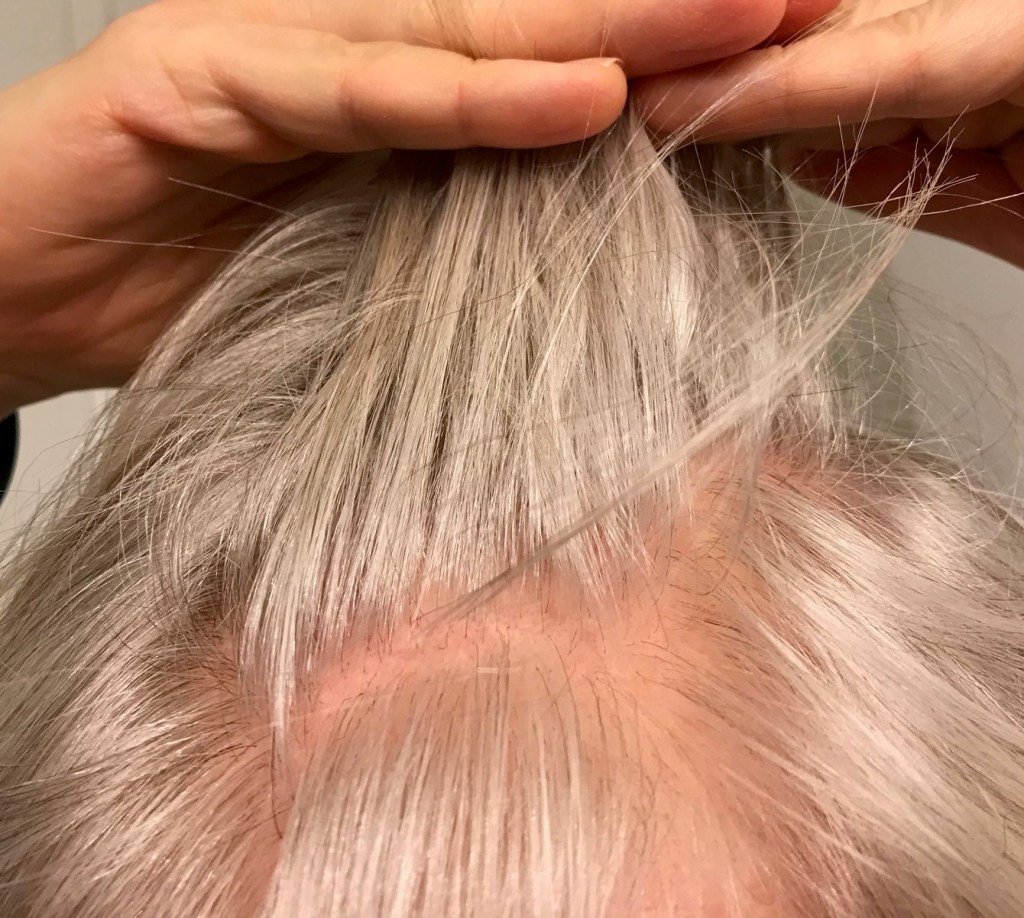
By now you can probably guess where I’m going with this. Because in Spring 2019, things started changing. Within a few months, my uber-cool spikey rockstar hair lost fullness as my strands thinned. Then, I saw “bald spots”.

So, let me explain how I define “bald spots”: these areas have hair, but due to the color (um, WHITE) and thinness, the hair seems translucent, even transparent. And along the part? You can’t see the roots well at all.

My reward for enduring cancer is invisible hair.

My hairstylist confirmed that the hair that comes back in after chemo is different from the hair that eventually settles in. And mine had settled.

Tamoxifen also played a role, since choking off estradiol and moving into menopause will age both you and your hair, particularly if you are premenopausal going into treatment, as I was. So this should have been expected, but in the hustle and bustle of all the other little things, like, oh, wondering if you’re going to survive the ordeal, no one really talks about the fact that there will be other changes that take place.

And now, I’ve been off tamoxifen for almost six weeks, but can’t tell whether there’s been any regrowth, not that I expect any. I meet with my oncologist this Tuesday and you can bet your panties he’s going to prescribe an aromatase inhibitor for me, so the pharmaceutical depression of estrogen will continue.

I am dealing. Mostly. Am I happy about this? Of course not. The last few years have felt like running a gauntlet of misery, but one where I’m only hobbled and not completely taken out. Given that, I’m ashamed of complaining, as there are many others doing so much worse. But not ashamed enough to stop writing about it, as this is my reality and it affects me. If I’m going through this, there’s a good chance that many others are too.

I’m supposed to be moving on and leaving cancer behind me, right? But like an annoyingly nosy neighbor, it keeps waving at me through my kitchen window, reminding me that it’s living next door.