Aging Muscle: After Cancer Treatment and Menopause [PHOTOS]

(Title image: Photo by Samuel Girven on Unsplash)

This is a reality check to demonstrate how, even with the greatest of intentions and planning, coupled with a serious love of exercise, you can’t turn back time.

And that’s okay.

But first, the comparison. Taken from this previous post, here’s a photo right before I started chemotherapy for triple-positive breast cancer, April 27, 2017:
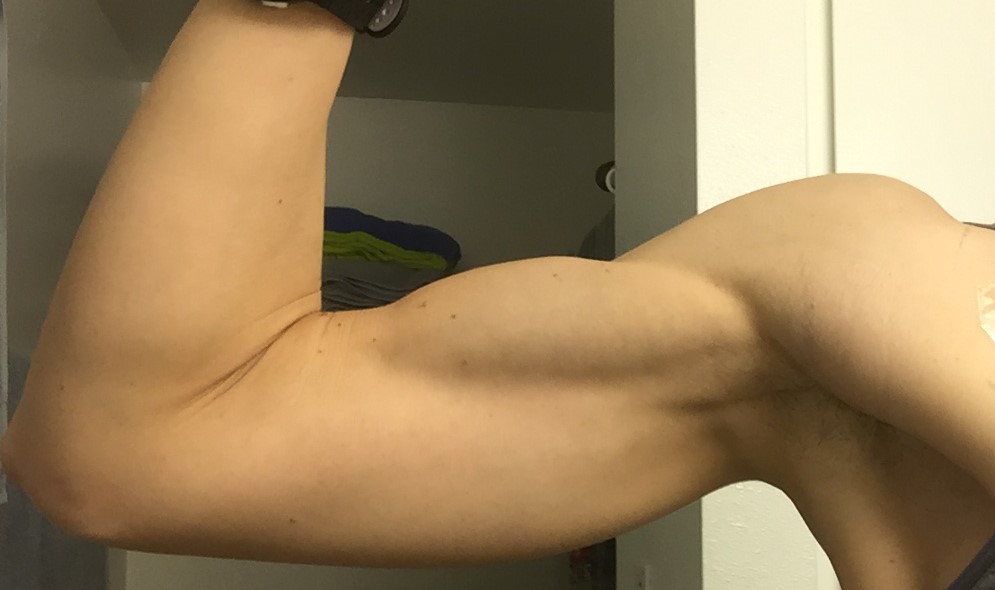
April 27, 2017: I was exercising with a vengeance

After finishing chemo, radiation and Herceptin, AND after two years of estrogen-lowering Tamoxifen and a year into Letrozole, I’d lost some muscle even though I was lifting as heavy as I could.

This photo is from December 11, 2020:

December 11, 2020: Still exercising with a vengeance, but…

While I was still working out hard, endocrine therapy and menopause took their toll on my progress. Interestingly, estrogen is not simply a “feminizing” hormone; in women, it also helps preserve both muscle and bone mass. Menopause puts the breaks on estrogen production.

This becomes worrying as we age because less estrogen means weaker muscles which can lead to a greater risk of falls and chance of bone fractures. Endocrine therapy, which is designed to decrease the estrogen in the body in order to lessen the recurrence risk of hormone-sensitive breast cancer, adds to the problem.

And more than seven years after the top photo, this was taken today before posting, September 23, 2024:

September 23, 2024: New phone, different lighting (sorry!), more wrinkles, same moles. I’m working hard just to keep what I have, but loss is inevitable.

I’m still lifting but the entire landscape of my workout routines has changed. I have to give myself more recovery time between strength training sessions. I am much more susceptible to injuries—seriously, I can tweak something by turning or stretching out in a weird way. I have neuropathy in my feet which makes getting up on my toes (such as in plank or doing lunges) painful.

We recently had an intense heat wave: for a week the temperature inside our apartment didn’t fall below 80F degrees, and during the day it climbed as high as 95F degrees (again, INSIDE our apartment). I managed to work out through a chunk of that week, but the heat eventually got to me. And recovering from that took almost another week.

So, the spirit is willing but the flesh is barely managing at times.

However, there is an upside to being 58 years old with a lifetime of fitness experience. I still love working out. Even tough training sessions are manageable because they feel like an awesome accomplishment, and I feel bouyed afterwards.

Even on the days that I don’t do a formal workout, I make sure that I’m moving as much as I can. Fitness is an integral part of my life, even though it looks different now than it did seven years ago. In the post that I reference earlier, at the very bottom I wrote about how yoga was becoming a larger part of my life.

And that’s continued. Through my yoga teacher training in 2022 and upcoming yoga4cancer advanced training starting in January 2025, this direction feels so right for me.

While I don’t plan to give up my gym sessions anytime soon, yoga has given me a path to physical and mental fitness as I age. I am gradually moving into a more meditative approach to exercise that is less about intensity and more about staying healthy by integrating mind and body.

Victims of Our Own Success: Premature Aging in Cancer Patients and What You Can Do About It

So this isn’t the kind of news you want to see. But there’s still hope…

A scientific journal article from 2017 (Cupit-Link et al., 2017, ESMO Open) describes the toll that cancer treatments can take on the patients subjected to them.

After being told you have cancer and deciding to proceed with the treatments that will offer you the best chance of survival…it’s disheartening to learn that many of those same treatments can accelerate aging, causing damage to your DNA, heart disease, hearing loss, cataracts, liver and kidney diseases, brittle bones, lowered immune response and other cancers (!) among other issues, depending on the type of cancer and treatment (see WebMD article).

The treatments that can save our lives from cancer may hasten our demise from age-related factors.

This is a problem resulting, ironically, from the success of treatments and extended lifespan of cancer survivors. Back when cancer was deadly with a low survival rate, no one was too concerned about the state in which survivors were left in; simply surviving the cancer was enough. Now that people are beating their cancers at greater rates, quality of life has become a much bigger issue.

While the most striking detriments are seen in childhood cancer survivors, accelerated aging occurs in most former cancer patients.

Doctors and researchers are taking note. At the time of this scientific article’s publishing in Dec 2017, there was already discussion on how to “de-escalate” cancer treatments as a way to decrease the amount of cellular damage to patients.

On a personal level, I chose an effective drug for my HER2+ breast cancer (Herceptin) over a more effective drug (Perjeta) that carried a risk of greater cardiotoxicity. I made that decision because although I was terrified of cancer, I was also afraid of what lasting effects the drug would have on me once the treatments were over.

Cancer treatments are strong but healthy living can help mitigate their negative effects.

But even if you didn’t have the opportunity to make such a choice, there’s still something that you can do. The authors of that 2017 paper noted that cancer survivors can take back some control over their health by adopting or continuing those healthy lifestyle habits that should sound familiar by now: not smoking, limiting alcohol, exercising regularly and eating a healthful diet.

To that, I would also add, managing your stress levels, the importance of which has been demonstrated on a cellular level, and getting optimal amounts of sleep.

Improving longevity is a hot field for research as scientists work to determine what aspects of one’s lifestyle show the greatest promise in keeping the body young. This topic is complex and new data is coming in on a regular basis, so I won’t delve into details here, but it stands to reason that being sedentary and eating a high-sugar, high-processed diet is not going to do you any favors.

Just as cancer treatments may have a negative effect on overall health, you can win back some lost ground by making healthy, informed decisions on diet and exercise. No one wants to limit their cancer treatment options, so this is one form of insurance that you can give yourself. No matter what else happens, a healthy lifestyle will benefit your quality of life. And that is an improvement that is yours to keep.

(Almost) Six Months on Letrozole

WARNING: IF YOU ARE STARTING ON AN AROMATASE INHIBITOR, I highly recommend that you not read this and instead give yourself the chance to gauge the medication’s effects without being influenced by someone else’s experiences. Note that I started letrozole just out of menopause, so my side effects from this drug have been more dramatic than they might be for a women who’s been postmenopausal for longer.

First a bit about aromatase inhibitors: according to breastcancer.org, “Aromatase inhibitors work by blocking the enzyme aromatase, which turns the hormone androgen into small amounts of estrogen in the body. This means that less estrogen is available to stimulate the growth of hormone-receptor-positive breast cancer cells.” Think of this as starving a hormone-positive cancer of its food.

Aromatase inhibitors have been shown to be more effective than tamoxifen, with fewer serious side effects, although they are certainly not risk-free as they can cause “more heart problems, more bone loss (osteoporosis), and more broken bones than tamoxifen.” (breastcancer.org)

When it was time to start letrozole, I took a different tack than when I began tamoxifen. For the latter drug, I did all the research I could, researching relevant studies, digging into possible side effects and visiting lots of forums to learn about what other women were experiencing.

I wish I hadn’t. I think all the negatives affected my perception and made me anxious about taking the medication.

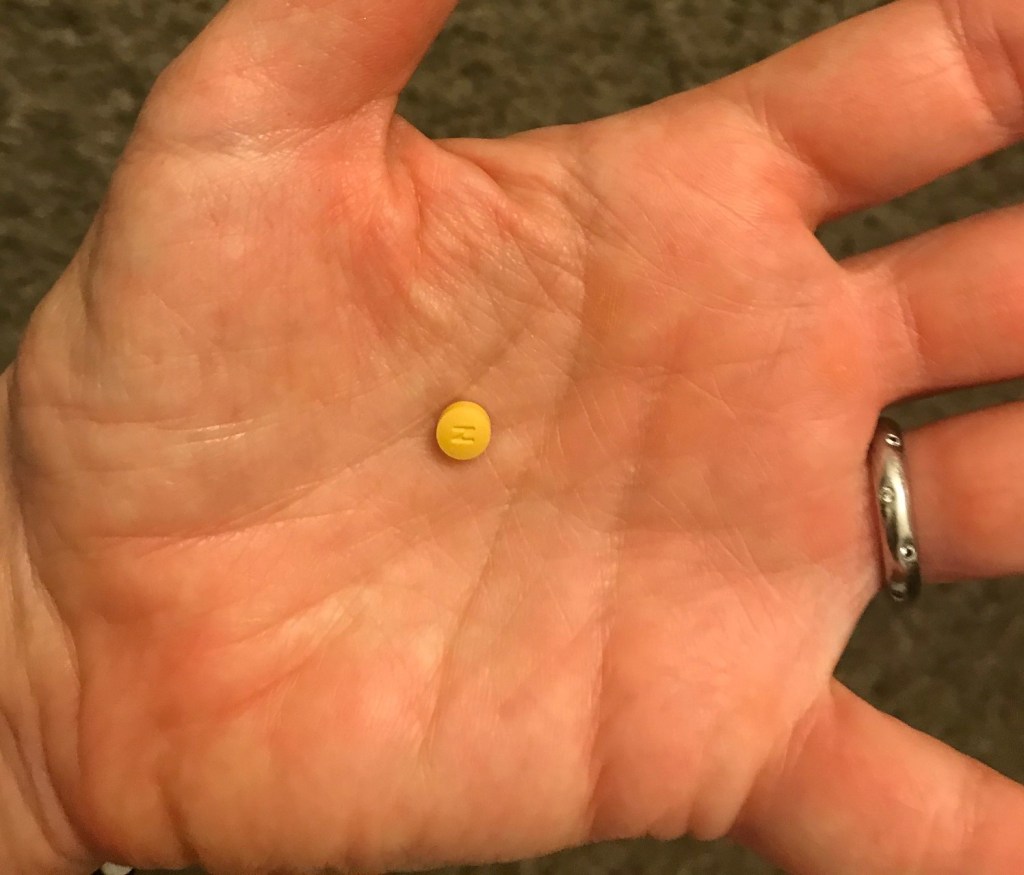
The letrozole pill looks so teeny and cute – how bad could the side effects be?

So after two years of tamoxifen, when my hormone levels suggested that I was postmenopausal and it was time to switch to an aromatase inhibitor, I stayed away from clinical literature about letrozole. I decided to give it a chance, since my oncologist felt that I had confused the effects of anxiety about taking tamoxifen with the actual effects of tamoxifen.

Okay, then. As I was leaving my oncologist’s office, letrozole prescription in hand, he added that some women complain of “joint pain”. I think he felt it was his duty to warn me.

My experience? I’m finding it harder to recover from workouts. I train with free weights and am a rower (currently, indoor) and the change in my resilience and stamina is striking. In 2018, a year after finishing up chemo, I was able to power through tough workouts and felt like I’d gotten most of my pre-cancer strength back.

Fast-forward to now, just two years later, I feel old. My joints are creakier and I’m having increased muscle pain and overall stiffness. I’m experiencing bone pain in the leg that I broke skateboarding when I was 12. Yeah, I push through workouts, but they’re taking their toll on me.

I’m fortunate to have a full complement of gym equipment at home, so the COVID-19 lockdown didn’t hinder my workouts. To get some fresh air, I incorporated more hiking into my routine, in addition to my regular workouts.

It was too much and left me with hip pain that made it difficult to fall asleep. So I took a rare break from vigorous workouts and for two weeks incorporated more gentle movements and focused on yoga, which I had been doing intermittently.

When I started ramping back up, I didn’t feel rested, I felt weak! Weights that had been easy to lift a couple of weeks before felt challenging. I had to restart the process of building my strength. You could pass it off as simply “age”, but I’m only 54, and the drop in strength and energy has felt precipitous, even demoralizing. While it’s true that I went through menopause during the last two years, it was a medication-induced menopause and I was literally shoved through the change.

Letrozole has been shown to be very effective in preventing cancer recurrence, presumably because it works to keep estrogen levels low. However, most women on letrozole are in their 60s and have been postmenopausal for a number of years. For a woman in her 50s, the aging effect of estrogen suppression has felt dramatic.

My libido dipped even lower than I’d experienced with tamoxifen, something I was warned about by my GP and gynocologist (both females). My male oncologist didn’t talk about it. I believe this is a seriously underreported side effect of aromatase inhibitors and one that many women suffer from in silence, because they don’t feel comfortable bringing it up.

Likewise, I feel my appearance changed. Now, this may simply be my perception of myself, as my post-chemo hair transitioned from super-cool and spikey to thin and limp (and, now, untrimmed!), and my eyebrows never recovered. But it’s not just in my head: A bus driver recently tried to offer me a senior citizen discount, whereas four years ago someone had told me they thought I was in my late 30s! That’s a big difference. The fact that the lack of estrogen is making me look like I’m older than I really am has become distressing:

And that difference is felt in my relationship with my family. There have been times that I’ve looked at my husband (four years my junior) and my high school-aged kids, and I feel like don’t belong with them. I feel like a stranger, an old lady that’s just hanging around. That hurts a lot.

And on my worst days, I feel dark clouds rolling in, bringing with them frustration and hopelessness. Is it letrozole or menopause? Does it even matter? Take a woman, throw her in a bag, tie it to a tree branch and then beat it with a stick. That is how I feel when I have to take a pill that does these things to me. No control, no future, lots of pain. The longer that I continue with medications like this, the more I feel that they are pointless, since I’m starting to not care whether or not the cancer comes back. And that’s the worst side effect of all.

~~~~~~~~~~~~~~~~~~~~~~~~~~~

So, this blog is about being honest about the cancer experience. But it’s also about mindfulness. I have to open the door and let the negative feelings into the room so that I can offer them compassion and a kind ear. I sit with them for a while, and eventually, I feel better.