Breast Cancer: Know When to Say When

(Title image: Photo by Marius Serban on Unsplash)

This is going to be short because I’m on the cusp of moving my family to a new apartment…and that’s going to take more work now that one of our cars is finally having its damage repaired.

So this is a gentle reminder to slow down and look around once in a while. Life’s obligations can push us like a bulldozer and we might not notice that we’re worn out until something happens that forces us into a mini-vacation.

Something, perhaps, like chemotherapy.

Who needs some love? You do.
(Photo by Mayur Gala on Unsplash)

And if you need a cancer diagnosis (or a broken bone or the flu or…) to give you a break from the pressures of work and family, then I think we can all agree that your mental health needs more love than you’ve been giving it.

Yes, easier said than done. But there are little breaks you can take. A 10-minute body scan meditation or guided breathing practice. A matcha tea break where you focus on the movements of your hands as they prepare your cup. Staring out the window and counting trees/people/cars.

It doesn’t have to be a pricey spa day. You can have a spa inside your head with a phone app and a set of headphones. You just need to care enough about yourself to allow this.

Believe me, I care about you and I don’t even know you. You are the whole reason why I started this blog and why I keep it going, even eight years after my diagnosis. I hope it helps you remember that you are worth being cared for. ❤

Breast Cancer: Life in the Breakdown Lane

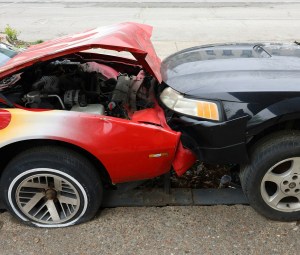
Last week, I walked out to my car, which had been parked on the street, to find that someone had hit it. The driver’s side mirror was ripped off, the wheel cover was smashed and the side was dented.

Two things immediately became evident: 1) we were lucky that the person responsible had left us a note with their phone number, (2) we were going to have to completely restructure our travel expectations for the foreseeable future.

While I found a lot to be grateful for in the situation, it also reminded me of a traffic analogy that I have used to describe what happens after you’re handed a cancer diagnosis.

Diagnosis? That’ll throw a wrench into your current plans.
(Photo by Scott Greer on Unsplash)

Being told you have cancer is like getting into a traffic accident: you’re moving along with everyone else in their cars, focusing on getting to where you need to be, and then all of a sudden *CRASH*.

You pull your car over to the side, still stunned by the collision, and take stock of the damage to both your vehicle and yourself.

And as you stand there, all that traffic that you were moving along with has left you behind. You are no longer part of the natural flow of things. All the plans that you had to be somewhere and expectations for what you were going to do this week and next…all of that stops.

You hear the noisy din of traffic and the “Dopplered” sounds of cars zooming by, feeling the whoosh of air as they pass. But when there’s a lull in the traffic, the quiet brings on loneliness, as if the other travelers have moved on and you’ve been forgotten.

The rest of life whooshes by you.
(Photo by Viktor Kiryanov on Unsplash)

Now you have to rework your life. Instead of taking your ability to move through the city for granted, you’re scrambling to figure out what you’re going to have to cancel, how you’ll get to where you need to go and what the immediate future will look like until you get your car back in working order.

In the meantime, you see everyone else progressing along, as they have been, completely unaware of what life looks like in the breakdown lane. Having pleasant conversations, arriving at work on time, meeting with business associates, eating from cafeteria salad bars without the need to double disinfect their lettuce and tomatoes.

Not needing to schedule multiple appointments or surgeries or infusions or radiation treatments. It is such a different life!

~~~~~~~~~~~~~~~~~~~~

Shortly after receiving a cancer diagnosis there’s so much going on that it can be difficult to articulate everything you’re feeling, and those around you might have a hard time relating. I’ve found that this analogy can be helpful in relaying what the experience is like.

See if this works for you too.

Breast Cancer: Finding Gratitude as a Cancer Patient

(Title image: Photo by Diego PH on Unsplash)

I’m not going to lie, gratitude can be difficult to navigate as a cancer patient.

When you’re mourning your diagnosis and trying to hold yourself together from the shock, the last thing you want is for some sunny person to tell you to think about everything you’re grateful for.

At such a time, it can be very difficult to think of anything. I, personally, felt a lot of anger, bitterness and even betrayal after I was told I had breast cancer. It wasn’t a great set of feelings to sink into, but that was my reality.

While I tried doing gratitude practices, in the beginning the process was miserable and felt “fake”. The whole notion of being grateful struck me as forced and required me to think about things I didn’t want to focus on.

Tough to be grateful? Make a list of what doesn’t suck.
(Photo by Hannah Olinger on Unsplash)

However, what helped me was making a list. It started out as a list of things about which I could say, “well, at least this didn’t happen” and slowly shifted to “well, this thing made my life easier”. It enabled me to find positives that I had otherwise overlooked.

I wasn’t grateful for getting cancer. But having bosses whose wives had survived breast cancer made it easier for them to understand what I was going through…and also to offer some useful advice (as did their wives).

I didn’t have the luxury of not working throughout treatment, but I was glad that a series of big projects had ended the previous year, so I didn’t have a huge workload waiting for me at the office. And while I really wished I could have had a full-time income, my part-time position meant that I had an easier time shifting my schedule to accommodate appointments and days off following infusions.

Additionally, it was fortunate that the region in which I live had a number of highly lauded cancer centers. And my cancer center offered free counseling by excellent therapists specifically trained to work with cancer patients.

It was also a plus that the summer during which I had my chemo infusions ended up being mild—luckily, since we didn’t have air conditioning—and my fear of enduring nausea through hot summer days never became a reality.

My list got longer and longer.

Opening the door to gratitude soothes the overwrought mind.
(Photo by Pedro Ramos on Unsplash)

So little by little, I started to pick through all the things that ended up better than they could have been. I didn’t call it “gratitude” at first because I was still bitter and refused to accept that there was anything to be grateful for. But the more things that came up that made me realize how much better the situation had turned out…the easier it was to finally come around to the idea that, even in the midst of the crappiest-thing-that-could-happen, there truly were things that I could l squeeze out a bit of gratitude for.

It took time. But when I loosened my grip on bitterness, I allowed in a swell of gratefulness, so much so that it was almost overwhelming how, if I had to get cancer, if it truly had to happen, there were so many things that had gone right. I started feeling so much better emotionally.

So my advice to anyone who wants to try out that “gratitude stuff” to see why it’s so great for your mental health: be gentle, start slowly and don’t tell anyone you’re doing it. This is a private practice for you. When you finally allow yourself to zero in on those little things that aren’t so bad or are kind of fortuitous given the situation, you may find that they buoy your spirits.

That’s all it takes. Not need to rush. Let the appreciation come to you.
Breast Cancer: Surviving the High Cost of Treatment

(Title image: Photo by Alexander Mils on Unsplash)

Since we are now in the Pink Season, otherwise known as Breast Cancer Awareness Month, in the midst of encouraging mammograms and regular clinical exams, it’s also useful to consider a very important barrier to obtaining cancer treatment and services in the United States: cost.

This is particularly distressing because breast cancer research has been very well-funded and treatments are quite effective for most forms of the disease, with great strides also having been made in understanding some of the most aggressive variants.

But according to a 2021 memo from the the American Cancer Society’s Cancer Action Network, 61% of (all) cancer patients describe paying for their treatment to be “somewhat or very difficult”.

It is striking that financial difficulty affects the majority of cancer patients. Obviously, the lower the family income, the greater the hardship, with 80% of patients having to “make financial sacrifices to cover their health care expenses, including 44% who’ve dipped into their savings, 36% who’ve gone into credit card debt to pay medical bills and nearly a quarter who say they did not schedule or cancelled an appointment or procedure because of cost.”

None of this will come as a surprise to you if you’ve ever had to pay for healthcare in the United States. Suffice it to say, we have a problem with affordability here.

Aside from the stressors of the disease and treatment side effects, many people have the added anxiety of not being able to afford the cost of cancer care.
(Photo by Woliul Hasan on Unsplash)

I was one of the very lucky ones in this regard, as my husband and I both work for non-profit research institutes with generous benefits. At the time of my diagnosis, we were enrolled in an employer sponsored PPO (Preferred Provider Organization) insurance plan with a per-person, out-of-pocket yearly maximum of $2000. When we initially signed up for the coverage, I thought the increased cost of the PPO was unnecessary as we were all quite healthy. However, after my diagnosis, I was struck by how blessed we were to even have this degree of health coverage as an option.

Clearly, my family is in the minority in our good fortune. We were able to avoid the financial fears and burdensome debt, even bankruptcy, that affect so many other cancer patients. Cancer care is devastatingly expensive, particularly for those with little to no insurance coverage, or insurance coverage with extremely high deductables.

What options do you have if you find yourself delaying care due to finances?

*Start with your cancer center’s social workers. They have experience in helping patients and survivors who are dealing with financial hardship and can point you in the right direction.
* Visit the Cancer Financial Assistance Coalition (CFAC) website, which has a database that you can search according to your cancer type and financial needs to find a list of charitable organizations that can offer support for your situation.
*For medicines that are not covered by insurance, pharmaceutical companies may offer deep discounts on their drugs. Reach out to them directly. They would rather sell you a heavily discounted medication than not make a sale at all.

Even when it seems that your luck has run out, there are still options available to ease your financial burden. Unfortunately, the healthcare system might not change anytime soon, but please know that supportive charities can to lend a hand as you make your way through the cancer maze.