Elle Macpherson’s Cancer Story and the Missing Tumor Info

(Title image: Photo by Pierre Bamin on Unsplash)

Following on the heels of my Elle Macpherson post last week, I wanted to fill in some missing info…

To back up, former supermodel Elle Macpherson revealed that she took the holistic route when deciding to treat her breast cancer in 2017. However, most of the news stories that reported and offered opinions on her choices left out some critical information, as noted by this article in The Guardian (“Crucial information missing in Elle Macpherson breast cancer story, experts warn“). In this case, that information makes a big difference.

While it seems that Elle’s cancer was HER2-receptor positive, which suggests a more aggressive cancer, it was considered “non-invasive”, meaning it was contained within the mammary ducts. Often, this is referred to DCIS, or Ductal Carcinoma In Situ, and at this point those of us with personal knowledge of the disease will knowingly go, “OOooooooh.”

This is basically a “precancerous” mass of cells and often the treatments are more conservative. It’s considered stage 0. Yes, it becomes more dangerous if you do nothing, but clearly Elle did something: she had it removed.

DCIS is a stage 0 cancer, which doesn’t necessitate the most aggressive treatment.
(Photo by Bernard Hermant on Unsplash)

Beyond that, there are other conventional treatments offered, depending on how aggressively you want to go. This introduces the issue of potential overtreatment, which is gaining more attention among physicians and the public. It’s easy to throw the kitchen sink at anything that looks like cancer, but that increases the chances that patients unnecessarily experience damaging side effects. Not everyone needs to be smacked that hard with treatment.

So, given that Elle’s cancer was DCIS, her holistic treatment starts looking less extreme. In perspective, for stage 0, a radical mastectomy topped off with chemotherapy and other treatments leans towards overkill with minimal benefits, potentially affecting quality of life. So this is less about the types of Elle’s holistic treatments and much more about her cancer not requiring the same level of aggressive action as stage 1+ tumors.

However, very few of the news stories mentioned this. As a matter of fact, my own blog post last week might have confused the issue—I was writing without having all the facts. This underscores the importance of learning as much about your cancer as you can and understanding that your version of the disease may be very different from that of a friend with cancer.

In light of this, the pile-on regarding Elle’s treatment seems unfair…but only as it regards her personal situation. Because all the opinion pieces that came out against her choices, including my post, did so for a critical reason: that Elle’s story (“follow your heart”) may turn a cancer patient away from much-needed and beneficial treatment that can prolong their lives.

Get the facts, talk to your team, understand what you’re up against and what your risks are—yes, meditate, pray, exercise, change your diet. But don’t try to wish your cancer away.

~~~~~~~~~~~~~~~~~~~~

To clarify, Elle did indeed decline even less radical treatments such as endocrine therapy, so one could argue that she’s still taking a risk. We don’t have a crystal ball to determine whether this was the wisest choice, Elle believed it was the right choice for her.
The Dangers of Elle Macpherson’s Cancer Treatment Choices

(Title image: Photo by Naser Tamimi on Unsplash)

Supermodel Elle Macpherson recently made the news with an interview with the Australian Women’s Weekly magazine when she revealed her breast cancer diagnosis.

She was diagnosed in 2017 (as I was!), so the fact that she’s here and talking about it suggests that her treatment worked.

But what was her treatment? According to the article, following diagnosis Elle consulted with 32 doctors (and experts, although it’s unclear in what) and ultimately decided to follow a holistic treatment path. In her own words, “an intuitive, heart-led, holistic approach”.

She decided to forego a mastectomy in favor of a lumpectomy (as I also did) but also dispensed with the conventional chemotherapy, radiation and hormone therapy (I went the conventional route).

So let me clarify some things here: Elle had the lump removed. If the cancer had not spread (which presumably it hadn’t) AND no rogue cancer cells had gotten out AND the surgeon confirmed “clear margins” upon excision of the tumor, it’s certainly possible that all evidence of the cancer was removed from Elle’s body with that surgery.

As we survivors know, everyone’s cancer is different. That’s why we discourage comparing tumors or offering advice. What works for one person may not for another because so much depends on the state of the individual…and probably on a lot of other factors that we are not even aware of, even with present day advances in cancer treatment.

Elle has even stated that her treatment is not for everyone. Who knows, she might have said this for legal reasons…because you can see what’s going to happen. While Elle, as a former supermodel, businesswoman, etc., might have access to whatever specialists and level of care she desires, most of us will not.

Do you feel lucky? Rejecting conventional cancer treatments in favor of clinically unproven ones can be a big gamble.
(Photo by Chris Liverani on Unsplash)

Elle asserted: “I want to help and encourage others to follow their heart and give things a go.” Sadly, when it comes to something as slippery as cancer, following our hearts is not always the best choice of action, no matter how much we want it to be.

My concern is that a newly-diagnosed breast cancer patient, fearful of the admittedly-harsh treatments that modern medicine offers, might decide to take Elle’s path (“she did it so I can too!”). But unless this person is independently wealthy or otherwise connected, they will have to cobble together a questionable plan with minimal support, and possibly fall prey to unscrupulous players looking to make a buck out of someone’s desperation.

And in these days of growing suspicion of science and the advice of doctors—brought on by pandemic-related missteps or perceived draconian measures—the chance of patients rejecting well-worn treatments is even more likely. Statistically, this would result in more lives lost to the disease.

When I made my own treatment choices, I didn’t go with the harshest stuff that my oncologist offered, opting for very effective (and, yes, cardiotoxic) Herceptin immunotherapy instead of lobbying my insurance to cover the even-more-effective (but even more toxic) Perjeta for my HER2+ cancer. I also had to cut my hormone therapy short by a number of years due to how it affected my ability to exercise, which has also been shown to have a strong effect on preventing cancer recurrence. These were measured choices, as it’s clear that Elle’s were.

At the same time, in the back of my mind I know I can’t say I did everything I could to blast my cancer into submission. But I do feel that taking everything into consideration, I did enough. My oncologist agrees.

As far as Elle’s treatment is concerned…I also did a number of things that she did, including meditation, exercise, therapy (our cancer center was very supportive of complementary therapies) and more. I cannot say how much conventional treatments vs. complementary ones contributed to my remission, but I assume each played a role. And the combination gave me peace of mind, which I would not have had, had I chosen only alternative therapies.

Ultimately, I hope we get to the point where we can eliminate the most toxic treatments and heal ourselves more gently. Ideally, we’d even prevent cancer. Huge strides have been made in cancer treatment, but we are not there yet. Every time we decline a proven treatment, we roll the dice. I’m hoping that Elle’s story does not unnecessarily put people with fewer resources at risk.

Fighting Depression with Exercise

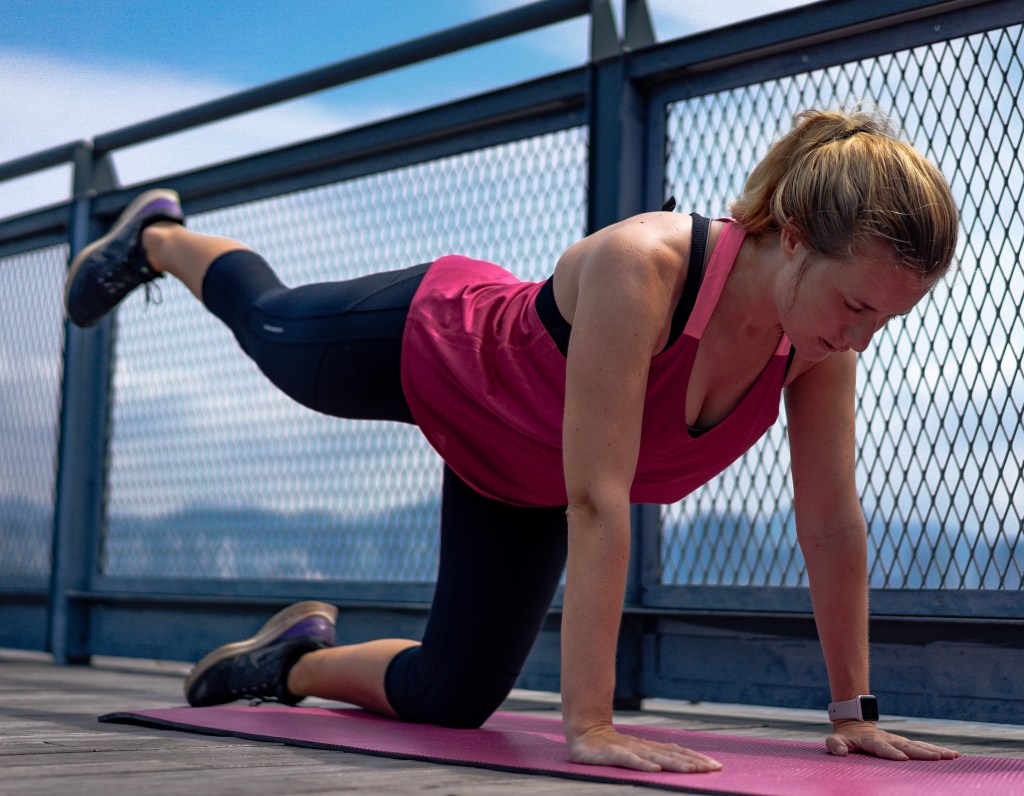
If you’ve hung around this blog for a while, you know that I am a firm believer that exercise will make just about anything better.

That was certainly the experience I had with cancer, as maintaining my fitness was critical to lifting my spirits. A nice workout was the best way for me to shake off the remaining side effects of a chemo infusion.

Moving makes you feel better.

That’s why I’m not completely surprised that a group of researchers (Heissel et al., 2023, Br J Sports Med) are suggesting, based on a meta-analysis of 41 studies comprised of a total of 2264 participants, that exercise be used as a primary treatment for depression. That means they feel the results of their research demonstrated exercise to be just as effective as psychotherapy and medication.

The study authors conclude boldy, “Exercise is efficacious in treating depression and depressive symptoms and should be offered as an evidence-based treatment option focusing on supervised and group exercise with moderate intensity and aerobic exercise regimes.” [Emphasis mine]

However, while no one is arguing against the importance of exercise in helping individuals treat their depression, an article appearing in The Washington Post cites other researchers who feel that it may be premature to use exercise as a primary treatment for people suffering from clinical depression and suggest that additional studies should be conducted.

More research needs to be done to determine the specifics of how to use exercise to lift depression.

In particular, as a meta-analysis, although the total number of research participants was large (2,264), the individual studies on which the analysis was based tended to have smaller participant sizes, due in no small part to the fact that running studies like this can be costly.

There are still a number of questions that need to be addressed, such as exercise type, frequency, intensity and amount. Depression is different for everyone both in scope and origin, and an “exercise prescription” should be personalized for the individual. Still, no one is disupting that any form or length of exercise is far better than doing nothing.

In light of these results, what should you do?

Do the type of exercise you enjoy. The best results in this particular meta-analysis were obtained from moderate intensity exercise, although intense exercise was still beneficial, and benefits were also gained from even light exercise. Avoiding sedentary behavior was key.

If you’re just starting out, find a simple exercise that you’ll enjoy doing and will look forward to.

My personal suggestion for anyone who is not currently exercising would be to try to maintain consistency with a simple exercise like brisk walking. If you are able to get outside into nature, perfect! If you’re deadset on bingewatching the latest season of your favorite show and decide to march in place, swinging your arms while you watch, that is great too! It still beats the pants off of crashing out on the couch as the show plays on.

There are many ways to incorporate more movement into your life and also ways to make it pleasant so that you look forward to it. At the least, find a simple exercise that you don’t dread…and then keep doing it. In the meantime, we will await future studies that can offer more insights into the psychological benefits of exercise.

REFERENCES

The Study, a Meta-analysis
Heissel A, et al. (2023) Exercise as medicine for depressive symptoms? A systematic review and meta-analysis with meta-regression. Br J Sports Med. http://dx.doi.org/10.1136/bjsports-2022-106282.

A Reader-friendly Synopsis
Reynolds G (March 15, 2023) The best treatment for depression? It could be exercise. The Washington Post. https://www.washingtonpost.com/wellness/2023/03/15/exercise-depression-benefits/

There Goes Another Cancer Milestone…Big Deal

On October 23, 2017, I finished radiation therapy for my stage 1, triple-positive breast cancer. That was three years ago. At that point, I imagined myself being through all the “tough stuff”. I’d already had surgery that March, spent the summer enduring chemo infusions, and then six weeks of radiation in autumn.

October 23rd seemed like a “marker” day. I rang the gong in the radiology waiting room, with all the staff present and smiling. It was a day that I knew I’d remember.

Except that it didn’t end up being a very important milestone. At that point, I didn’t fully realize that the treatment doesn’t really end. I can only say that it’s been three years since I finished chemo and radiation. But the truth is that a few weeks after that I started tamoxifen (surprise!), which came with its own worries. And I still had more than half of my infusions of Herceptin (trastuzumab, a monoclonal antibody) left, which stretched into April of 2018.

I guess next April, I’ll mark THAT as another milestone.

This coming December I can mark a full year of taking letrozole (aromatase inhibitor), which came after two years on tamoxifen. But I’m still supposed to be on that stuff for “a few more” years – it’s funny that my oncologist has not been specific about that. And I’m not very interested in asking, unusual for me.

I really thought I’d have said “goodbye” to all things cancer by now, but its spectre still seems to follow me around.

What once seemed like a very clear treatment plan, a definite path through the cancer jungle, now seems fuzzy and gray. In one of my first posts here, I talked about being able to put everything behind me, with the more time that passed after “finishing” chemo and radiation. Who was I kidding?

When mammogram time comes up, there’s that familiar rush of anxiety, knowing that I’ll be sitting in that comfy robe in the quiet waiting room, pretending to enjoy a cup of tea, but my tummy will be floating and I’ll try to not to think of much. That’s the work of cancer.

When I wake up in the middle of the night with my hand aching and fingers painfully stiff, medication side effects that are deemed, by the medical community, to be “worth it”. That’s the work of cancer.

When I wonder whether my 18-year-old daughter should be doing breast self-exams now. And whether she’s be hurt by whatever “mistake” my body made in not cleaning up some tumorigenic genetic defect. That’s the work of cancer.

So it makes all those “milestones” a little less fun and exciting.

~~~~~~~~~~~~~~~~~

But I have to be honest — I still note the time that’s passed by. For my breast cancer, the two-year mark is most important, followed by the five-year mark and then the 10-year one. Each year cancer-free makes me more cocky. But the truth is, one “bad” scan, and I’m back to square one: cancer patient. And then I’ll regret not having appreciated those milestones more.

What Do We Really Know About Cancer?

Some of the recurring themes in my conversations with my oncologist have been that there’s so much we still don’t know about cancer and that the truth will likely be much more complex than we realize.

The recommendations offered as ways to reduce the risk of cancer should not be misconstrued as sure ways of preventing the disease. Thinking we can prevent something gives us a sense of security, which is what we crave. With cancer, we don’t yet have a clear view of how the processes that initiate a DNA mutation translate into our everyday world behaviors or environmental influences, if they even do. What we know is mostly correlational, which means that there seems to be a connection between two things, that they occur together. But that does not mean that one causes the other.

Consider this example: the growth of grass that comes in spring is correlated with the appearance of robins searching for worms. But it would be incorrect to say that the appearance of robins causes the grass to grow. That’s confusing correlation with causation.

In the case of cancer, we don’t have significant causal information when it comes to providing guidelines to humans about what to do and what not to do to prevent the disease. We can offer suggestions, although as in the case of the robins, we can be way off in terms of the way that one thing might affect the other.

Perhaps most unsettling is that as humans, we’re used to being the top predator. What we don’t have as protection inherently (claws, fur, huge teeth), we can use our big brains to manufacture. Cancer, however, still exerts its dominance over us.

We are trying, of course, and learning more all the time. Witness how far we’ve come with treatments, and how we’ve affected the survival rates. That’s a significant and positive step – as a breast cancer survivor, I can attest to that.

But not being able to effectively address the cause means that the treatments, as effective as they may be, take a huge toll on the patient both physically and psychologically. Many of us struggle in recovering from treatments that are considered highly effective, while others succumb to either the disease or the treatment itself.

So as the Breast Cancer Awareness Month of October comes to a close, it’s a good time to celebrate all the positives associated with our medical advances, but also keep an open heart for those who continue to suffer from any type of cancer.

And many of those do not have the benefit of being highlighted in pink.