The Dangers of Elle Macpherson’s Cancer Treatment Choices

(Title image: Photo by Naser Tamimi on Unsplash)

Supermodel Elle Macpherson recently made the news with an interview with the Australian Women’s Weekly magazine when she revealed her breast cancer diagnosis.

She was diagnosed in 2017 (as I was!), so the fact that she’s here and talking about it suggests that her treatment worked.

But what was her treatment? According to the article, following diagnosis Elle consulted with 32 doctors (and experts, although it’s unclear in what) and ultimately decided to follow a holistic treatment path. In her own words, “an intuitive, heart-led, holistic approach”.

She decided to forego a mastectomy in favor of a lumpectomy (as I also did) but also dispensed with the conventional chemotherapy, radiation and hormone therapy (I went the conventional route).

So let me clarify some things here: Elle had the lump removed. If the cancer had not spread (which presumably it hadn’t) AND no rogue cancer cells had gotten out AND the surgeon confirmed “clear margins” upon excision of the tumor, it’s certainly possible that all evidence of the cancer was removed from Elle’s body with that surgery.

As we survivors know, everyone’s cancer is different. That’s why we discourage comparing tumors or offering advice. What works for one person may not for another because so much depends on the state of the individual…and probably on a lot of other factors that we are not even aware of, even with present day advances in cancer treatment.

Elle has even stated that her treatment is not for everyone. Who knows, she might have said this for legal reasons…because you can see what’s going to happen. While Elle, as a former supermodel, businesswoman, etc., might have access to whatever specialists and level of care she desires, most of us will not.

Do you feel lucky? Rejecting conventional cancer treatments in favor of clinically unproven ones can be a big gamble.
(Photo by Chris Liverani on Unsplash)

Elle asserted: “I want to help and encourage others to follow their heart and give things a go.” Sadly, when it comes to something as slippery as cancer, following our hearts is not always the best choice of action, no matter how much we want it to be.

My concern is that a newly-diagnosed breast cancer patient, fearful of the admittedly-harsh treatments that modern medicine offers, might decide to take Elle’s path (“she did it so I can too!”). But unless this person is independently wealthy or otherwise connected, they will have to cobble together a questionable plan with minimal support, and possibly fall prey to unscrupulous players looking to make a buck out of someone’s desperation.

And in these days of growing suspicion of science and the advice of doctors—brought on by pandemic-related missteps or perceived draconian measures—the chance of patients rejecting well-worn treatments is even more likely. Statistically, this would result in more lives lost to the disease.

When I made my own treatment choices, I didn’t go with the harshest stuff that my oncologist offered, opting for very effective (and, yes, cardiotoxic) Herceptin immunotherapy instead of lobbying my insurance to cover the even-more-effective (but even more toxic) Perjeta for my HER2+ cancer. I also had to cut my hormone therapy short by a number of years due to how it affected my ability to exercise, which has also been shown to have a strong effect on preventing cancer recurrence. These were measured choices, as it’s clear that Elle’s were.

At the same time, in the back of my mind I know I can’t say I did everything I could to blast my cancer into submission. But I do feel that taking everything into consideration, I did enough. My oncologist agrees.

As far as Elle’s treatment is concerned…I also did a number of things that she did, including meditation, exercise, therapy (our cancer center was very supportive of complementary therapies) and more. I cannot say how much conventional treatments vs. complementary ones contributed to my remission, but I assume each played a role. And the combination gave me peace of mind, which I would not have had, had I chosen only alternative therapies.

Ultimately, I hope we get to the point where we can eliminate the most toxic treatments and heal ourselves more gently. Ideally, we’d even prevent cancer. Huge strides have been made in cancer treatment, but we are not there yet. Every time we decline a proven treatment, we roll the dice. I’m hoping that Elle’s story does not unnecessarily put people with fewer resources at risk.

Year 7 Mammogram in the Books

It’s enough to make me get a little cocky.

A few days ago I had my 7th yearly mammogram since my cancer diagnosis. Let me stress first, I am very aware of how fortunate I am. My appointment was early in the morning, my husband came with me (like he’s been doing, since he didn’t come during my diagnostic mammogram seven years ago) and I got a clean bill of health from the radiologist quite quickly.

I didn’t even feel those few minutes of hovering as I waited for the results. The technician had allowed my hubby into the mammogram room to wait with me, and he and I casually chatted so I didn’t notice the time pass.

Wow, things have changed.

‘Scuse me while I sit back and reflect on how fortunate I am for getting this far.
(Photo by Fuu J on Unsplash)

Every year, this feels different, cancer feels further away and I feel less “impending sense of doom” that I had in the first several years.

That’s why something like Kate Middleton’s announcement that she had started chemotherapy for cancer shocked me back to reality.

No matter how good I currently feel about my own situation, there are many reminders that cancer is still a terrible disease that doesn’t care who you are or what you have going on. And it’s still grabbing people and throwing them into treatment.

So much for my cocky attitude.

At times like these, I take a moment to reflect on gratitude for how far I’ve come and, as suggested by my oncologist, how much more life I have in front of me. I don’t think I would have ever felt this appreciation as deeply if I hadn’t gone through the soul-tearing experience that cancer is. Which is not to say that I’m glad I went through it, because I’m not.

Still reminders like Kate’s announcement help counter the selfish little feelings that I sometimes get when I see the free things available to cancer patients now and pout that those weren’t there for me. Yes, those are “human” feelings, but you know what, I can do without them.

Instead, it’s so much more fulfilling to bask in the golden hour sun, taking deep nourishing breaths, and shoo away the everyday concerns that disturb my sleep. At least I have the luxury of being able to busy myself with them, the bothersome little things, and know that I’m still around to have them be a bother.

So Far, So Good

I had a mammogram last Thursday to ascertain whether or not I was still in remission from breast cancer.

For the record, I still am, although it’s easy to say that like it’s no big deal. Not only is it a huge deal, but getting through last week was more difficult that I anticipated.

One of the basic tenets of mindfulness that I practice, with varying degrees of success, is non-attachment. This is particularly useful when dealing with cancer because the disease involves so many scary things, and as a result, so much wishing that things were different. Of course, the more you agonize over the fact that you’re going through something you desperately don’t want to be going through, the more suffering you experience.

I can personally attest to this.

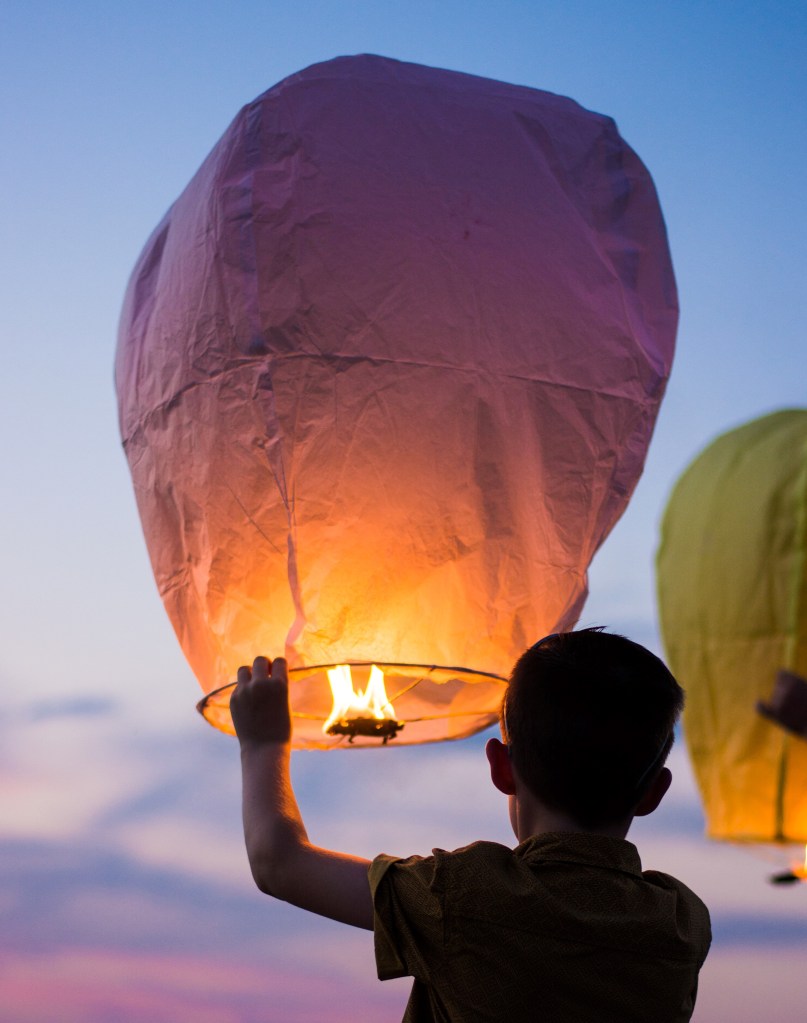
It would be great if letting go of expectations would be as simple as releasing a paper lantern, but it’s not that easy.

To counter this, I do my best to release expectations of specific outcomes. When it come to scans, every cancer patient wants to hear that tumors are shrinking and every cancer survivor wants to be told that the tumor hasn’t returned. It’s REALLY, REALLY, REALLY hard not to cling to those wants, but the harder you cling, the more painful the separation if things don’t turn out the way you hope, and even if they ultimately do, there’s fear that they might not.

So for the past several weeks, I’ve been practicing letting go. It’s funny that “letting go” is so easy to type out, but so incredibly difficult to accomplish. I’m not good at it when it comes to the things I desperately fear.

To counter my clinginess, I’ve adopted a concept I call, “so far, so good”. That means that up to this point, I’ve been able to handle everything that’s happened to me. This doesn’t mean that it’s been easy or pleasant — in fact, at times it’s been horrible — but somehow I’ve made it through to this point. And tomorrow? I cannot predict what will happen then, but right now I’m still here.

This way, I can feel positive without the burden of hopeful expectations — and the fearful possibility that those expectations will be dashed to smithereens. Of course, all of this sounds great because I’m speaking theoretically. But as we know, that ain’t real life, as I’ll illustrate in my next post…