Remembering to Do Nothing

(Title image: Photo by Ken Cheung on Unsplash)

I remembered something last night about mindfulness meditation that I’d realized I had somehow forgotten.

I don’t have to do anything when I meditate.

Not strain, nor grip, nor furrow my brow.

The only thing I need to do when I meditate is to exist, and to be aware that I am existing.

I was thankful that I remembered this because I’d been struggling with the concept of sitting and being present for the past few months. I had slipped into the belief that I needed to work at it.

But last night I asked myself, “What would it feel like if I didn’t try so hard? Or at all?”

Simply exist.
(Photo by Jeppe H. Jensen on Unsplash)

If you’ve practiced mindfulness meditation, you know that the guidance is simple and straightforward.

It goes something like this:

“Sit comfortably with a tall spine, alert but relaxed. Take a few deep breaths, stretching upward on the inhale and settling down on the exhale. Soften the muscles of your body starting from your face, moving down the neck, shoulders, torso, arms to the fingers, hips and seat, down the legs to your toes. Then allow your awareness to settle onto a focal point like the breath, tingling in the hands, the hum of an appliance or sounds of traffic in the distance.”

Does that sound familiar? There are of course numerous variations of this. You select an anchor to come back to whenever you realize that you’ve drifted away from the present moment and into the thoughts in your head.

And that’s it. It’s quite basic and yet we find ways to complicate it and make it a strenuous exercise.

You don’t necessarily have to sit, you can lie down or even stand if that works for you (or you’re practicing while queuing up for something).

There are no rules for mindfulness meditation. Yes, there are principles and/or steps to take, but no real way to do it “wrong”. The only thing that would be considered “incorrect meditation” would be going to meditate, but then spending all that time doing something else.

Last night, when I remembered that my meditation didn’t have to be a certain way and all I needed to do was simply to be and to be aware of myself being, it felt like a release. The last year has been difficult and there have been tough things that I have been required to do.

This felt like a gift, that I could rest and think, “Oh, yeah…I don’t have to do anything.” And I was so grateful for that moment.

Why do I make these things so much harder than they should be?

A Mini-Guide to Surviving Chemo Brain; or, “Wait, what were we talking about?”

While it’s not my intention to write advice columns for breast cancer patients, because I posted ‘getting through chemo‘ tips, I might as well follow up with what I’ve learned about handling the memory and focus issues associated with chemo brain.

Note, first, that chemo brain may not be all chemo. There may be various factors involved (chemo, tamoxifen, onset of menopause, even the tumor itself) and it’s difficult to tease out which one is the main culprit. Be that as it may, it still sucks when you’re standing in your closet, wondering why you went in there…for the tenth time today.

I put a lot of blame for this lack of focus and fleeting short-term memory on the estrogen-blocking drug tamoxifen, which is given to women with hormone receptor positive tumors. I can’t tell you how many physicians have assured me that it’s a “great drug” for decreasing risk of tumor recurrence. And an equally large number of women who have told me that their lives improved after they got off it.

Regardless, for now chemo brain is a fact of my life, so in the spirit of accepting what I cannot change, here are my best practices for making sure that chemo brain doesn’t get me fired from my job:

At least I know it’s there…
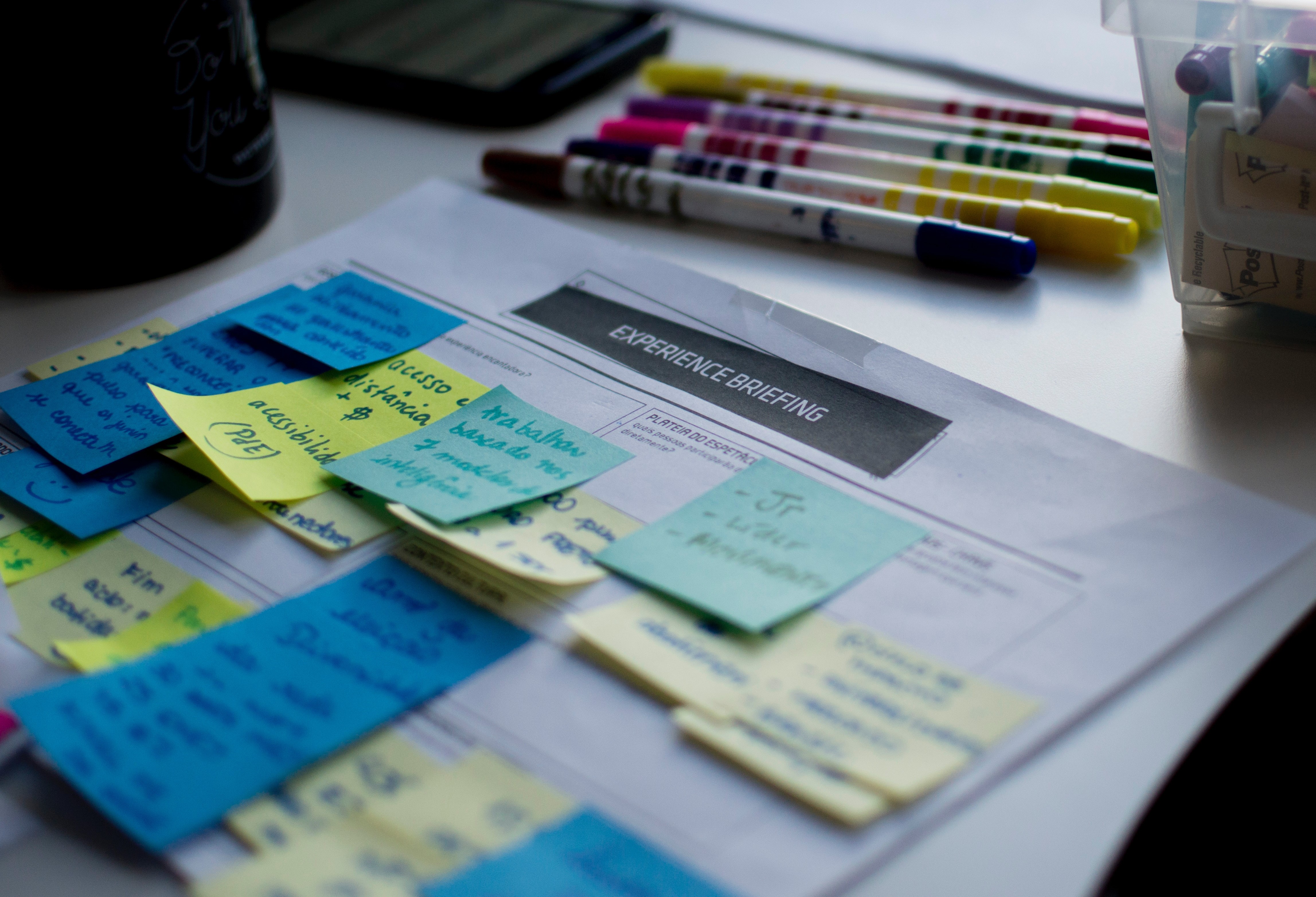
  • Write down your thoughts. And do it immediately. I’ve actually lost thoughts as I was scrounging for a writing utensil. If I have to remember something, I put it in writing, often on a sticky-note that goes on my computer monitor or bathroom mirror. Some place that I look at multiple times a day. I do this to excess, with notes everywhere, but it works. It also decreases my stress levels because I know the thought has been recorded.
  • If you can’t write it down, repetez! Repeat it in your head. Sounds obvious and overly simplistic? Perhaps, but you only need to do this until you either no longer need the thought, or get to a place where you can jot down a note. Of course, I ruined the last part of a meditation retreat for myself because a load of great post topics popped into my head and I had no place to record them. On the bright side, I realized I could juggle seven items in my head for a half hour if I concentrated on them!
  • Narrate what you’re doing. I’ve had to resort to this, especially when working on a multi-step process where accuracy counts. Yes, I’ve made mistakes on the “I-must-be-smoking-crack” scale, and this is often one of the best ways to avoid that. When I hear myself say what I’m supposed to be doing, I stay on task and am less likely to wander off.
  • Avoid distractions. This is probably the most critical piece of advice I can offer. Distractions are death to my thoughts because I go down rabbit holes before I’m even aware of what happened. The Google page of my Firefox browser at work suggests articles to read based on my browsing history, and let me tell ya, there are few feelings worse than suddenly realizing that you are lost deep in an article on body language when you should have been finishing up a report that’s due in a hour. How’d that happen? Anything that breaks my concentration — even a tickle of a distraction — can sidetrack me for minutes before I come to my senses.

Bottom line is, stay present. If there were one general rule of thumb to preserve your functioning while in the grips of chemo brain, that would be it.

The above hints may seem obvious, but I went through a lot of frustration until I accepted that my brain had changed and it couldn’t be ‘business as usual’ anymore. Once I started working around my limitations, things got a lot easier.