Aging Muscle: After Cancer Treatment and Menopause [PHOTOS]

(Title image: Photo by Samuel Girven on Unsplash)

This is a reality check to demonstrate how, even with the greatest of intentions and planning, coupled with a serious love of exercise, you can’t turn back time.

And that’s okay.

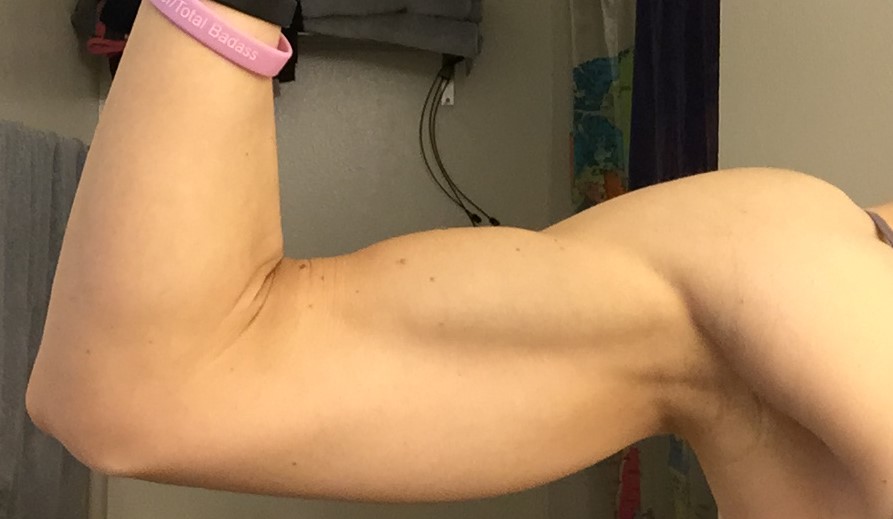
But first, the comparison. Taken from this previous post, here’s a photo right before I started chemotherapy for triple-positive breast cancer, April 27, 2017:
April 27, 2017: I was exercising with a vengeance

After finishing chemo, radiation and Herceptin, AND after two years of estrogen-lowering Tamoxifen and a year into Letrozole, I’d lost some muscle even though I was lifting as heavy as I could.

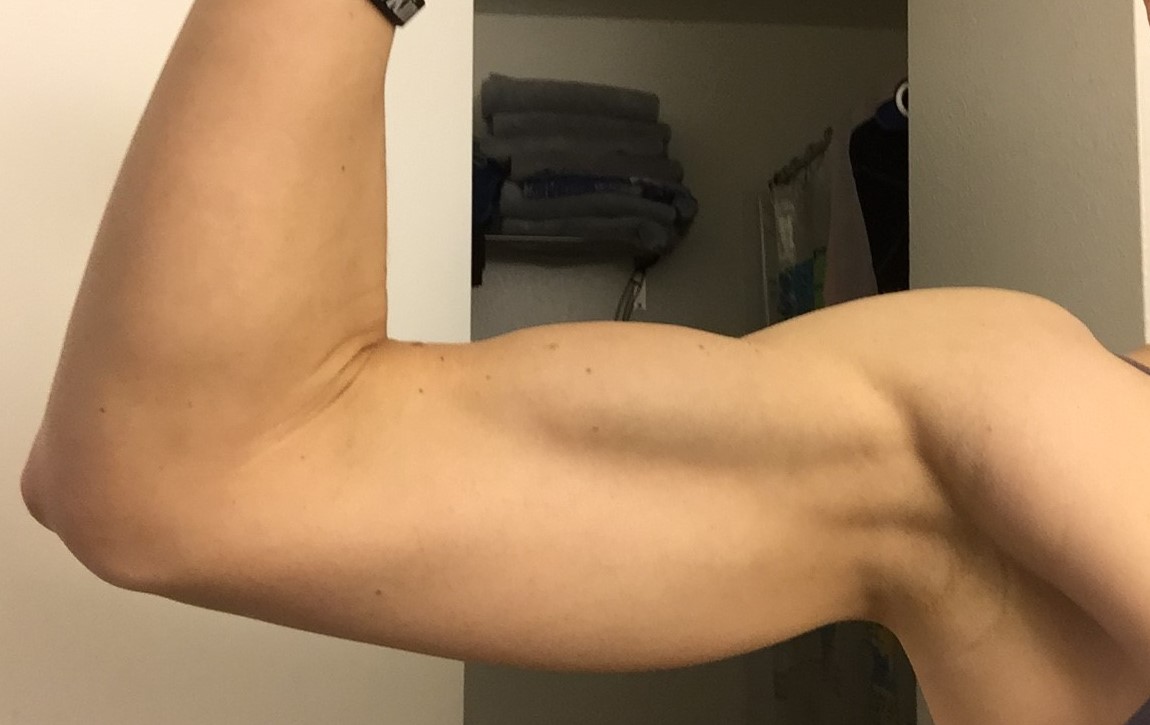
This photo is from December 11, 2020:

December 11, 2020: Still exercising with a vengeance, but…

While I was still working out hard, endocrine therapy and menopause took their toll on my progress. Interestingly, estrogen is not simply a “feminizing” hormone; in women, it also helps preserve both muscle and bone mass. Menopause puts the breaks on estrogen production.

This becomes worrying as we age because less estrogen means weaker muscles which can lead to a greater risk of falls and chance of bone fractures. Endocrine therapy, which is designed to decrease the estrogen in the body in order to lessen the recurrence risk of hormone-sensitive breast cancer, adds to the problem.

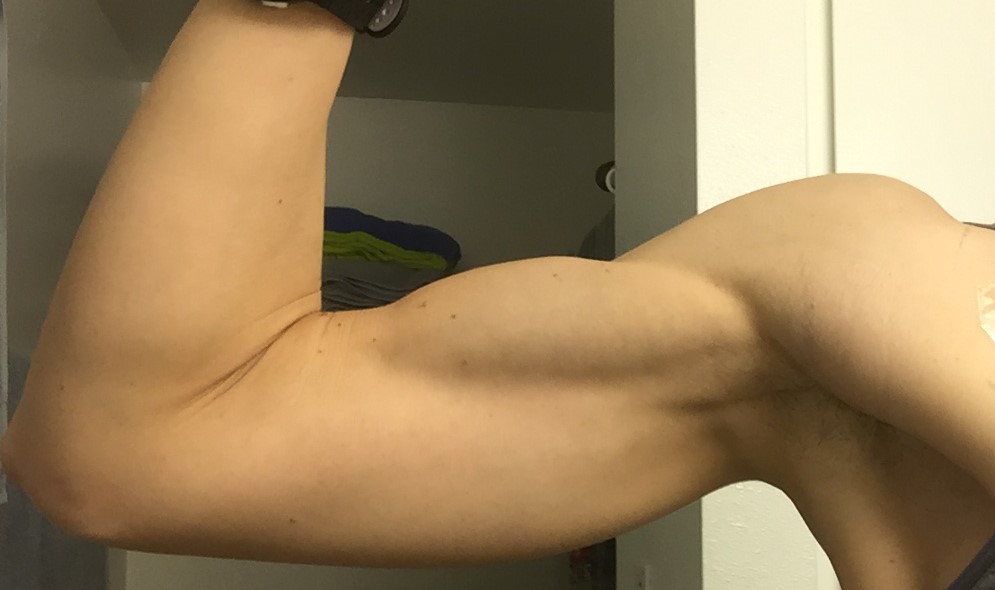
And more than seven years after the top photo, this was taken today before posting, September 23, 2024:

September 23, 2024: New phone, different lighting (sorry!), more wrinkles, same moles. I’m working hard just to keep what I have, but loss is inevitable.

I’m still lifting but the entire landscape of my workout routines has changed. I have to give myself more recovery time between strength training sessions. I am much more susceptible to injuries—seriously, I can tweak something by turning or stretching out in a weird way. I have neuropathy in my feet which makes getting up on my toes (such as in plank or doing lunges) painful.

We recently had an intense heat wave: for a week the temperature inside our apartment didn’t fall below 80F degrees, and during the day it climbed as high as 95F degrees (again, INSIDE our apartment). I managed to work out through a chunk of that week, but the heat eventually got to me. And recovering from that took almost another week.

So, the spirit is willing but the flesh is barely managing at times.

However, there is an upside to being 58 years old with a lifetime of fitness experience. I still love working out. Even tough training sessions are manageable because they feel like an awesome accomplishment, and I feel bouyed afterwards.

Even on the days that I don’t do a formal workout, I make sure that I’m moving as much as I can. Fitness is an integral part of my life, even though it looks different now than it did seven years ago. In the post that I reference earlier, at the very bottom I wrote about how yoga was becoming a larger part of my life.

And that’s continued. Through my yoga teacher training in 2022 and upcoming yoga4cancer advanced training starting in January 2025, this direction feels so right for me.

While I don’t plan to give up my gym sessions anytime soon, yoga has given me a path to physical and mental fitness as I age. I am gradually moving into a more meditative approach to exercise that is less about intensity and more about staying healthy by integrating mind and body.

“The Gun Show”: Assessing Biceps Muscle Loss Due To Endocrine Therapy [PHOTOS]

In my last post, I whined about the repercussions of taking aromatase inhibitors (in my case, letrozole) as a way to diminish the amount of estrogen in my body, for the purpose of reducing the risk of breast cancer recurrence.

While I also mentioned letrozole’s effects on my exercise habits, in this post I wanted to drill down on one aspect in particular: muscle loss.

Before I go further, I need to add a disclaimer. Since the time the first photo was taken (the morning before my first chemo infusion), three and a half years passed and I went through menopause. Notably, the menopause was pharmaceutically-driven, starting with tamoxifen and then, after my hormone levels were low enough, continuing with letrozole. However, my body now is dealing with the same aging effects as someone who had transitioned naturally.

Except that my transition came before its time.

The below photo is from April 27, 2017, before I headed to the infusion center for my first dose of chemo. I had been training as normally as I could, under the conditions of lumpectomy and port placement that I wrote about here, and finding work-arounds for exercises that I’d been told not to do.

This is my 51-year-old biceps muscle, before I started the pharmaceutical portion of my breast cancer treatment.

While I lost some size and strength throughout my chemo infusions (here are all the photos), I was able to bounce back and had a particularly strong 2018 (sorry, don’t have good photos of that). But as the endocrine therapy with tamoxifen continued in 2019, to be replaced by letrozole in 2020, I could feel the effects of low estrogen.

On December 11, 2020, I struck the same pose again for sake of comparison.

Is something missing? This is my 54-year-old biceps muscle, struggling to keep up. Note: I am still working out as hard as I can!

As far as muscle appearance is concerned, I have experienced a slow downhill slide. My shoulder is not as peak-y, the biceps itself has decreased in size and I even find it more difficult to hold this muscular contraction. In addition, there’s more looseness in my skin, particularly at the back of my arm, which in part may be due to loss of collagen, also affected by estrogen levels (nice dermatological review by Shah & Maibach, 2001, Am J Clin Dermatol).

I’m busting my butt trying to increase the amount that I’m lifting, but I’m not making progress. Not surprisingly, the decrease in estrogen plays a role in this. As stated by Chidi-Ogbolu & Baar (2019, Front Physiol), “estrogen improves muscle mass and strength, and increases the collagen content of connective tissues”.

It makes sense then that lack of estrogen is going to be detrimental to maintaining muscle. To that point, Kitajima & Ono (2016, J Endocrinol), working with animal models, have found that “estrogen insufficiency leads to muscle atrophy and decreased muscle strength of female mice.”

Not just mice, obviously.

This information comes as no surprise to any woman who’s gone through menopause, I’m sure. But the experience of being slammed through menopause instead of having the opportunity to transition more gradually is yet another frustrating way that having cancer pulls the rug out from under you and reminds you that you are not in control of your life.

~~~~~~~~~~~~~~~~~~~~~~~~~

Slowly, yoga is becoming more important in my life and my view of fitness is changing. Good thing too, since I can’t keep beating myself up like this.

This Is Your Arm On Drugs, Part I

Chemo drugs, that is.

Say “chemo patient” and people think of a hairless, skeletal person who could be blown down by a gentle breeze. But is that really what happens?

I was anxious about how much chemo was going to ravage me, so I decided to document everything. That way when treatment was over, I would know how much work I had to do to rebuild myself. The simplest way for me to do this was to photograph my right biceps. The cancer was on my left side and I had not been using that arm as much, so the right arm would provide a more accurate view of what chemo treatment was doing to lean mass.

I hope you’ll forgive the following photos. It was never my intention to actually post these (or else I would have chosen a better background!). The cropping is a bit off and I’ve only now realized that even my biceps curl isn’t consistent throughout all the photos. In my defense, I was focused on getting through treatment, and worrying about getting the angles and lighting right was the last thing on my mind. All these pics were taken on the mornings of my infusion days.

Infusion 1 – 4/27/2017:

CHEMO1_20170427_cropped

Infusion 2 – 5/18/2017:

CHEMO2_20170518_cropped

Infusion 3 – 6/8/2017:

CHEMO3_20170608_cropped

Infusion 4 – 6/29/2017:

CHEMO4_20170629_cropped

Infusion 5 – 7/20/2017:

CHEMO5_20170720_cropped

Infusion 6 – 8/10/2017:

CHEMO6_20170810_cropped

Is there a difference? I think there is, even with the relatively crappy and inconsistent photos. I also think that hanging towels over the door makes the bathroom look messy. And, YEOW, I am mole-y!

Six courses of chemo (Taxotere and Carboplatin), one every three weeks, won’t destroy you, although the drugs do smack you around a lot. It would take about a week or so to recover following each infusion, at which point I could work out again. As the infusions went on, the recovery time increased.

So, no, my chemo regimen didn’t turn me into a skeleton, although my weight did take a hit; there were times that I was literally too tired to eat or my GI tract hadn’t fully recovered, making it tough to get food down. Because my infusions were spread out, I got a pretty hefty dose. But women whose cancer dictates weekly infusions, while possibly receiving smaller doses, don’t get the same amount of time to recover and the treatment effects build up. In that sense, I was very fortunate, and that made it possible to maintain my strength.

Once again, my worst fears weren’t realized. It took time to get back to feeling normal and training hard again, but I got there.