Sweatin’ for Myokines [RESEARCH]

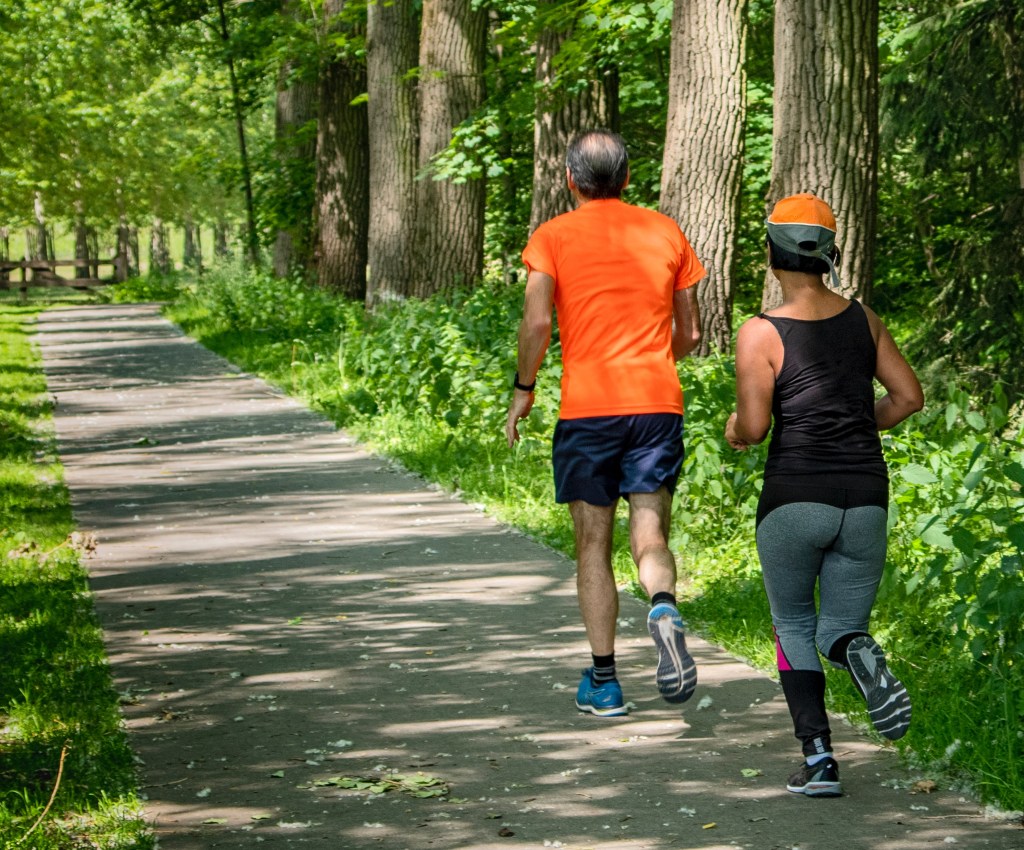
(Title image: Photo by Annemiek Smegen on Unsplash)

Following up on my “Exercise and Cancer Cells” post from September 2025, here is another paper by the same authors that was published this month that offers more evidence about the importance of exercise for cancer survivors.

This study by Bettariga et al. (2026, Med Sci Sports Exer) investigated what effect different types of exercise would have on the production of myokines in breast cancer survivors. Why myokines? Because myokines are chemicals released during a muscular contraction. Once in the bloodstream they have various effects on the human body, but the most important for our discussion is that some myokines have been shown to decrease the growth of cancer cells, although the mechanism by which they do that is still unclear.

The study participants, all breast cancer survivors, were assigned to either strength (resistance) training or HIIT groups.
(Photo by Robert Stump on Unsplash)

This study compared resistance training against high-intensity interval training, or HIIT. For twelve weeks, twenty-eight breast cancer survivors engaged in either resistance training or HIIT, three days per week. Exercise was performed at moderate-to-high levels of intensity, which means that the participants were challenged by the activities.

At the end of the twelve weeks, regardless of which exercise group the subjects were in, the cancer-busting myokines circulating in their bloodstreams had increased by as much as 15%; both resistance training and HIIT were equally effective. Furthermore, when serum taken from the study participants was applied to metastatic (in this case, triple-negative) cancer cells in the lab, there was a 22-25% reduction in the growth of the cells.

These are excellent results. While the study group (28 participants) was quite small and additional research with a larger set of subjects should be done, the effect of exercise was striking.

As mentioned above, the exercise was medium-to-high intensity. What exactly this means for each individual will vary, as intensity is specific to the exerciser and depends a lot on their current fitness levels. For this study, none of the participants had exercised in the previous three months, so they weren’t gym rats to start out with. Their results were still significant.

Everyone has different abilities. Begin at your own starting point and take it from there.
(Photo by LOGAN WEAVER | @LGNWVR on Unsplash)

As I’ve said in previous posts, being diagnosed with cancer leaves you feeling out of control and powerless about your own body. It can feel like things are happening to you and there’s little you can do about it. This is one way that you can effect a positive change and improve your chances of recurrence-free survival, and it is something over which you have control.

The take-home message? There is a constantly-expanding body of scientific literature that supports maintaining as high a level of physical activity as you personally can, while still respecting the limitations that your body may have. Start slowly, increase intensity gradually, keep going…and don’t ever stop.

REFERENCES

Reader-Friendly Article:
Bettariga F (January 6, 2026) “How Exercise May Suppress Cancer Growth.” Active Voice|ACSM. https://acsm.org/active-voice-how-exercise-may-suppress-cancer-growth/

Research Study:
Full publication (Abstract available without journal access)
Bettariga F, Taaffe DR, Crespo-Garcia C, Clay TD, De Santi M, Baldelli G, Adhikari S, Gray ES, Galvão DA, Newton RU (2026) Effects of Resistance versus High-Intensity Interval Training on Myokines and Cancer Cell Suppression in Breast Cancer Survivors: A Randomized Trial. Med Sci Sports Exer, 58, 1-9.
https://journals.lww.com/acsm-msse/abstract/2026/01000/effects_of_resistance_versus_high_intensity.1.aspx
PubMed Listing
https://pubmed.ncbi.nlm.nih.gov/40903011/

Protection Against Doxorubicin’s Cardiotoxicity: Exercise?

One of the strongest chemotherapy drugs used for breast cancer is doxorubicin, a drug in the anthracyline family that you might know as Adriamycin. It’s called “The Red Devil” due to its bright red color and tendency to temporarily dye the bodily fluids of its recipient red, but also due to its toxicity.

While it is highly effective, its use is limited by its potentially serious side effects, including damage to the heart. According to Drugs.com, “[b]ecause of its heart toxicity, doxorubicin has a maximum cumulative dose that can be given to each patient. The higher the total dose you receive over time, the greater your chance of heart side effects.”

Doxorubicin is a highly effective chemotherapy, but carries with it a considerable risk of heart toxicity.

There has been interest in discovering other drugs that can decrease the cardiotoxicity of doxorubicin, particularly since in addition to breast cancer, it is used against a variety of other cancers.

But as with so many things cancer-related, the drugs given to protect against chemotherapy side effects themselves have side effects, so it’s useful to explore other means of achieving protection from the toxic effects of doxorubicin.

Can Exercise Help?

In a webinar for the American College of Sports Medicine (ACSM) that I attended on May 18, 2023, University of Florida, Department of Applied Physiology and Kinesiology researcher Dr. Ashley Smuder and her lab presented research about the protective effects of exercise on the heart and muscle doxorubicin.

Importantly, Dr. Smuder’s lab was able to demonstrate that exercise-trained rats who were then given doxorubicin showed a decrease in the amount of drug that accumulated in the heart and diaphragm compared to sedentary rats, echoing the results of Parry and Hayward (2015, Am J Physiol Regul Integr Comp Physiol). Those results had suggested that exercise didn’t diminish and even increased the amount of doxorubicin that made it to the cancer tumor while decreasing the amount of the drug that went to the heart (left ventricle) and diaphragm.

Exercise keeps rodents healthier, even under a punishing chemotherapy regimen.

While the actual mechanism of this protective effect is still being researched, once again these studies show the benefits of exercise in a cancer situation.

Additionally, a doctoral student in Dr. Smuder’s lab, Brendan Nguyen, reported on work that he’s done showing the differences of exercise on fat mass and lean mass in rats administered doxorubicin using the same infusion schedule that a human patient would received (4 doses, 3 weeks apart). There were four conditions: (1) a sedentary group that received saline injections, (2) a sedentary group that received doxorubicin, (3) a moderate-exercise group that received doxorubicin, (4) a high-intensity exercise training (HIIT) group that received doxorubicin.

  • Moderate exercise: rats ran on a treadmill 3 days/week at a speed of 30 meters/min for 60 min/session.
  • HIIT exercise: rats ran on a treadmill 3 days/week, four 4-min bouts at 45 meters/min with 3 minutes of active recovery in between the bouts.

Not surprisingly, the exercise training had a significant effect on the body composition of the animals. Sedentary rats in both groups had an increased risk of obesity. Both groups of exercising rats (both moderate exercise and HIIT) saw a decrease in fat mass during this time and were able to avoid doxorubicin-induced cardiorespiratory weakness. Also, the HIIT exercise animals showed a significant increase in lean mass in addition to the drop in fat mass.

For reliable protection from the negative physiological effects of chemotherapy, exercise is still your best bet.

These findings in rats reflect similar results that have been obtained in humans (Battaglini et al, 2014, World J Clin Oncol; Lee et al, 2019, BMC Cancer; Lee et al, 2021, Support Care Cancer). Brendan noted that particularly HIIT exercise “may prevent unfavorable changes in body composition” compared to a sedentary condition.

The take-home message here remains the same as it’s been in my other posts. If you don’t currently exercise, start now. And then don’t stop. It’s easy to keep laboratory rats active and fit, but humans find many reasons not to challenge themselves with physical activity. If you needed a reason, these studies provide a little encouragement to find your favorite movement modality and make exercise a life-long habit.

REFERENCES

Battaglini CL, Mills RC, Phillips BL, Lee JT, Story CE, Nascimento MG, Hackney AC (2014) Twenty-five years of research on the effects of exercise training in breast cancer survivors: A systematic review of the literature. World J Clin Oncol, 5, 177-190. https://doi.org/10.5306/wjco.v5.i2.177.

Lee K, Kang I, Mack WJ, Mortimer J, Sattler F, Salem G, Dieli-Conwright CM (2019) Feasibility of high intensity interval training in patients with breast Cancer undergoing anthracycline chemotherapy: a randomized pilot trial. BMC Cancer, 19, 653. https://doi.org/10.1186/s12885-019-5887-7.

Lee K, Norris MK, Wang E, Dieli-Conwright CM (2021) Effect of high-intensity interval training on patient-reported outcomes and physical function in women with breast cancer receiving anthracycline-based chemotherapy. Support Care Cancer, 29, 6863-6870. https://doi.org/10.1007/s00520-021-06294-7.

Parry TL, Hayward R (2015) Exercise training does not affect anthracycline antitumor efficacy while attenuating cardiac dysfunction. Am J Physiol Regul Integr Comp Physiol, 309, R675-83. https://doi.org/10.1152/ajpregu.00185.2015.

Smuder AJ, Nguyen BL (May 18, 2023) Cardiorespiratory muscle response to chemotherapy and exercise. ACSM’s From Around The Field webinar.