A Date with the Oncologist…and the Office Scale

This past week I had my “9-years-since-biopsy” oncology appointment. I have sat in that same exam room numerous times since March 2017.

It still smells the same—I think it’s the cleaning solution the Cancer Center uses, but I’ll never forget that scent. On the other hand, numerous improvements in treatments have taken place since my first time there.

One thing that hasn’t changed is that I still get weighed before every doctor’s visit, just like I do for a lot of other health appointments. It’s also been my least favorite part of getting a check up. No, I am not overweight, but as a child I was taller than all my classmates; basically a lean kid with perfectionistic tendancies who was occasionally teased about having a higher number on the scale, which I can assure you is a shortcut to disordered eating. As a result, even now I am sensitive about how much my healthcare team reads into my weight numbers, even though my weight fluctuations tend to be only a few pounds up & down that are not reflected on my frame.

Yes, you would be correct if I seem to get a bit touchy about this.

I weigh myself twice a week at home with a pricey, high-quality scale that provides all sorts of other metrics. The bodyfat percentage is not accurate and tends to report a lower-than-truthful value, so I don’t swear by it. But I have a great deal of confidence in the weight measurement, especially because I control for as many variables (time of day, clothing, etc.) as possible when I weigh myself.
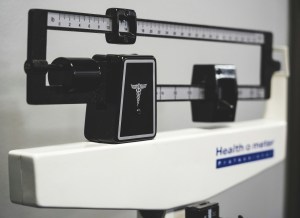
The scale in the exam room isn’t even one of the “good” ones!
(Photo by Samuel Ramos on Unsplash)

The scale in my oncologist’s exam room literally looks like a bathroom scale. It’s not even the typical mechanical doctor’s scale with the weights that you move across that “T” thing that stands in front of you, if you know what I mean. It’s just a basic electronic scale. I’m sure it’s relatively accurate but not what I’d consider a gold standard.

Why am I making such a big deal out of this? Because my weight at my appointment was about 5 pounds heavier than it had been when I weighed myself at home a few days before and about 3-4 pounds heavier than the last time I was at the oncologist’s office.

And my oncologist pointed it out. It struck a chord. Maybe I sensed concern on his part, maybe I interpreted it as disapproval, maybe I just imagined his reaction. But I immediately felt defensive. This was not a 20-pound difference. This was, for all intents and purposes, a few pounds higher than last time.

I work out 4-6 times a week. I lift weights. I do high intensity interval training. I row on an erg. I take the stairs two at a time. And I cannot shake the feeling that it’s never good enough.

I have been a pescetarian for the past 42 years. I eat mainly vegetables and protein. I don’t put sugar in my coffee. I rarely indulge in alcohol or rich desserts. I have been told that I’m TOO disciplined. And it doesn’t seem to matter.

So, yes, I’m sensitive about this because I’ve spent my entire adult life being very careful about diet and exercise. I have been big on avoiding the things that the general public may consider indispensible treats, even though they’re not healthy. And, quite frankly, I prefer it that way and regret nothing.

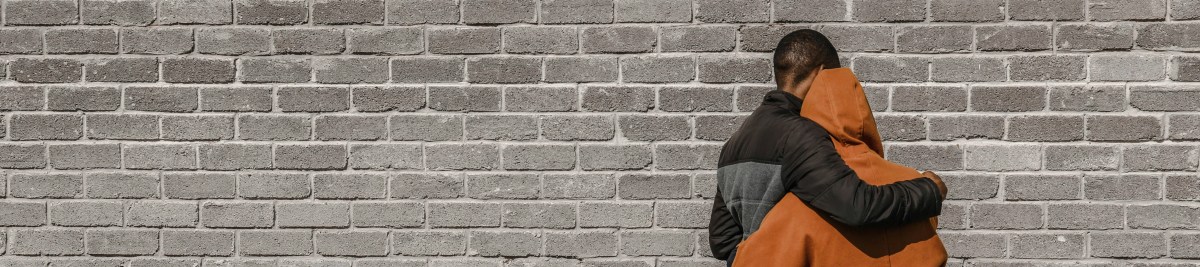
Eat healthy, exercise, get cancer—but will people believe you did your best?
(Photo by Nadine Primeau on Unsplash)

But still I feel pressure.

Now, if I were decades younger, this might have sent me into an “I-must-be-even-more-disciplined” state and triggered a clamp-down on myself. But I take a deep breath because I know what I look like naked. I can’t change how people think. I can’t change the healthcare system. The scale is here to stay.

But I can say that as judge-y as people get around weight, the negatives extend way beyond those who might be struggling with weight loss or seem not to care. The effects of perceived judgment touch everyone else too, no matter what shape or size you are. And numbers without context can ruin your day.

As cancer survivors we may already have a difficult relationship with our bodies: changes experienced through surgery, not being able to recognize ourselves after chemo, dealing with unexpected effects of endocrine therapy, even the beliefs of others that we did something to bring cancer upon ourselves. That’s a lot to handle when you’re worried about recurrence or a degraded quality of life.

Hey, it’s okay. I get why we get weighed. But sometimes I hate how it makes me feel.
Tell Me a Story: Suppressing Anxious Thoughts

(Title image: Photo by Jonas Jacobsson on Unsplash)

Nine years ago this month when I found out that I had breast cancer, the news hit me hard and felt so raw that I had nowhere to seek emotional shelter. The information was so in-my-face. There was no way to escape it, no way to “un-know” it.

While there were things I needed to deal with immediately, the sense of dread was overwhelming at times and I wished I could push it away. Even after going through surgery, chemo, radiation, there was a constant foreboding that lingered, a trauma that continued to terrify as I learned to deal with the uncertainty of the future. The anxiety was worst in the early morning hours.

At that point, I couldn’t even repress the feelings I was having, they were so strong. Mindfulness taught that I should allow all the feelings to pass through me. I struggled with that but kept at it. After all, I thought, isn’t that sort of suppression cautioned against, with the concern that feelings and thoughts that were pushed away would resurface in some other detrimental way?

That belief has been challenged by research on the experiences of those affected by the November 2015 terrorist attacks in Paris. Tracking survivors using MRI technology and psychological assessments, the researchers discovered that part of recovery from such a traumatic experience included the ability to suppress intrusive thoughts. The memories can still be accessed but do not overwhelm the patient, easing the burden of PTSD. (A National Public Radio story on the event and research is available here.)

My solution to intrusive thoughts is to create a story-based “safe space”.
(Photo by Kourosh Qaffari on Unsplash)

I found this reassuring. Part of the way that I have dealt with stressful situations that might have otherwise overwhelmed me is by creating mental distance between them and myself. While I have found meditation to be ideal, of course, sitting and allowing all the feelings to pass through me at a time that those feelings might still be very intense is not, for me, a winning strategy.

I have had success, however, in creating a story-like safe space for myself to retreat into, as if I’m writing a novel complete with a variety of characters. The theme is pleasant, perhaps romantic, even humorous. The scenes that play out are of my own choosing and if I find myself shifting into something more “realistic” (i.e., stress-inducing) I remember that this is my creation and that the story can be whatever I want it to be.

It doesn’t have to reflect real life. It can be as improbable as I want. This is one place where I have complete autonomy in determining what movie plays out in front of me.

This serves as a needed break from my stressors. Technically, I am not “repressing” anxious thoughts, I am dealing with them in the same way that someone might read a delightful story before bedtime, except that I decide what the story is about. And if I wake in the middle of the night, I can sink back into my self-spun tale, knowing that when I need to deal with all the tough stuff in my life, it’ll be there waiting for me.

But not right now.

Showing Self-Mercy

(Title image: Photo by Melanie Stander on Unsplash)

My oncologist keeps telling me that I’m too hard on myself.

This has been something he’s repeated for the nine years that I’ve known him. He says this when I express my frustration with not being as strong or resilient as I used to be. When I complain that I can’t lift as much weight and get injured more easily.

“Relax,” he tells me. But I have a desperate drive that pushes me, as if I’m fearful of stopping or even just slowing down. As if I’m going to sink if I rest for a while.

It’s not just my workouts in which I feel this. It’s also apparent in my professional life which, I admit, did not head down the path that I was expecting it to, and cancer didn’t help. Now, at a time in my life when I’m supposed to be winding down and enjoying a retirement coming in the not-so-distant future…no, I tell myself there’s still so much more to do to get myself to a point where I can finally rest.

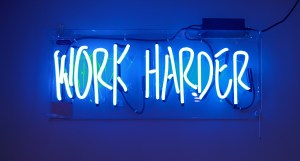
Yes, this would be me. No excuses.
(Photo by Jordan Whitfield on Unsplash)

Well, I needed to get that off my chest. As you can image, this kind of mentality has some downsides.

I was reminded of that when, last week, I was again invited to present during an event in which I’ve participated for the past two years. It’s one that I spend about four months practicing for.

The first time in 2024 I was mildly anxious but everything went very well. I couldn’t wait to do it again in 2025.

But last year was really tough for me. I was grieving the death of my father, dealing with weird migraine auras, working on a professional certification that I felt insufficiently prepared for and trying to juggle some major financial changes in my life. I didn’t have the same amount of time to prepare and, consumed by self-doubt, I allowed anxiety to creep in.

No, wait. That’s a lie.

Anxiety didn’t “creep in”, it hit me like a tidal wave. Preparing for an event that should have been amazingly positive and allowed me to showcase my expertise instead kept me up at night. It made me miserable. I obsessed over preparations and couldn’t wait for it to be over.

My presentation came and went well enough. But the experience left me feeling wounded.

Like I said, 2025 was a difficult year with major changes in my life. It stayed difficult up until the last days of December, when I finally had a chance to decompress and enjoy where I was in the present moment.

But when I recently received the invite to once again participate in this year’s event, I felt a familiar undercurrent of panic and despair. And that elicited shame.

First, I tried not to think about it. But that didn’t work well and my anxiety grew. I really wished that I could find an excuse to skip this year but I couldn’t turn it down—that would be “giving up” which would have left me defeated.

Or would it have?

Cutting myself some slack after a lifetime of beating myself up feels like the way I expect these kittens feel.
(Photo by Chirag Bhardwaj on Unsplash)

I have spent so much of my life doing things “for my own good”. When it comes to exercise, that is a very good thing indeed. But what about when doing something genuinely results in anxiety and dread? I had a long track record of pushing through those situations. Over and over again, I would barrel headlong into them, figuring that the more I did things like this, the more comfortable I would get with them. Although it didn’t always work like that. Sometimes, all it did was allow anxiety around it to build even more, painted with self-criticism for feeling that way.

But what if, instead of beating myself up, I took a breath and showed myself some grace? Just this once?

I poked at the possibility of declining the opportunity to present this year, just to test out how I would feel about it. And it immediately felt like a relief. All that anxiety fell away and I saw all the other things I could spend my time doing that I would otherwise put off because practicing required so much mental energy. I made the decision to listen to what my brain and body were yelling at me.

For Pete’s sake…!

This wasn’t a cop-out. This was giving my worn-out self a little love. I need more of that.

A Trolley Meditation

(Photo by miguel pela-yo_ou_voce on Unsplash)

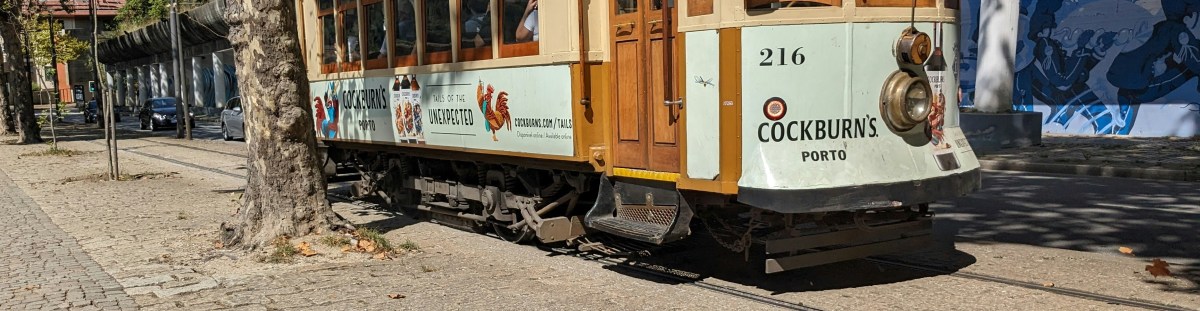
To be clear, this doesn’t have to be a mediation specifically for a trolley ride. It would work on a train, bus, car or any other moving vehicle. I take the trolley regularly and love how meditative the ride can be, so that’s where I use it.

While I work remotely for the majority of the week, some days I commute to my office, now further away due to our recent move. I get a ride in, but coming home means an hour on trolleys in addition to a long walk from the station.

At the time that I leave for home, the afternoon commute is in full swing. I often don’t get a seat on the first leg of my trip, so I stand, holding on to the bars interspersed throughout the car.

My height gives me a good view of the window. Now, if I allow my gaze to fuzz a bit, staring straight out into the distance, the passing landscape becomes a blur.

But this view can also serve as a beautiful way to drop into the ‘here and now’, and also train yourself to let go of the past. As the landscape passes before me, I mentally drop a “plumb line” into it, fixing my gaze every second or so on an object in the passing view, so that for a blink of an eye, my focus is maintained and follows it. Then I let it go, dropping another imaginary plumb, and I fix my gaze onto another spot on the fleeting landscape, again staying with it for about a second before releasing it and focusing on yet another point.

In the blur of constant movement, focus on the present moment.
(Photo by hannah cauhepe on Unsplash)

If the scenery very close to the trolley moves too quickly and I tire of the rapid changes, I can cast my gaze a little further away from the trolley where things are passing less frenetically.

Sometimes I switch between points closer by and those further away.

The idea is to allow yourself to let go of the point that you’re looking at, to not get captured by it. The moving vehicle, certainly, prevents that from happening to a great extent, but we also train ourselves to break the gaze and move on.

Why Is This Important?

Imagine that your day is like this: lots of stress, perhaps a lot of work, frustrating interactions with others, so much brain clutter. Can you take a big step back to observe the flow of life, understanding that annoyances comes and go, allowing them to pass by? Just as on the moving vehicle, everything passes and new views appear, so do our emotions and situations. This simple practice reminds us that when times are difficult, we can find solance in knowing that it won’t be forever.

I love this meditation. It combines a return to the present moment with letting go and moving on. What could be better?