Getting Deep: Harvard’s Meditation Research Program

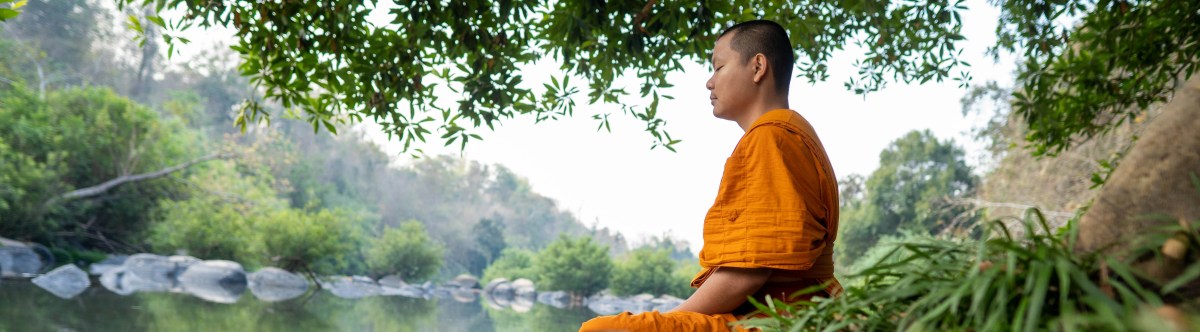
(Title image: Photo by TONG KBP on Unsplash)

I was delighted to learn that there is a Meditation Research Program at Mass General Hospital, associated with Harvard Medical School. I’m sharing the link to their research in this post because it seems pretty amazing

The program is run by Dr. Matthew Sacchet, an Associate Professor in Psychiatry at Harvard Medical School. Recall that Dr. Jon Kabat-Zinn, at the UMass Medical School, brought mindfulness to the clinical mainstream with his Mindfulness-Based Stress Reduction (MBSR) program, which initially was designed to help patients deal with the pain and stress of illness. At Harvard/Mass General, Sacchet takes this work further by focusing on a scientific study of advanced meditative states.

My meditation takes place in informal spaces.
(Photo by bahareh moradian on Unsplash)

So, just to be clear: I am a simple meditator, with a focus on mindfulness. I revel in the grounding that it gives me when life gets stressful. It offers a sense of confidence that I can, in fact, handle the stuff that comes my way as long as I allow it to, something that hasn’t always been the case. Meditation has given me a self-awareness that slows down the world around me and makes things feel less out-of-control.

However, after almost a decade of meditation, I would not call myself an “advanced” meditator. And, yes, I’m anal enough to have never skipped a day, which, it could be argued, kind of misses the point of mindfulness. I am confident in my abilities to sit quietly but possibly need to lighten up about giving myself the grace to miss a session (trust me, I won’t).

Still, I love being able to sit in my room and feel a connection to all the other human beings around the world who are meditating at the same time. I am also acutely interested in the way that deeper states of meditation can positively affect us.

But I’m no meditating monk; my average day’s meditation generally ranges from about 10 minutes to an hour and a half, max.

On the other hand, Dr. Sacchet is studying ‘master meditators’, such as the monks in question, in an effort to explore advanced meditation, which he defines as (from the program website) “deeper engagement with meditative practices that with time and mastery, produce refined states of mind and awareness…bliss states, insights into the mind, altruistic/compassionate mindsets and ultimately, enduring transformation.

That’s quite an impressive list. At a time when I’m clawing my way back to longer meditation sessions after a stressful year of struggling with intrusive brain noise, this provides motivation to stay on the cushion for a little longer.

Interested in more?

Here’s a link to a short quiz that appeared in the Harvard Gazette that might surprise you about what researchers like Dr. Sacchet are learning about meditation.

Below is more about Dr. Sacchet and his work from MGH Psychiatry News:

And here’s the link to the Scientific American article that the above site references:
https://www.scientificamerican.com/article/advanced-meditation-alters-consciousness-and-our-basic-sense-of-self/
Hacking My Brain

(Title image: Photo by Hal Gatewood on Unsplash)

At the beginning of 2026, I had decided that I was going to take a break from doing certifications or complicated classes. That was because I kept pushing myself and figured it was time to take a break…

But then…I found out about a “hackathon” that involved machine learning and Python, a computer coding language that I do not know, and I decided I should enter and see if I could muddle my way through it.

I am a glutton for punishment.

To be clear, usually you don’t enter these kinds of competitions when you have no idea what’s going on, but I also don’t know what’s good for me, so I guess it evens out.

This is not Python code.
(Photo by Markus Spiske on Unsplash)

I convinced my husband (who does have some knowledge of Python) to enter along with me, and we managed to form a team with a PhD student in Computer Science, who fortuitously brought along her Siberian Husky. If we didn’t win the hackathon, at least we could rank highest in fur production.

But that’s not the point of this post.

Not only was this an excellent learning experience for understanding machine learning, it also taught me a few things about how my brain has changed.

  1. In order to comprehend a complicated concept, I need to see it written down. Preferably with visual aids.
  2. If I’m reading something while someone is speaking loudly, I will not understand the words I’m looking at.
  3. I have a 50% chance of remembering something new after learning it the first time. Wait…more like a 30% chance.
  4. Pushing my brain to learn something new and highly technical for eight hours is exhausting. I went home each day feeling like I’d been hit by a Zamboni.
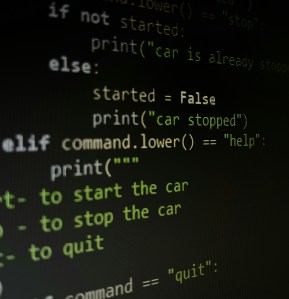
This, I am told, is Python code.
(Photo by Veronica on Unsplash)

Sometime back, I’d read about an MRI study involving twins in which one twin was a cancer survivor and the other wasn’t. While there wasn’t a significant different in cognitive abilities between the twin siblings, a huge difference appeared when they were told to perform cognitive tasks during an MRI scan: the twin who had undergone cancer treatment was recruiting vastly more of their brain real estate than their sibling was to perform the tasks. Essentially, the cancer survivor’s brain was less efficient and needed to use more brain cells.

I thought about this study when I came home from the hackathon. My brain was so full that information was seeping out through my ears. Using so many neurons to try to learn highly technical stuff was quite a workout.

On a side note, I had made use of AI (artificial intelligence; in my case, an AI assistant called Claude) to explain the coding sequences we were using. What I found was that (1) AI was useful in explaining complicated concepts using simple language, and (2) no one’s going to lose their coding job to AI anytime soon because when I asked Claude to re-write my code it did an absolutely horrible job with no improvement over the original code, although Claude tried to convince me it was better. Hmph.

So for the time being, I’m stuck with using my own brain, imperfect as it may be.

Sweatin’ for Myokines [RESEARCH]

(Title image: Photo by Annemiek Smegen on Unsplash)

Following up on my “Exercise and Cancer Cells” post from September 2025, here is another paper by the same authors that was published this month that offers more evidence about the importance of exercise for cancer survivors.

This study by Bettariga et al. (2026, Med Sci Sports Exer) investigated what effect different types of exercise would have on the production of myokines in breast cancer survivors. Why myokines? Because myokines are chemicals released during a muscular contraction. Once in the bloodstream they have various effects on the human body, but the most important for our discussion is that some myokines have been shown to decrease the growth of cancer cells, although the mechanism by which they do that is still unclear.

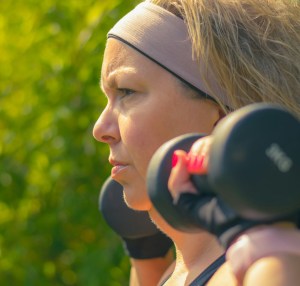
The study participants, all breast cancer survivors, were assigned to either strength (resistance) training or HIIT groups.
(Photo by Robert Stump on Unsplash)

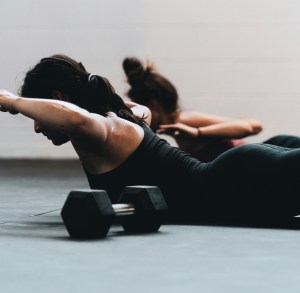
This study compared resistance training against high-intensity interval training, or HIIT. For twelve weeks, twenty-eight breast cancer survivors engaged in either resistance training or HIIT, three days per week. Exercise was performed at moderate-to-high levels of intensity, which means that the participants were challenged by the activities.

At the end of the twelve weeks, regardless of which exercise group the subjects were in, the cancer-busting myokines circulating in their bloodstreams had increased by as much as 15%; both resistance training and HIIT were equally effective. Furthermore, when serum taken from the study participants was applied to metastatic (in this case, triple-negative) cancer cells in the lab, there was a 22-25% reduction in the growth of the cells.

These are excellent results. While the study group (28 participants) was quite small and additional research with a larger set of subjects should be done, the effect of exercise was striking.

As mentioned above, the exercise was medium-to-high intensity. What exactly this means for each individual will vary, as intensity is specific to the exerciser and depends a lot on their current fitness levels. For this study, none of the participants had exercised in the previous three months, so they weren’t gym rats to start out with. Their results were still significant.

Everyone has different abilities. Begin at your own starting point and take it from there.
(Photo by LOGAN WEAVER | @LGNWVR on Unsplash)

As I’ve said in previous posts, being diagnosed with cancer leaves you feeling out of control and powerless about your own body. It can feel like things are happening to you and there’s little you can do about it. This is one way that you can effect a positive change and improve your chances of recurrence-free survival, and it is something over which you have control.

The take-home message? There is a constantly-expanding body of scientific literature that supports maintaining as high a level of physical activity as you personally can, while still respecting the limitations that your body may have. Start slowly, increase intensity gradually, keep going…and don’t ever stop.

REFERENCES

Reader-Friendly Article:
Bettariga F (January 6, 2026) “How Exercise May Suppress Cancer Growth.” Active Voice|ACSM. https://acsm.org/active-voice-how-exercise-may-suppress-cancer-growth/

Research Study:
Full publication (Abstract available without journal access)
Bettariga F, Taaffe DR, Crespo-Garcia C, Clay TD, De Santi M, Baldelli G, Adhikari S, Gray ES, Galvão DA, Newton RU (2026) Effects of Resistance versus High-Intensity Interval Training on Myokines and Cancer Cell Suppression in Breast Cancer Survivors: A Randomized Trial. Med Sci Sports Exer, 58, 1-9.
https://journals.lww.com/acsm-msse/abstract/2026/01000/effects_of_resistance_versus_high_intensity.1.aspx
PubMed Listing
https://pubmed.ncbi.nlm.nih.gov/40903011/

It’s 2026 and We’re Safe

(Title image: Photo by BoliviaInteligente on Unsplash)

Not going to lie, the world may seem like an unstable place. While I am happy to say that I remain cancer-free, I am facing some unexpected threats that could drastically shift my everyday life. And I know that there are readers out there with similar experiences.

Therefore, this is a great time to remind ourselves of one calming truth: at this very moment, as you are reading this post, you are safe.

You might not feel safe. There may be news you’ve received that threatens your safety. There might be thoughts in your head that make you feel unsafe. But the reality is that you are safe…right now. And…right now.

At these finite points in time, as we notice them.

Here, where you are in this moment, is safe…even when your brain says otherwise.
(Photo by Artem Beliaikin on Unsplash)

What do I mean by safe? For me personally, “I am safe” has to do with the calm reality of the present moment as contrasted with past traumas and future fears. Where you are right now, even if you don’t “feel” safe, is physically safe.

Obviously, your mileage may vary, and if you’re currently falling off a cliff then you can claim that you are not safe. But 99.999999999% of us will not be reading a blog in mid-air.

Feel into where you are in space. Notice the weight of your body and how it makes contact with the surface on which you’re resting. Objectively, where are you? Can you hear the buzzing of kitchen appliances, the chirping of birds, the people speaking outside? Reaching outward with your senses, leave the brain noise behind.

“I am safe” works as a soothing affirmation. Pair it with diaphagmatic breaths, nice deep ones into the belly (“belly breathing”) to reinforce the action of the vagus nerve in activating the parasympathetic (“rest and digest”) nervous system.

As you do this, slow everything down. I often employ the imagery of forming a “pearl” around myself and establishing a safe zone inside. Imagine that you’re blowing a bubble that surrounds you, with a slightly frosted appearance. As it forms, you can still see what taking is place outside it, but there is space between you and the rest of the world. Gone is the “in your face” feeling of rawness.

Feeling into your body is a quick way to ground yourself in what’s happening now.
(Photo by Merri J on Unsplash)

Rub your hands together and notice the sensations in your palms. Scrunch your toes and then stretch them out.

In or out, you decide. You have the option of reaching outward with your senses, or if you prefer, bringing your attention inward into your body. Or alternate between the two. Always noticing what is happening now.

The important thing here is that I’m not suggesting that nothing bad will ever happen or that what took place in the past doesn’t matter and can’t hold sway over you. Those are rose-colored views that are unrealistic and dismissive. What I *am* saying, and again, this is how I interpret this concept, is that you can check in at any given moment and notice that you are currently not in the maws of death, even if your brain is trying to convince you that you are.

Here. Grounded in this seat. You are safe.

Happy 2026!