Farming ‘Likes’ on Instagram

(Title image: Photo by Chelsea Gates on Unsplash)

I am a reasonably flexible person although I’ve become less so with age and especially following cancer treatment. Yoga asanas that I used to be able to do…well, they don’t come so easily anymore, if at all.

After going through my yoga teacher training in my 50s and now in the middle of an Oncology Yoga (y4c) certification program, I spend a lot of time feeling like an imposter.

There’s an element of shame to this. I tell myself I should be more flexible, I should have better balance, I should be able to hold more advanced poses and for longer.

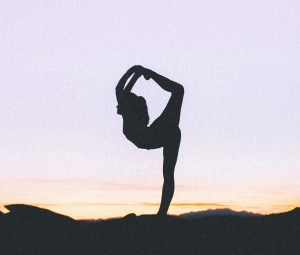
In my y4c training, the manual referenced a concept, versions of which I’ve seen before and have written about myself, but the message continues to hold true (see this article). The proliferation on social media of young, flexible bodies in extremely inaccessible poses for the vast majority of the population not only hurts the practice, but completely misses the point.

It seems like a lot of images that show up as “yoga” on platforms such as Instagram are part (if not wholly) acrobatics and contortions. But yoga is actually a spiritual practice and only one part of it, the one that is overemphasized in the west, is physical.
POV: You’re a cancer patient and your forward-thinking oncologist suggests that you try yoga to help alleviate some of your side effects. But this is what you think of when you hear “yoga”. What are the chances that you’ll try a yoga class? What are the chances that you’ll even find a yoga class that is appropriate for your current condition? Or will be able to afford one?
(Photo by Wesley Tingey on Unsplash)

And that physical practice is a big money maker. If you doubt that, take a look at how many yoga studios exist in affluent areas, and the dearth of studios in more moderate-to-low valued ones.

Yoga was what helped me through my cancer diagnosis, treatments and beyond. But that yoga was minus the “workout”. My workouts during cancer focused more on rowing and lifting weights rather than Sun Salutations and balance asanas. Yoga was for my mind and spirit, to maintain connection and grounding, to not get lost in my fears and to be grateful for what I had.

This is not to say that it’s not impressive when people post challenging asanas on social media. Some of the wonderful teachers that I have trained with have shared those kinds of posts. It’s natural to want to show off a physical achievement that you’ve worked so hard for. In a way, that’s the whole point of social media posts. And that’s also part of the problem with social media.

Frankly, yoga has become deeply entrenched in the United States as a physical practice and nothing is going to change that now. We can be hopeful that those who dutifully attend yoga class, rolled up mat under the arm, will take the time to understand the depth of this ancient practice. But regardless, the flow of the class still brings peace to the mind in a way that my ‘hardcore’ workouts do not.

There are a lot of people who could benefit greatly from the practice of yoga in all its forms, matching breath to movement and developing a mind-body connection. Cancer patients and survivors are some of those people. But if all they know is that yoga demands extreme flexibility, even hypermobility, and statue-like balance, they will avoid the practice as too advanced and inaccessible to them.

If you are a teacher, please keep that in mind. If you are a potential student, please don’t let social media keep you away from such a beneficial form of exercise for both your body and your mind. And if you are a current practitioner, please dig deeper to understand the roots of yoga to honor the cultural tradition from which it arose. It’s not just for likes on Instagram.

Ushering in Summer with a Gentle Attitude

With the upcoming longest day of the year on June 21st, many yogis celebrate the Summer Solstice by performing 108 repetitions of the series of movements known as a Sun Salutation, or Surya Namaskar in Sanskrit.

Why 108? The number 108 is significant in a number of dharmic traditions, including Hinduism, Jainism, Buddhism and Sikhism, and appears many times in sacred ancient texts (see more info at sites such as himalayanyogainstitute.com, yogajournal.com, hinduamerican.org).

Practicing 108 Sun Salutations traditionally has been done during the changing of the seasons to usher in the new phase of the year by generating an internal heat for purification (stoked by the energy of the movements), cultivating a will that pushes the practitioner forward and breaking through mental and physical barriers (youaligned.com).

Prior to getting cancer, I would have reveled in the challenge of 108 Sun Salutations. My body was ready to go hard and fast and have everything be perfect. Today, I approach such practices more mindfully, so this post is about a more forgiving alternative to churning through so many Sun Salutations.

This is because high repetitions of these movements are not for everyone, and even otherwise fit people may begin having wrist, shoulder and back issues as they move through the repeats. Proper preparation is essential in avoiding injuries. My own body protests high volumes of some movements so I accept my limitations, reset my expectations and opt for gentler variations.

Does participating in this tradition interest you but you find the high number daunting? Don’t insist on doing all 108 repetitions; set out to do one. And if that flows well, do another. Feel into your body from the very first sequence to the very last one you do, no matter the number.

However, if it helps, set a repetition goal for yourself — keeping in the spirit of the practice, let it be a factor of 108 as there many ways to evenly divide this number: 9, 18, 27, 54 — but don’t make that goal your sole purpose. Instead, keep your attention on your breath and the flow of your body.

This is a meaningful sequence to immerse yourself in as you cycle through the movements.

Avoid worrying about how you look, wondering whether you’re “beating” the pace of others, thinking about what you’re going to do afterwards or how many calories you burned. I would argue that a single Sun Salutation done consciously, appreciating the connection between the ancient origins of the sequence and the present day, is more valuable than 108 repetitions done with your mind elsewhere, focused only on the achievement.

For this practice, send your ego off to wait patiently by itself until you’re done.

IMPORTANT: For this post, I am focusing on the mindful and spiritual benefits of Sun Salutations. It is true that there is the purely physical practice of the sequence, a full-body exercise that has benefits in its own right. If you are more interested in treating this as a workout rather than a symbolic detoxification as you transition to the next season of the year, I’m the last person to try to talk you out of it. But be aware that this is a very sacred practice for some; I encourage you to pause and approach it with respect.

Whatever number you end on, let that be the right number for you, no judgments. This is a beautiful way to add meaning to your yoga practice and nurture a connectedness to everyone else engaged in this tradition.

The next change of seasons, the Autumnal Equinox, is only three months away…

Perhaps this Solstice’s Sun Salutations will lead to a mindful daily practice of Surya Namaskar. This may blossom into the next opportunity to join everyone in the tradition for the Autumn and welcome in a season full of new possibilities…and maybe even the full 108 repetitions.

But for now, start with just one.

For a beginner-friendly version of Surya Namaskar, try the version below: