Farming ‘Likes’ on Instagram

(Title image: Photo by Chelsea Gates on Unsplash)

I am a reasonably flexible person although I’ve become less so with age and especially following cancer treatment. Yoga asanas that I used to be able to do…well, they don’t come so easily anymore, if at all.

After going through my yoga teacher training in my 50s and now in the middle of an Oncology Yoga (y4c) certification program, I spend a lot of time feeling like an imposter.

There’s an element of shame to this. I tell myself I should be more flexible, I should have better balance, I should be able to hold more advanced poses and for longer.

In my y4c training, the manual referenced a concept, versions of which I’ve seen before and have written about myself, but the message continues to hold true (see this article). The proliferation on social media of young, flexible bodies in extremely inaccessible poses for the vast majority of the population not only hurts the practice, but completely misses the point.

It seems like a lot of images that show up as “yoga” on platforms such as Instagram are part (if not wholly) acrobatics and contortions. But yoga is actually a spiritual practice and only one part of it, the one that is overemphasized in the west, is physical.
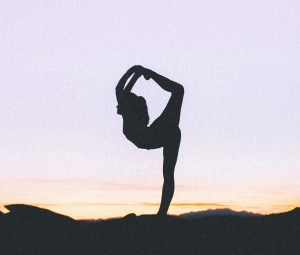
POV: You’re a cancer patient and your forward-thinking oncologist suggests that you try yoga to help alleviate some of your side effects. But this is what you think of when you hear “yoga”. What are the chances that you’ll try a yoga class? What are the chances that you’ll even find a yoga class that is appropriate for your current condition? Or will be able to afford one?
(Photo by Wesley Tingey on Unsplash)

And that physical practice is a big money maker. If you doubt that, take a look at how many yoga studios exist in affluent areas, and the dearth of studios in more moderate-to-low valued ones.

Yoga was what helped me through my cancer diagnosis, treatments and beyond. But that yoga was minus the “workout”. My workouts during cancer focused more on rowing and lifting weights rather than Sun Salutations and balance asanas. Yoga was for my mind and spirit, to maintain connection and grounding, to not get lost in my fears and to be grateful for what I had.

This is not to say that it’s not impressive when people post challenging asanas on social media. Some of the wonderful teachers that I have trained with have shared those kinds of posts. It’s natural to want to show off a physical achievement that you’ve worked so hard for. In a way, that’s the whole point of social media posts. And that’s also part of the problem with social media.

Frankly, yoga has become deeply entrenched in the United States as a physical practice and nothing is going to change that now. We can be hopeful that those who dutifully attend yoga class, rolled up mat under the arm, will take the time to understand the depth of this ancient practice. But regardless, the flow of the class still brings peace to the mind in a way that my ‘hardcore’ workouts do not.

There are a lot of people who could benefit greatly from the practice of yoga in all its forms, matching breath to movement and developing a mind-body connection. Cancer patients and survivors are some of those people. But if all they know is that yoga demands extreme flexibility, even hypermobility, and statue-like balance, they will avoid the practice as too advanced and inaccessible to them.

If you are a teacher, please keep that in mind. If you are a potential student, please don’t let social media keep you away from such a beneficial form of exercise for both your body and your mind. And if you are a current practitioner, please dig deeper to understand the roots of yoga to honor the cultural tradition from which it arose. It’s not just for likes on Instagram.
Cancer Info with a Grain of Salt

When I posted a couple of weeks ago about research that shows the potential benefits of melatonin as a cancer-fighting agent, I tried to emphasize that even though you can find a scientific study that suggest promise for a given treatment, that’s not enough to run out and take it yourself.

Your medical team still remains your best source of information. They’re not only reading and processing info from clinical studies, they also have the inside scoop on what actually works on a long-term level. Not to mention that they’ll be able to prep you for treatment side effects.

I was reminded of this by an article that appeared in Cancer Currents, a newsletter from the National Cancer Institute at the National Institutes of Health, entitled, “Addressing the Challenges of Cancer Misinformation on Social Media“. (Note: the National Cancer Institute has an information service you can reach out to with your cancer questions: Cancer Information Service.)

So you found some miraculous cure on social media. But if it sounds too good to be true, it likely is.

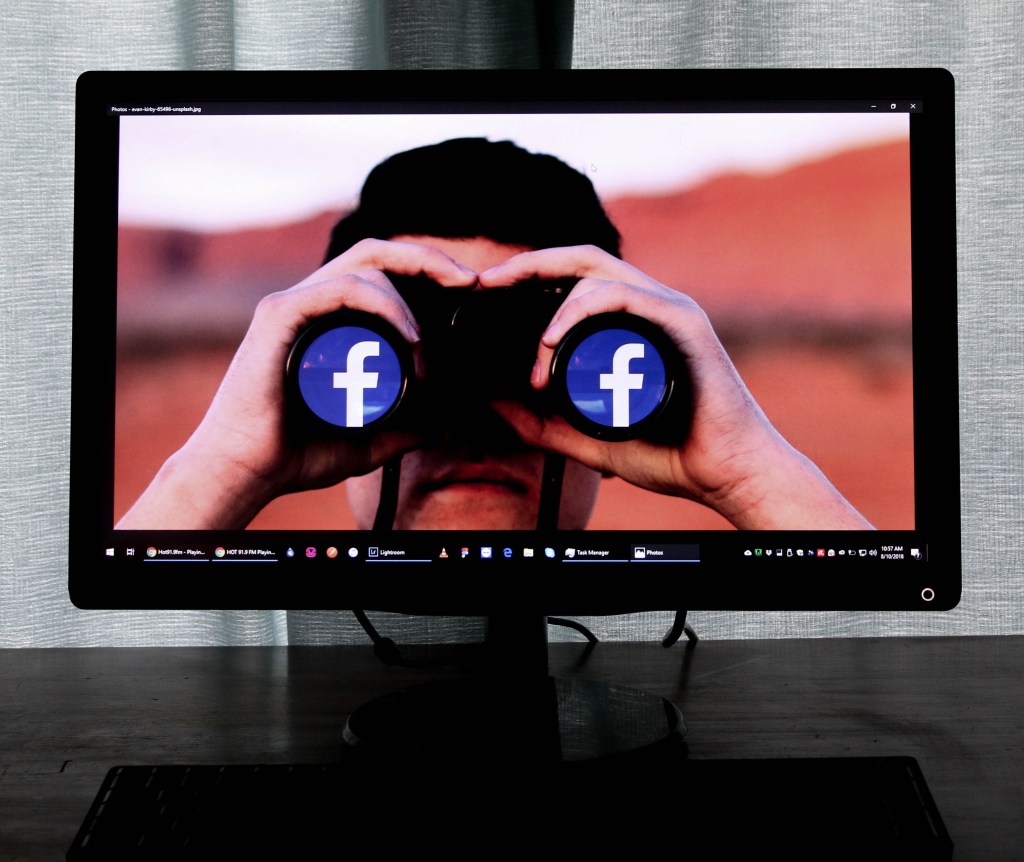
Unfortunately, people are turning to questionable sources–such as the oh-too-familiar Dr. Facebook or Dr. Google–for medical information. This has been glaringly apparent throughout the course of the COVID pandemic, but it certainly includes people looking for information for serious diseases like cancer. Often, the individuals most are risk of succumbing to “shocking cure doctors don’t want you to know about” misinformation are also the most vulnerable: those who are diagnosed with late-stage or particularly aggressive cancers.

Who can blame them? When things look desperate, we all hope to find some “secret” that has been tucked away somewhere. And that’s not without precedent, as there have been old drugs repurposed for a disease that work surprisingly well. So it does happen. It’s just that the first place that information pops up is not on someone’s social media page, and it’s extremely unlikely that the “cure” will be a special juice cleanse or your dog’s flea medicine.

Admittedly, I am intrigued by claims that pop up in less-than-scientific places. However, my first trip to the internet is to review whatever current research is available on the subject in the National Institutes of Health’s PubMed, and to see how reputable the journals are in which the studies have been published. Again, the Cancer Information Service would be an excellent resource for those who would like succinct info without wading through research papers.

No matter how tempting it may be to believe that some great cure is tucked away on social media, make sure you get your oncologist’s approval before you start any treatment.

Hands down, your best line of defense again bogus claims remains being a informed patient and educating yourself about what exactly makes a study trustworthy. Who is funding them? What does the methodology look like? A claim from a case study that blood cancers can be cured by rubbing toothpaste in your eye that appears in the National Enquirer and was funded by a toothpaste manufacturer…well, I don’t think I need to tell you on how many levels that’s a non-starter.

But for the sake of illustration, here we go:

  1. It already sounds fishy and harmful.
  2. “Case study” means that only one subject was studied, so the results cannot be generalized to a larger segment of the population.
  3. National Enquirer is not a reputable, peer-reviewed scientific journal.
  4. The funder of the study will gain financially from the outcome, which means there’s a confict of interest.

Certainly, the “study” above is an easy call. (For the record, I totally made it up, but if it sounds like something you might have seen on social media, well, there you go…)

But it’s not always that obvious. And often the info comes via well-meaning friends and family who are desperate to help. Please, consult with your medical team before you try anything out of the ordinary.

If you’ve honestly gotten to the point where you feel your team is not operating in your best interest, get a second opinion. If at all possible, change to a different oncologist.

But if the second (or third or fourth) opinion of a reputable and experienced cancer health professional echoes the original opinion, and no one is on board with the treatment you want to try…it’s time to ask yourself why you are so determined to go against the advice of experts, and reconsider for your own sake.

~~~~~~~~~~~~~~~~~~~~~~~~~~~~~~~~~~~~~~

It is unfortunate that many people hold doctors in contempt. As someone with a sibling who is a physician, I can promise you that most doctors do not enter the medical field because they think it’s a “get-rich-quick” scheme. They do it because they are driven to help people and they put in long exhausting hours under stressful conditions to do so. Again, if you feel that your doctor is not listening to your needs, then please seek out another qualified physician.