If you’ve read my posts, you’re aware that I really like guided meditations. There are a number of mindfulness apps that I use everyday, and if it’s not a meditation, it may just be ambient noise that I have in the background that helps keep me grounded.
The fact is that guided meditations have been a game-changer for me. During those times when I am trying to fall back to sleep and shake off anxiousness, having someone else’s voice in my head makes a huge difference.
When I’m groggy, I’m vulnerable. My thoughts can run away with me and take me to places that will keep me awake.
What do I mean by that? I’ve found that I’m a very visual person and for better or worse, I have a vivid imagination (this seems to be the case for many anxious people). During the day, it’s much easier for me to ground myself with the techniques that I often write about here — and it’s even better if I can find a quiet corner to do so. But nighttime is different. Sometimes I wake up stressed and clearing my head of all the noise feels like a Sisyphean task.
When I am groggy, I am vulnerable. But I certainly don’t want to do anything to make me more alert since my goal is to fall back to sleep, not to practice improving my concentration. That is the perfect time allow someone else to guide me in meditation.
The guidance does this: it allows me to focus on someone else’s voice. That’s enough. I do not want to have to exert effort beyond that required to listen.
The exact topic of the meditation is far less important than the delivery. A gentle voice at a low volume draws my attention just enough that it keeps my anxious “Monkey Mind” occupied and quiet.
The Monkey Mind running loose is a good way to visualize what your thoughts might be doing inside your head, swinging from branch to branch, chattering, jumping and constantly changing directions. It can be a jumbled mess in there. The meditation helps sort it out.
I have tried this on a number of occasions and have been very impressed with how effective a guided meditation is in dulling the clarity of what my mind has cooked up and clings to. It provides space between my worries and my self. And then I drift off to sleep.
As I mentioned, the meditation doesn’t have to be anything specific. While body scans work particularly well, any calming meditation will do as long as its purpose is to relax the listener. Breathing cues can also be highly effective, as can novel ambient noise that pulls you away from your worries.
No need to overthink it. Just indulge in a lulling guided practice and get some rest.
I remember telling people that I had breast cancer. Most tried to be as supportive as they could, some weren’t quite sure what to say. But regardless of how they reacted, there was a general expectation that breast cancer surgery meant that I had lost both breasts to the disease.
A few people went as far as trying to get me to “look on the bright side” that I had gotten a “nice rack” out of the deal. For the record, I had opted for a lumpectomy, otherwise known as breast-conserving surgery, which removes only the tumor and some surrounding healthy tissue to ensure that the entire diseased part is removed. There was no “nice pair” to be had.
So maybe this is a good place to clarify a few things.
A mastectomy is performed to remove all breast tissue, usually (but not always) along with nipples, areolae and lymph nodes, of one or both breasts. It’s done to treat breast cancer or, in the case of prophylactic mastectomy, prevent development of cancer in the breasts.
There are alternatives to reconstructive surgery that may be very meaningful to the breast cancer survivor, including creating something beautiful out of what she might otherwise consider an ugly experience.
Whether or not a woman chooses to have a mastectomy vs. a lumpectomy is a very personal decision and based on a number of physiological and even emotional considerations. No one should ever be judged for their decision regarding this.
Similarly, well-intentioned folks should not assume that breast cancer means a bouncing new set of perky breasts. Not everyone who gets a mastectomy will opt for reconstructive surgery. In fact, there are tattoo artists who specialize in using mastectomy scars and the newly-flat chest as a canvas to create meaningful and beautiful artwork.
It’s also important to note, total removal of the breast does not come without its downsides. Surgical complications are more likely with mastectomies, and because so much breast tissue and skin is removed, there may be loss of sensation in the chest area that in some cases is permanent.
A newly published study in JAMA Surgery (Dominici et al., 2021; note, the free PMC version of this article does not appear until Sept 2022) with a reader-friendly version appearing in the NCI blog Cancer Currents) compares quality-of-life scores between a variety of breast cancer surgery types, including lumpectomy, unilateral mastectomy (one breast) or bilateral mastectomy (both breasts). All subjects were young (under age 40 at time of diagnosis) cancer patients with early stage breast cancer who gave scores to their perceptions of items such as breast statisfaction following surgery and both psychosocial and sexual well-being. Having a bilateral mastectomy with radiation treatments resulted in the poorest quality-of-life scores out of all surgery options.
Important: while the sample size of this study was ample, with 560 subjects filling out the questionnaire, the women were predominantly white, married and financially stable. A more diverse subject pool might affect the scores and the study must be replicated with inclusivity in mind in order to extrapolate the findings to the general female population. It should also be noted that no surgical groups’ quality-of-life scores were particularly stellar – such is the way with cancer surgery – but those of bilateral mastectomy patients were worse.
All women, regardless of age, have the right to have their questions answered before making a decision about breast cancer surgery.
Given the notable difference between these scores, and the fact that all the different surgical options were open to these young women due to their early-stage tumor status, it stands to reason that women should be informed by their oncologists and surgeons of the possible outcomes of their decisions and second opinions should be encouraged.
That doesn’t mean that a bilateral mastectomy isn’t the right choice for a younger woman with early-stage breast cancer, only that she should be aware of the possibilities of complications and persistent quality of life issues. She should not be pressured in either direction because there is a lot to consider and it’s not an easy choice, nor does it come at an easy time in her life.
So please, don’t call it a free boob job.
~~~~~~~~~~~~~~~~~~~~~~~~~~~~~~~
If you are contemplating a prophylactic mastectomy in the absence of a genetic predisposition (BRCA+) and have early-stage breast cancer, please read this article from breastcancer.org and discuss your options with your medical team.
I’m perpetually on the lookout for different ways to ground myself.
When things get tough and I feel my anxiety rising, I’ve gotten better at pausing and pulling a grounding technique out of my “mental tool bag” before the feelings become too intense.
One that I came up with recently works quiet well, especially if you can take a quick break and find a quiet corner.
As I breathe, I visualize my breath inflating my limbs, filling them with relaxation.
The idea behind this one is that you take a few deep breaths to help slow your breathing down, and then start imagining that your breath is going down into one arm, inflating it.
I’ve visualized it in two ways. The first being breathing into the arm as if it were a balloon that inflates in all directions, all the way down to the fingertips, until it’s completely full. I imagine it glowing from within.
The second entails imagining the breath filling the arm in the way that a fern leaf unfolds. The expansion starts at the shoulder, then upper arm, elbow, lower arm, wrist, hand and finally fingers. As the arm fills with the inhalation, it brightens. This visualization is best when your breathing has already slowed considerably, as it may take a longer breath for your entire limb to sense the serial expansion down to your fingertips.
If my breathing has slowed enough, I imagine the breath entering my limb gradually, just like a fern leaf gently unfurls, part by part.
Either way, I wiggle my fingers at the end of the in-breath, and then as I exhale, the fingers fall still again and the breath exits my arm as it arrived.
Then I do the same with my other arm, followed by one leg and then the other.
On days that I’m really rushed, I might only have time for one limb, particularly if I’m sitting at my desk at work. But that’s okay. Even that short bit is better than letting stress run away with me. That little pause may be exactly what I need.
If this “extremity inflation” sounds too complicated in the heat of the moment, I urge you to try it when you’re lying in bed with your eyes closed. Then you can focus on the sensation of expansion and get familiar with it, so that when you need to call upon it in a stressful situation, you’ll have an easier time bringing up that imagery.
My limbs glow as the breath brings brightness into them.
What I particularly like about this visualization is that it’s a touch more complex, and therefore requires more attention from you. The inhalation all the way to the wiggling fingers makes it more difficult to be thinking about other things. So while it may demand more, I feel that it also delivers more, since everything else decreases to a dull roar in the background as you visualize the air rush in and inflate your body.
And of course, there are different variations of this that you can play with, such as expanding your entire body.
If you are able to practice with this, or even duck out to the bathroom for a few moments of eyes-closed peace, I think you’ll find it a lovely way to give your nervous system a needed break.
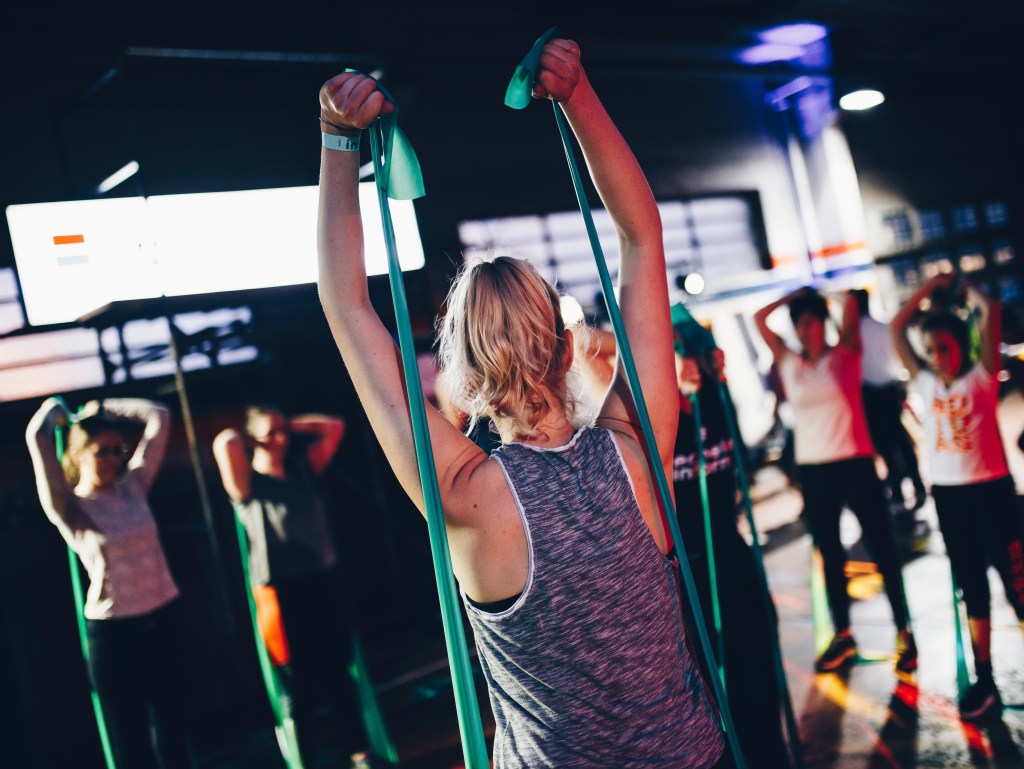
So if you needed yet another reason to exercise before, during and after your breast cancer treatments, I’ve got one for you.
A recent study in the Journal of Clinical Oncology (Salerno et al., 2021) found that early stage (I-III) breast cancer patients who were meeting the US minimum physical activity guidelines both before and during their chemotherapy displayed better cognitive function then did those patients who did not, and the effects were apparent both at the time of chemo and also six months after its completion.
Cognitive impairment is a relatively common complaint of breast cancer survivors–and can be improved with exercise.
This follows along the lines of other things we already know about exercise and cancer, such as increased survival rates and reduced rates of recurrence. It’s not a big stretch to say that exercise (and for the purposes of this post, I’m referring to the US national guidelines) is possibly one of the best things you can do for yourself, whether you are already a cancer patient or don’t want to become one (again).
What are these guidelines?
It’s suggested that adults do (1) at least 150-300 minutes per week of moderate-intensity or 75-150 minutes per week of vigorous-intensity aerobic physical activity, or some combination of the two intensities, the more the better; and (2) strength training activity involving all the major muscle groups at least two days a week at moderate or greater intensity (see specifics at Physical Activity Guidelines for Americans, 2nd edition).
Notably, similar guidelines hold across age groups and health conditions, with some modifications, although what exactly constitutes moderate to high intensity for different people will vary according to their conditioning and abilities. Take home message: If you can’t meet the guidelines, do what you can. It will still benefit you. The worst thing you can do is nothing.
The benefits of exercise for cancer survivors have been well-documented.
While there’s been a considerable amount of research done on the benefits of exercise as a whole, we’re only now beginning to focus on cancer patients and survivors as the test subjects. And new research is being conducted on different aspects of exercise to learn what effects they might have on cognition.
I’m going to be watching for the results of two clinical studies regarding exercise and cognition of cancer survivors. Both are currently recruiting participants.
The second, conducted by the University of Pittsburgh and entitled, “Aerobic Exercise in Improving Cognitive Function in Patients with Stage 0-IIIA Breast Cancer”, will explore the effects of aerobic exercise specifically and will involve neuroimaging and the examination of pro-inflammatory biomarkers. You can read about it here: https://www.cancer.gov/about-cancer/treatment/clinical-trials/search/v?id=NCT02793921&r=1. Again this is funded by the National Cancer Institute. Interested in learning more? Go to https://clinicaltrials.gov/ct2/show/NCT02793921.
If you’re not exercising yet, the important thing is not what physical activity to choose, it’s to make the decision to begin.
If you have any interest in participating in either of these studies, contact info for the research project is available above in the posted clinical trial links.
So you might be thinking, “I can barely deal with the diagnosis…and you want me to EXERCISE???” I promise you, physical movement will only make you feel better. However, if you don’t have an established exercise routine and don’t particularly enjoy the experience, consider what you can manage.
We’re not talking about training for a marathon or a powerlifting competition. But if you can do something, ANYTHING, you will still see greater improvements in your cognition–and quite frankly, many other aspects of your physical and mental state–than if you hadn’t done any activity at all.
It is worth it and you are worth it. So lace up your shoes and give it a go.
So the recurring theme in my posts about meditation is the struggle that I have with maintaining focus. This has been complicated by breast cancer medications that are associated with cognitive effects, not to mention the eventual menopause and “brain fog” that has resulted from them.
And while I’ve taken all sorts of classes and scoured meditation how-tos, I used to wonder, am I even doing this “right”? Shouldn’t I have an easier time with this by now?
A recent “Daily Trip” contemplation on the Calm smartphone app, narrated by meditation teacher Jeff Warren, reminded me that it’s important not to overthink what we’re doing.
The breath is a wonderful point of focus because it moves through our body and elicits sensations in a number of places.
Often in mindfulness meditation, we’re taught to use different aspects of our breath as an “anchor” or point of focus. The breath is a nice anchor to use because it helps us move inward while still staying present. It’s also a moving target, so to speak, so it might be more interesting to watch (and therefore focus on) than a static sensation.
But people are different, and if it’s really not working for you, or if focusing on your breathing actually makes you feel more anxious, you can switch to another focal point. How about the sensation in the hands, the feeling of your body’s weight against the surface on which it rests, or the distant sounds around you?
Maybe you even use several anchors within a single meditation (consider dual focus). The idea is to remain present and aware of what is happening now, even if you have open all your senses in order to do so. What anchor(s) work(s) best for YOU? It is, after all, YOUR meditation.
What really matters is just that you make it back to the present.
And then, instead of worrying about maintaining focus, what if we let go of that? It’s okay, even expected, for your mind to drift off. I would argue that losing focus is an integral part of mindfulness meditation. Because it gives us the opportunity to be aware that we are no longer focused. And once you realize this, you have returned to the present. Nice job!
The more you practice this back-and-forth, like tossing a beach ball between your anchor and your errant thoughts, the more adept you will become at realizing that your thoughts have carried you away. The more you do that, the easier it will become to return to your anchor, and that’s the whole idea.
I am a believer in the idea that, for developing proficiency in an undertaking, consistency is more importat than what you do on any given day. It is true for workouts and it certainly holds true with meditation too. Exercises, whether physical or mental, need time to show beneficial effects and that requires patience and persistence on the part of the practitioner.
However, there comes a point where maybe what you’re doing, consistently, might need to increase in order to enable you to progress.
Consistency is key when it comes to exercise, both physical and mental.
When I started out with meditation, I had very little guidance outside that from the Calm app on my phone. The curated daily meditations there lasted about 10 minutes, so that’s how long I meditated. I did so ever single day, true to my perfectionist nature. I earned a gold star for consistency.
At that time, my life was in turmoil–I was only a few weeks out from a cancer diagnosis. Meditation helped me breathe through the early sleepless hours of the morning, when I would wake, feeling frightened, alone and angry.
But it wasn’t until almost a year later, when I started the Mindfulness-Based Stress Management (MBSR) course originally developed at the UMass Medical Center, that I learned how much meditation could do for me. Our “homework” was 45-60 minutes of meditation a day, no joke when you’re used to 10-minute stints.
But during that time, something unexpected happened. As I meditated, somewhere around the 20-30 minute mark, I felt myself settling in and releasing. This, for a bundle of nerves like me, was a novel experience. I don’t think I could have gotten that with 10 minutes a day. But a glorious hour? It was transformative.
Any meditation will do you good, but take advantage of those times that you can engage in a longer session.
Giving myself permission to simply BE for the entire length of time was not easy. There was guilt involved in being “unproductive” for so long, not to mention the difficulty of dealing with intrusive thoughts. But once my monkey mind accepted the fact that all I was going to do for the entire hour was feel into my breath or pay attention to bodily sensations, it started settling down, gifting me with a stillness that I hadn’t experienced during the shorter meditations.
It was the most soothing act of self-care that I had ever allowed myself to do.
So right now I want to clear the air of the “never good enough” idea, by which I mean the concept of, “Oh, you’re only meditating for 10 minutes? You should be doing it longer.” That is a total motivation killer and goes completely against the acceptance that mindfulness teaches. And that’s not what I’m suggesting at all.
There are great benefits to short meditation stints, one of which being that when you “drop and give 2 minutes” of deep breathing, or however else you choose to express your mindful self, you are actually doing a great job of integrating mindfulness into your everyday experience. Remembering to ground yourself in the middle of a hectic moment allows for a respite from the busyness of the day and helps build a mindful life.
But if you find yourself with extra time, such as a day of travel (where you’re the passenger!) or a prolonged sit in a waiting room–jury duty, anyone?–or even the decision to turn off the electronics and retire to bed early, it is well worth giving yourself a nice chunk of extended time to engage in the self-care of turning inward and being still.
~~~~~~~~~~~~~~~~~~~~~~~~~~~~~
Tip: If you’re not used to prolonged meditation sessions, start with an extended guided body scan meditation, readily available free online through YouTube, MBSR websites and apps such as Insight Timer, for a few examples. It will give your monkey mind enough to do so that your thoughts don’t completely wander off, and yet little enough so that you can feel completely into each body part.
When I posted a couple of weeks ago about research that shows the potential benefits of melatonin as a cancer-fighting agent, I tried to emphasize that even though you can find a scientific study that suggest promise for a given treatment, that’s not enough to run out and take it yourself.
Your medical team still remains your best source of information. They’re not only reading and processing info from clinical studies, they also have the inside scoop on what actually works on a long-term level. Not to mention that they’ll be able to prep you for treatment side effects.
I was reminded of this by an article that appeared in Cancer Currents, a newsletter from the National Cancer Institute at the National Institutes of Health, entitled, “Addressing the Challenges of Cancer Misinformation on Social Media“. (Note: the National Cancer Institute has an information service you can reach out to with your cancer questions: Cancer Information Service.)
So you found some miraculous cure on social media. But if it sounds too good to be true, it likely is.
Unfortunately, people are turning to questionable sources–such as the oh-too-familiar Dr. Facebook or Dr. Google–for medical information. This has been glaringly apparent throughout the course of the COVID pandemic, but it certainly includes people looking for information for serious diseases like cancer. Often, the individuals most are risk of succumbing to “shocking cure doctors don’t want you to know about” misinformation are also the most vulnerable: those who are diagnosed with late-stage or particularly aggressive cancers.
Who can blame them? When things look desperate, we all hope to find some “secret” that has been tucked away somewhere. And that’s not without precedent, as there have been old drugs repurposed for a disease that work surprisingly well. So it does happen. It’s just that the first place that information pops up is not on someone’s social media page, and it’s extremely unlikely that the “cure” will be a special juice cleanse or your dog’s flea medicine.
Admittedly, I am intrigued by claims that pop up in less-than-scientific places. However, my first trip to the internet is to review whatever current research is available on the subject in the National Institutes of Health’s PubMed, and to see how reputable the journals are in which the studies have been published. Again, the Cancer Information Service would be an excellent resource for those who would like succinct info without wading through research papers.
No matter how tempting it may be to believe that some great cure is tucked away on social media, make sure you get your oncologist’s approval before you start any treatment.
Hands down, your best line of defense again bogus claims remains being a informed patient and educating yourself about what exactly makes a study trustworthy. Who is funding them? What does the methodology look like? A claim from a case study that blood cancers can be cured by rubbing toothpaste in your eye that appears in the National Enquirer and was funded by a toothpaste manufacturer…well, I don’t think I need to tell you on how many levels that’s a non-starter.
But for the sake of illustration, here we go:
It already sounds fishy and harmful.
“Case study” means that only one subject was studied, so the results cannot be generalized to a larger segment of the population.
National Enquirer is not a reputable, peer-reviewed scientific journal.
The funder of the study will gain financially from the outcome, which means there’s a confict of interest.
Certainly, the “study” above is an easy call. (For the record, I totally made it up, but if it sounds like something you might have seen on social media, well, there you go…)
But it’s not always that obvious. And often the info comes via well-meaning friends and family who are desperate to help. Please, consult with your medical team before you try anything out of the ordinary.
If you’ve honestly gotten to the point where you feel your team is not operating in your best interest, get a second opinion. If at all possible, change to a different oncologist.
But if the second (or third or fourth) opinion of a reputable and experienced cancer health professional echoes the original opinion, and no one is on board with the treatment you want to try…it’s time to ask yourself why you are so determined to go against the advice of experts, and reconsider for your own sake.
~~~~~~~~~~~~~~~~~~~~~~~~~~~~~~~~~~~~~~
It is unfortunate that many people hold doctors in contempt. As someone with a sibling who is a physician, I can promise you that most doctors do not enter the medical field because they think it’s a “get-rich-quick” scheme. They do it because they are driven to help people and they put in long exhausting hours under stressful conditions to do so. Again, if you feel that your doctor is not listening to your needs, then please seek out another qualified physician.
The last time I was researching the link between cancer and sleep, noting the myriad benefits gained from solid nighttime rest, I was surprised to see mention of melatonin’s role in decreasing the risk of cancer.
For anyone who might not be familiar with it, melatonin (a tryptophan derivative) is a naturally-occuring hormone secreted by the pineal gland that signals when it’s time to sleep and wake. It’s mediated by light levels, with the amount of melatonin in your body increasing as the sun goes down. You’ve probably seen melatonin on the vitamin shelves at your local store, as in recent years it’s been popularized as a non-addictive sleep aid. What I hadn’t realized was that its effect on cancer cells has become an active area of study.
I dug into the PubMed database to find there was quite a bit on this topic. However, note that not all the journals in which these results were published were familiar to me, so I cannot vouch for the rigor of the peer review, however, there was a general consensus that melatonin showed promise.
Melatonin shows a lot of promise as a cancer fighting hormone.
It’s well-established that women who work night shifts experience disruption of their circadian cycle and have an increased risk of breast cancer risk, purported to result from extra circulating estrogen (Cohen et al., 1978, Lancet). Researchers are now linking that disruption with a decrease in melatonin production.
Amin et al. (2019, J Cell Biochem) describe the action of melatonin as it relates to cancer: “Melatonin via its receptors and various second messenger pathways decrease[s] cell duplication and increase[s] cell differentiation.” Since cancer tumors are composed of a proliferation of poorly differentiated cells, this means that the action of melatonin works against the process by which cancer develops and progresses.
Amin et al. continue by noting that melatonin “regulates estrogen-dependent pathways (by nonreceptor-dependent means) and reduces the production of oxidants; as a result, melatonin inhibits cell toxicity and mutations….Melatonin interrupts estrogen-dependent cell signaling and also causes reduced estrogen-stimulated cells in breast cancer. [It] is a mammary tumor inhibitor…[as relates to the] development, progression, and metastasis of breast cancer via a number of molecular mechanisms.”
A randomized, double-blind, placebo-controlled research study showed that melatonin has a neuroprotective effect that can counteract the effects of chemotherapy on “cognitive function, sleep quality and depressive symptoms” (Palmer et al., 2020, PLOS One). These are significant side effects that have a profound impact on the patient’s quality of life, and anything that may relieve these will improve the entire treatment experience.
Griffin & Marignol (2018, Int J Radiat Biol) noted that melatonin administered to subjects before they were exposed to ionizing radiation resulted in the breast cancer cells being more sensitized to the radiation therapy, rendering it more effective. And melatonin seemed to reduce the radiation-induced side effects exhibited by both human and rodent subjects.
No matter how many drug treatments are available for cancer, they do no good if the cancer cells develop a resistance to them. In a study published this year, Sang et al. (2021, Cancer Lett) found that melatonin increased the effectivess of drug lapatinib in HER2 receptor-positive breast cancer cells that were originally resistant to the drug, suggesting that melatonin could be a promising adjuvant therapy for treating advanced HER2+ tumors.
So, melatonin may reduce breast cancer risk, make existing treatments more effective and help protect patients against negative effects of these therapies. Does that mean you should run out and gobble melatonin every night?
Many studies are first run on animal subjects, but to truly determine whether a treatment will be effective for cancer patients, it must be tested on humans.
No! As tempting as it sounds, that’s not an advisable course of action. Many more studies still have to be run to evaluate the exact mechanisms by which melatonin acts on physiological processes. Some of the results in the cited studies were based on small sample sizes; good for proof of concept, but following up with larger scale studies is critical. Some studies were run on animal models which are not the best human analogues. In addition, there’s little direction regarding proper therapeutic dosages. Establishing those will take additional research.
Keep in mind: a naturally-occurring hormone like melatonin likely has a “sweet spot” in terms of dosing, and determining the ideal amount may be tricky. Just because you can buy melatonin gummies in 10mg doses does not mean you should be taking that much.
Furthermore, melatonin may elicit negative side effects in some people, including headaches, nightmares and nausea. Side effects tend to be short-lived with short-term usage but there’s still not enough information available about long-term safety, so taking it for longer periods of time is strongly discouraged.
Note also, the articles I’ve mentioned above were selected because they describe recent research, although some of these are review articles that espouse the authors’ opinion, backed up by research selected for the purpose. If you’d like to read the above studies yourself and the links I’ve posted do not provide you full access, please consult your local university library for copies (copyright laws prohibit me from providing access to pay-only articles, regrettably).
Finally, it may be that some of melatonin’s benefits might be its undoing. Reiter et al. (2017, Int J Mol Sci) note that melatonin is inexpensive and readily available, and therefore there might not be the same level of interest in researching and developing it for cancer use as there might be with a novel drug with the potential to be more lucrative.
Where does this leave us?
I would urge you to: 1) Ask your oncologist about what they would recommend, given the research that’s coming out. They are still your best source for information. FranticShanti.com is only a blog and can be used as food-for-thought but definitely not for determining your course of treatment. 2) Learn how to read scientific studies. There are free courses on educational site such as Coursera.com that explain research design and interpretation in layperson terms. They can offer instruction on reading research with a critical eye. 3) Keep an eye on emerging research. Databases such as PubMed are excellent sources for health research. Even if you’re not well-versed in research design, you can look up articles to bring to your next visit with a health provider. 4) Do not take megadoses of melatonin! There is still so much we have to learn about this hormone as it relates to cancer, and self-medicating with melatonin in the hopes that “maybe it’ll help” is dangerous. Again, your oncologist remains your best source of information.
Promising drugs aside, get your sleep!
I do encourage you to respect your circadian rhythm by establishing good sleep hygiene practices to improve the conditions for your body to create and release its own melatonin. Proper and adequate sleep will always benefit you!
And so we get back to the idea that launched this post: sleep remains the ultimate good.
~~~~~~~~~~~~~~~~~~~~~~~~
It bears repeating: ALWAYS ask your cancer team about starting any new medication or supplement, regardless of how well-supported it is by research.
This is critical to be aware of when you’ve gotten your cancer diagnosis and are meeting your oncologist for the first time. We all go into that exam room fearful but hoping for good news. We want reassurance that it’s going to be okay.
The problem is, your oncologist can’t tell you that. They can’t say that you’ll get through this fine. Because they’re not going to promise you something they cannot guarantee. What they can give you is statistics. However, that may come in the form of something like, “You have an 85% chance of surviving…”, which sounds great, right, “…for 5 years.”
Is it good news or bad news? Their faces won’t tell.
Now, I don’t know how you feel about this, but honestly, when I heard that I thought, um, is that the best you can give me?
While I adore my oncologist, there was no cute wrinkled nose, no “I’m sure you’re gonna be okay” warm-and-fuzzies. It was all, “this is what’s next.”
I’m convinced that oncologists start their day by practicing how to deliver information without emotion, without giving away whether the news is good or bad. As patients, we literally hang on every word, every hesitation, every wrinkle on our oncologist’s face for an indication of just HOW bad the situation is. Some will reveal more than others, but in my own experience, it was “just the facts, ma’am” for quite a long time.
This could be very frustrating. I learned that I needed to get the “rah-rah” encouragement elsewhere.
On the plus side, however, I knew that if something was bad, my oncologist was going to tell me. He wouldn’t be like that friend who assures you your ugly outfit looks good just so that they don’t hurt your feelings. So if it’s any consolation, you’ll leave the office knowing what’s up, and what the doc doesn’t know yet if they’re still waiting for results. No false promises.
That helps get your head past the diagnosis and moving forward into treatment.
~~~~~~~~~~~~~~~~~~~~~~~~~~
I remember when, after my final infusion, I developed a horrible nail infection that landed me in the Emergency Room. I was stabilized, pumped full of antibiotics and my wound cleaned out. As I recovered, my ER doc came back to see how I was doing because he knew I’d just finished chemo and was familiar with the cancer experience. He told me that he was about to go notify another ER patient that they had liver cancer and wanted to take a breather and come talk to me before he had to break the news to them. It was obvious that he was moved by his patient’s plight.
So this was a great reminder for me that even though the doctors may seem to be stone-faced, they are by no means stone-hearted.
I’ve written before many times about different “grounding” techniques. Grounding is what helps move us out of the chatter in our heads and brings us into the present moment, where we can pause and realize that we are safe. It helps put space between our ourselves and both fears about the future and regrets about the past that may unnecessarily cloud our minds.
On days like those, I need to fine-tune my focus. This calls for a grounding technique that won’t be as easy to derail.
Body scans are some of my favorite grounding and calming go-tos. But recently, I was introduced to tracing the outline of the hand with your mind, a focus on just one part of the body. I tried this and found that it worked brilliantly!
As kids, we traced our hands to help us draw; now, it can help us stay present.
Just like when, as a child, you started a drawing using the outline of your hand by placing it on a piece of paper and tracing the around your fingers with a pencil, you can do the same thing mentally. Imagine the sensation of a point of pressure (say, an invisible crayon) moving up your wrist to the outside of your pinkie, around the fingertip, and down the other side into the hollow between the fingers…and doing the same as it moves up and down each finger until it ends up on the outside of the thumb and travels back down the wrist.
What makes this so effective for me is that it is a simple visualization that requires a bit more concentration, and yet it is still uncomplicated. That means that it gives my monkey mind a little extra to focus on, but not so much that it becomes a struggle.
Try it next time you need grounding and want to trying something different.